Sustainability in Silk Product Manufacturing
Carina Silk helps B2B buyers turn sustainability requirements into a clear silk product brief. Review the material, production route, quantity, packaging, documentation and quality checkpoints around the product you need to make.
- Selected silk and blend directions reviewed around the finished application
- Certification, fibre and restricted-substance requirements kept specific to the project
- Artwork, printing, cutting, sewing, labels and packaging coordinated before bulk
- Sampling and inspection used to check the actual product rather than a generic claim

Sustainable Silk Product Development for B2B Buyers
Sustainability is not a single fabric name or certificate. For a custom silk product, it is a set of decisions that connect fibre content, processing, product life, packaging, quantity and evidence to the buyer’s market requirements.
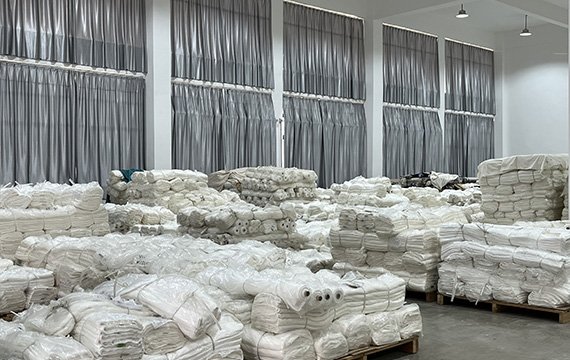
Start with the decision that carries the most risk
- A fibre or certification claim must match the exact material, product and current document scope.
- A print or finishing route should be reviewed against the selected base, artwork, colour and restricted-substance requirements.
- A smaller first order may reduce inventory exposure, but the quantity and MOQ remain project-specific.
- Packaging, care and end-of-life instructions should be designed with the channel rather than added after production.
Use the approved sample, written specification and supporting documents as the control point. A sustainability label by itself is not a substitute for product-level evidence.
Material Selection and Certification Evidence
The material decision affects hand feel, drape, print response, care, price position and the documents a buyer may need. Carina Silk can review 100% silk and selected silk-blend directions around the finished product; confirm the exact composition before approval.

Selected Silk Directions
Review the weave, momme, width, finish and intended use together. A natural-silk direction may suit a premium accessory, garment, sleepwear or bedding program, but the final fibre declaration remains the specification.

Selected Blend Directions
Silk cotton, silk modal, silk linen, silk viscose, silk rayon, silk bamboo and silk Tencel are listed across Carina Silk’s product range as blend directions. Request the exact ratio, construction, care and supporting documents for the chosen program.

Certificate Scope
Selected OEKO-TEX® fabric options are presented on the current site. Ask for the current certificate, scope, expiry or renewal information and the material or product covered; do not treat one certificate as proof for every SKU.
| Buyer requirement | Evidence to request | Approval checkpoint |
|---|---|---|
| Fibre claim | Exact fibre content, blend ratio and construction | Matches the approved sample and product description |
| Certification | Certificate number, scope, date and covered material or product | Document applies to the selected order route |
| Restricted substances | Applicable test or compliance information for the market | Requirements are agreed before printing and finishing |
Production Choices That Affect Sustainability
The production plan should make the main resource and inventory decisions visible before the order is released. These are review points for the project, not universal claims about every silk order.

On-Demand Quantity Planning
Custom production around a real product brief can help buyers avoid committing to the wrong colour, size or artwork. Confirm quantity by SKU, colour, fabric and packaging configuration in the quotation.

Print and Finishing Route
Digital, screen or other print directions can change colour, coverage, hand feel, setup and sampling needs. Request the route and any chemical or restricted-substance information relevant to your destination market.

Cutting and Product Yield
Size, repeat, border, panel placement, seam allowance and usable width influence material yield. Review the cutting plan early when the product uses a large print or a directional fabric.
| Production question | Why it matters | What to confirm |
|---|---|---|
| How many SKUs and colourways? | Prevents one generic quantity from hiding the actual inventory plan | Quantity by style, colour, size and packaging set |
| What print route fits the base? | Affects sampling, colour, coverage, setup and finishing | Base fabric, artwork, print side, colour reference and sample |
| How will the product be cut and packed? | Connects usable width, yield, labels and packaging waste | Cutting layout, tolerance, packing format and documentation |
Water, Energy and Chemical Claims Need Scope
A responsible buyer should ask where a claim applies, which site or material it covers, when the evidence was issued and whether it describes a process, a product or a future target. Carina Silk does not turn a general sustainability theme into an unqualified factory-wide promise.

Water and Effluent
If water recycling, wastewater treatment or discharge controls matter to the order, request the relevant site, process and document scope. The answer may differ by fibre, dyeing, printing and finishing route.
Energy and Emissions
If your buyer policy needs energy, fuel or emissions information, ask for the boundary, period, calculation method and production stage covered. Avoid using a percentage without a dated evidence trail.
Dyes, Inks and Chemicals
“Eco-friendly” is not a complete technical specification. State the market, restricted-substance list, print route and testing requirement, then review the information available for the selected material and finish.
Good evidence answers four questions: What is covered? Where was it measured? Which date or version applies? What does the buyer need to do with the result?
Product Life, Packaging and End-of-Life Planning
The environmental position of a silk product is shaped by how long it is used, how it is cared for, how it is packed and what happens after use. These decisions should be part of the product brief, not only the marketing copy.
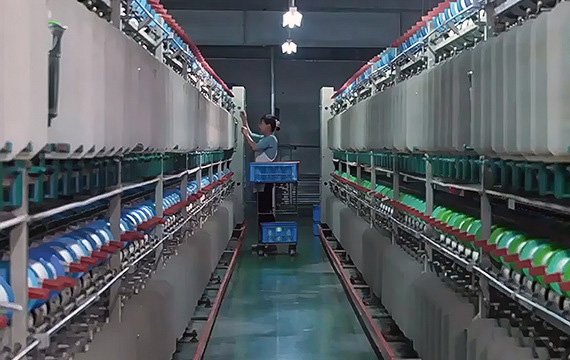
Design for the Intended Life
Choose the weave, weight, construction, seams, edge finish and care direction around the actual use. A product that is designed for its channel is easier to describe accurately and inspect against a real standard.

Packaging and Product Information
Labels, care information, folding, bands, pouches, boxes and shipment packing can be included in the development brief. Confirm material choices, printing, recyclability claims and local disposal wording before approval.
| Lifecycle decision | Buyer brief should include |
|---|---|
| Care and durability | Use, wash or dry-clean route, ironing, storage and customer-facing care wording |
| Packaging | Primary pack, outer pack, labels, inserts, materials, printing and quantity per carton |
| End of life | Accurate fibre and material notation, local disposal guidance and any substantiated claim |
Buyer Evidence Checklist
A sustainability-focused request is easier to price and produce when the evidence requirement is written alongside the product requirement. Share the items below at the start of the conversation so the selected route can be checked before sampling.
Prepare these details
- Product type, finished use, channel and destination market
- Fibre content, blend ratio, weave, weight, width and finish
- Artwork, colour standard, print route, placement and cutting direction
- Certificate, testing, restricted-substance, social-compliance or traceability requirement
- Quantity by SKU, packaging format, labels, care information and delivery plan
| Evidence category | Example request | When to check |
|---|---|---|
| Material | Fibre declaration, blend ratio, weave and finished weight | Before quotation and sample approval |
| Compliance | Current certificate scope, test report or restricted-substance response | Before the claim is used in product copy |
| Production | Print, dyeing, finishing and inspection information for the selected route | Before bulk production |
| Packaging | Material description, artwork, label content and packing configuration | Before final packing approval |
Sustainable Silk Programs for Different B2B Applications
The right sustainability brief depends on what the finished product must do. Carina Silk develops custom silk scarves, printed fabrics, sleepwear, bedding and accessories, with material, print, construction and packaging reviewed around the application.
Fashion and Accessories
Compare silk bases, artwork placement, edge finishing, labels and care details for scarves, ties, bandanas, scrunchies and other branded accessories.
- Check fibre and certificate wording
- Review colour and placement on the sample
Sleepwear and Bedding
Define the contact surface, construction, sizing, care and packaging for pajamas, robes, pillowcases, bedding, eye masks and related sleep products.
- Match material and care to the finished use
- Confirm labels and retail presentation
Retail and Gifting
Plan the product story, label content, folding, insert, box or pouch and shipment format for retail, corporate, hospitality or event collections.
- Keep claims tied to current evidence
- Review the complete pack before bulk
Explore printed silk fabric, custom silk scarves and silk bedding when you are comparing product routes. About Carina Silk explains the wider manufacturing and quality process.
From Sustainability Brief to Approved Silk Product
A clear sequence reduces the chance that a material, certification or packaging requirement is discovered after the sample or bulk order has already been approved.
01. Define the Requirement
Send the product, market, application, fibre or certification requirement, artwork, quantity and evidence checklist.
02. Review the Route
Compare suitable material, weave, weight, print, construction, packaging and document options around the finished product.
03. Build the Sample
Use a physical sample or swatch to review hand feel, colour, surface, dimensions, construction, labels and packing.
04. Approve the Specification
Lock the fibre declaration, certificate scope, artwork, tolerance, quantity, packaging and inspection points in writing.
05. Inspect and Document
Check the production against the approved sample and confirm the documents and packing information required for shipment.
For a first review, use the Carina Silk contact page and include the destination market. Sustainability requirements often depend on the market, product and documentation scope.
Quality Checks Connect Sustainability Claims to the Product
A document is only useful when the delivered product matches the material, construction and finish it describes. Carina Silk’s published quality process covers fabric condition, print colours, dimensions, stitching, edge finishing, labels and packaging against confirmed requirements.
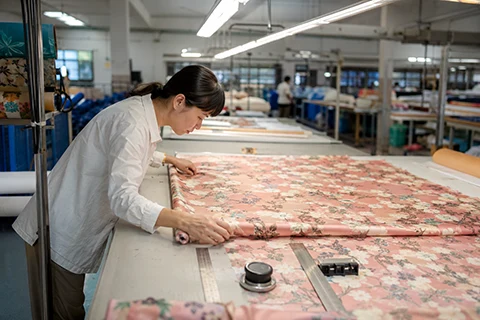
Material and Print Inspection
Check fabric identity, surface, visible defects, colour, artwork, pattern alignment and print coverage against the approved reference.
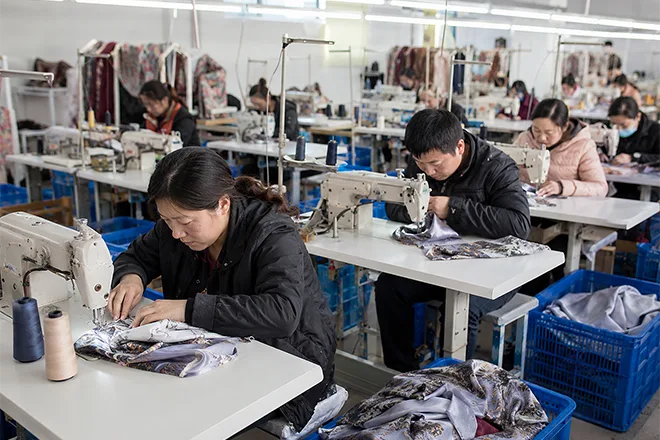
Sewing, Finishing and Packing
Check measurements, seams, hems, loose threads, labels, ironing, folding and final packaging against the written specification and approved sample.
| Checkpoint | Question for approval |
|---|---|
| Material identity | Does the fibre, blend, weave, weight and finish match the written claim? |
| Artwork and colour | Does the print match the approved file, reference and intended product placement? |
| Construction | Do measurements, stitching, edge finishing and labels match the approved sample? |
| Packing and documents | Do the pack, care information and available compliance documents match the market brief? |