Printed vs. Woven vs. Jacquard Patterns: Which Route Fits?

Carina Silk Editorial Team writes practical guides on silk fabrics, scarves and custom textile development, with a focus on materials, artwork, sampling, construction and finishing decisions.
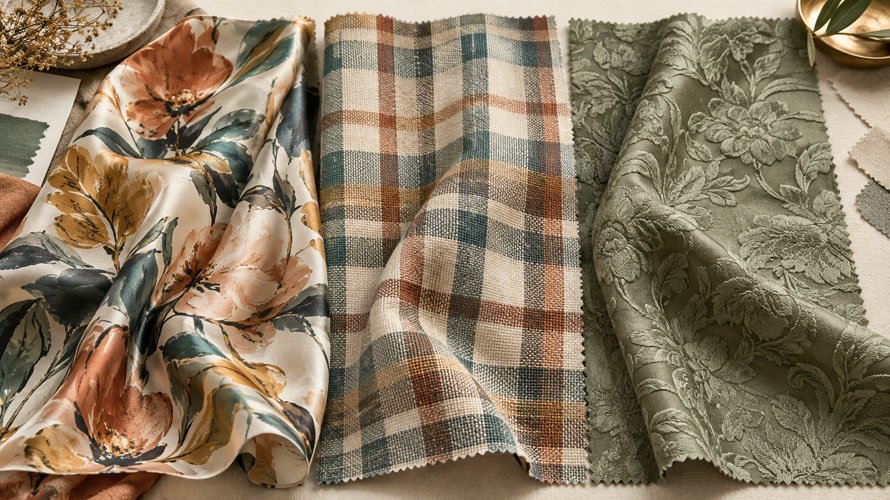
Printed, woven and jacquard patterns are different ways to create a design on fabric. Printing applies colour or artwork to a fabric surface. Woven patterns use yarn and weave relationships. Jacquard is a controlled woven construction that can form complex motifs in the cloth. The right route depends on artwork detail, surface intent, hand feel, product geometry, repeat and the sample result you need to approve.
The same floral, geometric or damask reference can be interpreted through more than one route. It should not be quoted as the same specification. A custom textile brief should say what must remain constant: a flat printed appearance, a woven-in motif, a raised texture, a particular drape, a reversible effect or a defined scarf placement.
What Is the Difference Between Printed, Woven and Jacquard Patterns?
The core difference is where the pattern is created. A printed pattern is applied after the fabric surface has been constructed. A woven pattern is created through yarns, colour and weave. Jacquard uses controlled warp and weft selection to develop more complex woven motifs.
This does not mean that one route has a universal advantage. Fibre composition, weave, weight, width, finishing, artwork scale and end use still change the result. A printed silk scarf, a yarn-dyed check and a tonal silk jacquard may all look refined, but they require different artwork and approval checks.
For a wider vocabulary of motif types, see the fabric patterns guide. The guide explains pattern families; this article focuses on the physical route that creates them.
How Does Each Pattern Route Work?
Printed patterns
Printed patterns transfer colour or artwork to the surface of a constructed fabric. This route can suit detailed illustrations, gradients, painterly artwork, multi-colour repeats, borders and placement designs. The artwork can be changed without redesigning the underlying weave, but the colour result still depends on the base fabric, print route, coverage, registration and finishing.
The buyer should state whether the artwork is all-over, border, centre placement or panel-based. For a custom silk scarf, also record the finished size, orientation, safe area, bleed and edge direction. The digital printed scarves page is the matching Carina destination for a surface-print scarf brief.
Woven patterns
Woven patterns are created by arranging warp and weft yarns, yarn colours and weave structures. The result may be a simple yarn-dyed check, stripe, herringbone or another structural design. Because the appearance depends on the cloth construction, the yarn and weave plan are part of the specification.
Woven does not automatically mean heavy, rough or reversible. The selected fibre, yarn, weave and finishing determine the surface and drape. A buyer should therefore approve the actual construction rather than infer the hand feel from a digital artwork reference.
Jacquard patterns
Jacquard is a weaving method that gives the loom more control over individual warp threads, allowing complex motifs to be formed within the fabric structure. It can be used for tonal, geometric, floral or ornamental designs and can create a different relief or light response from a flat print.
Jacquard is not a fibre name. A silk jacquard, cotton jacquard and synthetic jacquard can have different weight, drape, sheen and care direction. If the required design must be woven into the cloth, state the fibre, weave direction, motif scale and desired surface response. The silk jacquard fabric page is the relevant product route for that discussion.

What Changes for Silk and Textile Products?
| Route | How the pattern is formed | Best-fit condition | Main limitation | What to confirm |
|---|---|---|---|---|
| Printed | Colour or artwork is applied to the fabric surface | Detailed custom artwork, gradients, flexible repeats or placement designs | Colour and detail respond to the base fabric and print route | Artwork, colour reference, print route, strike-off and finished sample |
| Woven | Warp, weft, yarn colour and weave create the design | Structured stripes, checks, texture-led motifs and yarn-dyed effects | Artwork must be translated into a weave and yarn plan | Fibre, yarn, weave, width, scale and construction sample |
| Jacquard | Controlled weaving forms complex motifs in the cloth | Woven-in ornamental, tonal or textured designs | The visual result depends on weave structure, fibre and scale | Jacquard artwork, fibre, motif size, surface response and sample |
For silk products, the route also interacts with drape, sheen, opacity and the way the fabric folds. A detailed print may remain visually flat while a woven or jacquard motif changes the way light moves across the surface. Neither result is automatically preferable; it must match the product intent.
Custom scarves
A square scarf can use a centre motif, framed border, corner artwork or an all-over field. A long scarf may suit a lengthwise stripe, a repeated logo or a border that follows the edge. Printed artwork offers flexible placement, while woven or jacquard construction may be selected when the pattern must remain part of the cloth.
Check the design at finished size. A motif that is balanced on a large fabric panel may become too dense on a narrow scarf. A border that looks correct before hemming may lose its spacing at the edge. The sample should show the route, dimensions and finishing together.
Garments and fabric panels
Garments add seams, grain direction, folds and multiple pattern pieces. A large printed placement may need a cutting plan. A woven check may need matching at joins. A jacquard motif may need a width and repeat plan that works with the garment panels.
Record whether the pattern is directional, whether pieces must match, and which areas may be cropped. These decisions belong in the brief before the artwork or weave plan is finalised.
Which Route Should You Choose?
Use the following decision order:
- Start with the product. State the scarf, garment, lining, accessory or running fabric application and its finished dimensions.
- State what the surface must feel like. Decide whether the result should be flat, textured, raised, matte, lustrous, structured or fluid.
- State what the artwork must retain. Identify fine lines, gradients, colour count, readable details, symmetry, repeat, border or placement requirements.
- Choose the route that can carry those requirements. Keep the choice conditional to the fibre, weave, width, scale and end use.
- Approve the physical sample. The final route decision should be based on the actual selected fabric and finished construction, not a screen image alone.
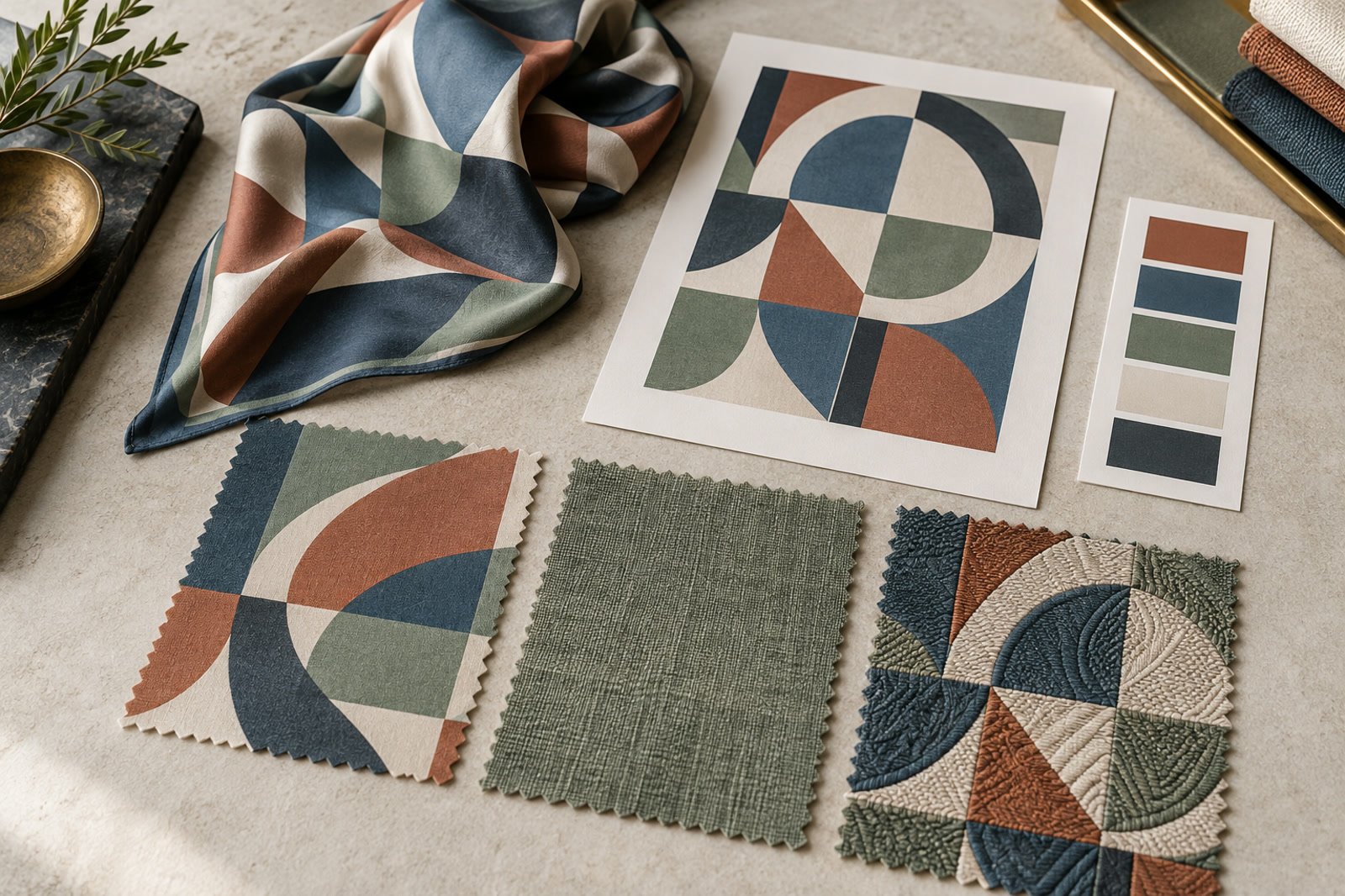
How Should You Sample Printed, Woven or Jacquard Patterns?
Printed route
Review the artwork file, colour references, tile or placement, bleed, safe area and fabric orientation. Then check the strike-off or swatch for colour, scale, coverage and surface response. A finished scarf or panel sample verifies border, fold, hem and placement behaviour.
Woven route
Review the yarn and weave direction, motif scale, width, repeat, edge and reverse-side expectations. Confirm the construction on a sample that is large enough to show the motif and surface. Check whether the result remains legible after finishing and folding.
Jacquard route
Review the converted jacquard artwork, fibre, weave structure, motif scale, relief and colour relationship. Inspect the surface from different angles because light response can change the appearance of tonal motifs. Confirm the finished sample before treating the route as approved.
For all three routes, record the required inputs and acceptance criteria before approval. The sample can validate the selected construction and appearance, but it cannot validate every commercial or logistics requirement and cannot replace a clear brief about fibre, dimensions, packaging or the intended market.
Conclusion
Printed, woven and jacquard patterns are different construction routes. Printing applies artwork to a surface, woven patterns are created through yarn and weave, and jacquard provides controlled woven motifs within the cloth. The correct choice depends on product geometry, artwork, surface intent, scale, repeat, drape and approval requirements.
Choose the route only after stating what must remain unchanged. Then approve the selected fabric, artwork or weave plan, colour direction, finished dimensions and physical sample together.