Sateen vs Satin: What’s the Difference?

Carina Silk Editorial Team writes practical guides on silk fabrics, scarves and custom textile development, with a focus on materials, artwork, sampling, construction and finishing decisions.
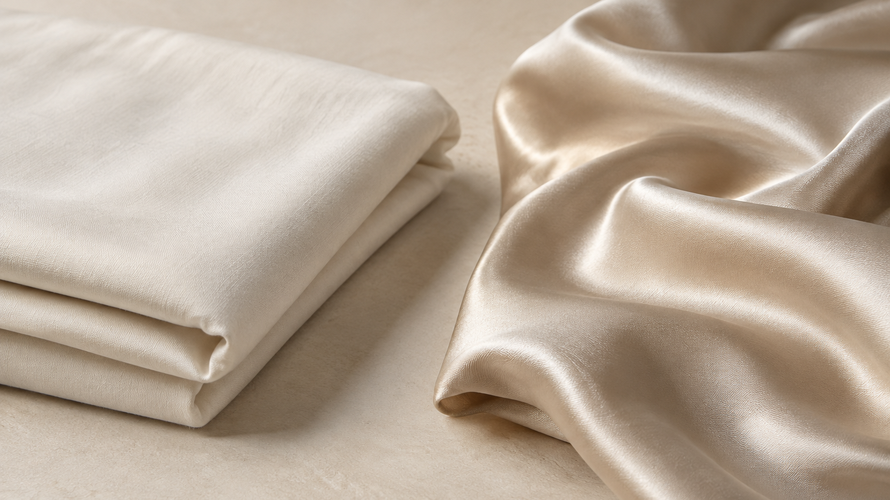
Sateen and satin are related fabric labels, but they are not interchangeable specifications. Both can use a satin-weave structure with longer floats on the surface. Sateen commonly points to a spun-yarn fabric, often cotton-based, while satin is commonly associated with filament yarns such as silk, polyester or nylon.
That distinction matters when you are developing a scarf, garment, bedding product or another custom textile. The fibre, yarn, weave direction, weight, width, finish and end use can change the final hand feel and performance. This guide explains the difference between sateen and satin and shows what a buyer should confirm before sampling.
What Is the Difference Between Sateen and Satin?
The short answer is that sateen and satin sit within the same satin-weave family, but the names often signal different yarn and fibre traditions. Sateen is commonly made with spun yarns and is frequently cotton-based. Satin is commonly made with filament yarns and may use silk, polyester, nylon, acetate, rayon or another fibre.
These are useful starting points, not universal rules. A fabric label does not tell you the exact fibre percentage, weight, finished width, surface finish, opacity, drape, print response or care route. If the fabric will become a finished product, compare the complete specification and the approved sample rather than choosing from the name alone.
Are Sateen and Satin the Same Fabric?
They are related, but they are not the same guaranteed material. Satin is one of the basic woven structures. Its smooth surface comes from longer floats and fewer visible interlacing points. CottonWorks’ explanation of satin weaves describes warp-face satin and filling-face satin, with the latter sometimes called sateen.
Commercial terminology is not perfectly uniform. Some references use satin for silk-based or warp-face fabrics and sateen for non-silk or filling-face fabrics. Other suppliers use the terms more broadly. The safe buyer method is to ask for the fibre composition, yarn type, construction direction and finished sample together.
What Is Sateen Fabric?

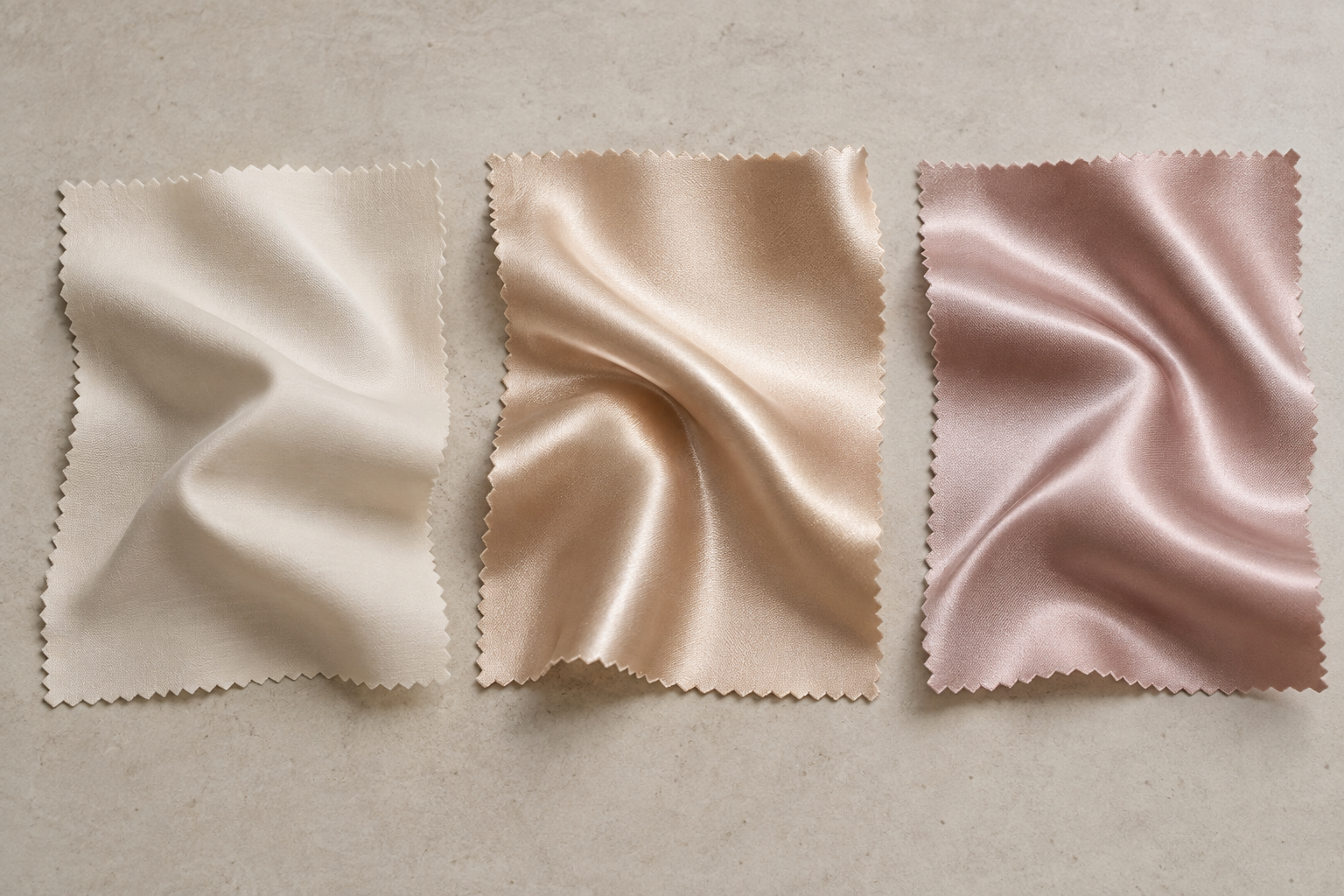
Sateen is commonly a satin-style woven fabric made with spun yarns. Cotton is a frequent choice, but cotton content should still be confirmed rather than assumed. Blends and other fibre choices can change the surface, weight, drape, comfort and care response.
What changes in a sateen fabric?
A filling-face construction can place more of the weft yarn on the visible surface, creating a smooth face with a softer or more muted sheen than many filament satin fabrics. The exact result depends on yarn size, density, finishing and the fibre used.
A cotton-based sateen can be a practical starting point for bedding, home textiles or products that need a familiar hand feel. It is not automatically crease-proof, shrink-proof or more durable than every satin. Long floats can still be picked or snagged, and the finished care route depends on the material and finish.
For a custom product, confirm the fibre composition, weave, weight, width, surface finish and end use. These details explain more than the word sateen on a quotation.
What Is Satin Fabric?

Satin describes a smooth, lustrous fabric or weave family. Silk satin is the traditional luxury reference, but satin can also be made from polyester, nylon, acetate, rayon and other fibres. The fibre changes how the fabric handles heat, moisture, drape, shine, care and price.
Why does the fibre matter so much?
A silk satin may provide a soft, fluid surface with a distinctive hand feel, while a polyester satin may be selected for cost control, colour range or easier handling. These two fabrics may share a visual category but should not be treated as interchangeable in a product specification.
Satin weave can provide excellent drape, but longer floats can increase the risk of picking, snagging, skew or seam slippage. The risk depends on the construction and finished product, so a flat swatch is not enough when the scarf, garment or accessory will be handled frequently.
If the brief calls for a custom silk satin fabric, specify the silk type or blend, momme, finished width, surface, colour or print route, opacity, edge treatment and care requirement.
How Do Sateen and Satin Compare?
The table below gives a practical starting point. It deliberately uses words such as “often” and “depends” because fibre, yarn, weight and finishing can change the result.
| Comparison point | Sateen | Satin | What to confirm |
|---|---|---|---|
| Usual yarn direction | Often spun yarn | Often filament yarn | Yarn type |
| Common fibre direction | Cotton or cotton blends are common | Silk, polyester, nylon and other fibres are possible | Fibre composition |
| Surface | Smooth with a softer sheen | Smooth with a stronger or more fluid sheen | Actual finished sample |
| Hand feel | Often softer and more grounded | Often slicker or more fluid | Weight and finish |
| Drape | Depends on yarn, weight and finishing | Often fluid, but varies by fibre | GSM or momme and width |
| Care | Often easier when cotton-based | Depends strongly on the fibre and finish | Fibre-specific care route |
| Common product fit | Bedding, home textiles and everyday products | Scarves, apparel, lingerie and formal products | End use and acceptance criteria |
| Main risk | Creasing, shrinkage or surface wear | Snagging, slippage or care sensitivity | Construction and sample testing |
For a broader explanation of warp, weft and construction layers, see what woven fabric is. The comparison here is narrower: it is about how the sateen or satin label should be translated into a usable buying specification.
Which Fabric Fits Different Product Uses?
Premium printed scarves and accessories
Silk satin can fit a scarf that needs a smooth, fluid and reflective surface. It may not be the best answer when the product needs more grip, a crisper fold or a highly controlled printed face. Compare satin with silk twill or another construction using the actual scarf dimensions and finished edge.
Everyday bedding and home textiles
A cotton-based sateen may suit a product that needs a familiar cotton hand, a softer sheen and a routine care process. Confirm shrinkage, weight, width, dimensional stability and surface wear. A home-textile label does not guarantee the same result across different yarns and finishes.
Formal apparel, lingerie and occasion products
Satin is often selected when fluid movement and a stronger surface reflection support the design. The choice still depends on fibre, weight, opacity, stretch, seam behaviour and care. A lightweight polyester satin and a heavier silk satin may look similar in a photograph but behave differently during cutting, sewing and wear.
Cost-controlled custom textile products
A synthetic satin may offer a different cost and handling position from silk satin, while a cotton or cotton-blend sateen may offer a different balance of structure and care. Decide from the required product result, not from a general claim that one category is always cheaper or better.
What Should Buyers Specify Before Sampling?
A useful specification should state what it changes, the best-fit condition, the limitation and the buyer check. Include the following fields before asking a supplier to recommend a sateen or satin option:
- Fibre composition: state the exact percentage or permitted blend range.
- Yarn and weave: identify spun or filament yarn, warp-face or filling-face construction where relevant, and any special finish.
- Weight and width: request GSM or momme for silk-based products, plus finished width and tolerance.
- Surface and drape: describe the target sheen, hand feel, opacity, fluidity and structure using a physical reference when possible.
- Artwork and colour: define the print route, colour reference, artwork repeat, placement, single- or double-sided result and strike-off expectation.
- Finished product: specify dimensions, cutting direction, hem or edge treatment, labels, packaging and the intended end use.
- Acceptance criteria: agree what will be checked on the swatch, strike-off and finished sample before bulk production.
What the fabric name cannot confirm
Neither sateen nor satin confirms the complete fibre composition, exact weight, finished width, opacity, shrinkage, colour fastness, snag resistance, seam behaviour or care instruction. Request those details separately. This prevents a familiar name from hiding a mismatch between the material and the final product.
How Should You Test Sateen or Satin Before Bulk Production?

Check construction and dimensions
Confirm the face, yarn direction, fibre composition, weight, width and usable grain. If the product will be cut into scarves or panels, check whether the intended artwork and cutting direction work within the finished width.
Check hand feel, drape and surface
Compare the fabric in the lighting and movement conditions that matter to the product. Look for unwanted slippage, excessive transparency, uneven sheen, surface pulls or a hand that is too soft or too stiff for the brief.
Check colour, print and care response
Review a strike-off or finished sample rather than judging print quality from a digital image. If the product will be washed or exposed to repeated handling, agree a care check and an appearance tolerance before production.
Check performance with an agreed method
ASTM lists separate textile methods for width, fabric mass, abrasion, snagging and sewn-seam performance. The correct method depends on the fabric and end use, so treat a standard as a test framework rather than as a universal pass threshold. The ASTM textile standards list and sewn-seam failure method are useful starting points for defining the check.
Finish by approving the actual finished sample. A loose swatch may not reveal the final effect of hemming, seam construction, print placement, lining, packaging or repeated handling.
Frequently Asked Questions
Is sateen always made from cotton?
No. Cotton is common in sateen, but the label alone does not prove a 100% cotton composition. Sateen can use other spun fibres or blends, so confirm the fibre composition, yarn type and finished construction.
Is satin always made from silk?
No. Satin can be made from silk, polyester, nylon, acetate, rayon or other fibres. The word satin describes a weave or surface family, not one guaranteed fibre.
Are sateen and satin made with the same weave?
They belong to the same satin-weave family, using longer floats to create a smooth face. Commercial terminology can differ, so confirm whether the fabric is warp-face or filling-face and identify the actual yarn system.
Which is better for bedding or home textiles?
A cotton-based sateen may suit everyday bedding or home textiles when softness, a moderate sheen and a familiar care route are priorities. A satin option may also work, but the fibre, weight, care route and finished sample should be checked first.
Which is better for a silk scarf?
Silk satin may suit a scarf that needs a smooth, fluid and reflective surface. Silk twill may be a better fit when the brief needs more controlled structure or grip. Compare the actual silk type, momme, width, print result and edge finish.
Does the name sateen or satin tell me the fabric weight?
No. Neither name tells you the complete weight, width, opacity, drape or finishing route. Request the weight or momme, finished width and approved swatch or sample.
How should I compare a sateen or satin sample?
Compare the construction, fibre composition, weight, width, surface, hand feel, drape, opacity, colour or print result, care response and finished edge. Approve the finished sample when the end product matters.
Conclusion: Choose the Specification, Not Only the Name
Sateen and satin share a satin-weave family, but the labels do not guarantee the same fibre, yarn, surface, drape, care route or product performance. Sateen often points toward spun-yarn, frequently cotton-based fabrics, while satin often points toward filament-based fabrics such as silk or polyester.
The better choice depends on the intended product and the complete specification: fibre composition, weave, weight or momme, width, drape, opacity, surface, artwork, finishing, care and acceptance criteria. When the result matters, compare a real swatch, strike-off and finished sample before bulk production. If you are developing a custom scarf or fabric product, prepare those variables before you contact Carina Silk.