
Viscose vs. Rayon: What Is the Difference?

Carina Silk Editorial Team writes practical guides on silk fabrics, scarves and custom textile development, with a focus on materials, artwork, sampling, construction and finishing decisions.
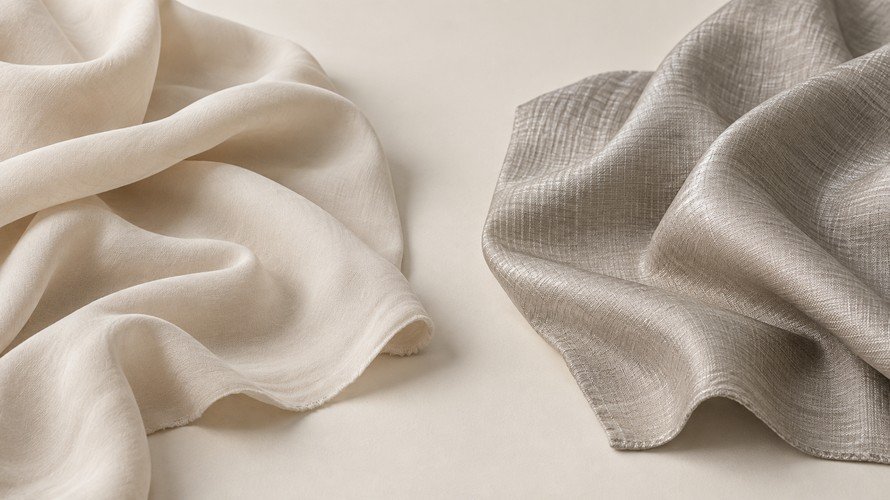
Viscose vs. Rayon is often not a comparison between two separate fabrics. In common textile usage, rayon is the broader family of regenerated-cellulose fibres, while viscose is usually a type or naming route within that family. A fabric labeled 100% rayon may therefore be close to a fabric labeled 100% viscose, but the name alone does not tell you the variant, weave, GSM, width, finish or end-use performance.
For a scarf, garment, lining or printed textile, the useful comparison is more specific. You need to confirm the fibre composition, blend, construction, weight, width, drape, surface, print route and care requirements. This guide explains the naming relationship first, then turns it into a practical specification checklist.
What Is the Difference Between Viscose and Rayon?
Rayon is commonly used as a family term for regenerated cellulose fibres. These fibres start with purified cellulose, which is processed into a solution and regenerated into filaments or staple fibres. Viscose is the most familiar rayon route in many textile markets, so the two words are often used interchangeably in product descriptions and consumer discussions.
The important boundary is that rayon and viscose do not describe every part of a fabric. They do not tell you whether the fabric is satin, twill, crepe or another weave. They do not set the GSM, width, opacity, drape, surface finish or print method. They also do not identify whether the fabric contains silk or another blended fibre.
That is why a buyer should treat the label as the first line of a specification, not the complete specification. If the intended product is a printed scarf, the artwork, finished size, base construction and sample approval can matter as much as the fibre-family term.
Why Are the Two Names Used Interchangeably?
The overlap comes from industry language, regional labeling practice and the fact that consumers often use rayon as a general name while suppliers use viscose to describe a familiar fibre direction. US Federal Trade Commission guidance discusses rayon and viscose terminology in textile labeling, while also requiring fiber descriptions to be accurate for the material being sold. You can review the FTC textile labeling guide for the US context.
This does not mean that every rayon and viscose fabric will feel or perform the same. The final fabric depends on the fibre variant, yarn, weave, weight, finishing and care route. A lightweight plain weave and a heavier satin can carry the same broad fibre-family label but behave differently in a finished scarf or garment.
Market wording also matters. If a product is sold in the European Union, the fibre name and supporting documentation must be checked against the applicable textile-labeling rules in Regulation (EU) No 1007/2011. Treat the destination market as a separate compliance check rather than assuming that one label convention applies everywhere.
How Are Viscose and Other Rayon Fibres Made?
Viscose, modal and lyocell all belong to the regenerated-cellulose discussion, but they are not interchangeable production specifications. Their process routes and resulting fibre properties can differ. When the end use is sensitive to wet handling, dimensional stability, drape or care, the exact variant should be confirmed instead of relying on the word rayon alone.

Viscose rayon
Conventional viscose rayon is made by regenerating purified cellulose into a textile fibre. The route can produce soft, fluid fabrics that are useful for apparel, scarves and other products where drape and a smooth hand feel are part of the brief. Those outcomes still depend on yarn, weave, weight, finishing and construction.
Do not use the fibre name to promise a fixed level of strength, shrinkage control or colour performance. The relevant specification is the finished fabric, not only the fibre family. Confirm the fibre declaration, construction, weight, usable width and care instructions for the chosen fabric.
Modal and high-wet-modulus rayon
Modal and other modified rayon directions are separate variants with their own production and performance boundaries. They may be selected when the buyer needs a different balance of softness, wet behaviour or dimensional control, but the decision should be based on the actual technical specification and sample.
If a project uses a rayon blend, record the blend ratio and identify whether the percentage refers to the fibre content of the finished fabric. When silk is included, also clarify the silk type, construction and applicable weight language. A silk/rayon program should not be treated as identical to 100% viscose.
Lyocell
Lyocell is another regenerated-cellulose fibre route. It is often discussed alongside viscose because both start from cellulose, but it should be named separately when it is the selected fibre. Differences in process and fibre construction can influence handle, wet behaviour, care and the buyer’s sustainability documentation requirements.
The practical rule is simple: if a quotation says rayon, ask which rayon variant is intended. If it says viscose, ask whether that means a conventional viscose fibre, a blend or a broader commercial description.
What Changes for a Fabric Buyer?
The word viscose helps identify a fibre direction, but the finished textile is controlled by several linked variables. Use the following checks before comparing samples or approving a quotation. For each variable, record what it changes, the best-fit condition, the limitation and the buyer check.
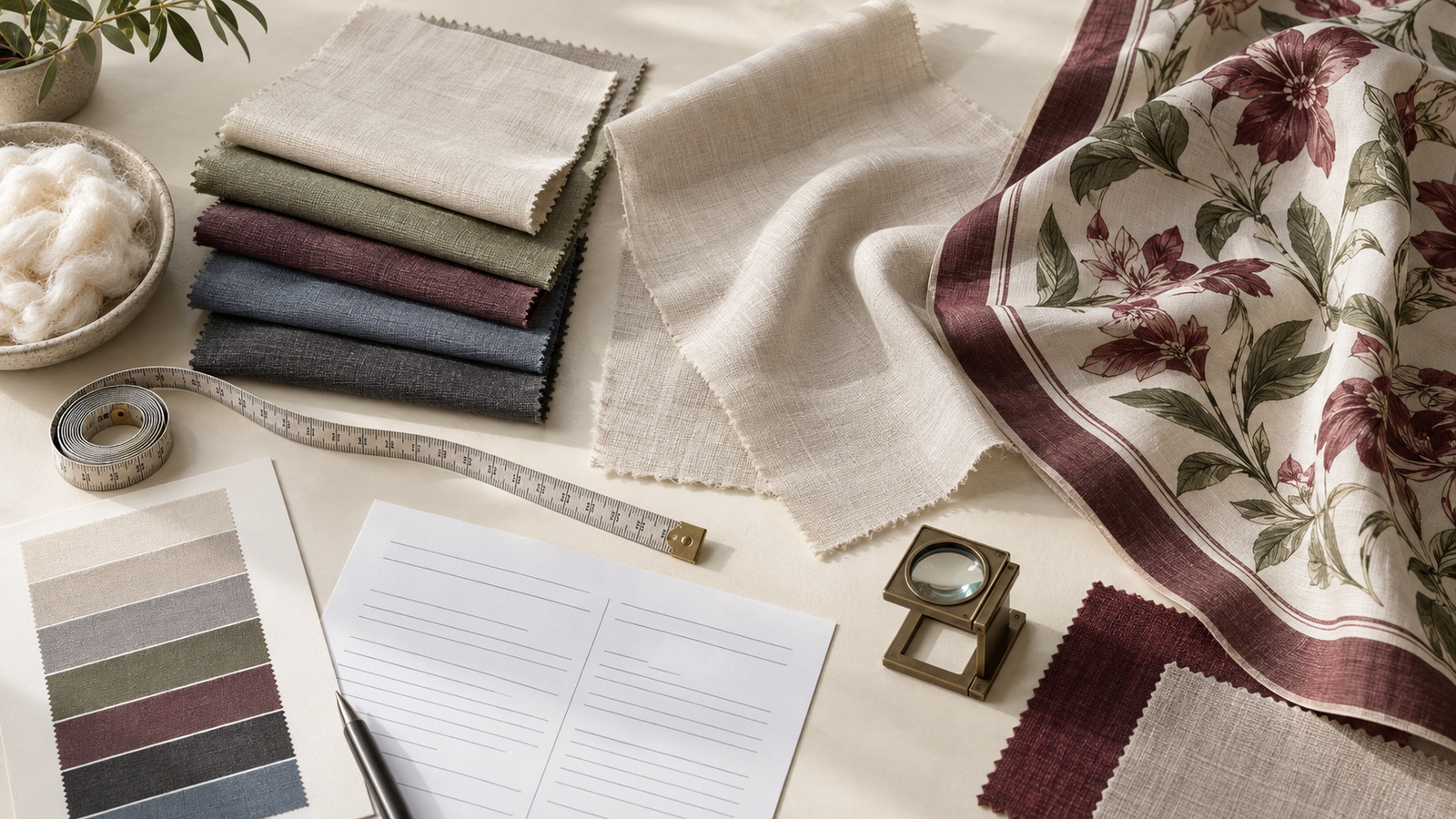
Fibre composition and variant
Ask for the declared fiber composition, fibre variant, blend ratio and exact production route. A label such as 100% rayon is not enough when the project depends on a specific hand feel, wet-care route, print response or market label. If bamboo is the feedstock, the FTC explains that the textile must be described as rayon or viscose made from bamboo rather than simply bamboo; read the FTC bamboo textiles guidance for that boundary.
Weave, weight, width and drape
Weave changes the surface and drape. Satin, twill, crepe and plain constructions can carry different amounts of body, lustre and texture even when their fibre-family label is similar. Weight should be recorded using the measure appropriate to the fabric. GSM is common for many non-silk textiles; momme is often used for silk constructions. Do not compare a viscose GSM to a silk momme value as if they were the same scale.
Width affects cutting yield, placement and finished dimensions. Drape affects how a scarf folds, how a garment hangs and how a printed border sits after cutting. Therefore, confirm the weave, weight, usable width, finished size, seam allowance and end use together. Carina Silk’s printed viscose fabric page is the relevant destination when the next decision is a printed fabric brief.
Artwork, printing and finishing
The same fibre can produce different results under different print and finishing routes. Confirm whether the design is a repeat, border, placement or panel; whether it is single-sided or double-sided; how colours will be referenced; and whether the fabric needs hemming, fringe, tassels, lining or another finish.
For a custom scarf, the physical sample should show the interaction between fibre, construction, colour, print coverage and edge treatment. A digital image or fibre label cannot establish the final hand feel or registration. The sample should be checked against the approved artwork, dimensions, colour direction and surface expectations.
Sampling and inspection
Use a staged check rather than approving a bulk route from the name alone:
- Confirm the fibre declaration, variant, blend, weave, weight and width.
- Review a swatch or base-fabric reference for hand feel, surface and drape.
- Review a strike-off or printed sample for colour, coverage, repeat, placement and registration.
- Review the finished sample for dimensions, seams, hemming, labels, packaging and care information.
- Record the acceptance criteria before bulk production.
This sequence helps separate a terminology question from a production question. The silk rayon fabric page is the relevant internal destination when the project is evaluating a silk/rayon fabric direction rather than a general viscose label.
Which Should You Specify: Viscose or Rayon?
Specify the actual fibre variant and finished fabric brief, not only the shorter name. Use the following conditional rules:
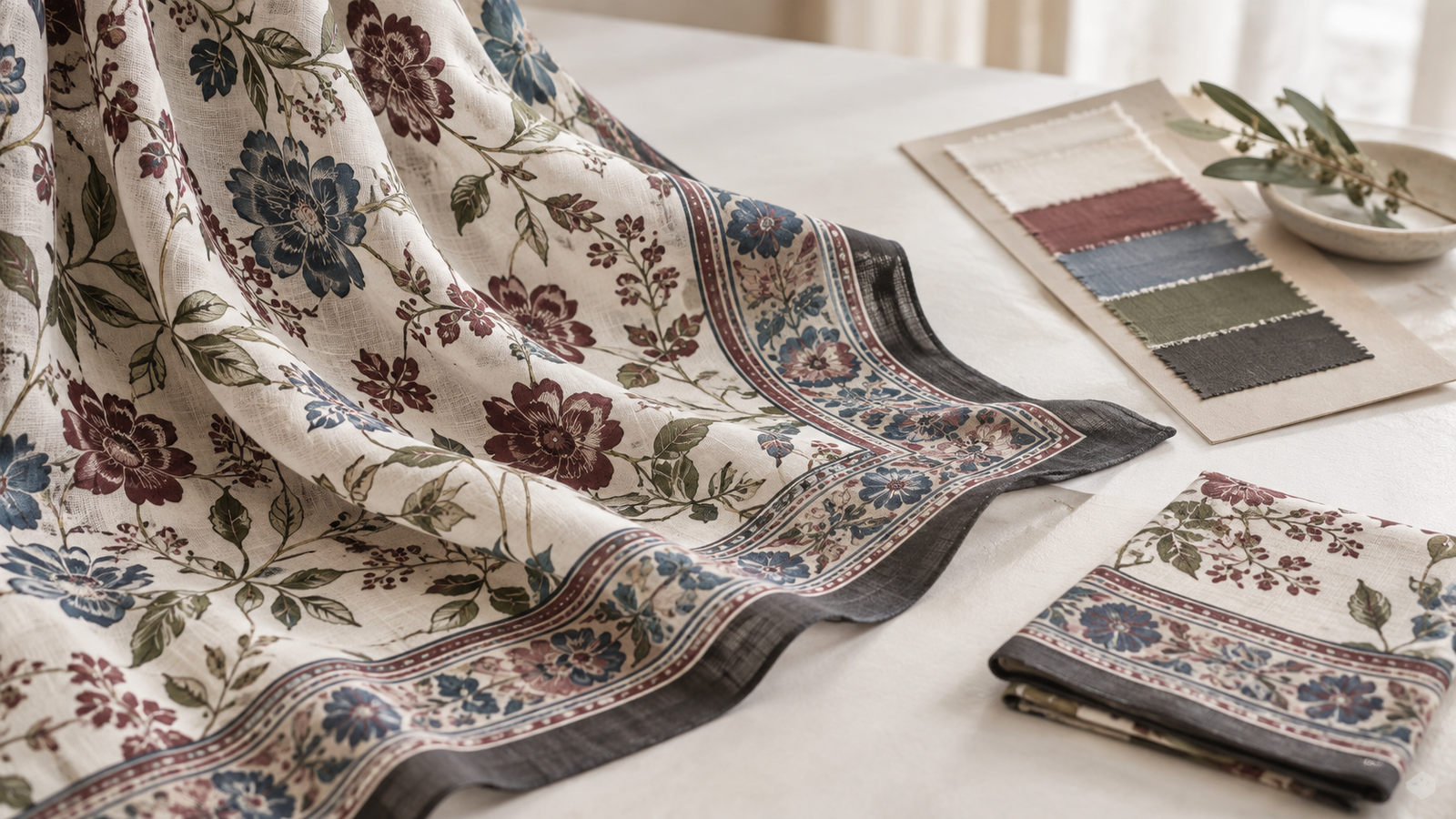
There is no universal winner between viscose and rayon because the names often overlap. The better specification is the one that states the fibre variant, fabric construction and finished-product requirements clearly enough for a sample to be evaluated.
Conclusion: Treat the Fibre Name as the Starting Point
Viscose is usually a type of rayon or a name used within the regenerated-cellulose fibre family. The two terms can overlap on a label, but they should not be treated as a complete description of a fabric’s hand feel, drape, durability, print response or care requirements.
For a reliable comparison, confirm the fibre composition, variant, blend, weave, GSM or momme where applicable, width, end use, artwork, print route, finishing and acceptance sample. If you are developing a scarf or printed textile, prepare those details before requesting a quotation so the supplier can evaluate the actual fabric brief rather than a broad fibre name.
FAQs
01. Is viscose the same as rayon?
Viscose is usually a type of rayon or a commonly used name within the regenerated-cellulose rayon family. The terms can overlap, but the exact variant, blend and finished fabric construction still need to be confirmed.
02. Is viscose a natural or synthetic fibre?
Viscose is a regenerated-cellulose fibre. It starts with cellulose but is processed into a textile fibre, so it is not the same category as an unprocessed natural fibre and is not a petroleum-based synthetic fibre simply because it is manufactured.
03. Does the word rayon tell me the full fabric specification?
No. Rayon identifies a fibre-family direction, but it does not tell you the exact variant, weave, weight, width, drape, finish, print route or blend ratio. Request the finished-fabric specification and a sample.
04. Which is better for a printed scarf, viscose or rayon?
Neither name is automatically better. Select a suitable fibre variant and base construction, then confirm artwork, colour, print coverage, finished dimensions, edge finish, care and the physical printed sample.
05. How should I compare a viscose/rayon fabric sample?
Compare the fibre declaration, variant, blend, weave, GSM or applicable weight, width, hand feel, drape, colour, print registration, dimensions, seams and care information against the approved brief before bulk production.
