
What Is the Best Fabric for a Head Scarf?

Carina Silk Editorial Team writes practical guides on silk fabrics, scarves and custom textile development, with a focus on materials, artwork, sampling, construction and finishing decisions.
- What Makes a Fabric Suitable for a Head Scarf?
- What Are the Best Head-Scarf Fabrics by Use Case?
- How Do Head-Scarf Fabrics Compare?
- What Is the Difference Between Silk, Satin, and Polyester?
- How Should You Specify a Custom Head Scarf?
- How Do You Test a Head-Scarf Fabric Before Bulk Production?
- How Should You Choose the Final Head-Scarf Fabric?
- Frequently Asked Questions
There is no single best fabric for head scarf products. The right choice depends on how the scarf will be worn, how much grip and coverage it needs, the desired drape, the climate, the care routine, and whether it is a standard retail item or a custom printed product.
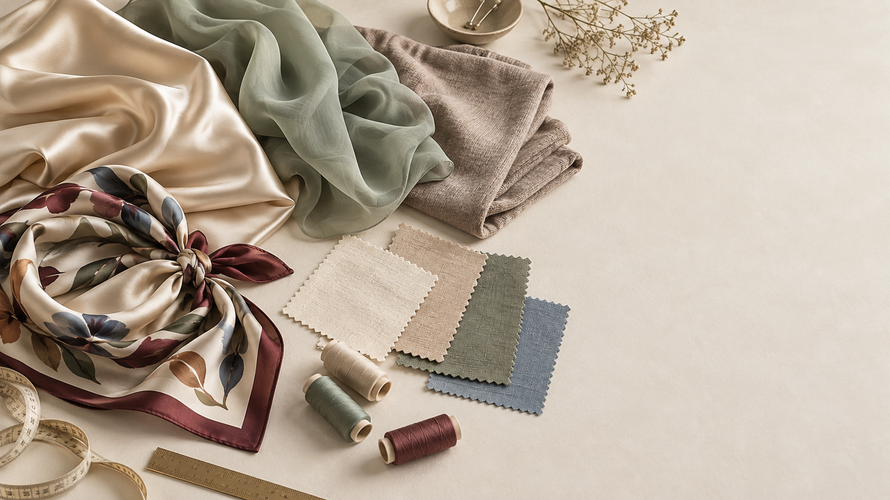
For a premium custom collection, begin by comparing the right construction within the right fibre family. Silk twill can suit a more defined printed scarf, silk satin can create a smoother and more fluid surface, and silk chiffon can provide a lighter, more transparent effect. Cotton, jersey, modal, and viscose may be more suitable when stretch, everyday handling, or a softer matte appearance matters. The final answer should come from a finished sample, not from the fibre name alone.
What Makes a Fabric Suitable for a Head Scarf?

A useful head-scarf fabric needs to balance six practical properties:
- comfort against the skin;
- grip or resistance to unwanted movement;
- coverage and opacity under the intended lighting;
- drape and ease of styling;
- care requirements and crease behaviour;
- print, colour, edge, and finished-product performance.
These properties are controlled by more than fibre content. A fibre is the raw material category, such as silk, cotton, polyester, or viscose. A fabric also has a construction, weight, surface finish, and finishing method. Woven and knitted structures can create very different movement and stretch even when they use similar fibres. Textile construction also influences heat and moisture transport, so “breathable” should not be treated as a fibre-only promise.Oxford Academic’s textile review discusses how fibre properties and fabric structure work together.
This distinction is especially important when a buyer requests satin. Satin describes a weave structure with long floats and a smooth, lustrous face; it does not automatically mean silk. A silk satin and a polyester satin may share a surface family while differing in hand feel, care, drape, and price position.CottonWorks’ satin definition provides the technical distinction.
What Are the Best Head-Scarf Fabrics by Use Case?
Best for a premium printed head scarf: silk twill

Silk twill is a strong starting point when a product needs a refined surface, controlled drape, and a more defined hand than a very light chiffon. The diagonal twill structure can give the scarf visual character while supporting a polished printed appearance.
Its limitation is that the final result still depends on silk type, weight, finishing, artwork, and edge treatment. A light silk twill may behave very differently from a heavier version. Confirm the proposed weight, width, surface, print side, colour target, and finished hem before treating it as the final choice.
Best for a smooth, fluid luxury look: silk satin
Silk satin can create a smooth face and flowing movement, which suits formal styling, luxury accessories, and gift-oriented collections. It can also make colours appear visually rich because of its surface reflection.
The same smooth surface can increase the risk of slipping during wear, and satin constructions can be more sensitive to snagging or seam movement. If the brief requires a scarf that stays in place without pins, compare the fabric with the actual scarf dimensions and finishing rather than approving a flat swatch alone.
Best for a light and airy effect: silk chiffon

Silk chiffon is useful when the design needs softness, lightness, and a more transparent layered look. It may suit formal styling or products designed to be worn over another layer.
The trade-off is coverage and control. A sheer fabric can need layering, a suitable undercap, or a different finished construction. Test it against the intended skin tone, lighting, artwork density, and final scarf shape. Do not describe it as fully opaque without a product-specific check.
Best for everyday structure and breathability: cotton or cotton voile

Cotton can suit practical everyday products where a matte appearance, familiar hand feel, and straightforward care are important. A lighter cotton or voile construction may feel more suitable in warm conditions than a dense or heavy version.
Cotton can crease more readily than some synthetic options, and a soft lightweight construction may not provide the same fluid luxury appearance as silk. Confirm shrinkage, colourfastness, finished size, and crease expectations before bulk production.
Best for stretch and secure wrapping: jersey
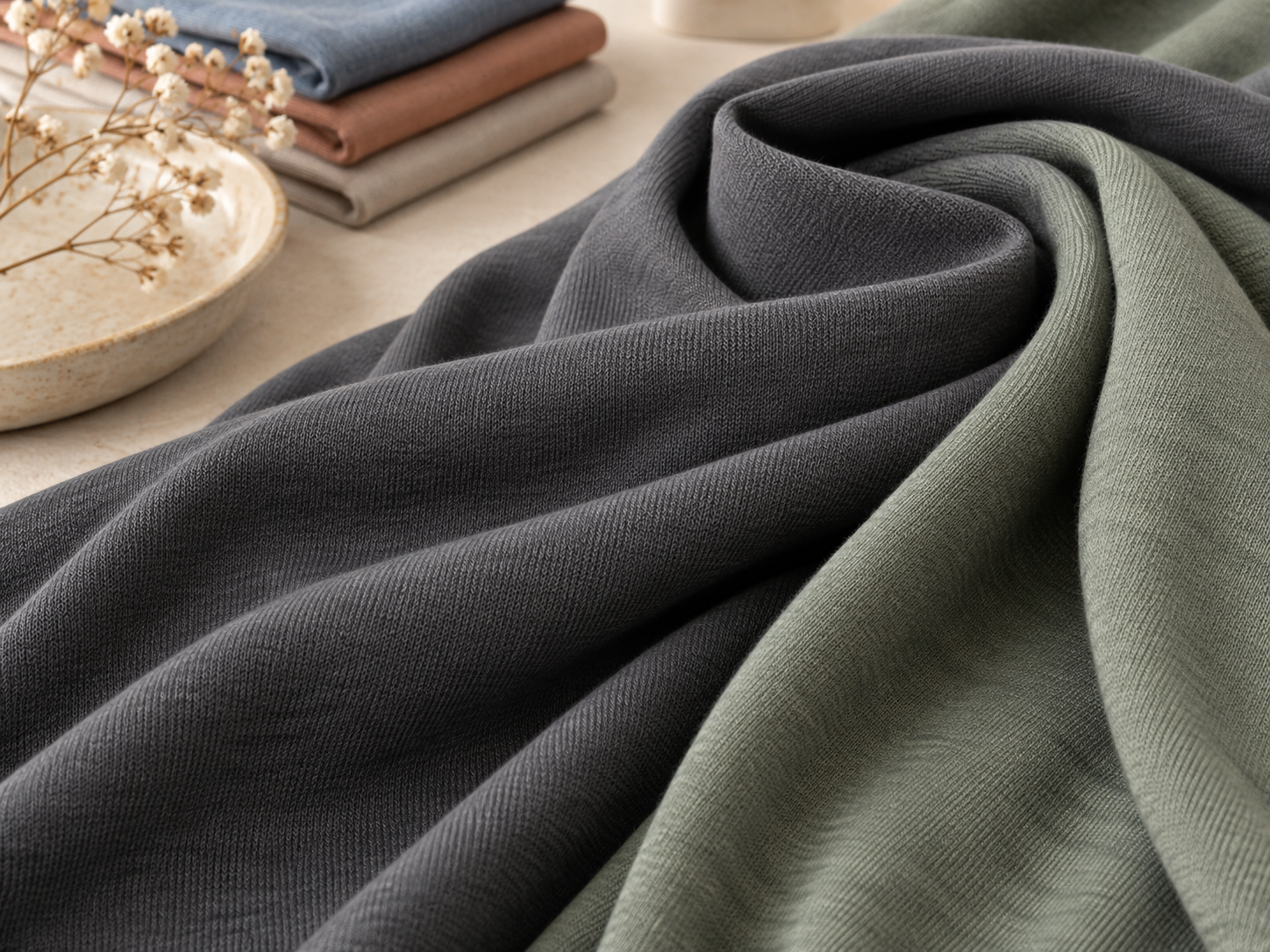
Jersey is a knitted structure, so it can offer stretch and a close fit that helps with everyday wrapping. It may be practical for travel, active routines, or products where the wearer values easy handling over a crisp woven shape.
Jersey is not one fixed fibre. Its weight, fibre blend, loop structure, recovery, warmth, and surface can vary. Ask for the composition, weight, stretch and recovery behaviour, and finished-width information. A jersey that feels secure may also feel warmer or heavier than a lightweight woven scarf.
Best for a soft, fluid matte option: modal or viscose
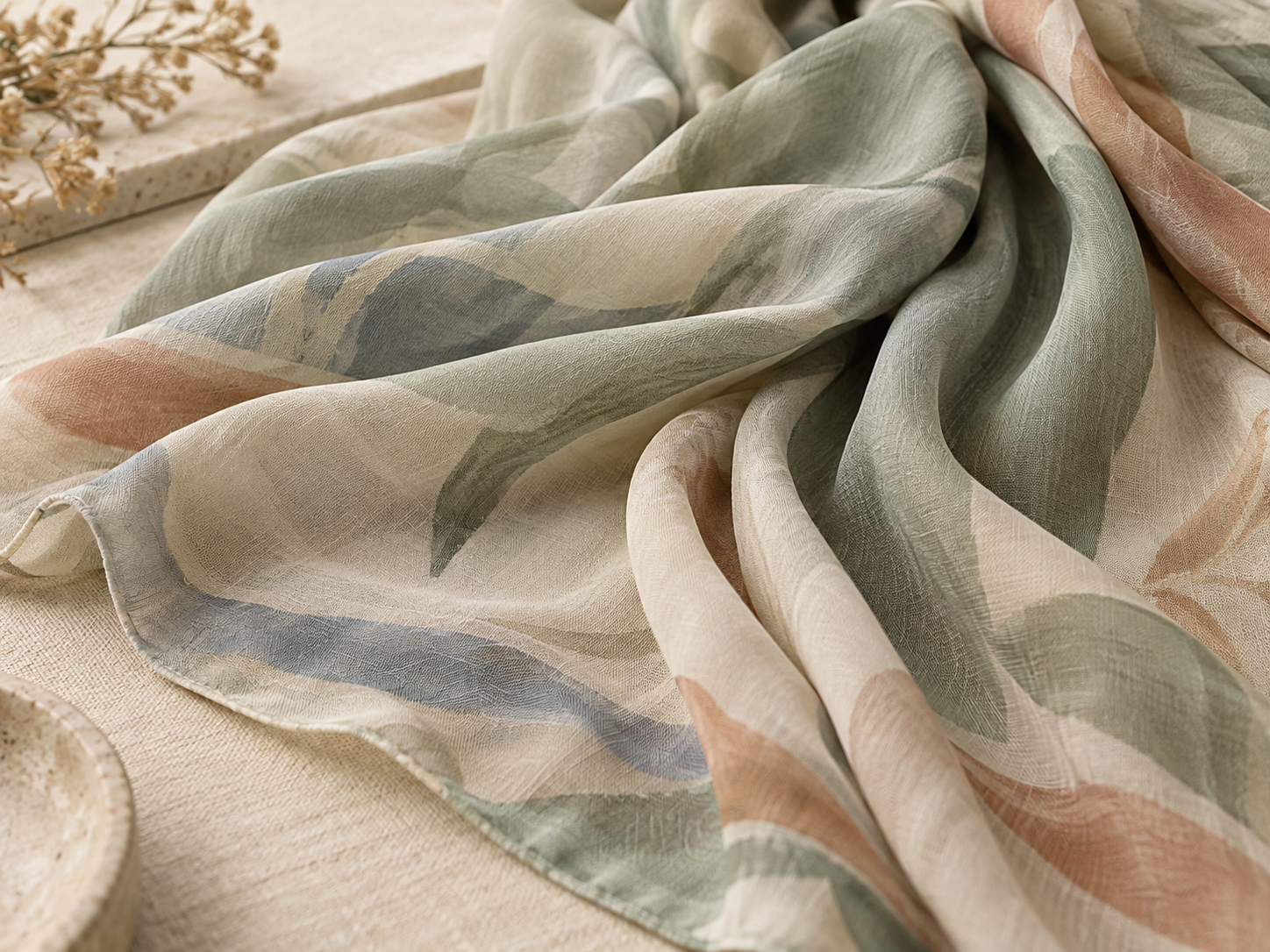
Modal and viscose can provide a soft hand and fluid drape, making them useful for lightweight everyday styles. They can also be considered when the target product is positioned away from a glossy silk surface.
Their performance varies substantially with blend, construction, weight, finishing, and care route. If the difference between rayon and viscose appears in your product copy, keep the terminology precise and review the explanation in viscose and rayon terminology before finalising labels or marketing text.
Best for budget control or easy-care positioning: polyester chiffon or crepe

Polyester constructions may be considered when a project prioritises cost control, durability, or easier routine care. Chiffon and crepe structures can provide different levels of texture, drape, and opacity within the same fibre family.
The correct decision still requires a hand-feel and wear test. Check static, heat, surface shine, transparency, print appearance, and edge behaviour. A lower-cost fibre is not automatically the better commercial choice if it creates a poor wearing experience or weakens the intended brand position.
How Do Head-Scarf Fabrics Compare?
| Fabric direction | Hand feel and drape | Grip and coverage | Best fit | Main limitation | What to confirm |
|---|---|---|---|---|---|
| Silk twill | Defined, polished, moderately structured | Depends on weight and finish | Premium printed scarves | Not every weight gives the same body | Fibre, weight, width, print, hem |
| Silk satin | Smooth, fluid, reflective | Can be more slippery | Formal and luxury styling | Surface may move or snag more easily | Slip, surface, care, finished edge |
| Silk chiffon | Light, soft, airy | Often needs a transparency check | Layered and formal looks | May be too sheer for some uses | Opacity, lighting, layering, artwork |
| Cotton or voile | Matte, familiar, practical | Often stable, but construction matters | Everyday or warm-weather styles | Can crease or lack fluid luxury drape | Shrinkage, crease, colourfastness |
| Jersey | Stretchy and close-fitting | Often secure, but may feel warmer | Easy wrapping and active routines | Weight and recovery vary widely | Blend, weight, stretch, recovery |
| Modal or viscose | Soft, fluid, usually matte | Depends on blend and finish | Soft everyday collections | Care and grip vary by construction | Composition, opacity, care, finish |
| Polyester chiffon or crepe | Varies from airy to textured | Must be tested on the finished item | Cost-conscious or easy-care ranges | Static, heat, shine, or hand-feel risk | Surface, static, print, care, edge |
The table is a shortlist, not a substitute for sampling. Compare like-for-like weights and finished constructions. A lightweight silk, a dense polyester, and a stretch jersey cannot be judged fairly by fibre name alone.
For each option, record four things in the brief: what it changes, the best-fit condition, its main limitation, and the buyer check that will decide whether it moves to the next sample round. This keeps the comparison practical instead of turning it into a list of general fabric adjectives.
What Is the Difference Between Silk, Satin, and Polyester?
These terms describe different parts of the specification:
- Silk identifies a fibre source.
- Polyester identifies a manufactured fibre.
- Satin identifies a weave or surface family.
- Chiffon, twill, jersey, and crepe describe constructions or fabric categories that can also vary by fibre.
That is why “silk versus satin” is not always a direct comparison. The practical comparison may be silk twill versus silk satin, or silk satin versus polyester satin. Put both the fibre and the construction in the request for quotation.
For terminology and labelling, use the generic fibre name and percentage required for the target market rather than relying on a broad marketing name. In the United States, the FTC Textile Fiber Rule addresses generic fibre names and percentages for covered textile products. The FTC also explains that viscose is an alternative generic name for some forms of rayon in its labelling guidance. Market-specific requirements should be checked separately.
How Should You Specify a Custom Head Scarf?

Before asking for a quotation, prepare a brief that makes the desired wearing result measurable. Include:
- End use: daily wear, formal accessory, hair wrap, travel, gifting, retail, or another defined use.
- Finished format: square, long scarf, bandana, narrow wrap, or a custom shape.
- Fiber composition and construction: for example, silk twill, silk satin, silk chiffon, cotton voile, or a specified knit.
- Weight and width: use the supplier’s available units, such as GSM or momme, and confirm finished width.
- Performance target: desired grip, coverage, drape, stretch, surface, and care level.
- Artwork and colour: provide the repeat, placement, colour references, scale, bleed, and whether the result must be single-sided or double-sided.
- Edge finish: specify a machine hem, hand-rolled edge, baby hem, fringe, tassel, or another approved finish.
- Packaging and labelling: include labels, hangtags, inserts, sleeves, boxes, and the target market’s information requirements.
If the scarf uses a repeating design, the difference between an overall print, a border placement, and a woven or jacquard pattern can change the sampling route. Review fabric patterns and fabric prints and printed, woven, and jacquard patterns before you finalise the artwork brief.
How Do You Test a Head-Scarf Fabric Before Bulk Production?
Approve the fabric in the finished format, not only as a loose square. A practical sample review should include the following checks:
1. Hand feel and skin contact
Handle the fabric on both sides and along the finished edge. Note whether the surface feels smooth, dry, crisp, brushed, warm, or slippery. Record the intended hand feel in the approval notes rather than relying on a general word such as “soft.”
2. Drape and movement
Fold, knot, drape, and wrap the sample in the intended size. A fabric that looks attractive flat may not create the right volume or movement when worn.
3. Grip and slippage
Test the scarf with the proposed styling method, undercap, magnet, or pin arrangement. If the product brief requires no pins, test that requirement directly. Do not infer grip from the fibre name.
4. Opacity under realistic light
View the sample indoors and near a window. Check it against the intended skin tone and artwork density. Transparent areas can change the perceived colour and coverage of the finished scarf.
5. Crease and recovery
Fold or compress a small area, then observe the result after release. This does not replace a formal test, but it helps identify whether the fabric suits a travel or low-maintenance product promise.
6. Print and colour result
Review the strike-off or printed sample for colour, sharpness, repeat scale, border placement, bleed, and the difference between the face and reverse. For additional pattern decisions, see fabric pattern repeat types.
7. Care and finished edge
Check the proposed care route and inspect the hem after the relevant sample treatment. Care instructions should be based on the product’s actual needs. The FTC Care Labeling Rule explains the importance of supportable care instructions in its US scope; other markets may have different requirements.
How Should You Choose the Final Head-Scarf Fabric?
The best fabric for a head scarf is the one that matches the intended use and survives the finished-product checks. Start with the wearer’s needs, then specify fibre, construction, weight, width, coverage, grip, drape, print route, dimensions, and edge finish together.
For a custom collection, approve a swatch, strike-off, and finished sample before bulk production. If you need to compare silk options or turn artwork into a scarf specification, prepare the intended use, fabric direction, dimensions, artwork, colour references, finishing, packaging, and target market information before requesting the next sample.
Frequently Asked Questions
What is the best fabric for a head scarf in summer?
The best summer option depends on construction, weight, coverage, and the wearer’s need for grip. Start with a lightweight cotton, modal, viscose, chiffon, or another suitable construction, then test heat, transparency, and slippage in the finished format.
Is silk or satin better for a head scarf?
The comparison is incomplete because silk is a fibre and satin is a weave family. Compare the actual options, such as silk twill, silk satin, or polyester satin, by drape, grip, coverage, care, and price position.
What fabric is best for custom printed head scarves?
For a premium printed product, silk twill is a useful starting point, but silk satin, silk chiffon, cotton, modal, and polyester constructions may fit other briefs. Choose after checking artwork detail, colour result, drape, opacity, dimensions, and edge finish.
