
What Is a Fabric Swatch? Meaning, Types and Sampling Uses

Carina Silk Editorial Team writes practical guides on silk fabrics, scarves and custom textile development, with a focus on materials, artwork, sampling, construction and finishing decisions.
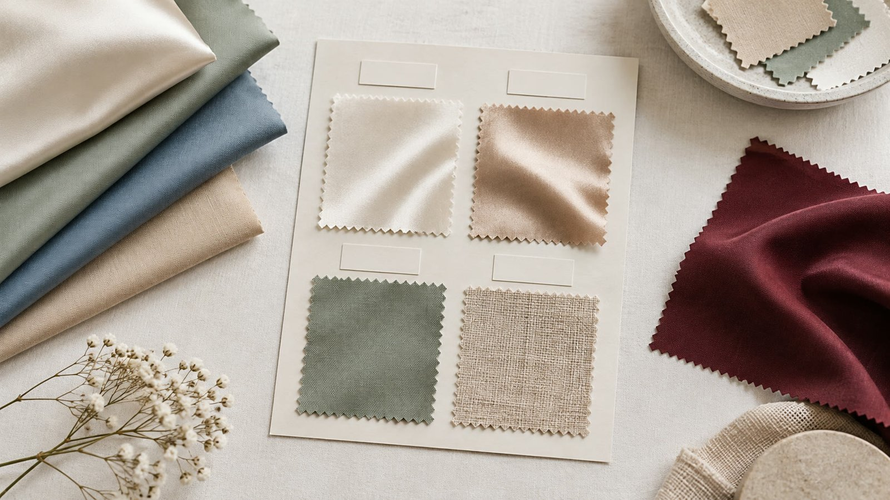
A fabric swatch is a small physical piece of an existing or proposed fabric used to represent a larger textile or product decision. Buyers use it to compare fibre direction, construction, surface, hand feel, weight, colour, opacity and drape before requesting more specific samples or committing to production.
The important boundary is that a swatch is a material reference, not automatic approval for every later stage. A base-fabric swatch can help you shortlist the right cloth. A lab dip addresses a custom solid colour, a print strike-off addresses artwork on the selected fabric, and a finished sample shows whether the complete product works together.
What Is a Fabric Swatch?
In general textile use, a swatch is a small piece of cloth that shows what a larger fabric is like. The Cambridge Dictionary definition of swatch describes it as a small piece of cloth used to show the colour and type of cloth available.
For a B2B buyer, the physical piece should be connected to an identified material direction. That means the swatch should not be treated as an anonymous square of fabric. Its fibre composition, construction, weight, width, finish, colour reference and sample date should be recorded when those variables affect the project.
A swatch can make a material decision more concrete because it lets you see and feel the actual surface. A fibre name alone cannot tell you the final sheen. A product photograph cannot prove the hand feel. A digital colour on a screen cannot replace a physical reference under agreed viewing conditions.
The swatch therefore answers an early question: is this fabric direction suitable enough to move to the next stage? It does not answer every production question at once.
What Can You Learn from a Fabric Swatch?
The value of a swatch depends on whether it represents the fabric you may actually use. A like-for-like sample can help you compare the following properties.
| Check | What the swatch can indicate | What still needs confirmation |
|---|---|---|
| Fibre and construction | The material direction and visible structure | Exact composition, yarn system and production tolerance |
| Surface and hand feel | Smoothness, texture, sheen and initial handle | Whether the same result remains after printing, washing or finishing |
| Weight and thickness | A first comparison between lighter and heavier options | Recorded GSM or momme, measurement method and tolerance |
| Opacity | Whether the cloth appears suitable for the intended coverage | Final opacity after colour, print, lighting and finishing |
| Colour direction | How the physical colour appears on the named fabric | Formal colour approval, light source and acceptable tolerance |
| Drape and movement | A first impression of fluidity, body and fall | Behaviour at finished size, with hems, folds, seams or other components |
| Surface response | How a print, weave or finish appears on that particular piece | Full artwork placement, repeat, registration, wash response or bulk consistency |
Use wording such as “can indicate” rather than “proves.” A small swatch is useful because it reduces uncertainty, but it is still a limited specimen.
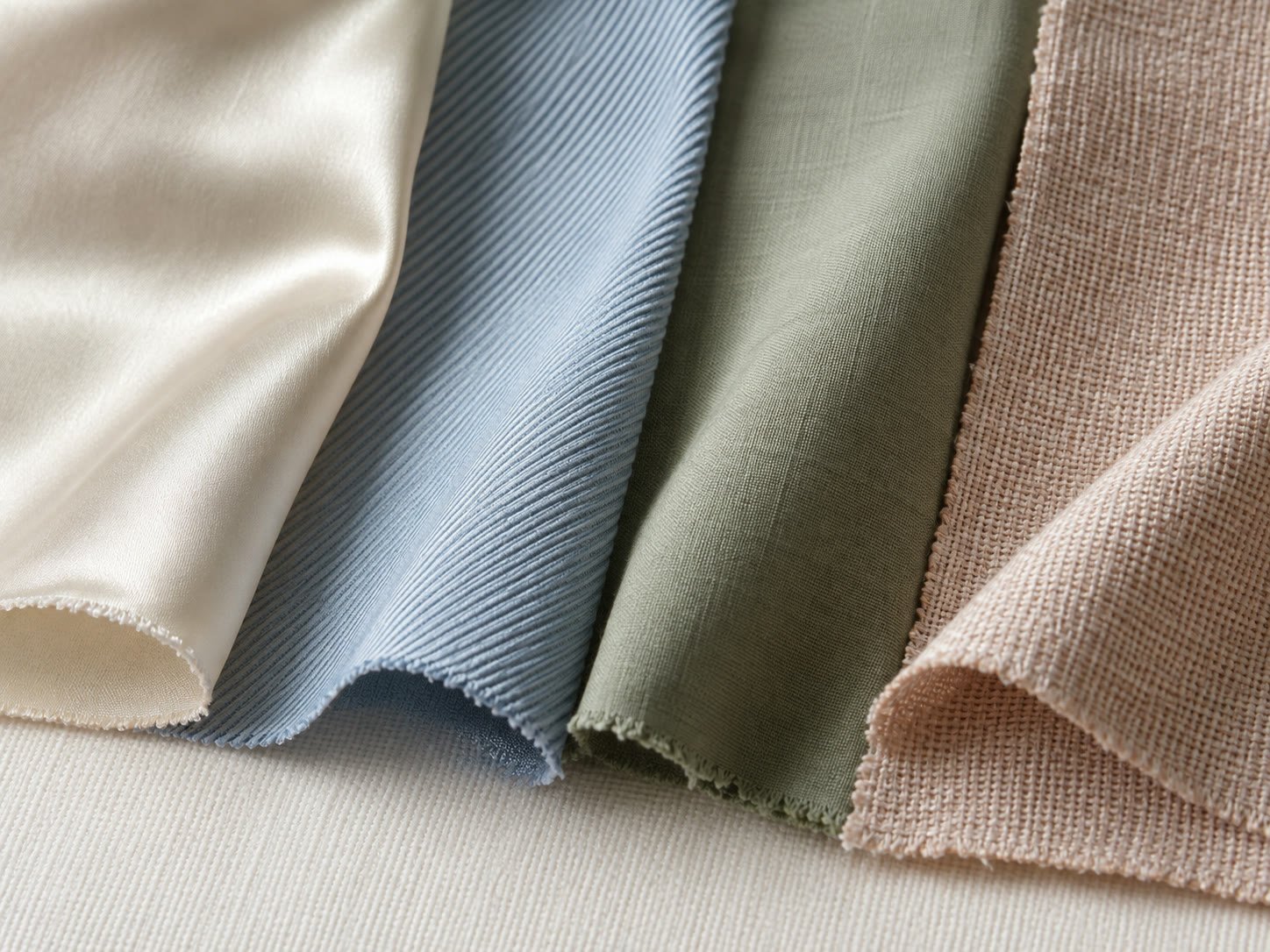
What Is the Difference Between a Swatch, Lab Dip, Strike-Off and Finished Sample?
These terms describe different approval objects. Suppliers may use the vocabulary slightly differently, so the written sample identity and approval scope should control the decision.
| Approval object | Main question | Does not approve by itself |
|---|---|---|
| Fabric swatch | Is this identified material direction suitable for the project? | Custom colour, printed artwork, finished construction or every bulk lot |
| Lab dip | Is the solid colour direction acceptable on the named substrate? | Print registration, finished-product construction or all bulk performance |
| Print strike-off | Does the artwork reproduce acceptably on the selected fabric? | Finished dimensions, hem, folds, seams or every production metre |
| Finished sample | Do the chosen materials and processes work together in the actual product? | Automatic conformity of every later bulk unit |
A fabric swatch is usually the first filter. It helps the buyer compare material options before spending effort on a custom colour or printed design. If the colour is the main open variable, the next object may be a lab dip. If artwork is the open variable, the next object may be a strike-off made on the selected production fabric. If the product geometry matters, a finished sample is required.
This separation prevents an approval message such as “looks good” from becoming an unclear approval for material, colour, print and finished construction at the same time.
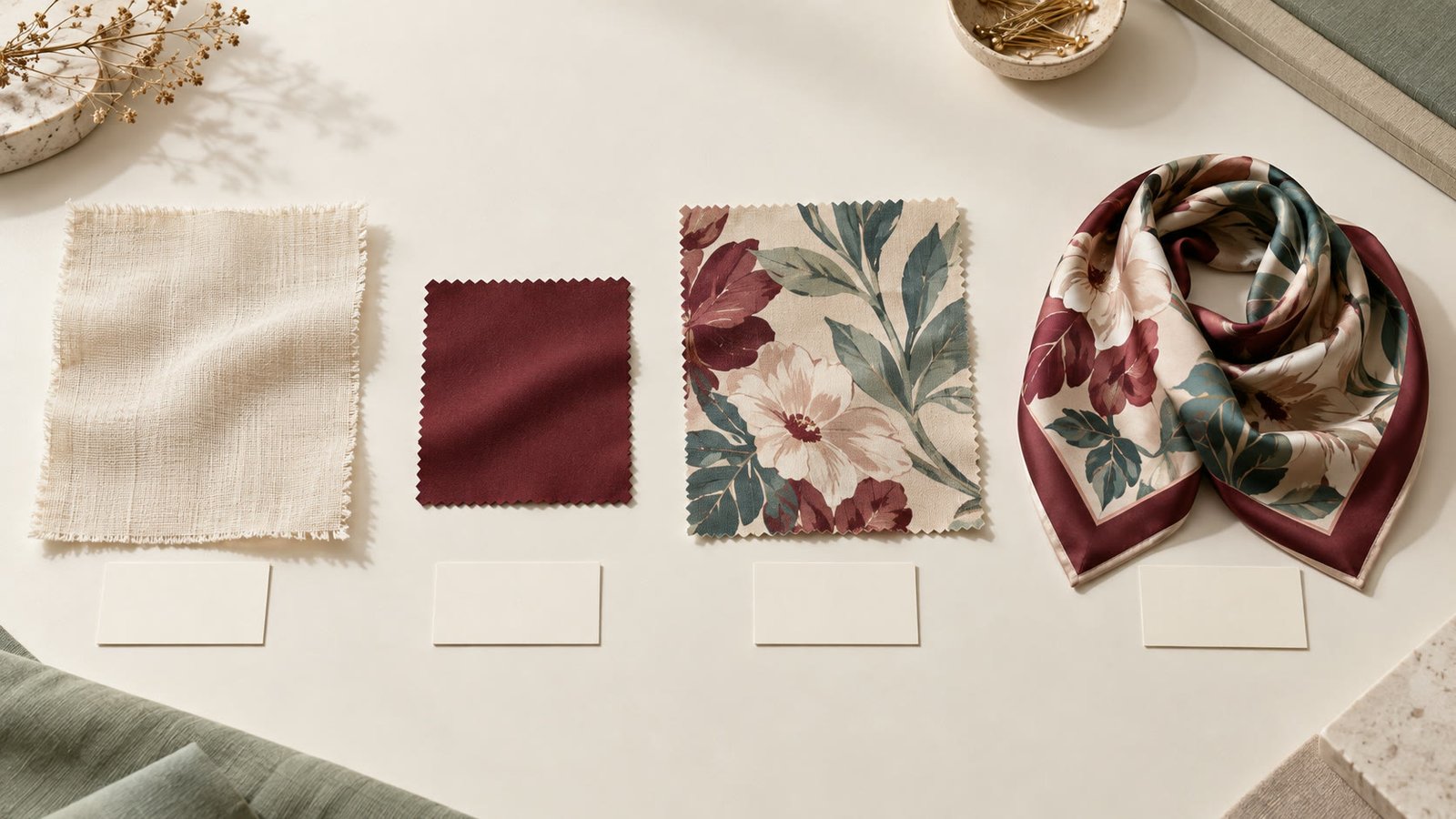
What Are the Common Types of Textile Swatches?
Base-fabric or stock swatch
A base-fabric swatch shows an existing material direction before custom colour or artwork is developed. It is useful when you are comparing silk satin, silk twill, cotton, viscose, polyester or another construction by surface, weight, opacity and drape.
The sample should be labelled with enough information to distinguish one construction from another. Two fabrics may both be called satin or twill while differing in fibre, weight, width and finish. The name is a starting point, not a complete specification.
Colour swatch or lab dip
A colour swatch may show a range of available shades, while a lab dip is normally a small dyed submission prepared to approach a requested solid colour on a named substrate. They answer different questions from a base-fabric swatch.
When colour matters, compare the physical submission with the agreed colour reference under the stated viewing condition. Do not approve a custom shade only from a screen image or a photograph of the sample.
Printed swatch or print strike-off
A printed swatch can show how artwork appears on a particular fabric. A print strike-off is more specific: it is a trial print used to review variables such as colour, artwork detail, scale, repeat, coverage and registration before bulk printing.
The base fabric matters. The same artwork can look different on silk satin, silk twill, chiffon, viscose or cotton because the surface, absorbency, texture and finishing route change the result. For a custom scarf, also check the border, orientation, fold and finished edge rather than judging a small flat strip alone.
Woven, textured or finish reference
Some samples are used to show a construction or surface treatment rather than a colour alone. A woven, jacquard, textured or finished reference can help a buyer compare relief, sheen, softness, firmness or surface character.
If the design must be built into the cloth rather than printed on the surface, compare the required construction with a relevant woven sample. The distinction between printed, woven and jacquard patterns is useful when the same visual idea could be produced through different textile routes.
Swatch card or swatch book
A swatch card or book groups multiple small samples for comparison. It can help a development team review fabric families, colour ranges, finishes or constructions in one place.
The card becomes more useful when each swatch has a stable identity. Record the material name, fibre content, construction, weight, width, finish, colour, supplier reference and date. Without that information, the card becomes a visual collection rather than a controlled sourcing reference.
How Should You Compare Fabric Swatches?
Use the same questions for every candidate. This makes the decision easier to explain to a designer, client, supplier or purchasing team.
Confirm the sample identity
Record the sample reference, version, date received, intended use and whether it is stock, development, dyed, printed or finished. If a replacement arrives later, compare its identity with the retained reference before treating it as the same material.
Check the face, reverse and edge
Review both sides when the product may reveal the reverse. Look at the cut edge, grain, surface direction and any difference between face and back. This matters for scarves, panels and products where folds or turning expose more than one surface.
Compare construction and dimensions
Ask for the fibre composition, weave or knit construction, weight, finished width and relevant tolerance. A swatch can suggest that two materials feel different, but the specification explains what the difference is supposed to be.
For woven fabric terminology and the relationship between yarn directions and construction, see what woven fabric is. Keep the swatch review focused on the next product decision rather than collecting technical terms that do not affect the brief.
Review colour under the agreed condition
Compare physical colour references in the lighting condition that has been agreed for the project. A shade can appear different under daylight, store lighting and a screen. If the colour is critical, record whether the swatch is only a direction or has been formally approved.
Check hand feel, surface, opacity and drape
Touch the fabric, move it and view it against the type of background relevant to the product. Note whether it is too slick, too stiff, too limp, too sheer or too reflective. These observations are useful, but they do not replace tests for properties that require an agreed method.
Separate open questions from approved properties
Write down what the sample closes and what remains open. For example, a buyer may approve the base-fabric direction while leaving custom colour, print scale, finished width and care response for later stages.
What Can a Fabric Swatch Not Prove?
A swatch is a controlled reference only when its identity and scope are clear. It cannot automatically prove:
- final full-width artwork placement, border or repeat balance;
- finished scarf dimensions, corners, folds, seams or hem behaviour;
- the result of a custom print route when the swatch is unprinted;
- the result of a finish, wash or treatment that is not represented;
- bulk-lot consistency across every roll or production batch;
- shrinkage, colourfastness, abrasion, snagging or sewn-seam performance without the relevant method and evidence;
- final packaging, labels, presentation or retail appearance.
This is why a small swatch should not be used as a substitute for a strike-off, test or finished sample when the open decision concerns those later stages. ASTM’s textile standards resource is a starting point for identifying relevant test categories; the correct method and acceptance requirement still depend on the material and end use.
How Do Fabric Swatches Fit into a Custom Textile Workflow?
A practical sampling sequence is:
Brief → base-fabric swatch → colour approval where needed → print strike-off where needed → finished sample → written approval → bulk production
Not every project needs every stage. A stock-colour, unprinted fabric may move from a base swatch to a finished sample. A custom printed scarf may need the base swatch, a strike-off and a finished scarf sample. A custom solid colour may need a lab dip before the finished sample.
Each stage should close a different decision:
- Brief: define the product, end use, fabric direction, artwork and acceptance criteria.
- Base-fabric swatch: shortlist the material, construction, weight, surface and drape.
- Lab dip where needed: review a solid custom colour on the named substrate.
- Print strike-off where needed: review artwork colour, scale, coverage, detail and registration.
- Finished sample: check the actual product dimensions, placement, edge, folds, construction and presentation.
- Written approval: record the approved reference, revision, properties approved and open issues.
- Bulk production: use the approved references and specification as the basis for production checks.
When the next step is a printed scarf, the digital printing for custom scarves page provides a relevant route from fabric selection to artwork and sampling requirements.
What Should You Include in a Fabric Swatch Request?
Give the supplier enough information to send a relevant sample rather than a random fabric cut. A useful request should include:
- the intended product and end use;
- preferred fibre or blend direction;
- construction or weave direction if known;
- target weight, momme or GSM range where relevant;
- desired usable width and finished product dimensions;
- target hand feel, sheen, opacity and drape;
- colour reference, or a note that colour remains open;
- artwork, repeat, placement and print route when printing is involved;
- edge treatment and finished-product requirements for a scarf;
- the information you want on the label or specification sheet;
- which decision the sample should support next.
You can also ask the supplier to identify what the submitted swatch does not cover. That question helps keep the approval record precise and reduces the chance that a material shortlist is mistaken for a full production approval.
Frequently Asked Questions
Is a fabric swatch the same as a fabric sample?
The terms are sometimes used interchangeably, but a swatch usually means a small material reference, while “sample” can refer to a swatch, a lab dip, a strike-off or a finished product. State the sample type and approval scope in writing.
How big is a fabric swatch?
There is no universal size for every textile project. The useful size depends on the fabric, the property being checked and the intended product. Ask for a piece large enough to judge the relevant surface, hand, drape, colour or construction rather than relying on a fixed number.
Can a fabric swatch show the final colour?
A physical swatch can show the colour direction on that fabric, but it does not automatically approve a custom shade. For a critical solid colour, compare a lab dip with the agreed physical reference under the specified viewing condition.
Is a lab dip the same as a fabric swatch?
Not exactly. A lab dip is a colour-development submission, while a base-fabric swatch is used to review the material direction. A lab dip may be made from a small piece of fabric, but the two objects close different decisions.
What is the difference between a swatch and a print strike-off?
A swatch helps you review the material. A print strike-off helps you review artwork reproduction on the selected material, including colour, scale, coverage, detail and registration. Neither one automatically approves the complete finished product.
Can a swatch approve a bulk fabric order?
Only to the limited extent stated in the written approval. A swatch may approve a material direction or selected construction, but it does not automatically prove bulk-lot consistency, finished dimensions, print execution or every performance property.
What should be written on a fabric swatch label?
Include the sample reference, fibre composition, construction, weight, width, finish, colour or print reference, version, date and intended use when those fields matter. Also record what was approved and what remains open.
Conclusion: Use the Swatch to Define the Next Decision
A fabric swatch is a small physical reference that helps a buyer shortlist and compare an identified textile direction. It can reveal useful information about surface, hand feel, weight, opacity, colour direction and drape, but it cannot replace every later approval.
The right sequence depends on the open variable. Use a base-fabric swatch to select the material, a lab dip for a custom solid colour, a print strike-off for artwork reproduction and a finished sample for the complete product. Before bulk production, record the fibre, construction, weight, width, colour, artwork, finish, finished dimensions and acceptance criteria that control the decision. If you are developing a custom fabric or scarf and need to discuss the next sampling stage, contact Carina Silk.
