
What Is Georgette Fabric? Properties, Uses and Buyer Checks

Carina Silk Editorial Team writes practical guides on silk fabrics, scarves and custom textile development, with a focus on materials, artwork, sampling, construction and finishing decisions.
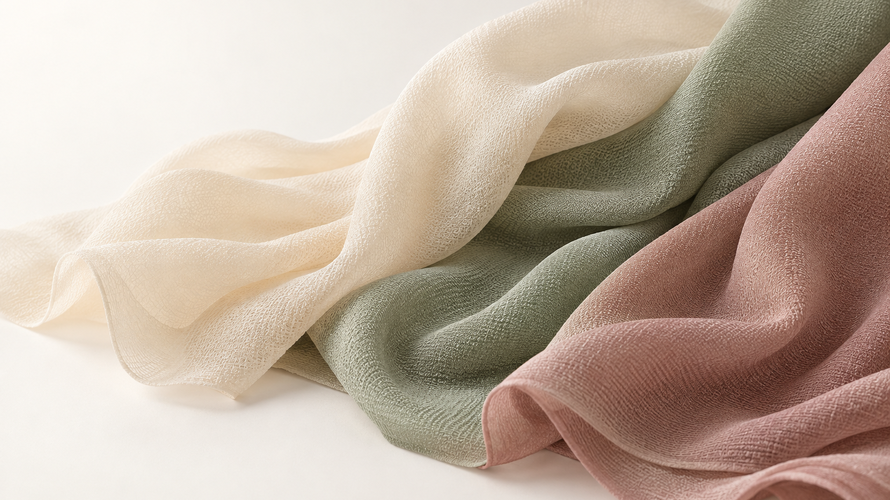
Georgette fabric is usually a lightweight woven crepe made with highly twisted yarns, often in a plain weave. Its slightly grainy or crinkled surface and flowing drape make it common in blouses, dresses, overlays, scarves and other moving garments.
The important qualification is that georgette describes a fabric direction, not one fixed fibre or performance level. Silk, polyester, viscose and blends can produce different results. For a buyer, the useful specification combines fibre content with construction, finished weight, width, opacity, hand, drape, printing and finishing.
What Is Georgette Fabric?
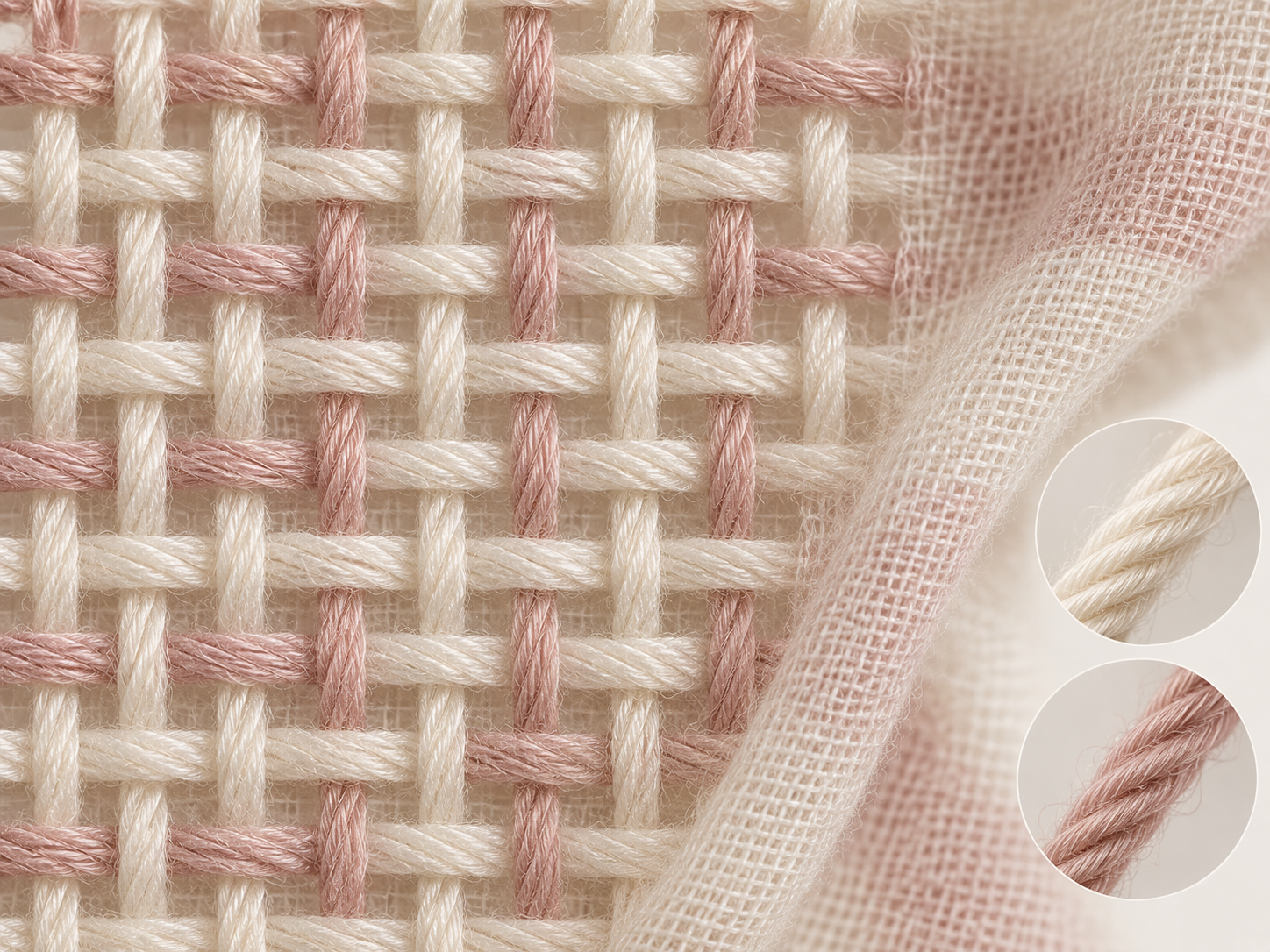
Georgette is a woven crêpe fabric. The crepe character usually comes from highly twisted yarns used in the warp and weft, with twist directions arranged to create a fine, pebbled surface. The Government of Canada’s georgette terminology record describes it as a fine, lightweight fabric generally made in a plain weave from crepe yarns.
This definition explains why georgette is not the same as a fibre name. Silk georgette, polyester georgette and viscose georgette can share a crepe-like appearance while differing in softness, sheen, care, price position and drape. The finished construction matters as much as the label.
Georgette is often semi-sheer rather than fully opaque. It has more visible surface grain than smooth fabrics, and it normally moves more easily than a firm, structured cloth. Those are useful tendencies, not guarantees. Yarn, density, finished weight, dyeing, printing and finishing can shift the result.
How Is Georgette Made?
The production route depends on the fibre and the mill, but a practical overview includes four stages:
- Yarn preparation: the selected silk, synthetic, regenerated-cellulose or blended yarn is prepared with the required twist and yarn size.
- Weaving: warp and weft yarns are interlaced, usually in a plain-weave structure. Highly twisted yarns help create the crepe surface and characteristic movement.
- Wet processing: the fabric may be scoured, dyed, printed or washed according to the intended colour and end use.
- Finishing: softening, setting, calendaring or other finishing steps can alter hand, lustre, width, shrinkage and surface appearance.
The twist direction is only one part of the result. Yarn type, yarn tension, weave density and finishing can change whether the fabric feels dry, soft, springy, smooth or more textured. A fabric that looks like georgette in a photograph may therefore need a sample check before it is approved for production.
What Are the Common Types of Georgette?
The most useful way to classify georgette is to separate fibre direction from construction or finishing variation.
Silk georgette
Silk georgette is the traditional premium direction. Silk can contribute a soft hand, natural depth and a refined drape, but the final result still depends on the silk type, yarn, weight, dyeing and finishing. If the brief specifically requires silk, record the fibre composition instead of accepting “georgette” as proof.
Polyester georgette
Polyester georgette is widely used where consistent supply, easy-care positioning or a lower material cost is important. It can imitate the general crepe appearance, but the hand, sheen, static behavior and drape should be checked against the intended product rather than assumed from the fibre name.
Viscose or rayon georgette
Viscose and rayon georgette can provide a soft, fluid direction at a different price and care position from silk. Dimensional change, wet handling and final recovery need attention because regenerated-cellulose qualities can behave differently from silk or polyester.
Double, stretch and finished variants
Double georgette uses a heavier or layered construction to provide more body and coverage. Stretch georgette may include elastane or another construction that adds give. Satin georgette, printed georgette and embellished georgette describe surface or design treatments rather than one universal fibre content.
| Georgette direction | What it can change | Best-fit condition | Main limitation | What to confirm |
|---|---|---|---|---|
| Silk georgette | Softness, natural hand, premium surface | Luxury scarves, occasionwear and refined drape | Care and price position may be more demanding | Fibre content, silk type, weight, finish |
| Polyester georgette | Consistency, care route and cost position | Commercial fashion and easy-care ranges | Hand, static, sheen and breathability vary | Surface, static, colour, care, drape |
| Viscose or rayon georgette | Soft fluid movement and colour response | Flowing apparel and selected accessories | Shrinkage and wet handling may matter | Blend, dimensional change, care, recovery |
| Double georgette | Body and coverage | Less sheer garments or layered products | Heavier hand and different consumption | Finished weight, opacity, width |
| Stretch or finished georgette | Give, surface or visual effect | Briefs needing movement or a special face | Stretch and recovery are quality-specific | Fibre blend, stretch, recovery, print/finish |
The table is a starting point, not a substitute for the technical sheet. A “silk georgette” label still needs a fibre percentage, finished width and sample approval.
What Properties Matter When Buying Georgette?
Surface and hand
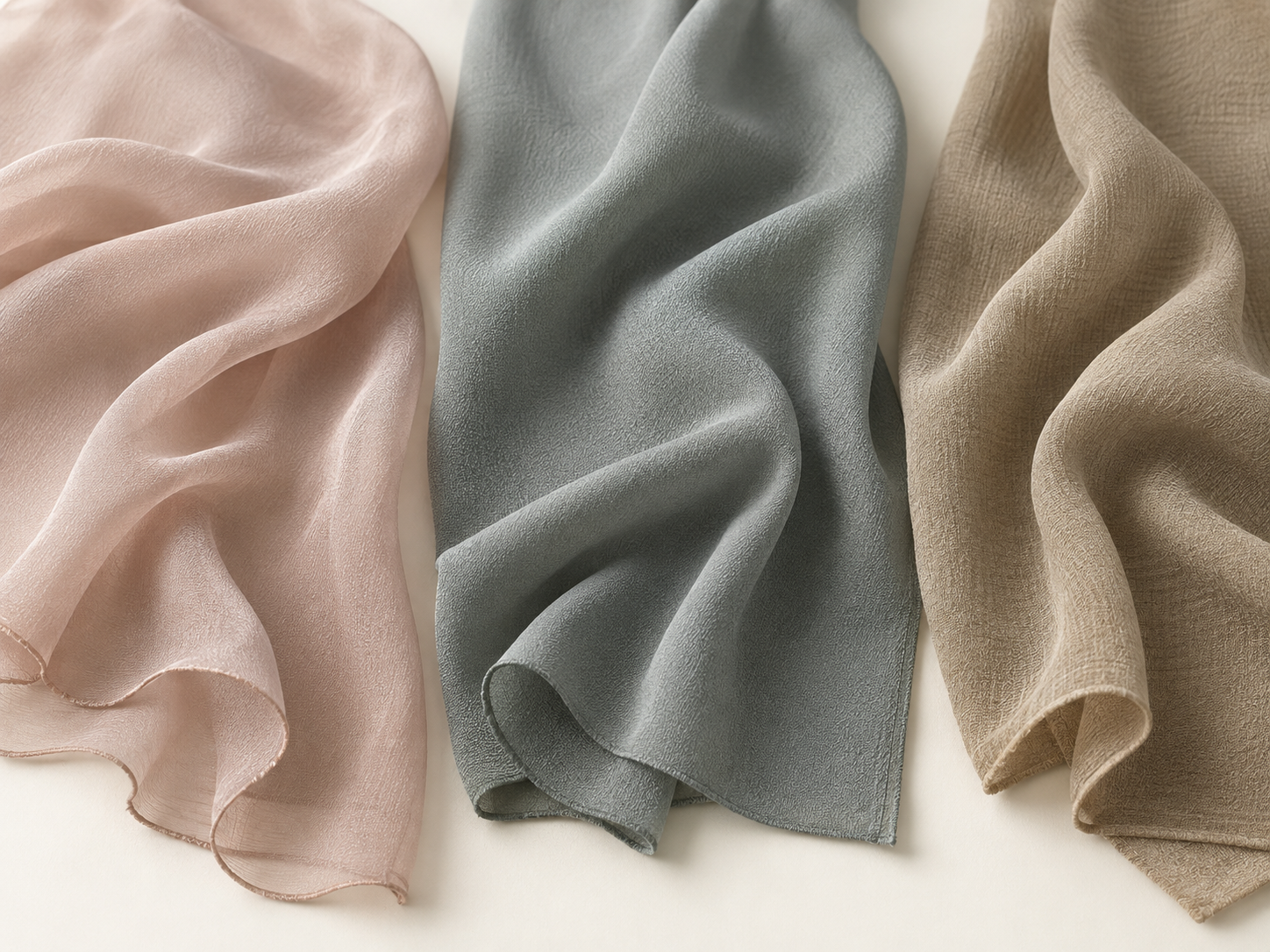
Georgette usually has a matte or softly reflective crepe surface with a fine grain. The hand may feel dry, soft, springy or slightly rough depending on the fibre and finish. Surface texture can help a printed scarf look less flat, but it can also soften small artwork details.
Ask whether the target is a clearly textured crepe surface or a smoother quality with only a light crepe effect. The approved swatch should show the face, reverse and the fabric under the lighting used for colour and artwork review.
Opacity and coverage
Many georgettes are semi-sheer. Colour, construction, finished weight and lighting can all change the perceived coverage. A pale scarf or overlay may require a denser quality, lining, double construction or a different product design.
Check opacity over the intended background and at the finished product dimensions. Do not approve coverage from a small folded swatch alone.
Drape and movement
Georgette is normally selected for movement rather than rigid structure. High twist can add a slight spring or surface resilience, while a lighter or more open quality may feel airier. The same fabric can hang differently when cut as a square scarf, long scarf, gathered panel or lined garment.
Test the actual fold, knot, drop and edge. If the product must keep a defined shape, compare the fabric after hemming rather than judging the unsewn cloth only.
Stretch, width and dimensional stability
Basic georgette is generally not a stretch fabric unless elastane, mechanical give or a special construction is involved. Finished width and dimensional change can affect marker planning, scarf size, print placement and consumption.
Record finished width, usable width, finished weight or momme where a silk specification uses it, shrinkage or skew tolerance and any stretch or recovery requirement. These are more useful for production than the word “lightweight” on its own.
Colour and print response
Georgette can be used as a printed base, but the crepe surface, transparency, fibre content and print route all affect the visual result. Fine details may look softer on a textured surface, while a two-sided or translucent product can show a different face-and-reverse relationship from an opaque fabric. For a silk-specific order, record the fiber composition and, where applicable, momme alongside the construction and finished width.
Confirm the ground colour, artwork scale, repeat, placement, bleed, print side, colour target and whether a strike-off or finished sample is required. The woven construction guide is useful when the project needs to separate fabric construction from fibre content.
| Property | What it changes | Risk if assumed | Buyer check |
|---|---|---|---|
| Fibre content | Changes hand, care, sheen and price position | “Georgette” is mistaken for silk | Composition percentage and supplier specification |
| Surface texture | Affects touch, light reflection and print detail | Artwork or product feel differs from the brief | Face/reverse swatch under intended light |
| Opacity | Controls lining, layering and coverage | Pale colours look too transparent | Compare over the intended background |
| Drape and recovery | Controls movement, knotting and garment shape | Finished item collapses or feels too stiff | Fold, knot, hang and finished-size sample |
| Weight and width | Changes consumption, body and production planning | Pattern or scarf dimensions do not match | Finished GSM/weight, usable width and tolerance |
| Finish and care | Can change hand, width and dimensional stability | Approved fabric changes after washing or pressing | Care test and final label route |
Georgette vs Chiffon: What Is the Difference?
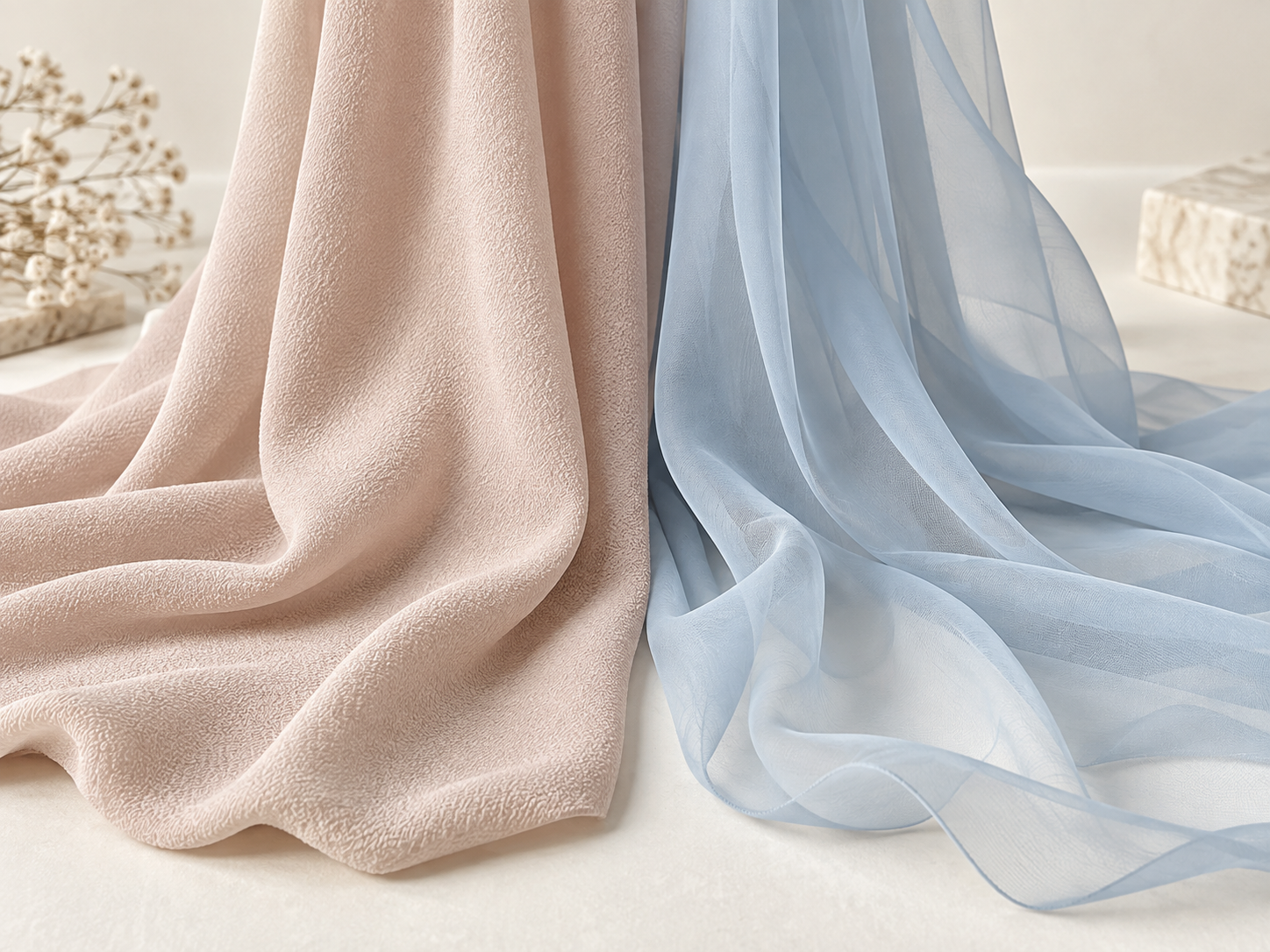
Georgette and chiffon can both be lightweight, sheer or semi-sheer woven fabrics used for flowing products. The usual distinction is that georgette has a more visible crepe grain and a little more body, while chiffon is generally smoother, lighter-looking and more transparent. The exact boundary depends on fibre, yarn, density and finishing.
| Decision factor | Georgette | Chiffon | What to confirm |
|---|---|---|---|
| Surface | Grainy or pebbled crepe character | Smoother and more delicate-looking | Face and reverse under light |
| Coverage | Often semi-sheer, but quality-dependent | Often more transparent, but quality-dependent | Opacity in the intended colour |
| Movement | Fluid with some crepe body | Very light and floating | Finished-size drape and edge behavior |
| Print appearance | Texture can soften or diffuse small details | Sheerness can alter colour depth and face/reverse appearance | Strike-off or finished sample |
| Best starting point | Flowing garments, scarves and overlays needing texture or more body | Airy layers, transparent effects and very light movement | End use, lining and handling requirements |
Choose georgette when the product needs flowing movement with a visible crepe surface or more body than a very light sheer. Choose chiffon when transparency and an airy visual effect are more important. Compare matched samples because the names alone do not specify the final weight or opacity.
Where Is Georgette Used?
Georgette is used for blouses, dresses, eveningwear, overlays, sleeves, ruffles, scarves and shawls. It works best when the product benefits from movement, lightness and a textured surface rather than a stiff, tailored body.
For a custom scarf, consider the relationship between the fabric and the finished format:
- Square scarves: confirm fold behavior, opacity at the centre and edge, and whether the fabric holds a clean knot.
- Long scarves and wraps: check drop, recovery, seam or hem movement and how the fabric behaves when layered.
- Printed fashion panels: confirm artwork scale, repeat, colour depth, bleed and whether the crepe texture supports or softens the design.
- Lined or double-layer products: evaluate total body, coverage, weight and finished consumption rather than the outer fabric alone.
The relevant question is not whether georgette is universally suitable. It is whether the selected quality meets the product’s hand, coverage, movement, artwork and finishing requirements.
How Do You Choose and Sample Georgette?
Start with the product brief, then turn the choice into a specification that another supplier could understand:
- Define the end use: state whether the fabric is for a scarf, wrap, garment, overlay, sleeve or another product.
- Set the fibre direction: specify silk, polyester, viscose, a blend or an open fibre decision that the supplier must quote separately.
- Describe the construction: ask for the georgette type, face, reverse, weave direction and any double, stretch, satin or embellishment treatment.
- Set weight and width: record target finished weight or momme for silk, usable width and tolerances that affect cutting, printing or consumption.
- Define visual behavior: state the required texture, sheen, opacity, drape, grip and colour target.
- Define artwork and print checks: confirm repeat, scale, placement, bleed, print side, colour reference and whether a strike-off is required.
- Approve the edge and finish: test the proposed hem, baby hem, rolled edge, fringe, tassel or lining on the actual quality.
- Approve the sample: keep the accepted swatch and, for dimension-sensitive products, approve a finished-size sample before bulk production.
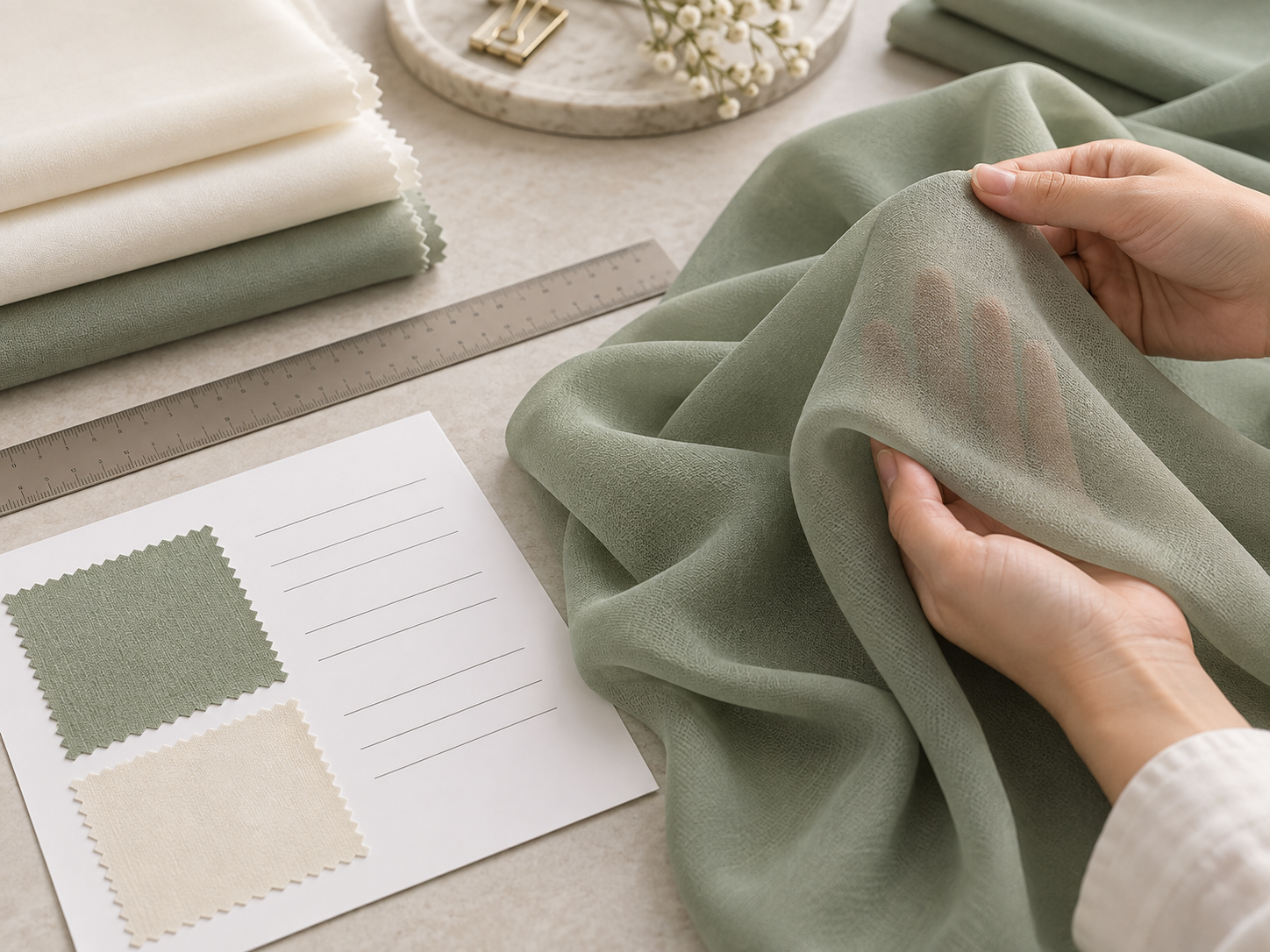
The fabric swatch guide explains why a swatch should be used to compare more than colour. For georgette, it should also help you assess surface, opacity, drape, hand, reverse appearance and finish.
How Should Georgette Fabric Be Cared For?
Care depends on fibre content, dye, print, construction and finishing. Silk and viscose georgette may need more cautious handling than a polyester quality, but the fibre label alone is not a complete care instruction.
Use the actual care label or approved supplier instruction as the starting point. Before production, confirm whether the selected quality can tolerate the intended washing, drying, pressing and storage route. Avoid assuming that every georgette can be machine washed, tumble dried or ironed at the same temperature.
Conclusion
Georgette fabric is usually a lightweight woven crepe defined by yarn twist, surface texture and drape rather than by one fibre. Silk, polyester, viscose and blended georgettes can all be valid choices, but they will not produce identical hand, opacity, care or print results.
For a reliable specification, define the fibre, construction, finished weight, width, surface, opacity, artwork, edge treatment and care route together. Then approve the actual swatch and finished sample before treating the georgette quality as production-ready. If the brief requires a silk-specific route, review Silk Georgette Fabric after the general material decision is clear.
