
What Is Tencel Fabric? Fibre Types, Properties, Uses and Buyer Checks

Carina Silk Editorial Team writes practical guides on silk fabrics, scarves and custom textile development, with a focus on materials, artwork, sampling, construction and finishing decisions.

Tencel fabric is fabric made with fibres sold under Lenzing’s TENCEL™ brand, most commonly TENCEL™ Lyocell or TENCEL™ Modal. Those branded fibres are regenerated cellulosic fibres made from wood-based cellulose; they are not the same thing as a fabric construction such as satin, twill, jersey or plain weave.
That distinction matters when you are sourcing a fabric. Two products may both be described as Tencel while differing in fibre blend, weave, weight, width, surface, drape, moisture behavior, print result and care route. A useful specification therefore names the branded or generic fibre identity together with the actual fabric construction and finished-product requirements.
What Is Tencel Fabric?
Tencel is a trademarked fibre brand from Lenzing. The brand portfolio includes TENCEL™ Lyocell, TENCEL™ Modal and TENCEL™ Lyocell Filament. When these fibres are spun into yarn and made into fabric, the finished material may be woven or knitted in many different constructions. The official TENCEL™ fibre overview explains the branded fibre directions and their wood-based cellulose origin.
TENCEL™ Lyocell and TENCEL™ Modal begin with cellulose from wood-based raw material and are regenerated into textile fibres. The result is a manufactured cellulosic fibre: its raw material is plant-based, but the fibre used in the fabric has been produced through an industrial dissolution and regeneration process. It is therefore not accurate to treat Tencel as an untreated natural fibre such as cotton, linen or silk.
The name also does not identify one fixed fabric weight or appearance. A TENCEL™ lyocell twill, a TENCEL™ modal jersey and a TENCEL™ lyocell satin can have very different hand feel, stretch, sheen, opacity and care requirements.
Is TENCEL™ a Fibre, a Fabric or a Brand?
TENCEL™ is a brand name, not a generic construction name. Lyocell and modal are generic regenerated-cellulose fibre categories. A fabric can be made with generic lyocell or modal without being a TENCEL™ branded product, while a TENCEL™ fibre can be used in different yarns, blends, weaves and knits. Lenzing’s TENCEL™ brand description identifies Lyocell, Modal and Lyocell Filament as separate branded solution directions.
This distinction is important for labels, quotations and sustainability documentation. If a brief requires TENCEL™ branded fibre, ask the supplier to state the branded fibre identity and composition rather than accepting “Tencel-like,” “eucalyptus fabric” or “tree fibre” as an equivalent specification. If the brief only needs a lyocell or modal performance direction, the quotation can compare branded and generic options separately.
The fabric name still needs a construction description. Record whether the quality is woven or knitted, the weave or knit structure, the fibre percentage, the finished weight and width, the face and reverse, and any finish or blend. The Carina Silk woven fabric guide explains why fibre identity and fabric construction should be specified separately.
How Are TENCEL™ Lyocell and Modal Fibres Made?
The exact production route depends on the branded fibre and supplier, but the general sequence is:
- Cellulose is prepared: wood-based raw material is processed into dissolving pulp with the purity and consistency needed for fibre production.
- The pulp is dissolved: the cellulose is put into a solution so it can be regenerated into a controlled fibre form.
- The fibre is formed: the solution is pushed through spinnerets to create filaments, which may be cut into staple fibres or used as filament yarn.
- The fibre is washed and prepared: washing, drying, opening, pressing and other preparation steps create fibre suitable for spinning.
- The yarn becomes fabric: the fibre is spun, woven or knitted, dyed or printed, and finished for the intended product.
TENCEL™ Lyocell and TENCEL™ Modal are not made by exactly the same process. Lenzing describes TENCEL™ Lyocell as using a closed-loop process with more than 99.8% solvent recovery, while TENCEL™ Modal uses a modified viscose process with resource-efficient technology. These statements describe the branded fibre systems; they should not be transferred automatically to every generic lyocell or modal product.
The fibre stage is only one part of the final fabric. Yarn size, spinning, weave or knit, dyeing, printing, finishing and garment or scarf construction can change the final hand and performance.
What Are the Main Types of Tencel Fabric?
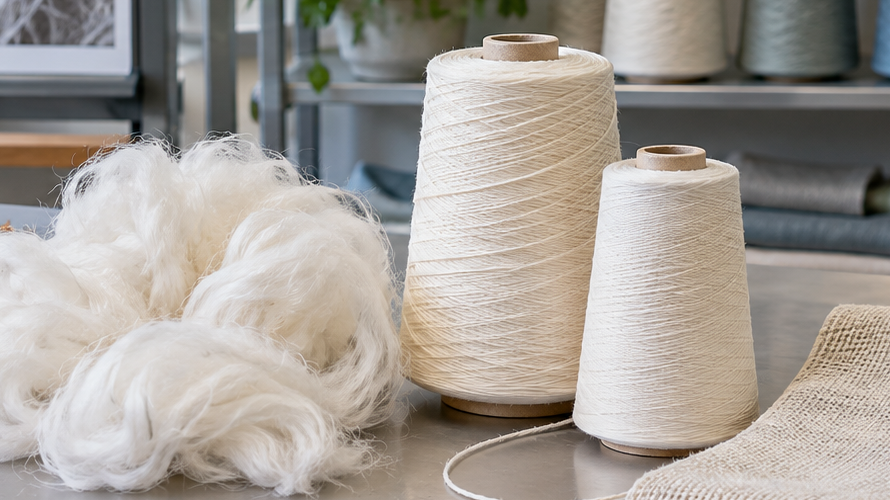
The fibre direction is only the starting point. The finished fabric can be woven or knitted, pure or blended, smooth or textured, lightweight or structured.
TENCEL™ Lyocell
TENCEL™ Lyocell is often selected for a smooth, soft and fluid direction. Lenzing describes it as having high tenacity among cellulosic fibres and a subtle sheen potential. The final fabric can still vary considerably according to yarn, blend, weave, weight, dyeing and finish.
Lyocell may suit apparel, scarves, bedding, denim blends, sleepwear and other products where softness and fluid movement matter. Confirm wet handling, shrinkage, surface, opacity and care on the actual quality.
TENCEL™ Modal
TENCEL™ Modal is another branded regenerated-cellulose direction. It is commonly used where a soft hand and close-to-skin comfort are important, including underwear, loungewear, lightweight apparel and selected blends. The blend and construction affect stretch, recovery, weight, moisture handling, pilling risk, dimensional change and care.
TENCEL™ Lyocell Filament
TENCEL™ Lyocell Filament is a filament-yarn direction designed for a smooth, uniform yarn character and fluid fabrics. It should be evaluated as a yarn and fabric route rather than treated as interchangeable with staple-fibre lyocell.
| Fibre direction | What it may contribute | What to confirm |
|---|---|---|
| TENCEL™ Lyocell | Softness, smoothness, fluid movement and a controlled cellulosic hand | Brand identity, composition, yarn, weave or knit, weight, care and wet handling |
| TENCEL™ Modal | Soft close-to-skin feel and moisture-management potential in suitable constructions | Brand identity, blend, stretch, recovery, pilling and dimensional change |
| TENCEL™ Lyocell Filament | Uniform filament character, smoothness and fluid drape potential | Filament specification, yarn size, fabric construction, sheen and opacity |
| TENCEL™ blend | A balance of hand, cost, strength, stretch or care | Exact fibre percentages and which blend component changes each property |
| Generic lyocell or modal | A regenerated-cellulose direction without automatic TENCEL™ branding | Fibre name, producer, process documentation, composition and sample performance |
What Properties Matter in Tencel Fabric?
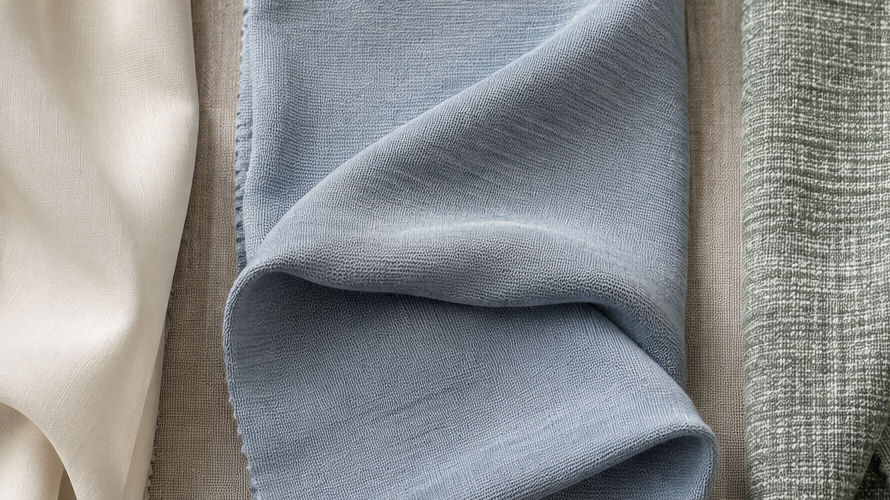
The most useful properties are the ones that affect the finished item and the approval decision.
| Property | Why it matters | What to confirm |
|---|---|---|
| Fibre identity | Determines whether the product can be described as TENCEL™ branded or generic lyocell/modal | Brand, generic fibre name, percentage and supporting documentation |
| Construction | Changes stretch, recovery, drape, opacity, surface and care | Woven or knitted base, weave/knit structure and face/reverse |
| Weight and width | Affects body, coverage, cutting, consumption and finished dimensions | GSM, thickness, usable width and tolerance |
| Hand and surface | Controls perceived quality, comfort, sheen and print appearance | Smoothness, softness, dry/wet hand, lustre and finish |
| Drape and recovery | Determines how a scarf, garment or panel folds, hangs and returns | Fold, knot, hang, stretch and recovery on the finished quality |
| Moisture and wet handling | Regenerated-cellulose fabrics can change in hand or dimension when wet | Washing route, drying, dimensional change and care instruction |
| Colour and print response | Fibre, construction and finish change colour depth, detail and face/reverse | Ground colour, print route, strike-off, repeat, bleed and tolerance |
| Pilling and abrasion | Blend, yarn, surface and end use affect wear behavior | Test method, abrasion exposure, pilling expectation and sample result |
“Soft,” “breathable” and “sustainable” are not complete specifications. They describe a direction, but the final result still depends on fibre, yarn, construction, finish, colour and use. The more sensitive the product, the more important the approved fabric and finished-size sample become.
Tencel vs Viscose and Cotton: What Is the Difference?
TENCEL™ Lyocell and Modal are branded regenerated-cellulose fibres. Viscose and rayon are broader generic terms for regenerated-cellulose fibres. Cotton is a natural cellulosic fibre spun from cotton fibres, while TENCEL™ fibres are manufactured by regenerating dissolved cellulose into a textile fibre.
The correct comparison is therefore not “Tencel fabric always performs better.” Compare the actual construction, blend, weight, finish and care route.
| Decision factor | TENCEL™ Lyocell or Modal | Generic viscose/rayon | Cotton |
|---|---|---|---|
| Fibre identity | Branded regenerated-cellulose direction | Generic regenerated-cellulose category | Natural cellulose fibre |
| Common hand direction | Soft, smooth or fluid in suitable constructions | Can be soft and fluid, but varies widely | Familiar matte-to-soft hand, depending on yarn and finish |
| Construction choice | Can be woven, knitted, filament or blended | Can be woven, knitted or blended | Can be woven, knitted or blended |
| Care risk | Heat, wet handling and finish can change the result | Wet strength, shrinkage and finish vary by quality | Shrinkage, creasing and colourfastness depend on quality |
| What to verify | Brand identity, composition, construction and approved sample | Exact fibre and process direction, blend and sample | Fibre, yarn, weave/knit, shrinkage and finish |
For a customer product, the intended hand and performance may be achieved by more than one fibre route. A branded TENCEL™ specification may be important for the product story or documentation, while a generic lyocell, viscose or cotton blend may be considered for a different price, hand or care position. Keep those options separate in the quotation and approval record.
Where Is Tencel Fabric Used?
TENCEL™ fibre fabrics appear in apparel, shirts, dresses, trousers, denim blends, underwear, sleepwear, active layers, bedding, pillowcases, home textiles and accessories. The most suitable application depends on the fabric construction rather than the brand name alone.
For scarves, a Tencel direction may work when the brief needs a soft hand, fluid drape or a smooth printed surface. Check whether the selected quality has enough body to hold the intended shape, enough opacity for the colour, and enough stability for the hem, fringe or finished edge.
For apparel, confirm the relationship between the fabric and the pattern pieces. A fluid quality may need different seam, lining and pressing decisions from a firmer twill. For bedding and home textiles, check abrasion, laundering, width, shrinkage and repeat matching. For a blend, record which component is responsible for stretch, strength, sheen or care behavior.
Is Tencel Suitable for Printed Scarves and Custom Textiles?
It can be suitable, but “Tencel” alone does not specify the print result. Fibre form, weave or knit, surface, ground colour, weight, width and print method all affect artwork and finished appearance.
Before approving printed Tencel fabric, check:
- The fibre identity: confirm TENCEL™ branded fibre or generic lyocell/modal, composition and any required documentation.
- The fabric base: record woven or knitted construction, weave or knit, weight, width, opacity, face and reverse.
- The artwork route: confirm repeat, placement, border, scale, bleed, print side, colour reference and registration tolerance.
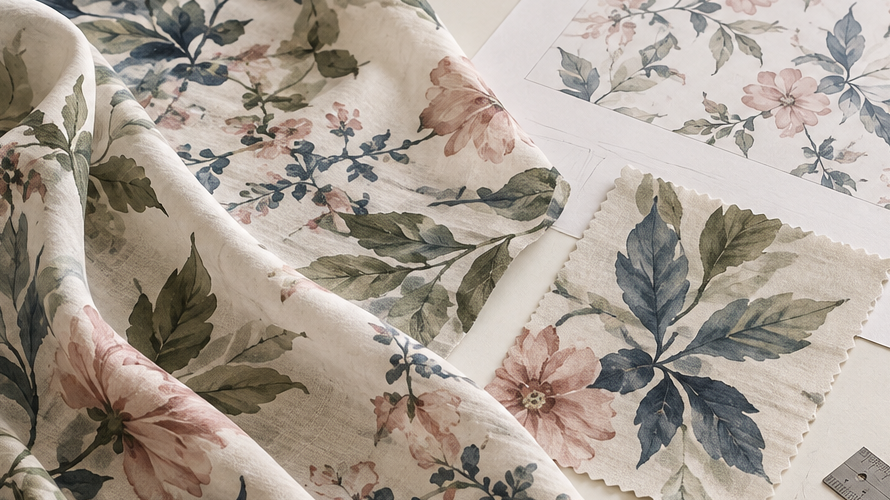
- The surface result: compare a strike-off or finished sample under the intended light, because a smooth or fluid surface may change colour depth and detail.
- The finished product: test the actual scarf or panel dimensions, hem, drape, knot, washing or pressing route before bulk production.
The existing Printed Tencel Fabric page is the commercial route for a custom project. This article provides the material and specification context so the buyer can request the right sample instead of treating the fibre brand as the whole brief.
How Should Buyers Specify and Sample Tencel Fabric?
Start with the product, then specify the material. A practical Tencel fabric brief should include:
- End use: scarf, garment, bedding, accessory, home textile or another product.
- Brand and fibre: TENCEL™ Lyocell, TENCEL™ Modal, TENCEL™ Lyocell Filament, generic lyocell/modal or a defined blend option.
- Construction: woven or knitted, weave/knit structure, yarn direction, face and reverse.
- Finished dimensions: target weight, thickness, width, usable width and tolerance.
- Surface and movement: hand, sheen, drape, stretch, recovery, opacity and desired finished behavior.
- Artwork and colour: ground colour, print route, repeat, placement, border, colour reference and strike-off requirement.
- Care and testing: washing, drying, pressing, shrinkage, pilling, abrasion, colourfastness and finished-size checks.
- Documents: fibre composition, branded-fibre evidence where required, certifications or test records required by the customer.
The Carina Silk fabric swatch guide is useful because a swatch should confirm more than colour. For Tencel, retain the approved swatch with the construction, fibre identity, weight, width, print result, care route and acceptance notes.

Frequently Asked Questions
Is Tencel a natural fabric?
TENCEL™ fibres begin with wood-based cellulose, but the finished fibres are manufactured through dissolution and regeneration. They are regenerated cellulosic fibres, not untreated natural fibres like cotton, linen or silk.
Is Tencel the same as lyocell?
Not exactly. TENCEL™ is Lenzing’s brand, while lyocell is a generic fibre category. TENCEL™ Lyocell is one branded lyocell direction. A generic lyocell fabric is not automatically TENCEL™ branded.
Is Tencel the same as modal?
No. TENCEL™ Modal is a branded modal direction, while modal is a generic regenerated-cellulose fibre category. TENCEL™ Lyocell and TENCEL™ Modal have different process and performance directions, so the quotation should name the exact fibre.
Is Tencel better than cotton?
Neither is automatically better. TENCEL™ and cotton can be made into different weaves, knits, weights and finishes. Compare the required hand, drape, moisture behavior, care, shrinkage, price position and finished sample.
Does Tencel fabric shrink?
Shrinkage depends on fibre direction, construction, finishing and care. Confirm the finished dimensions and dimensional-change tolerance on the actual quality after the intended washing or pressing route.
Is Tencel fabric suitable for scarves?
It can be suitable when the selected quality provides the required drape, opacity, hand, print appearance and edge stability. A soft jersey, fluid woven fabric and structured twill will behave differently even if all contain TENCEL™ fibres.
Is Tencel fabric easy to care for?
Care depends on the fibre, construction, dyeing, printing and finish. Follow the approved care label or supplier instruction, and avoid assuming that every Tencel fabric can tolerate high heat or the same washing route.
How can I tell if fabric is really TENCEL™?
Ask for the exact fibre identity, composition and supporting documentation. “Tencel-like,” “eucalyptus fabric” and “tree fibre” are not substitutes for a stated branded or generic fibre specification.
Conclusion
Tencel fabric is not one universal fabric. TENCEL™ is a Lenzing brand covering specific regenerated-cellulose fibre and filament directions, while the finished fabric can be woven or knitted, pure or blended, smooth or textured, lightweight or structured.
For a reliable buying decision, specify the branded or generic fibre identity together with construction, weight, width, hand, drape, opacity, artwork, care and testing requirements. Then approve the actual swatch, printed strike-off and finished-size sample before treating the quality as production-ready. For a custom printed project, continue with Printed Tencel Fabric after the material brief is defined.
