
Pashmina vs Cashmere: What Is the Difference?

Carina Silk Editorial Team writes practical guides on silk fabrics, scarves and custom textile development, with a focus on materials, artwork, sampling, construction and finishing decisions.
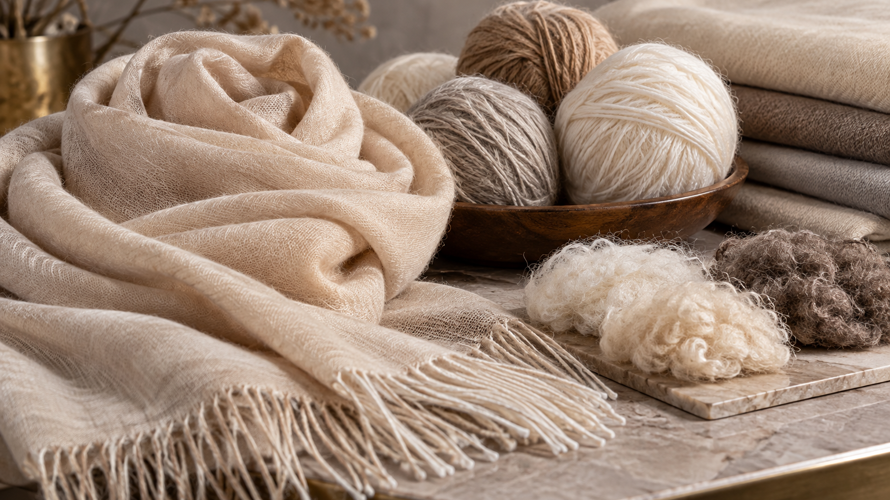
Pashmina and cashmere are closely related terms, but their use is not always consistent in international retail. Current comparison pages generally describe cashmere as the broader goat-down fibre category and pashmina as a more specific fine-fibre or regional textile tradition.
The practical buyer question is not which word sounds more luxurious. It is what fibre, blend, provenance, processing, weave, weight and finished product the supplier can document.
Is Pashmina the Same as Cashmere?
Cashmere is a fine animal fibre obtained from the undercoat of cashmere goats. Pashmina is often used for especially fine cashmere or for a particular Himalayan textile tradition, but commercial use can be broad.
A product called pashmina may be pure cashmere, a cashmere blend, a silk blend or a marketing term. The label must be checked against the actual fibre content and target-market rules.
Use the fabric composition guide and a finished swatch to separate material evidence from product storytelling.
How Do Pashmina and Cashmere Become Scarves?
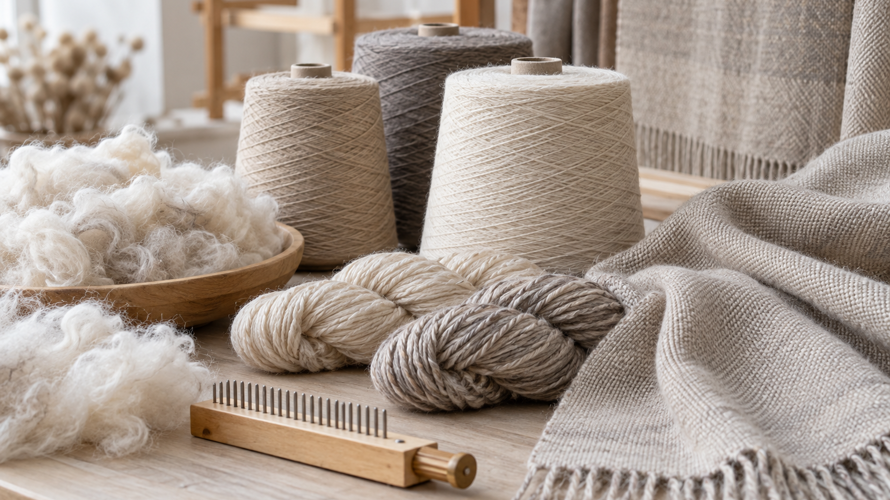
Fine animal down is collected, sorted and dehaired before spinning. Fibre length, fineness, cleanliness and consistency affect the yarn and finished hand.
The yarn can be woven, knitted, brushed, milled or blended with silk and other fibres. Finishing changes softness, density, surface, warmth and dimensional behaviour.
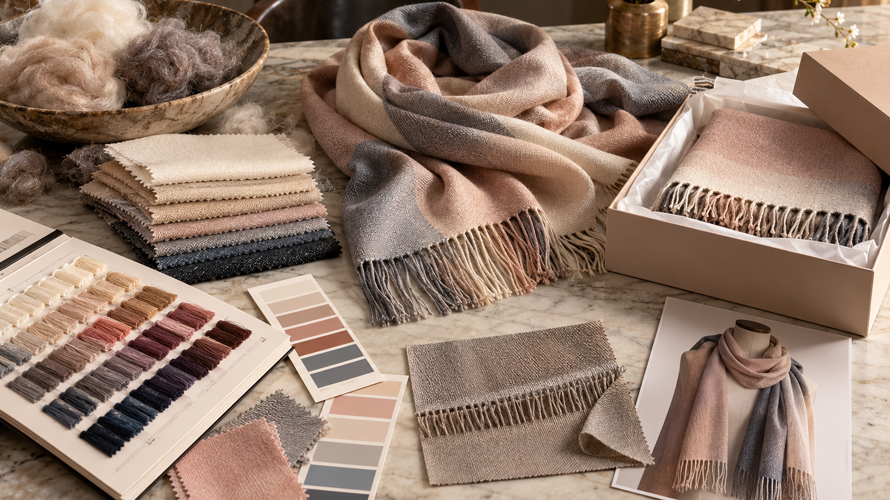
Border placement, fringe, hem, pressing and packaging are part of the finished product. Approve the actual scarf rather than a loose fibre description alone.
What Pashmina and Cashmere Product Directions Should Buyers Compare?
Use a material description and a product description together.
| Direction | Textile character | Potential fit | What to confirm |
|---|---|---|---|
| Pure cashmere | Cashmere fibre with documented content | Premium scarves and knitwear | Fibre statement and blend |
| Pashmina term | Fine or regional cashmere usage varies | Luxury shawls and scarves | Definition and provenance |
| Cashmere-silk blend | Cashmere combined with silk | Light, fluid luxury products | Ratio and label |
| Woven shawl | Flat woven construction | Wraps and scarves | Weight, width and edge |
| Brushed or milled quality | Surface raised or compacted | Soft warm products | Finish consistency |
| Imitation pashmina | Different fibre sold under a style name | Fashion or cost-led products | Actual composition |
Pashmina vs Cashmere: What Should a Buyer Believe?
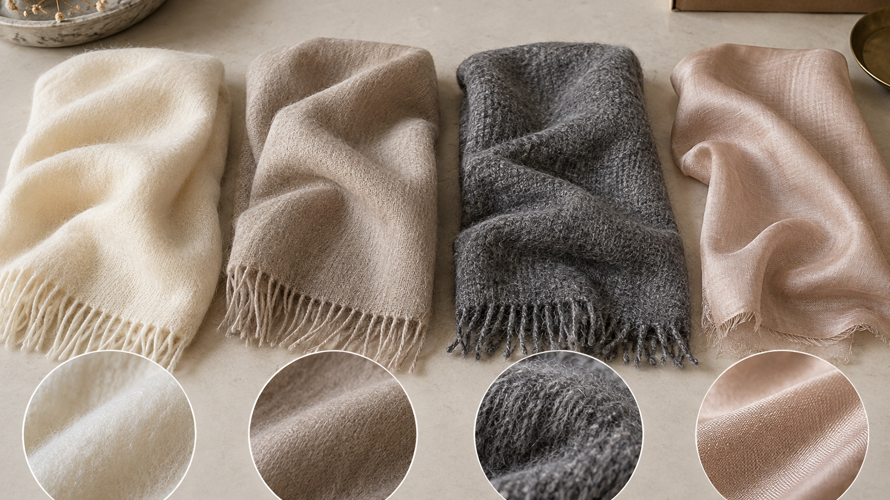
The word pashmina can communicate fineness, place or craft tradition, but it does not by itself establish fibre content or quality. Cashmere is broader, yet “100% cashmere” also needs documentation and does not define every processing detail.
Compare fibre, fineness, yarn, weight, weave, softness, warmth, colour and edge on the finished sample. Micron figures should be used only when the supplier can support the method and scope.
Avoid unsupported claims about origin, hand-spinning, hand-weaving, certification or exclusivity. Write the product description around verified facts.
What Should Buyers Check in Pashmina or Cashmere?
Luxury wording should be backed by fibre and finished-product evidence.
Fibre Content
Confirm cashmere, silk, wool and other percentages with the correct label wording.
Fineness and Length
Request supported fibre data when fineness or softness is a material acceptance criterion.
Yarn and Construction
Record spun yarn, ply, weave, knit, weight, width, density and finish.
Provenance Wording
Separate origin, craft, geographic and cultural claims and request evidence for each.
Surface and Care
Test softness, pilling, shedding, shrinkage, pressing and colourfastness.
Finished Scarf
Approve border, fringe, hem, dimensions, packaging and the worn or draped result.
| Check | Why it matters | Possible risk | Evidence to request |
|---|---|---|---|
| Composition | Controls legal identity | Blend sold as pure | Fibre statement |
| Fineness | Controls hand | Unsupported micron claim | Test or supplier data |
| Origin | Controls story | Unverified provenance | Documentation |
| Construction | Controls drape | Wrong body or warmth | Weave and weight |
| Care | Controls service life | Felted or pilled surface | Care trial |
| Finished item | Confirms product | Loose swatch misleads | Approved scarf |
Where Are Pashmina and Cashmere Used?
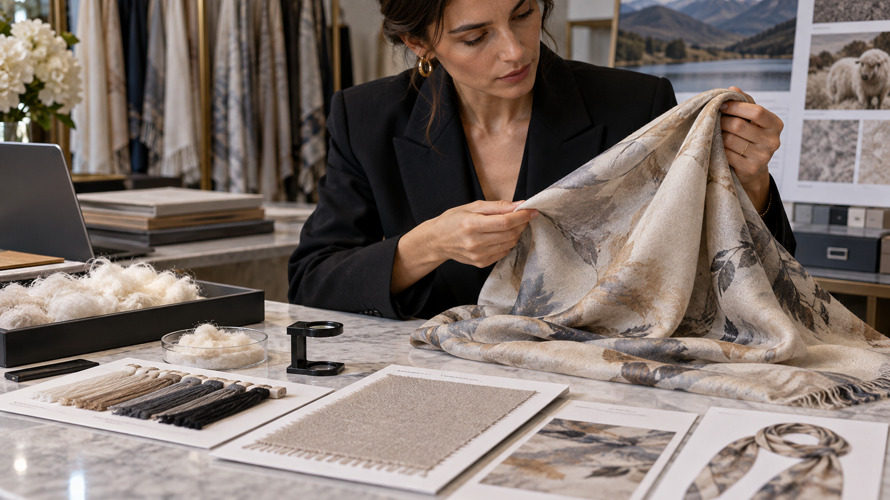
Cashmere and pashmina-labelled products are used in scarves, shawls, knitwear, wraps, gifting and luxury accessories where softness, warmth and lightness are important.
A cashmere-silk blend can be compared with silk or wool according to weight, drape, warmth, care, edge and price position.
The finished product should communicate exactly what the buyer is purchasing, especially when the name carries cultural or provenance meaning.
How Should Pashmina or Cashmere Be Specified?
State fibre and blend, supported fineness or fibre data, yarn, weave or knit, weight, width, surface, origin wording, edge, care, packaging and finished dimensions.
Attach a finished reference swatch and the evidence for any provenance, craft, certification or sustainability statement.
Frequently Asked Questions
Is pashmina the same as cashmere?
Pashmina is often used for very fine cashmere or a regional textile tradition, while cashmere is the broader fibre category. Commercial usage varies, so verify the product.
Is pashmina always 100% cashmere?
No. Products sold as pashmina may be pure cashmere, blends or other fibres. Read the composition and request documentation.
Is pashmina softer than cashmere?
Softness depends on fibre fineness, length, dehairing, yarn, weave and finish. The name alone does not prove softness.
What is a cashmere-silk blend?
It combines cashmere and silk fibres to balance warmth, softness, lustre, drape or cost. The ratio should be stated.
How should a cashmere scarf be tested?
Check composition, hand, pilling, shedding, dimensions, care, colour, edge, fringe and the finished drape.
Is pashmina good for scarves?
It can suit lightweight luxury scarves when fibre, hand, warmth, edge and care meet the product brief.
What should a buyer request?
Request fibre content, supported quality data, provenance wording, construction, care and an approved finished scarf sample.
Conclusion
Pashmina and cashmere terms overlap, but neither should replace a verified product specification. Control fibre content, supported quality data, provenance wording, construction, care and the finished scarf. A silk comparison can also help separate fibre identity from surface appearance.
