
What Is Silk? Properties, Types, Uses and Buyer Checks

Carina Silk Editorial Team writes practical guides on silk fabrics, scarves and custom textile development, with a focus on materials, artwork, sampling, construction and finishing decisions.
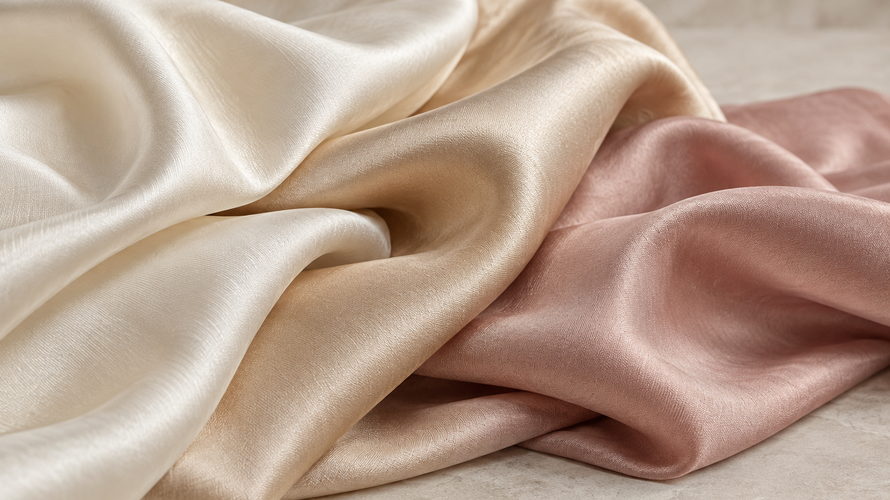
Silk is a natural protein fibre produced by silkworms and made into yarns and fabrics for apparel, scarves, accessories, interiors and other textile products. The word describes the fibre family, not one fixed surface or hand feel.
A silk twill, silk satin, silk chiffon and silk charmeuse can all be made from silk while behaving very differently. For a reliable specification, separate fibre content from yarn, weave, weight, width, finish, colour and end use.
What Is Silk?
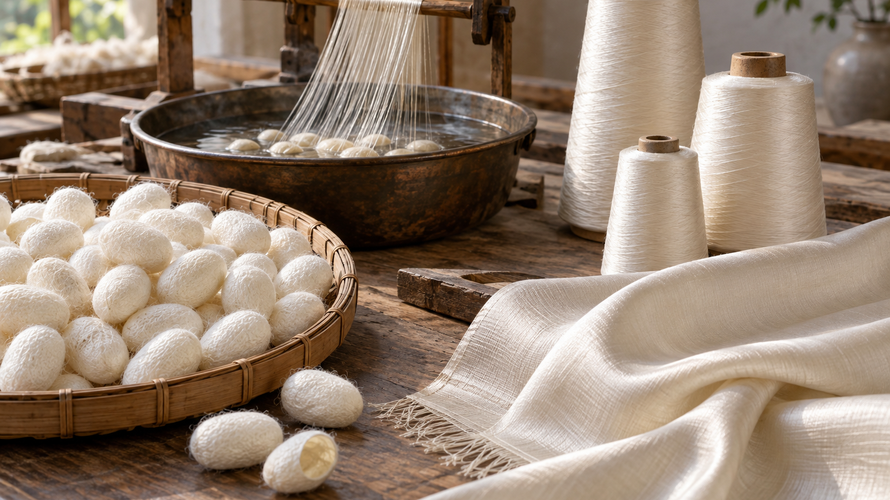
Silk is a natural protein fibre formed mainly from fibroin in the cocoon filament of silkworms. The continuous filament can be reeled, combined, twisted or spun into yarn, then woven or knitted into a finished textile.
The Textile Exchange materials classification places silk in the animal-fibre family. The CottonWorks weaving basics also helps explain why the fibre name alone cannot describe the final fabric construction.
Commercial labels may refer to the silk source, a silk type, a fabric construction or a finish. Check the full composition and construction instead of treating words such as satin, charmeuse or crepe as proof of fibre content.
How Is Silk Made Into Fabric?
The route usually begins with cocoon production, filament preparation and reeling or spinning. Filament silk can be kept relatively continuous, while shorter fibres may be processed into spun yarn. Yarn size, twist and ply influence the eventual surface, strength, opacity and drape.
The yarn is then woven or knitted, dyed or printed, and finished for the intended product. Washing, softening, calendaring, weighting, brushing or other finishing can change lustre, hand, dimensional stability and care behaviour. A mill should therefore identify the finished construction, not only the raw fibre.
For printed silk, artwork scale, colour separation, base construction, usable width and edge treatment all affect the result. Approve a production-scale sample when repeat placement, shade or finished drape matters.
What Are the Main Types of Silk Fabric?
Silk fabric names usually describe a weave, texture, yarn route or surface effect. The same family name can still vary by weight, width and finish, so use the table as a starting point rather than a substitute for a sample.
| Silk fabric direction | Typical character | Common fit | What to confirm |
|---|---|---|---|
| Silk twill | Defined diagonal structure with controlled drape | Printed scarves and accessories | Twill angle, weight, width, print and hem |
| Silk satin | Smooth face with higher surface reflection | Formal accessories and luxury styling | Slip, snag risk, face, reverse and care |
| Silk chiffon | Light, soft and often sheer | Layered scarves and airy products | Opacity, seam handling, width and finish |
| Silk charmeuse | Fluid satin construction with a lustrous face | Draped apparel and premium accessories | Weight, stretch, reverse and pressing |
| Silk crepe | Textured surface with a less mirror-like face | Dresses, blouses and scarves | Crepe texture, shrinkage and colour |
| Silk dupioni or shantung | Textured, often more structured hand | Occasionwear and decorative products | Slub character, yarn route and variation |

Silk Fibre vs Silk Fabric: What Is the Difference?
Silk is the fibre or material family. Fabric is the finished textile made from one or more fibres through a construction and finishing route. A silk fabric can therefore be plain woven, twill, satin, crepe, chiffon, jacquard or another construction.
Use the silk fabric types guide for a broader map of constructions. If the proposed fabric uses a satin surface, compare it with the satin construction guide rather than assuming every satin-like fabric is silk.
This distinction matters in sourcing. Fibre content sets part of the material identity, while weave, yarn, weight and finish influence the hand, coverage, movement, print response and production risk.
What Should Buyers Check When Sourcing Silk Fabric?
A good silk specification describes the finished product and the evidence needed to approve it. Review the actual fabric direction, not only a generic silk label or a small swatch.
Fibre Content and Yarn
Confirm whether the quality is 100% silk or a blend, and record filament or spun-yarn direction, yarn size, twist and ply where relevant.
Construction and Surface
State plain weave, twill, satin, crepe, chiffon, jacquard or another construction, then inspect face, reverse, lustre, texture and snag risk.
Weight, Width and Coverage
Confirm finished weight, usable width, opacity, dimensional tolerance and the coverage needed for the actual scarf, garment or accessory.
Colour, Artwork and Finish
Approve the shade, print method, repeat, placement, colour standard, finish and edge treatment under the lighting used for the product.
Care and Dimensional Behaviour
Test the intended care route, shrinkage, skew, seam behaviour, pressing response and colourfastness on the finished construction.
Sample and Documentation
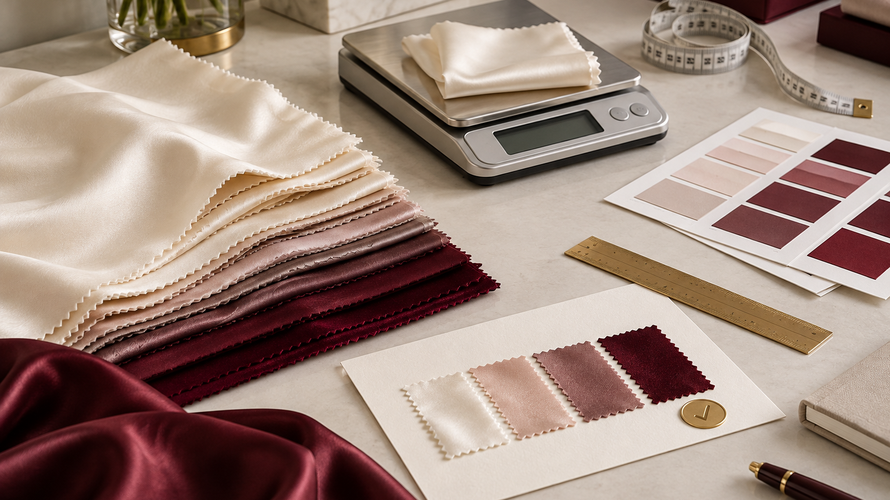
Keep the approved swatch and production-scale sample together with the composition, width, weight, tolerances, care and inspection requirements.
| Check | Why it matters | Possible risk | Evidence to request |
|---|---|---|---|
| Composition | Defines material identity and care direction | Silk blend described as pure silk | Fibre specification and label wording |
| Construction | Controls hand, drape and surface | Wrong body or snag behaviour | Construction detail and finished sample |
| Weight and width | Controls coverage, yield and product dimensions | Insufficient opacity or yield | Finished measurement and tolerance |
| Colour and artwork | Controls brand and repeat accuracy | Shade, placement or print mismatch | Colour standard, strike-off and full-width sample |
| Care and testing | Protects use and aftercare claims | Shrinkage, crocking or damage | Care route and relevant test results |
| Inspection | Confirms the delivered roll or panels | Slubs, flaws or edge defects missed | Inspection points and packing record |
What Is Silk Fabric Used For?
Silk can be considered for printed scarves, shawls, ties, pocket squares, blouses, dresses, lingerie, sleepwear, linings, accessories, bridal products, decorative panels and selected home-textile applications. The best construction depends on the required drape, opacity, sheen, strength, care and budget.
For a printed scarf, review the fabric swatch and sample workflow before bulk production. For a textured or patterned direction, the Jacquard fabric guide and woven fabric guide provide useful construction context.

How Should Silk Fabric Be Specified?
Write the specification as fibre content plus construction: silk type or blend, yarn direction, weave or knit, finished weight, usable width, thickness or opacity, colour, print or artwork, finish, edge, care route and acceptable tolerances.
When the product is a scarf or accessory, also define finished dimensions, corner or border placement, hem method, face and reverse, packaging and inspection points. The silk twill reference shows why a named construction still needs weight, width and finishing details.
Frequently Asked Questions
What is silk?
Silk is a natural protein fibre produced mainly from silkworm cocoons. It can be reeled or spun into yarn and then woven or knitted into different fabrics.
Is silk a fibre or a fabric?
Silk is primarily a fibre or material family. Silk fabric is the finished textile made from that fibre through a construction and finishing route.
What are the main types of silk fabric?
Common directions include silk twill, satin, chiffon, charmeuse, crepe, dupioni, shantung and jacquard. Their final behaviour depends on yarn, weight, weave and finish.
Is satin always made from silk?
No. Satin describes a weave or surface family, and satin-like fabrics can use silk, polyester, acetate or other fibres. Confirm composition separately.
Is silk good for scarves?
Silk can suit scarves because selected constructions offer drape, colour depth and a refined hand. Choose the exact weave, weight, opacity, edge and care route for the design.
How should silk fabric be cared for?
Care depends on the fibre, construction and finish. Follow the approved care route, and test washing, pressing, colourfastness and dimensional change on the finished quality.
What should a silk fabric buyer request from a supplier?
Request composition, construction, weight, usable width, colour or artwork details, finish, care guidance, tolerances, relevant tests and an approved sample of the finished quality.
Conclusion
Silk is a natural protein fibre, not one uniform fabric. The finished result depends on the yarn, construction, weight, width, colour, finishing and care route. Define those details together, approve the actual sample, and use the finished product requirements to choose the silk direction before bulk production.
