What Is Satin? Weave, Fibres, Uses and Buyer Checks

Carina Silk Editorial Team writes practical guides on silk fabrics, scarves and custom textile development, with a focus on materials, artwork, sampling, construction and finishing decisions.
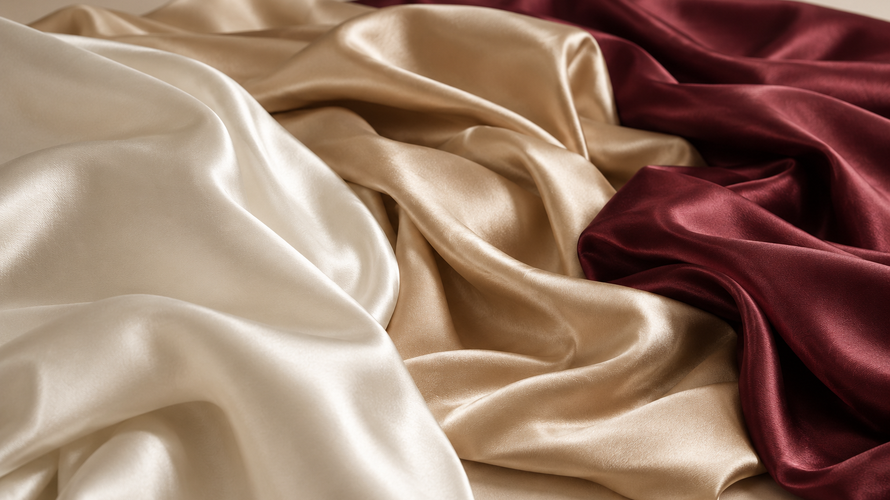
Satin is commonly used to describe a smooth, lustrous fabric surface, but satin is not automatically a fibre. It is a weave or surface direction that can be made with silk, polyester, acetate and other fibres.
The long floats that create the smooth face can also make a satin quality more sensitive to snagging, seam movement, skew and surface marks. The fibre, yarn, weight and finish still need to be stated.
What Is Satin?
CottonWorks’ satin reference describes satin as a weave with long warp or filling floats and a flat, shiny surface. The weave creates the appearance; the fibre content is a separate question.
That is why sateen and satin should be compared carefully. In a sourcing brief, write both the fibre and the construction instead of using “satin” as a substitute for “silk.”
A satin fabric can be warp-face or filling-face, light or heavy, fluid or structured, plain-dyed or printed. The finished sample determines whether it suits the product.
How Is Satin Fabric Made?
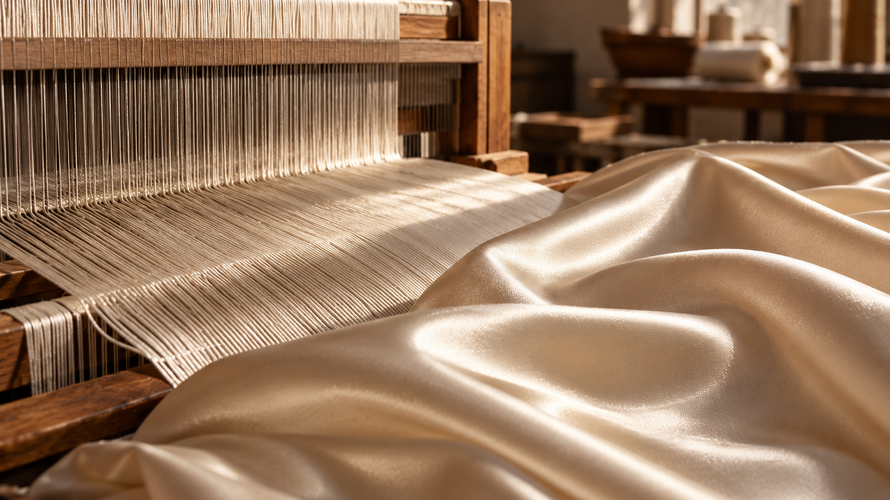
The loom follows a satin weave plan with relatively long floats and fewer visible intersections on the face. The exact harness count, counter, yarn and density affect the surface and stability.
The fabric may then be dyed, printed, washed, calendared or otherwise finished. Finishing changes lustre, hand, drape, opacity, friction and care response.
Because floats can catch or move, inspect the intended satin after cutting, sewing, pressing and finishing rather than judging only a flat swatch.
What Are the Main Types of Satin Fabric?
Satin names should be read together with fibre, yarn, weight and finish.
| Satin direction | Typical character | Common fit | What to confirm |
|---|---|---|---|
| Silk satin | Fluid, refined and reflective | Formal scarves and luxury products | Silk content, weight and care |
| Polyester satin | Reflective with broad price range | Accessories, lining and apparel | Polymer, static and snag risk |
| Acetate satin | Smooth and draping | Lining and occasionwear | Blend, heat and care |
| Stretch satin | Satin surface with engineered give | Close-fit garments | Stretch, recovery and seam |
| Matte satin | Lower reflection or brushed surface | Quiet luxury and apparel | Finish, face and hand |
| Printed satin | Artwork over a satin base | Scarves and decorative products | Print method, repeat and rub |
Satin vs Silk, Sateen and Charmeuse
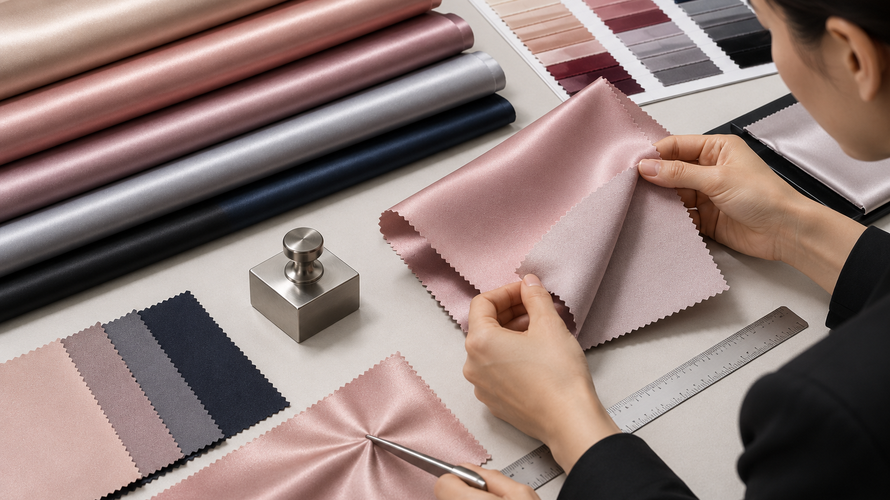
Satin is a construction or surface family. Silk is a fibre, and silk satin is one combination of fibre and weave. Sateen is often used for a satin construction made with non-silk yarns, while charmeuse is a specific fluid satin direction that also needs composition confirmation.
The sateen versus satin comparison covers the naming distinction. The polyester versus silk comparison shows why a similar surface does not prove similar fibre or care.
For a purchase, compare the actual face, reverse, weight, width, drape, slip and finished sample.
What Should Buyers Check in Satin Fabric?
Satin can look simple in a photograph while behaving differently on the cutting table. Approve the construction and finished product together.
Fibre and Yarn
Confirm silk, polyester, acetate, blend or other fibre content, then record yarn type, size and twist where relevant.
Float and Surface
Inspect lustre, face, reverse, float length, snag risk, picking and surface marks under the final lighting.
Weight and Drape
Measure finished weight, width, opacity, drape and slip against the product brief.
Colour and Print
Approve shade, reflection, print repeat, border, colourfastness and rub performance on the final base.
Seam and Edge
Test cutting, seam slippage, needle marks, pressing, hems and edge treatment on the actual satin.
Care and Packing
Confirm care, folding, roll or panel packing, crease response and protection from abrasion during shipment.
| Check | Why it matters | Possible risk | Evidence to request |
|---|---|---|---|
| Composition | Separates fibre from weave | Wrong care or label | Fibre specification |
| Surface | Controls appearance and use | Snag or picking | Face and reverse sample |
| Weight | Controls drape and coverage | Too light or heavy | Finished measurement |
| Colour | Protects visual target | Shade or print shift | Colour standard and strike-off |
| Seam and edge | Protects manufacturability | Slippage or damaged hem | Finished construction sample |
| Care | Protects product life | Crease or heat damage | Care trial and instruction |
What Is Satin Fabric Used For?
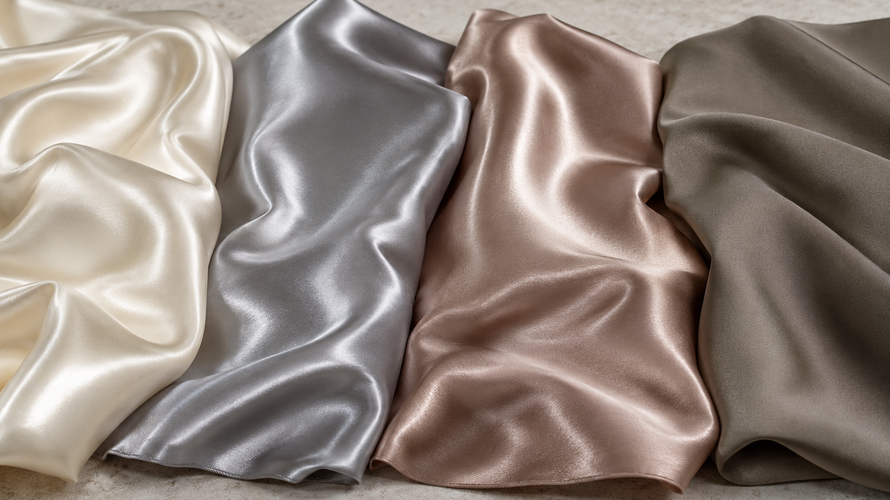
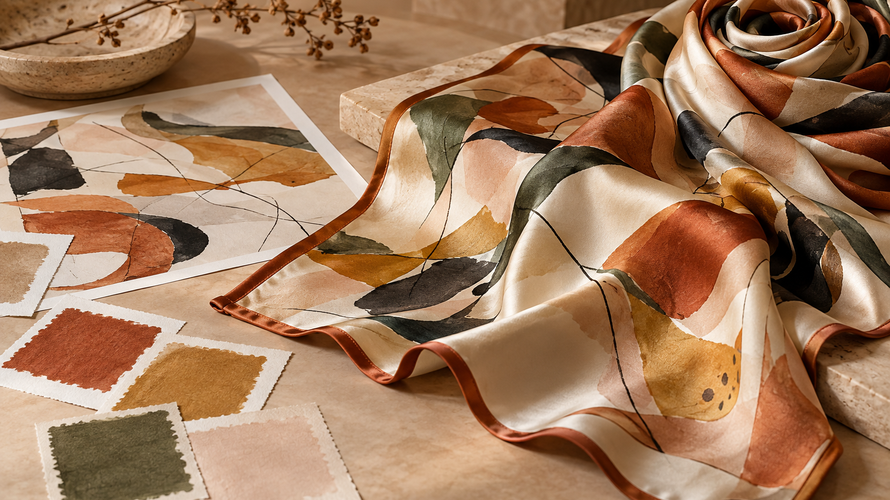
Satin can suit scarves, linings, dresses, sleepwear, ties, ribbons, accessories and decorative products. For printed scarves, keep the fabric swatch and sample record with the artwork and finished hem approval.
If the design is based on silk, compare the satin direction with other silk fabric types before committing to the final weight and finish.
How Should Satin Fabric Be Specified?
State fibre, satin direction, yarn, weight, width, opacity, face, reverse, colour, print, finish, care, snag or slippage tolerance and edge treatment.
For a custom product, define the printed or woven pattern route, repeat, finished dimensions, hem and packaging.
Frequently Asked Questions
What is satin?
Satin is a weave or surface family recognized by longer floats and a smoother, often more reflective face. It is not one fibre.
Is satin always silk?
No. Satin can be made with silk, polyester, acetate and other fibres. Confirm composition separately.
What is the difference between satin and sateen?
The terms are used differently across markets, but sateen commonly describes a satin construction made with non-silk yarns. Check the fibre and construction specification.
Is satin good for scarves?
It can suit scarves that need a smooth, reflective surface, but slip, snagging, edge treatment, weight and care need to match the design.
Does satin snag easily?
Some satin qualities are more sensitive to picking because of their floats. Test the exact fibre, yarn, density and finish.
Is charmeuse the same as satin?
Charmeuse is a fluid satin direction, but the name does not replace composition, weight or finish details.
What should a satin buyer request?
Request fibre, construction, weight, width, face, reverse, colour, print or finish data, care, tests and a finished sample.
Conclusion
Satin describes a smooth weave or surface direction, not a single fibre. Specify composition, yarn, floats, weight, width, finish and care together, then test the face, reverse, seams and finished product before bulk production.