
Polyester vs Silk: Differences in Hand, Care, Cost and Use

Carina Silk Editorial Team writes practical guides on silk fabrics, scarves and custom textile development, with a focus on materials, artwork, sampling, construction and finishing decisions.
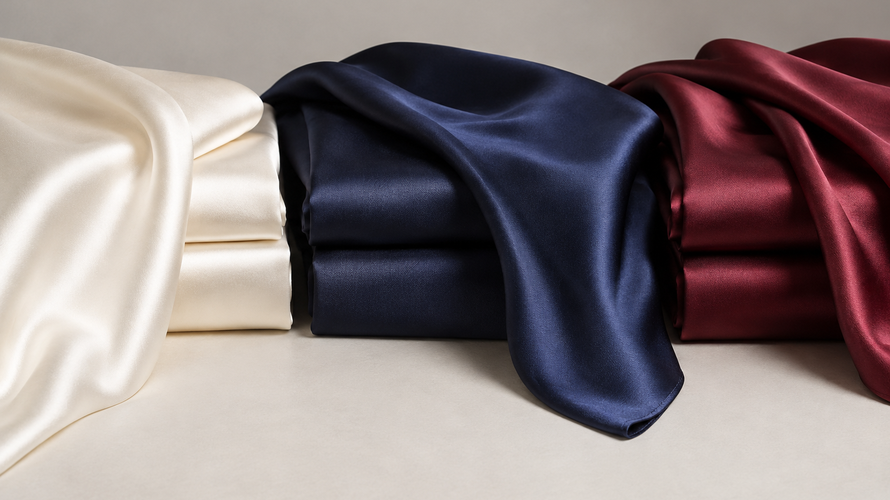
Polyester and silk can both be made into smooth, printed or lustrous fabrics, but they are different fibre families. Silk is a natural protein fibre; polyester is a synthetic polymer fibre. The finished fabric still depends on yarn, weave, weight, finish and construction.
The better choice depends on the product brief. Compare hand, drape, care, colour, print, cost, durability, sustainability requirements and finished appearance rather than treating either fibre as automatically superior.
What Is the Difference Between Polyester and Silk?
Silk is produced from silk filaments and is often associated with a smooth hand, natural lustre and fluid drape. Polyester can be engineered in different filament and spun forms, with finishes that create matte, glossy, textured or silk-like surfaces.
The FTC textile labelling guidance is useful for keeping fibre names accurate. A fabric label should identify composition, while satin, twill or chiffon describes a construction or surface direction.
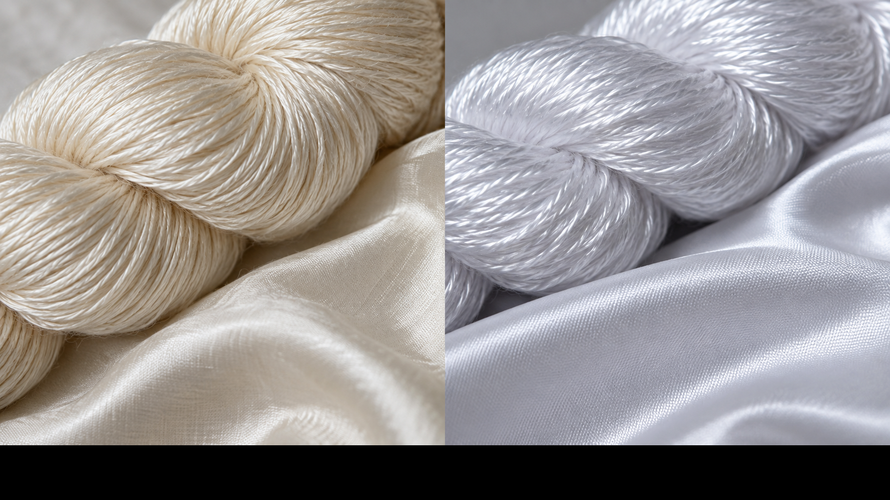
How Do Fibre, Weave and Finish Affect the Comparison?
Silk satin and polyester satin may share a reflective surface while differing in hand, heat response, care and price position. Silk twill and polyester twill can both show diagonal ribs, but yarn, density and finish decide the actual body and drape.
Printing, dyeing, brushing, coating and calendaring can change appearance in both fibre families. The sateen versus satin guide helps separate surface language from fibre language.
Polyester vs Silk: Quick Comparison
The table is a directional guide. Approve the proposed weight, weave, finish and finished item before making a commercial decision. For the silk side of the comparison, see the silk fabric types guide.
| Factor | Silk direction | Polyester direction | What to confirm |
|---|---|---|---|
| Hand and lustre | Often smooth, natural and nuanced | Can be matte, glossy or silk-like | Actual face and finish |
| Drape | Often fluid but varies by weave and weight | Can range from fluid to structured | Finished-size sample |
| Care | May need careful washing or dry-cleaning | Often chosen for easier-care ranges | Label route and test |
| Colour and print | Rich surface response with fibre-specific limits | Wide engineered colour and print options | Strike-off and light test |
| Cost position | Often higher depending on silk type | Broad range from value to premium | Full specification and yield |
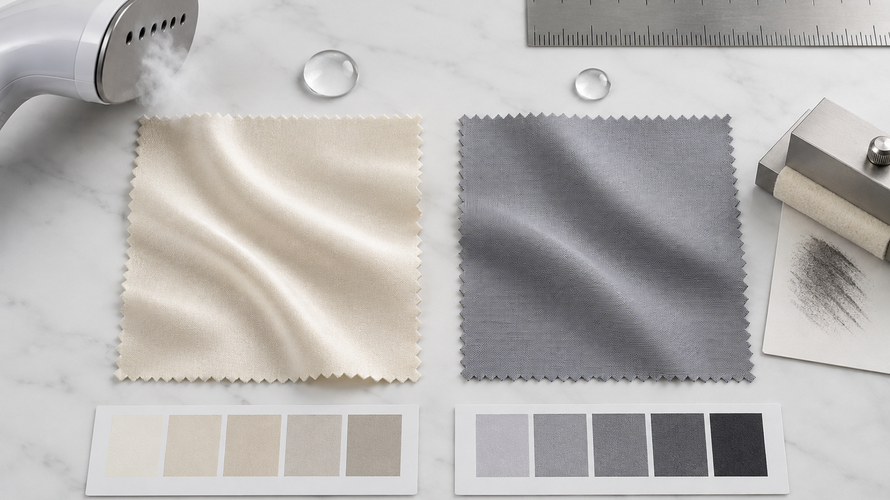
Polyester vs Silk for Scarves and Printed Products
Silk may be selected for a premium hand, natural fibre story, fluid movement and refined surface. Polyester may be selected for cost control, colour range, repeatability, durability or easier-care positioning. Neither choice removes the need to test the finished scarf.
For a custom scarf, compare the same dimensions, edge treatment, artwork, print side and lighting. Keep the approved fabric swatch with the production sample and review the fibre comparison method.
What Should Buyers Check Before Choosing Silk or Polyester?
A material decision should be tied to acceptance criteria. Check both fibre families at the proposed weight, weave, finish and product scale.
Hand, Drape and Slip
Touch the face and reverse, hang the fabric and test a finished fold. Smooth satin surfaces can slip even when they feel luxurious.
Heat, Steam and Care
Confirm the intended wash, pressing, steaming or dry-cleaning route. Test how lustre, shrinkage and surface respond after care.
Colour and Print
Review a production-representative strike-off under the final lighting. Compare colour depth, sharpness, show-through and reverse-side appearance.
Wear, Snagging and Pilling
Test rubbing, snagging, seam movement and pilling on the actual construction. Fibre name alone does not predict every wear result.
Cost, Yield and Compliance
Compare fibre cost, usable width, yield, minimums, care claims and accurate composition labelling before selecting the commercial route.
| Decision check | Why it matters | Possible risk | Evidence to request |
|---|---|---|---|
| Fibre content | Controls label and material story | Incorrect composition claim | Supplier specification |
| Weave and finish | Controls face and drape | Wrong hand expectation | Construction and finish note |
| Care route | Protects appearance | Lustre loss or shrinkage | After-care test |
| Print and colour | Protects artwork fidelity | Shade or sharpness drift | Strike-off and light review |
| Wear performance | Protects service life | Snagging, pilling or seam risk | Finished sample test |
| Cost and yield | Protects target price | Unexpected waste or MOQ | Usable-width and quote record |
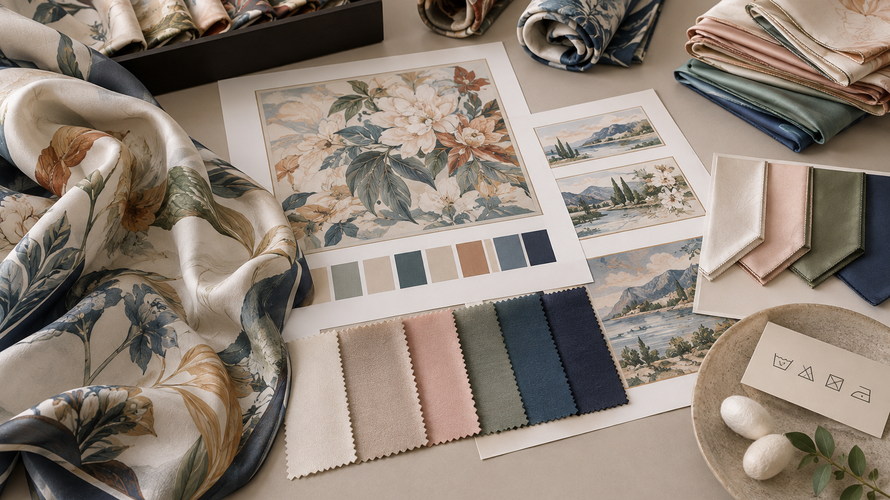
Which Is Better for a Custom Scarf?
Silk is often a strong fit for premium printed scarves, luxury gifting and designs where hand, lustre and natural fibre positioning matter. Polyester can fit promotional, value, easy-care or high-repeat programs where colour consistency, durability or price is more important.
The right answer is use-case specific. Compare silk with polyester at the same construction and finished size, then approve the construction specification and physical sample together.

How Should Polyester or Silk Be Specified?
State fibre content and percentage, yarn, weave, weight, usable width, face and reverse, finish, colour standard, print method, repeat, edge treatment, care route, tolerances and finished dimensions. For silk, identify the silk type or quality direction; for polyester, identify the engineered yarn or finish when it affects the hand.
Keep the comparison sample, artwork, care instruction and approval record together. Do not approve a cheaper or easier-care substitute from a photograph alone.
Frequently Asked Questions
Is silk better than polyester?
Neither is universally better. Silk may suit premium hand and natural-fibre positioning, while polyester may suit cost, repeatability, durability or easier-care requirements.
Does polyester look like silk?
Some polyester fabrics are engineered with a smooth or lustrous silk-like appearance, but hand, drape, care and fibre composition can still differ.
Is silk more breathable than polyester?
Breathability depends on fibre, weave, weight, openness and finish. Compare the actual fabrics for the intended climate rather than relying on fibre name alone.
Which is better for a printed scarf?
Silk can suit a premium hand and refined drape; polyester can suit cost-conscious, easy-care or repeatable programs. Compare the finished print and hem sample.
Is polyester easier to care for than silk?
Polyester is often selected for easier-care products, but the exact route depends on weave, dye, finish and construction. Follow the approved care test.
Is polyester cheaper than silk?
Polyester often offers a wider value range, while silk pricing varies by silk type, quality and supply. Compare usable width, yield, minimums and finished cost.
What should a supplier provide for a silk versus polyester decision?
Request accurate fibre content, construction, weight, width, finish, colour and print approval, care data, dimensional tests and representative finished samples.
Conclusion
Polyester versus silk is a product decision, not a universal ranking. Separate fibre from weave and finish, then compare hand, drape, care, print, wear, cost and finished dimensions against the brief. Approve the actual sample before bulk production.
