
What Is Fabric Composition? Fibre Content, Blends and Buyer Checks

Carina Silk Editorial Team writes practical guides on silk fabrics, scarves and custom textile development, with a focus on materials, artwork, sampling, construction and finishing decisions.
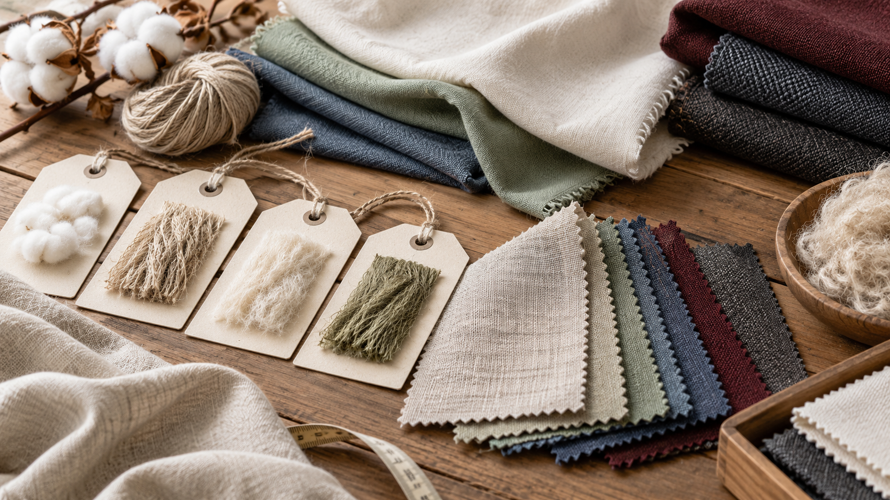
Fabric composition is the list of fibres present in a textile, usually expressed as percentages by weight. It tells a buyer what the material is made from, but it does not fully describe the fabric’s hand, drape, opacity, strength, care or print response.
A reliable specification therefore combines fibre content with yarn, construction, weight, width, finish and test conditions. Composition is the first identity check, not the complete quality specification.
What Is Fabric Composition?
Fabric composition identifies the generic fibres in the textile and the proportion of each fibre. A label such as cotton/polyester or silk/viscose describes the material mixture, but not the weave, knit, yarn or finish.
For regulated textile products, the FTC textile labelling guidance explains why fibre content must be stated accurately. The EU textile label guidance also requires composition information for products marketed in the EU. Requirements vary by market and product, so check the destination rules.
The Textile Exchange classification helps separate natural, manufactured cellulosic and synthetic fibre families. Do not turn a fibre family into an unsupported sustainability or performance claim.

How Is Fabric Composition Determined?
Composition may be declared from the bill of materials, yarn specification, supplier records and relevant testing. In a blended fabric, percentages should refer to the stated basis and the finished product documentation.
Construction can include different yarns, pile, coating, filling, trims or functional fibres. Ask which part the composition describes and whether the label applies to the base fabric or the whole finished product.
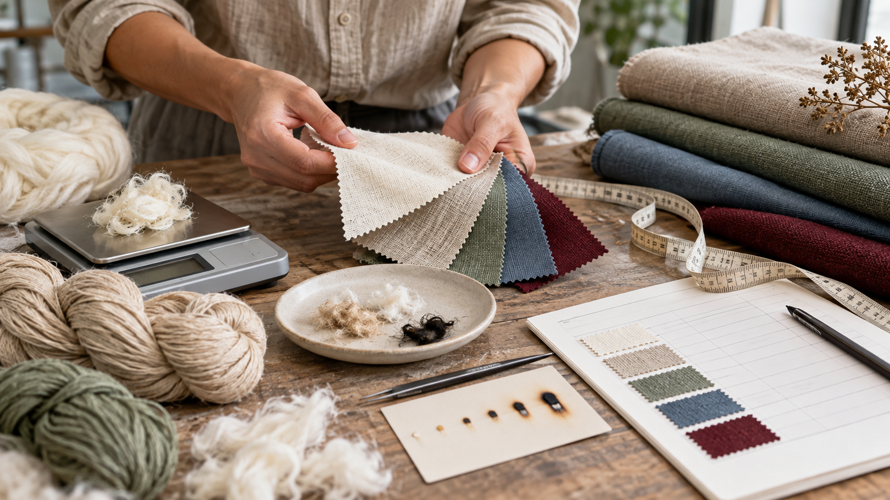
If a claim matters commercially or legally, use appropriate verification for the destination market. A visual inspection or burn test may provide clues but does not replace the required documentation or laboratory method.
What Are the Main Fabric Composition Types?
Use composition categories to frame the next question, not to predict every finished property.
| Composition direction | What it tells you | Potential fit | What it does not prove |
|---|---|---|---|
| Single-fibre fabric | One dominant generic fibre | Simple label and material story | One fixed hand or performance |
| Natural-fibre blend | Two or more natural fibre families | Balanced hand or cost position | Exact care or durability |
| Regenerated-cellulose blend | Cellulosic fibre with another fibre | Drape and stability balance | Sustainability outcome |
| Synthetic blend | Multiple manufactured fibres | Engineered hand or repeatability | Comfort or heat response |
| Stretch blend | Small elastane or stretch component | Recovery and fit | Long-term recovery |
| Coated or finished textile | Base fibre plus surface treatment | Protection or visual effect | Chemical or certification status |
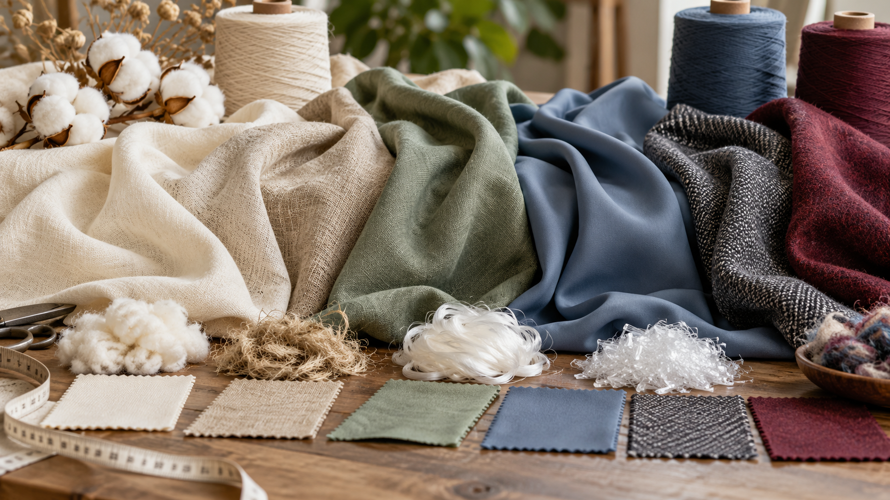
Fabric Composition vs Fabric Construction: What Is the Difference?
Composition answers “what fibres are present?” Construction answers “how are the yarns arranged?” A cotton plain weave, cotton sateen and cotton jersey share a fibre name but can differ sharply in drape, opacity, stretch and surface.
Finish can change the hand, lustre, shrinkage, softness, water response and print surface without changing the generic fibre label. The woven fabric guide explains why warp, weft and construction must be recorded separately.
Composition is therefore necessary but not sufficient. Pair it with a fabric swatch, technical specification and finished sample.
What Should Buyers Check in Fabric Composition?
The composition line should be traceable from the quotation to the finished product and label.
Generic Fibre Names
Confirm that the stated names are the recognized generic fibre terms for the destination market.
Percentages and Order
Check that percentages are stated on the correct basis and in the required order. Do not rely on a rounded marketing phrase.
Base and Trim
Ask whether the composition applies to the base fabric, lining, pile, coating, filling or complete finished product.
Construction and Weight
Record yarn, knit or weave, weight, width, density and finish because composition alone cannot predict the final hand.
Testing and Documentation
Request the appropriate test report or supplier document when content affects labelling, customs, safety or acceptance.
Claims and Care
Separate composition from claims about natural origin, sustainability, durability, comfort or care, and verify each claim independently.
| Record | Why it matters | Possible risk | Evidence to request |
|---|---|---|---|
| Fibre names | Defines material identity | Ambiguous or non-generic term | Composition statement |
| Percentages | Controls label and blend | Incorrect or rounded content | Technical document |
| Construction | Controls finished behaviour | Wrong drape or opacity | Construction details |
| Weight and width | Controls yield and use | Cost or coverage mismatch | Finished measurement |
| Testing | Supports material claim | Unverified content | Test report if required |
| Care and claims | Controls customer information | Unsupported promise | Care and claim evidence |
Why Does Fabric Composition Matter?
Composition affects fibre labelling, care guidance, customs description, sourcing decisions, dye or print compatibility and the way a product is positioned in a target market.
For silk products, separate genuine silk content from silk-like appearance. The silk guide explains why the fibre name should be checked before making a product or marketing claim.
For custom products, composition also affects sampling and testing. The same artwork and construction can behave differently when the fibre blend changes.

How Should Fabric Composition Be Specified?
State each generic fibre and percentage, the basis of measurement, construction, yarn, weight, width, finish, colour, care, testing and label wording. Check the FTC guidance or EU guidance for the destination market.
Attach a swatch and finished sample so the composition record is connected to the actual fabric. If the percentage or construction changes, treat it as a new quality until reapproved.
Frequently Asked Questions
What is fabric composition?
Fabric composition is the list of fibres in a textile and the percentage of each fibre, usually expressed by weight.
Does fabric composition tell me how fabric feels?
Not completely. Hand depends on fibre, yarn, construction, weight, finish and processing.
What does a blend percentage mean?
It indicates the proportion of each stated fibre on the declared basis. Check the complete technical and labelling context.
Why is fabric composition important?
It supports material identity, labelling, care, sourcing, customs and product decisions, but it is not a complete performance specification.
Can a fabric label be wrong?
A label can be inaccurate or incomplete, which is why important claims should be supported by supplier documents or suitable testing.
Does composition include trims and coatings?
It depends on the product and labelling rule. Ask whether the statement covers the base, trim, coating, filling or finished item.
What should a buyer request?
Request the fibre statement, percentages, construction, weight, width, finish, care, test evidence where needed and an approved sample.
Conclusion
Fabric composition is the identity layer of a textile specification. Use it to confirm fibre content and labelling, then add construction, weight, width, finish, care and sample evidence before making a purchasing or product claim.
