Linen vs Cotton: Properties, Uses and Buyer Checks

Carina Silk Editorial Team writes practical guides on silk fabrics, scarves and custom textile development, with a focus on materials, artwork, sampling, construction and finishing decisions.

Linen and cotton are both natural cellulose fibres, but they come from different plants and often create different fabric directions. Linen is commonly associated with a crisp, textured, breathable hand; cotton covers a wider range from soft jersey to stable canvas and smooth voile.
The right choice depends on construction, weight, width, surface, wrinkle tolerance, moisture behaviour, care and end use. A linen-cotton blend can balance some of these variables, but the blend still needs a finished-sample check.
What Are Linen and Cotton?
Linen is made from fibres of the flax plant, while cotton is produced from the seed fibres of cotton plants. Both belong to the natural cellulosic family, but their fibre form and processing history differ.
The Textile Exchange materials classification is a useful reminder to separate fibre origin from fabric construction. A linen plain weave, linen blend and cotton sateen will not behave the same simply because the fibre names are familiar.
Use the woven fabric guide when comparing the actual structure. Weave, yarn, density and finish can change drape and surface as much as the fibre choice.
How Do Linen and Cotton Become Fabric?
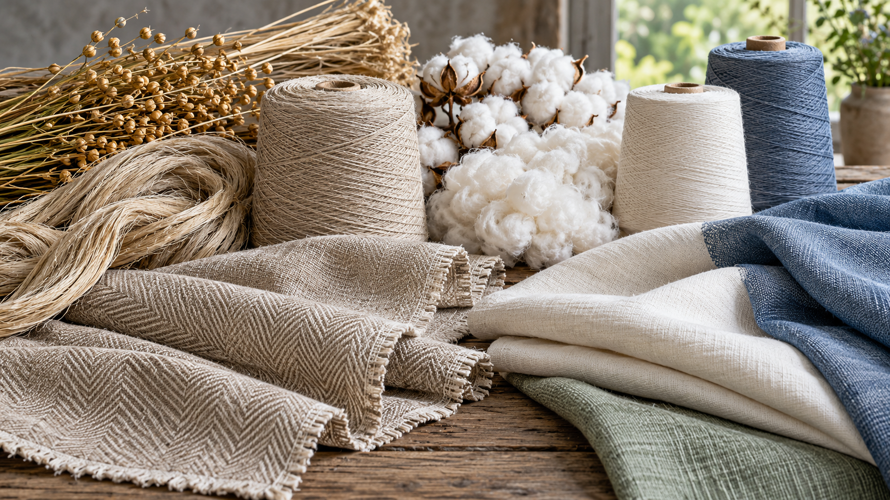
Flax fibres are prepared from the stem of the flax plant, while cotton fibres are separated from cotton bolls. Both are spun into yarn or used in blend routes before the fabric is knitted or woven.
A fabric can be open and airy, dense and structured, brushed, softened, mercerized, printed or finished in many ways. These steps control the final hand and can change the practical difference between linen and cotton.
When a project is printed or finished, approve the final base. A fibre comparison made on a flat swatch may not predict the result after dyeing, printing, washing, pressing or hemming.
What Are the Main Linen and Cotton Options?
The most useful comparison is between finished constructions rather than generic fibre names.
| Option | Typical character | Potential fit | What to confirm |
|---|---|---|---|
| Light linen plain weave | Crisp, airy and textured | Summer apparel and light accessories | Opacity, width and crease |
| Heavy linen or canvas | Stable and more structured | Home textiles and structured products | Weight, stiffness and edge |
| Cotton voile or lawn | Light, soft and potentially sheer | Scarves, blouses and overlays | Opacity and print show-through |
| Cotton sateen | Smooth face with more surface lustre | Decorative or polished products | Weave, slip and care |
| Cotton jersey | Flexible and comfortable | Casual and close-to-skin products | Stretch, recovery and spirality |
| Linen-cotton blend | Balances texture and softness | Apparel and accessories | Blend ratio, care and shrinkage |
Linen vs Cotton: What Is the Difference?
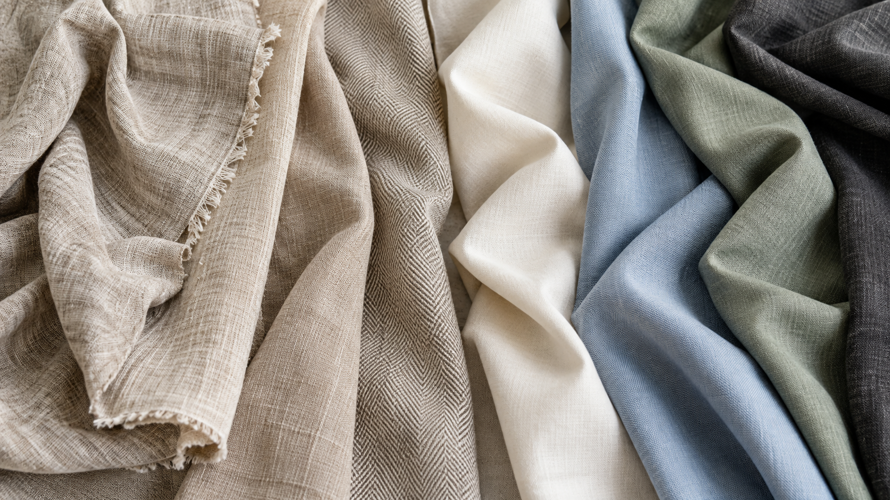
Linen often gives a cooler, crisper and more textured direction, while cotton can offer a softer initial hand and a broader selection of constructions. Linen commonly shows stronger creasing; cotton may be easier to control in smooth or stable finishes.
These are tendencies, not universal guarantees. A lightweight cotton voile can be cooler and more transparent than a heavy linen, while a dense cotton sateen can feel more polished than an open linen weave. Compare fibre, yarn, weave, weight and finish together.
For printed scarves and panels, check the sateen and satin distinction if a smooth reflective surface is part of the brief. Fibre choice and weave choice should be recorded separately.
What Should Buyers Check Before Choosing Linen or Cotton?
Use the comparison to define the product requirement, then use a physical sample to verify the result.
Fibre and Blend
Confirm linen, cotton and any other fibre percentages. Do not infer composition from texture or colour.
Hand and Crease
Handle, fold and hang the sample. Record whether the product needs crisp texture, softness, easy pressing or relaxed creasing.
Weight and Width
Record finished weight, usable width and dimensional change because these affect yield, drape, opacity and costing.
Moisture and Comfort
Evaluate the intended end use and care route. Absorption, drying and comfort depend on construction and finish as well as fibre.
Colour and Print
Approve shade, artwork, repeat, border and show-through on the exact linen, cotton or blend base.
Shrinkage and Care
Test washing, pressing and drying because both fibres can change dimension or surface under different care conditions.
| Criterion | Linen tendency | Cotton tendency | What to confirm |
|---|---|---|---|
| Initial hand | Crisp and textured | Often softer, but construction varies | Finished sample |
| Crease | More visible in many qualities | Can also crease, often easier to control | Wrinkle tolerance |
| Breathability | Often airy in open constructions | Depends on construction and weight | End-use trial |
| Structure | Can feel firm or dry | Ranges from fluid to firm | Weave and finish |
| Texture can affect detail | Route depends on fibre and finish | Strike-off | |
| Care | May need dimensional control | Wide range of care routes | Wash and press test |

When Should You Choose Linen, Cotton or a Blend?
Choose linen when texture, a crisp hand, airflow and a relaxed visual direction matter. Choose cotton when the project needs a familiar range of hand, construction, care or cost positions.
Choose a blend when the product needs a compromise between texture, softness, crease behaviour and care. The blend should still be specified by percentage and tested after finishing.
For a scarf, compare the fabric with the best fabric for head scarves guide only when the end use is relevant. A fabric that works for apparel may need different opacity, edge and grip for a scarf.
How Should Linen or Cotton Fabric Be Specified?
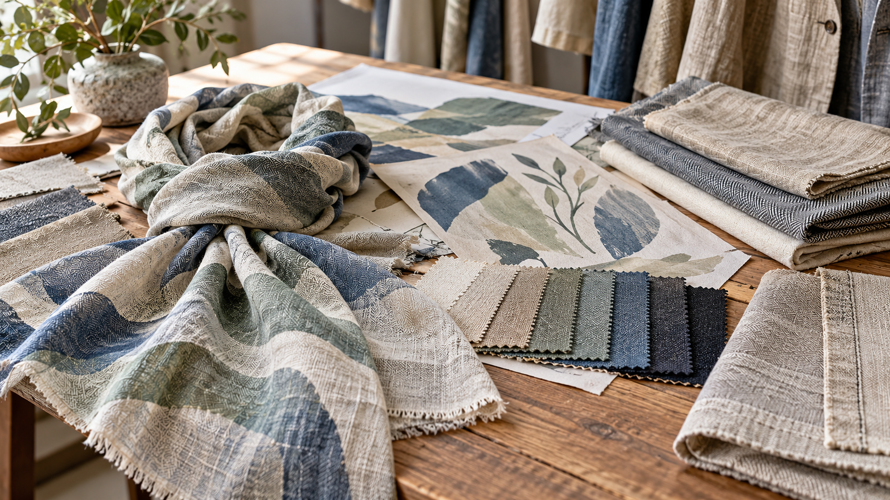
State fibre composition, construction, yarn, weight, usable width, opacity, hand, colour, artwork and finish. For labelling, review the FTC textile-fibre guidance and EU textile labelling guidance for the relevant market.
Attach a fabric swatch and define the accepted shrinkage, skew, colour, crease and edge conditions. The finished sample should be the reference for bulk.
Frequently Asked Questions
Is linen better than cotton?
Neither is automatically better. Linen may suit a crisp, breathable and textured direction, while cotton may suit a softer or more versatile construction.
Which is cooler, linen or cotton?
Linen is often selected for a cool, airy direction, but weight, weave and finish also control comfort. Compare the finished fabrics in the intended use.
Does linen wrinkle more than cotton?
Linen commonly shows stronger creasing, but the result depends on construction and finishing. Cotton can also wrinkle, especially in light or relaxed fabrics.
Can linen and cotton be blended?
Yes. A blend can balance texture, softness and care, but the exact ratio and finished dimensions must be tested.
Which is better for printing, linen or cotton?
The answer depends on the fibre, preparation, construction and print route. Approve colour and detail on the actual base fabric.
Is linen good for scarves?
It can suit scarves that need texture and a crisp natural direction. Confirm softness, opacity, drape, crease tolerance and edge finish.
What should a linen or cotton buyer request?
Request composition, construction, weight, width, care, shrinkage, colour standard, print sample and finished-product reference.
Conclusion
Linen versus cotton is a choice between finished-fabric directions, not a universal ranking. Define the required hand, crease behaviour, weight, opacity, print response and care route, then approve the exact blend and construction through samples.