
What Is Synthetic Fabric? Types, Properties, Uses and Buyer Checks

Carina Silk Editorial Team writes practical guides on silk fabrics, scarves and custom textile development, with a focus on materials, artwork, sampling, construction and finishing decisions.
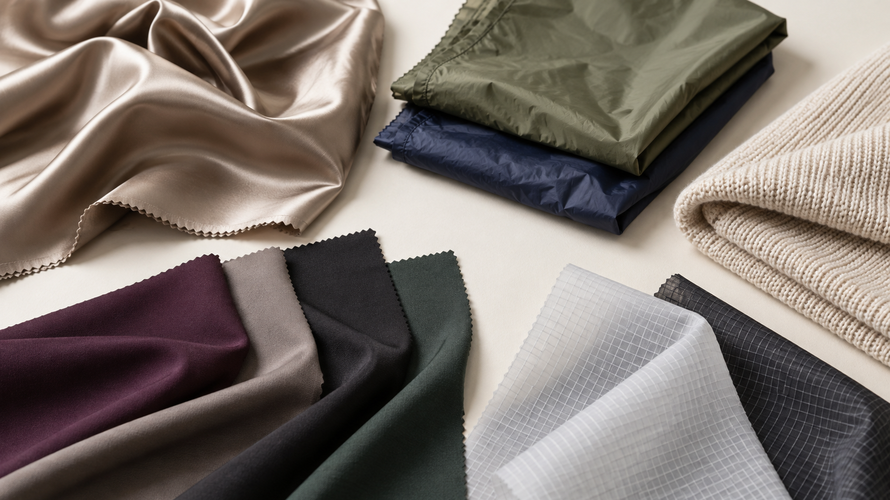
Synthetic fabric is made from fibres whose polymers are produced through chemical synthesis rather than grown as cotton or harvested as wool or silk. Common examples include polyester, nylon or polyamide, acrylic, elastane and polypropylene. These fibres are used in apparel, scarves, accessories, home textiles, upholstery and technical products because their chemistry can be engineered for particular strength, stretch, drying, shape retention or surface effects.
“Synthetic” is a fibre family, not one finished fabric. A sheer polyester chiffon, a coated polyester rain shell and a dense polyester satin can share a generic fibre name while behaving very differently. For sourcing, specify fibre, yarn, construction, weight, finish, coating and end use together.
What Is Synthetic Fabric?
Synthetic fabric is made from manufactured polymer fibres. Textile Exchange’s synthetic fibre glossary describes polymers such as polyester, polyamide, acrylic, polyurethane and polypropylene as synthetic fibre families produced through chemical processes.
This differs from regenerated cellulosic fibre such as viscose or lyocell. Regenerated fibres begin with cellulose from a plant source and are dissolved and re-formed into textile fibre. Both categories are manufactured, but they are not the same fibre family and should not be described interchangeably.
Fibre identity is only the starting point. Ask whether the yarn is staple or filament, how it is textured, what the weave or knit is, and whether a coating or finish changes the final surface. The Textile Exchange synthetics overview is a useful reference for the major directions.

What Are the Main Types of Synthetic Fabric?
Polyester is widely used for apparel, linings, scarves, home textiles and printing. Nylon or polyamide is valued in many applications for strength, abrasion resistance and a smooth hand. Acrylic is used where a wool-like appearance or light warmth is wanted. Elastane or polyurethane provides stretch when blended with another fibre. Polypropylene is used in selected lightweight, moisture-management and technical products.
The generic name still leaves important questions unanswered: staple or filament, yarn size, cross-section, texturing, weave or knit, coating, finish and blend percentage. A fibre label cannot predict drape, opacity, static, heat tolerance or print result by itself.
| Fibre family | Common product direction | Possible strength | What to confirm |
|---|---|---|---|
| Polyester | Apparel, scarves, linings, home textiles and printed goods | Shape retention, colour consistency and processing options | Heat response, hand, pilling, dye or print route |
| Nylon / polyamide | Activewear, hosiery, bags and lightweight outerwear | Strength, abrasion resistance and smooth surface potential | Moisture, UV, stretch and care |
| Acrylic | Wool-like apparel, blankets and knitwear | Light weight and soft wool-like appearance | Pilling, heat, static and dimensional stability |
| Elastane / polyurethane | Stretch garments, swimwear and fitted accessories | Elastic extension and recovery | Blend ratio, recovery, heat, chlorine and ageing |
| Polypropylene | Selected base layers and technical products | Low density and low moisture absorption potential | Heat, dyeability, seam and odour |
How Are Synthetic Fabrics Made?
The route depends on the polymer, but a synthetic fibre is generally formed by preparing a polymer, melting or dissolving it, pushing it through a spinneret and drawing or treating the resulting filaments. The material may be used as continuous filament, cut into staple fibre, textured, twisted into yarn and then woven or knitted.
Finishing is part of the product, not an afterthought. Heat setting can stabilise shape. Brushing, calendaring, coating, lamination, water-repellent treatment and surface texturing can change hand, lustre, air movement and care. Two polyester fabrics can therefore have different performance before garment design is considered.

What Properties Matter When Choosing Synthetic Fabric?
Synthetic fabrics can be strong, light, quick to dry, crease resistant or elastic, but none of these properties is universal. A dense synthetic may have low air permeability. A smooth surface may build static. A stretch fabric may lose recovery after heat or chemical exposure. A coated fabric may resist water while becoming less breathable.
Hand, Drape and Appearance
Compare hand, drape, weight, thickness and opacity on the actual construction. A sheer filament fabric, a brushed knit and a laminated shell may share a polymer family but not a use case.
Moisture and Air Movement
Air permeability, moisture movement and drying depend on yarn, openness, weight, finish and garment design. Do not assume that a quick-drying fibre will always feel comfortable or that a coated face will breathe well.
Stretch and Recovery
For elastane blends, measure extension and recovery in the intended direction and after repeated cycles. A high stretch percentage without recovery can create bagging, seam stress and inconsistent sizing.
Heat, Static and Surface Wear
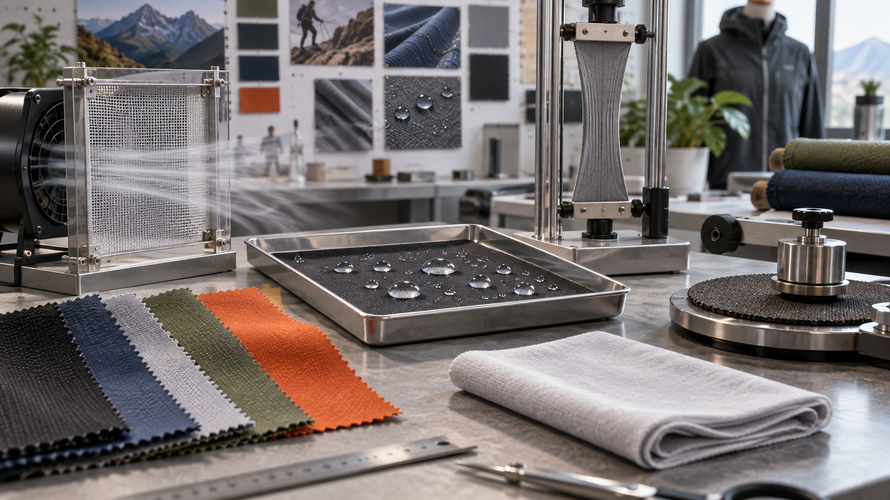
Check pressing temperature, heat setting, static, pilling, abrasion, snagging and coating adhesion. The correct test depends on the end use, so retain the method and result with the approval sample.
| Property | Why it matters | What to confirm |
|---|---|---|
| Weight and construction | Controls drape, coverage, air movement and cutting | GSM, width, weave or knit, face and reverse |
| Moisture response | Changes comfort, drying and care | Absorption, wicking, drying and finish |
| Stretch and recovery | Controls fit and shape retention | Direction, extension and repeated recovery |
| Heat response | Affects pressing, pleating, coating and care | Temperature limits and finished sample |
| Surface durability | Rubbing can create pills, shine or snags | Relevant abrasion, pilling and appearance test |
Where Are Synthetic Fabrics Used?
Polyester can suit printed scarves, linings, pleats, uniforms and home textiles when the selected surface and print process match the brief. Nylon may suit products where abrasion or strength matters. Elastane can solve a fit problem but needs recovery and ageing checks. Acrylic can create a soft visual direction but may need careful pilling and heat review.
The limitation is not simply that a fabric is synthetic. The real question is whether the polymer, construction and finish fit the intended use. A lightweight open synthetic may feel very different from a coated technical version. A synthetic fibre may be easy to care for in one construction and heat-sensitive in another.
For custom work, approve the actual strike-off and finished sample. The fabric swatch guide explains why a swatch should be retained with the material specification rather than treated as decoration.
Sustainability and Fibre Claims
Synthetic fibres are commonly associated with fossil-fuel-derived feedstocks, and end-of-life, shedding and recycling should be considered. At the same time, recycled content, mono-material construction and product longevity are separate variables that need evidence. Do not treat “recycled polyester” as a complete sustainability claim without confirming content, certification and chain of custody.
The FTC clothing and textiles guidance is a useful reminder that fibre content and care information must be accurate in covered markets. A supplier’s marketing name should not replace the generic fibre name, composition and supporting documentation.
How Should Buyers Specify Synthetic Fabric?
State the exact polymer and percentage, staple or filament direction, yarn, construction, weight, width, face and reverse. Add the required hand, drape, opacity, stretch, recovery, coating, finish, print method and care route. For a printed product, approve a strike-off on the actual base. For a stretch product, test repeated extension and recovery. For a coated or technical product, test the finished construction rather than the face fabric alone.
Keep an approved fabric swatch with the specification. If the base is woven, the woven fabric guide explains why warp and weft direction belong in the brief. For regenerated-cellulose terminology, see the viscose vs rayon guide.

Frequently Asked Questions
Is Synthetic Fabric Plastic?
Most common synthetic fibres are made from manufactured polymers, and many use petrochemical feedstocks. The exact polymer family matters: polyester, nylon, acrylic, polyurethane and polypropylene are different materials. “Plastic” is a broad description, not a complete textile specification.
Is Synthetic Fabric Breathable?
It can be, but breathability depends on fibre, yarn, construction, weight, finish and garment design. An open mesh and a coated shell made from related polymer chemistry will not have the same air or moisture behaviour.
Is Synthetic Fabric Waterproof?
Fibre identity alone does not make a fabric waterproof. Water resistance or waterproof performance usually depends on construction, coating, membrane, seam design and testing. Confirm the finished-product requirement.
Which Synthetic Fabric Is Strongest?
There is no universal ranking because strength depends on polymer, yarn, construction, orientation and finish. Nylon may be selected for some abrasion or strength requirements, while polyester may be preferred for other stability or colour directions. Test the actual fabric.
Does Synthetic Fabric Shrink?
Some synthetic fabrics are dimensionally stable, while others can shrink, relax or distort through heat, washing, finishing or coating. Confirm the finished dimensional tolerance after the intended care route.
Is Polyester the Same as Nylon?
No. Both are synthetic polymers, but they have different chemistry and can differ in hand, strength, abrasion, moisture response, heat behaviour and care.
Can Synthetic Fabric Be Printed?
Many synthetic bases can be printed, but the suitable process depends on polymer, construction, finish, ground colour and fastness requirement. Approve a strike-off and finished sample before bulk production.
How Do I Buy Better Synthetic Fabric?
Specify polymer, percentage, construction, weight, width, finish, performance and end use. Then compare the approved swatch, test result and finished product under realistic handling and lighting.
Conclusion
Synthetic fabric is a broad family of manufactured polymer textiles, not one fixed material. Polyester, nylon, acrylic, elastane and polypropylene solve different problems, and construction or finishing can change the result as much as fibre chemistry. Choose by the finished brief, confirm the generic fibre identity and approve the actual sample before production.
