
What Is Yarn-Dyed Fabric? Process, Benefits and Buyer Checks

Carina Silk Editorial Team writes practical guides on silk fabrics, scarves and custom textile development, with a focus on materials, artwork, sampling, construction and finishing decisions.
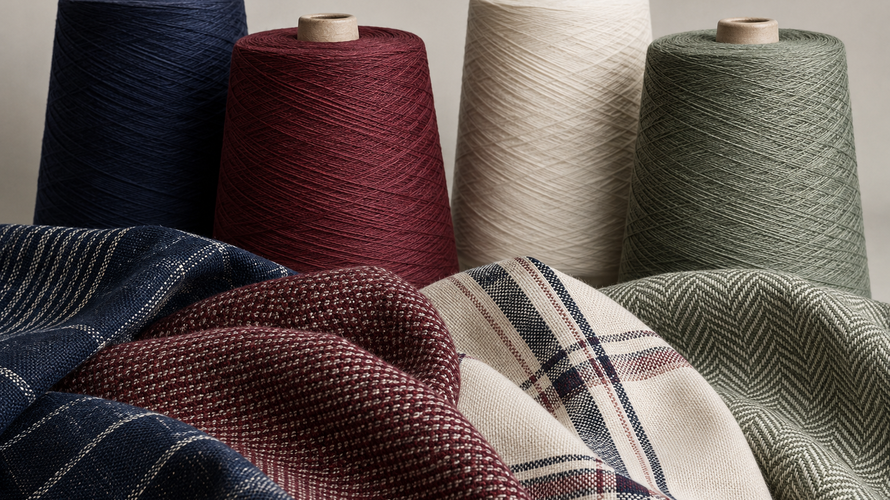
Yarn-dyed fabric is made with coloured yarns before weaving or knitting, so stripes, checks, plaids and other patterns are formed by the yarn arrangement. It is different from piece-dyed fabric, which is coloured after the cloth is constructed, and from printed fabric, where artwork is applied to the surface.
Yarn dyeing can support a strong two-sided appearance and repeat control, but the result depends on fibre, yarn, weave, colour recipe, density and finishing.
What Is Yarn-Dyed Fabric?
In yarn-dyed cloth, some or all yarns are dyed before they are interlaced. The warp, weft or both can carry colour, allowing the fabric structure itself to create a stripe, check, plaid, herringbone or figured effect.
The basic woven design reference and warp-and-weft glossary help describe how yarn directions form the cloth. A yarn-dyed claim should still be supported by accurate fibre and colour specifications.
How Is Yarn-Dyed Fabric Made?
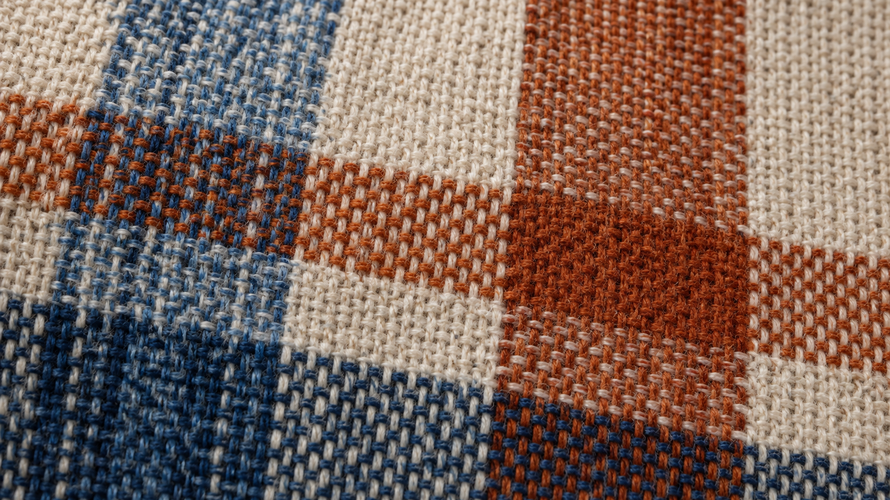
The mill prepares yarns to approved colour standards, then arranges them according to the weave draft and repeat. On a loom, coloured warp and weft yarns cross to create the visible design. The pattern can appear on both sides, although face and reverse may not be identical.
After weaving, washing, finishing, brushing or calendaring can change colour depth, hand, shrinkage and repeat alignment. A complex design needs a full-width sample because a small cutting may not reveal the complete repeat.
What Patterns Can Be Yarn-Dyed?
Yarn dyeing works across many fibres and constructions. The pattern family is only one part of the final specification.
| Pattern direction | How it is formed | Common fit | What to confirm |
|---|---|---|---|
| Stripes | Alternating coloured yarns in one direction | Scarves, shirting and apparel | Stripe width and alignment |
| Checks and plaids | Warp and weft colours intersect | Apparel, accessories and home goods | Repeat and face/reverse |
| Herringbone | Reversing twill directions | Tailoring and structured accessories | Chevron scale and skew |
| Solid yarn-dyed | Uniform colour through yarns | Stable colour programs and basics | Shade lot and colourfastness |
| Custom engineered repeat | Planned multi-colour yarn layout | Signature scarves and branded goods | Artwork, repeat and loom plan |

Yarn-Dyed Versus Piece-Dyed and Printed Fabric
Yarn-dyed patterns are built into the cloth through coloured yarns. Piece-dyed fabric is made first and dyed as a piece, while printed fabric receives artwork on the surface after construction. A piece-dyed or yarn-dyed base can also be printed, so the routes should be stated separately.
Use the printed, woven and Jacquard comparison when a buyer needs to distinguish construction from surface artwork.
What Should Buyers Check in Yarn-Dyed Fabric?
The key controls are colour, yarn matching, repeat, grain, dimensional stability and finished appearance. Approve the full-width quality, not just a small colour swatch.
Yarn Colour and Lot
Match yarns to the approved colour standard and record lot controls. Different yarn lots can shift the visual balance of a repeat.
Repeat and Alignment
Measure stripe, check or plaid repeat in both directions. Check how it meets the scarf corner, hem, seam and cut edge.
Face and Reverse
Inspect both sides under the final lighting. Yarn-dyed patterns can be attractive on both sides but not identical.
Colourfastness and Care
Test rubbing, washing, perspiration or other relevant care conditions. Finishing can change colour depth and hand.
Shrinkage, Skew and Yield
Measure length, width, skew and usable yield after finishing. Pattern alignment can expose dimensional change.
| Check | Why it matters | Possible risk | Evidence to request |
|---|---|---|---|
| Yarn colour | Sets the pattern balance | Shade-lot mismatch | Yarn standard and lab dip |
| Repeat and layout | Controls cutting and identity | Plaid or stripe mismatch | Repeat plan and full-width sample |
| Face and reverse | Controls presentation | Unexpected reverse | Both-side approval |
| Colourfastness | Protects use and care | Crocking or shade loss | Test result |
| Shrinkage and skew | Protects finished dimensions | Uneven pattern | After-finish measurement |
| Fibre and construction | Sets care and performance | Wrong material expectation | Specification |
Is Yarn-Dyed Fabric Good for Scarves?
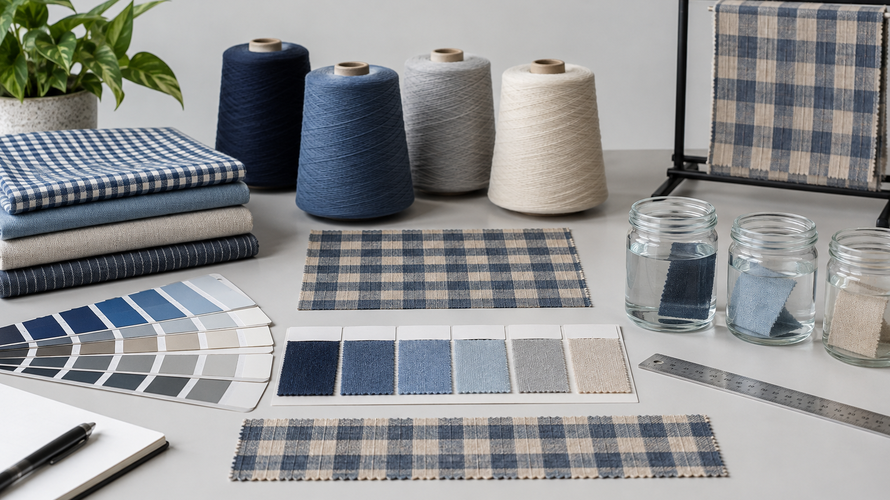
Yarn-dyed fabric can suit striped, checked, plaid or reversible scarves where the colour relationship is part of the product identity. It can also suit apparel, bags and home goods, but the repeat and cut direction must be planned before production.
For a custom product, keep the approved fabric swatch with the yarn standard and finished hem sample. The woven fabric guide provides the construction context.
How Should Yarn-Dyed Fabric Be Specified?
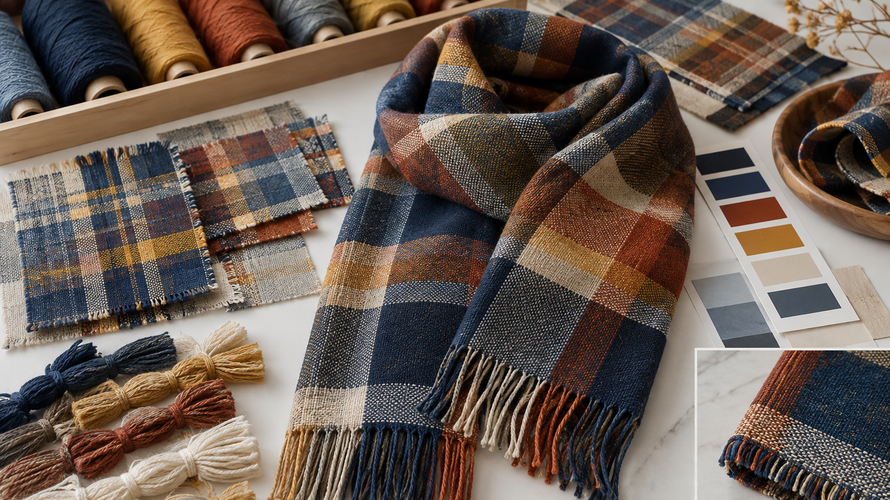
State fibre content, yarn type and colour, weave or knit construction, repeat, stripe or check scale, weight, usable width, face and reverse, finish, colourfastness, shrinkage and care route.
Use the twill guide if the pattern uses a diagonal construction, and approve the finished sample at production scale.
Frequently Asked Questions
What is yarn-dyed fabric?
It is fabric made with coloured yarns dyed before weaving or knitting, so stripes, checks or other patterns are formed by the yarn arrangement.
Is yarn-dyed better than printed fabric?
Neither is universally better. Yarn-dyed construction can provide a two-sided woven pattern, while printing offers different artwork and colour flexibility. Choose for the brief.
What is the difference between yarn-dyed and piece-dyed fabric?
Yarn-dyed colours the yarn before construction; piece-dyed colours the cloth after it is made. The appearance, repeat and development route differ.
Is yarn-dyed fabric reversible?
It may show colour on both sides, but face and reverse can differ in contrast, finish and usability. Inspect both sides.
Does yarn-dyed fabric fade?
Colourfastness depends on fibre, dye, recipe, finishing and care. Test the actual quality for the intended use.
Is yarn-dyed fabric good for scarves?
It can suit stripes, checks, plaids and reversible scarf designs when repeat, drape, edge and care meet the brief.
What should a yarn-dyed supplier provide?
Request fibre and yarn details, colour standards, repeat plan, width, weight, face and reverse, colourfastness, dimensional data and a full-width sample.
Conclusion
Yarn-dyed fabric builds colour into the yarn arrangement before construction, which makes it useful for stripes, checks and planned repeats. Specify the yarn, fibre, repeat, colour, finish and care route, then approve a full-width finished sample before production.
