
Fabric Weight and GSM Guide: Meaning, Uses and Buyer Checks

Carina Silk Editorial Team writes practical guides on silk fabrics, scarves and custom textile development, with a focus on materials, artwork, sampling, construction and finishing decisions.
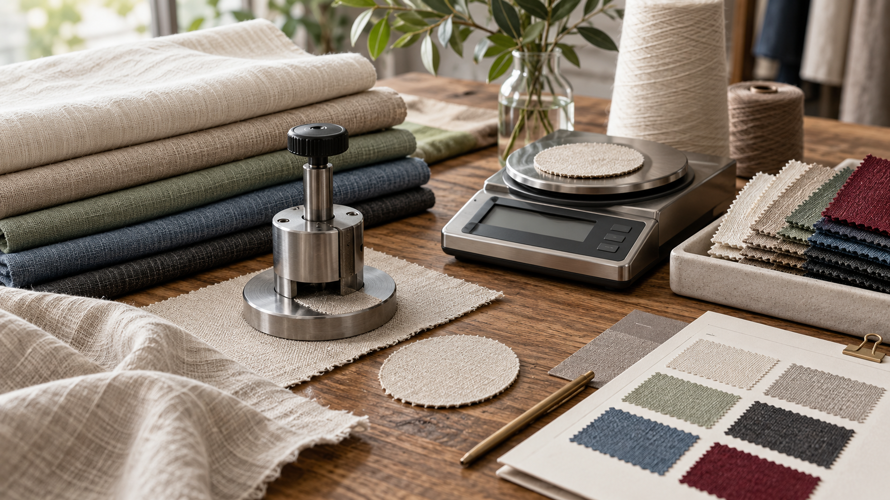
GSM means grams per square metre. It describes the mass of a defined area of fabric and gives buyers a common way to specify weight across widths. GSM is useful for comparing samples, but it is not a complete description of thickness, quality, warmth, drape or durability.
The same GSM can feel very different when fibre, yarn, weave, knit, density, finish and width change. Use GSM with a physical reference, construction information, tolerance and a finished-sample check.
What Is GSM in Fabric?
GSM is the mass of one square metre of fabric, expressed in grams. It is also described as fabric mass per unit area or grammage. The measurement allows a buyer to compare weight without confusing roll length or fabric width.
A higher GSM generally means more mass per area, but it does not automatically mean thicker, warmer, stronger or better. A dense fine fabric and a bulky open fabric can produce different hand and thickness at similar or different GSM values.
The woven fabric guide and silk fabric types guide show why fibre and construction must accompany the weight number.
How Is Fabric GSM Measured?
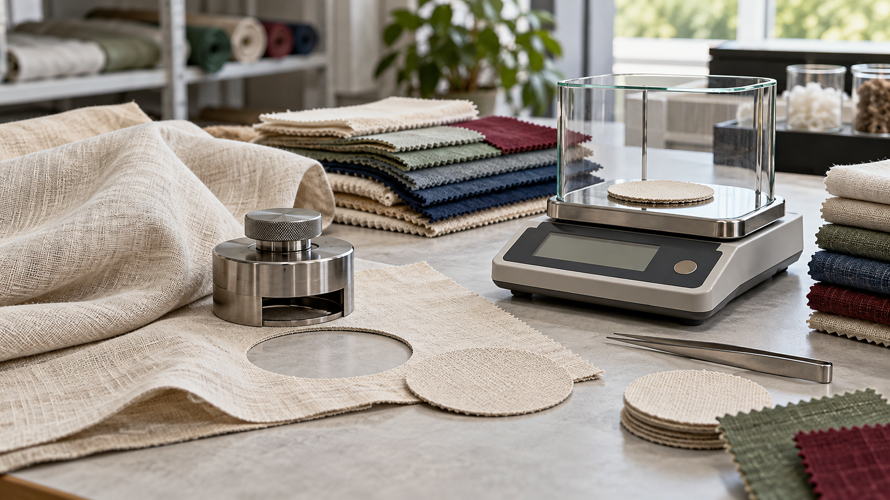
A defined fabric area is cut or otherwise measured, then weighed. The result is converted to grams per square metre. The sample should be taken from the agreed fabric condition and handled consistently.
Moisture, finish, coating, pile, stretch, selvage, conditioning, location across the width and sample preparation can influence the result. A test method and tolerance should therefore be stated when GSM is a contractual or inspection requirement.
For a buyer, compare the result with the approved reference. A number without the fabric identity, construction, finish and test condition can create false precision.
How Should Fabric Weight Be Interpreted?
Weight categories are useful only when tied to a fabric family and end use. Use them as working descriptions, not universal quality grades.
| Weight direction | What it may change | Potential fit | What to confirm |
|---|---|---|---|
| Very light | Airiness, drape and possible sheerness | Voile, chiffon and light scarves | Opacity, edge and tear risk |
| Light to medium | Balance of movement and cover | Blouses, scarves and light apparel | Drape, width and print show-through |
| Medium | More body and coverage | Everyday apparel and structured scarves | Construction and hand |
| Heavy | Body, warmth or structure | Outerwear, upholstery and heavy products | Stiffness and yield |
| Coated or piled | Mass includes surface material | Technical or decorative textiles | Measurement basis and thickness |
| Stretch or knit | Weight interacts with recovery | Close-fitting or flexible products | Relaxed condition and recovery |
Fabric Weight vs Thickness: What Is the Difference?
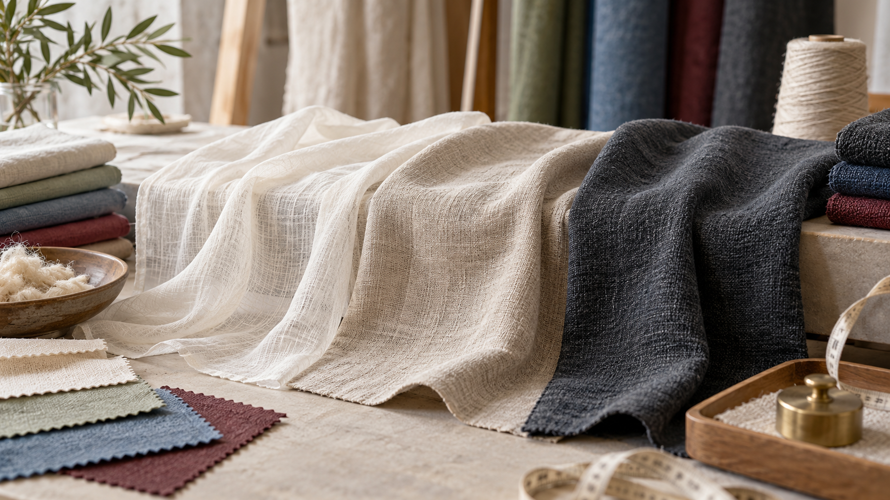
GSM measures mass per area. Thickness measures distance through the fabric. They are related in some constructions but not interchangeable. A lofty fabric can be thick at a moderate GSM, while a dense fabric can feel compact without being thick.
GSM also does not directly measure drape, warmth, opacity, strength, softness, pilling or quality. These outcomes depend on fibre, yarn, construction, finish and end use.
Use the fabric swatch workflow and the woven fabric guide to compare the weight number with the hand, drape, opacity and finished dimensions that the product actually needs.
What Should Buyers Check When Specifying Fabric Weight?
A useful GSM specification answers what is measured, on which fabric, under which condition and within what tolerance.
Measurement Basis
State GSM, unit, test method or sampling approach, conditioning and whether the result includes coating, pile or other surface material.
Construction and Fibre
Record fibre, yarn, knit or weave, density and finish because the same GSM can produce different hand and performance.
Width and Yield
Confirm finished and usable width. GSM does not replace width when estimating material use or product yield.
Drape and Opacity
Handle and hold the actual sample under intended lighting. Record drape, coverage and show-through rather than inferring them from weight.
Tolerance and Variation
Agree a tolerance and inspect across the roll or lot. Record where and when the sample was taken.
Finished Product
Check weight again after dyeing, printing, washing, coating, pressing and hemming when those steps can change the final quality.
| Record | Why it matters | Possible risk | Evidence to request |
|---|---|---|---|
| GSM value | Creates a common weight reference | Number without context | Test result and unit |
| Condition | Controls comparability | Moisture or finish shift | Condition and stage |
| Construction | Explains hand and density | Wrong drape or opacity | Yarn and weave details |
| Width | Controls yield and costing | Coverage mismatch | Usable width |
| Tolerance | Controls lot acceptance | Unclear pass or fail | Agreed range |
| Finished sample | Confirms the real product | Bulk differs from swatch | Approved reference |

Why Does Fabric Weight Matter for Custom Textiles?
GSM can affect drape, opacity, warmth, hand, shipping weight, material yield and the way a print or finish sits on the fabric. It is especially useful when a brief must be repeated across colours or production lots.
For silk, weight may also be expressed through momme in some contexts. Do not convert or compare units without confirming the fabric width, basis and specification. The silk guide provides the fibre context; the buyer still needs the exact weight and construction.
For scarves, choose weight together with size, shape, edge finish, opacity and use. A heavier fabric is not automatically more suitable or more durable.
How Should Fabric Weight Be Specified?
State the target GSM, unit, test condition, method if required, tolerance, fibre, yarn, construction, width, finish, colour, print route and the intended finished stage.
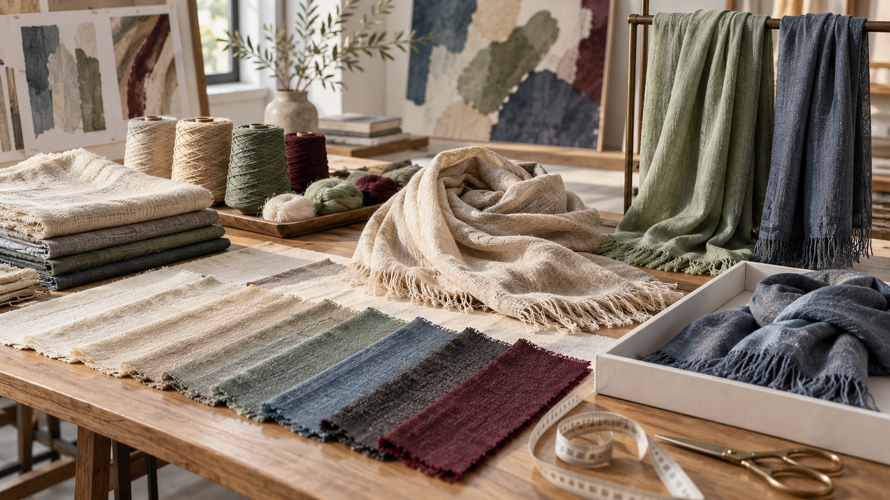
Attach a fabric swatch with the target hand and drape. Approve a finished sample after printing, washing, pressing and hemming when those operations form part of the product.
Frequently Asked Questions
What does GSM mean in fabric?
GSM means grams per square metre. It is the mass of a defined area of fabric.
Does higher GSM mean better fabric?
No. Higher GSM means more mass per area, but quality depends on fibre, construction, finish, hand, use and testing.
Does GSM equal fabric thickness?
No. GSM measures mass per area, while thickness measures distance through the fabric. The two should not be treated as interchangeable.
What is a good GSM for fabric?
There is no universal best GSM. The target depends on fibre, construction, product, drape, opacity, care and end use.
How is fabric GSM checked?
A defined area is cut or measured and weighed, then expressed as grams per square metre. Use the agreed method and condition.
Does GSM affect scarf quality?
It can affect drape, opacity, hand and shipping weight, but the result also depends on weave, fibre, finish, size and edge treatment.
What should a fabric buyer specify?
Specify GSM with unit, condition, tolerance, construction, width, finish and an approved physical reference.
Conclusion
GSM is a useful control number, not a complete quality grade. Pair fabric weight with construction, width, fibre, finish, tolerance and a physical reference so the delivered textile matches the intended hand, drape, opacity and finished use.
