
Viscose vs Polyester: Properties, Uses and Buyer Checks

Carina Silk Editorial Team writes practical guides on silk fabrics, scarves and custom textile development, with a focus on materials, artwork, sampling, construction and finishing decisions.
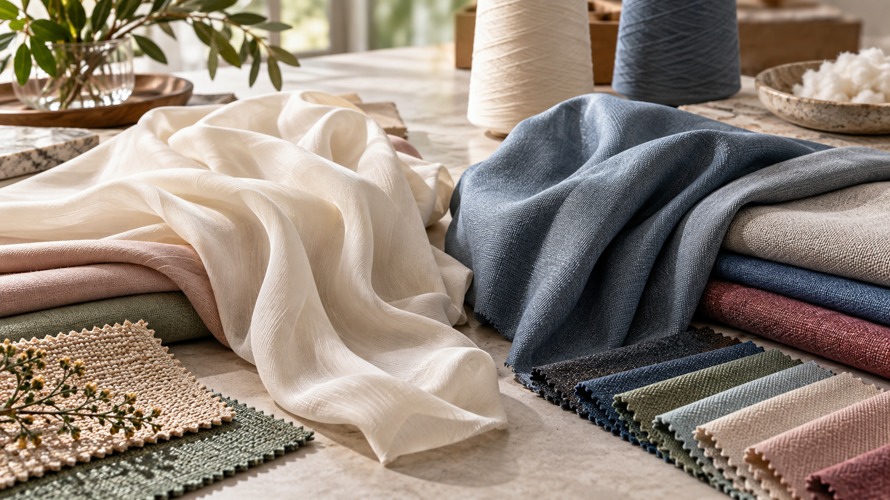
Viscose and polyester belong to different fibre families. Viscose is a regenerated cellulose fibre in the rayon family, while polyester is a manufactured synthetic fibre. Viscose is often selected for fluid hand and drape; polyester is often selected for dimensional stability, repeatability or easy-care potential.
Neither fibre determines the finished fabric alone. Yarn, knit or weave, weight, density, finish, blend ratio and care control the actual result. A viscose-polyester blend may solve a specific brief, but it still needs testing.
What Are Viscose and Polyester?
Viscose is a regenerated cellulosic fibre made by converting cellulose into a spinning solution and regenerating it into fibre. Polyester is a synthetic polymer fibre. The Textile Exchange classification helps place the two in different material families.
The viscose versus rayon explanation is useful because naming varies by market, while a finished fabric still needs composition, construction and finish details.
A viscose fabric can be fluid or structured, and a polyester fabric can be soft or crisp. Avoid treating the fibre name as a complete performance specification.
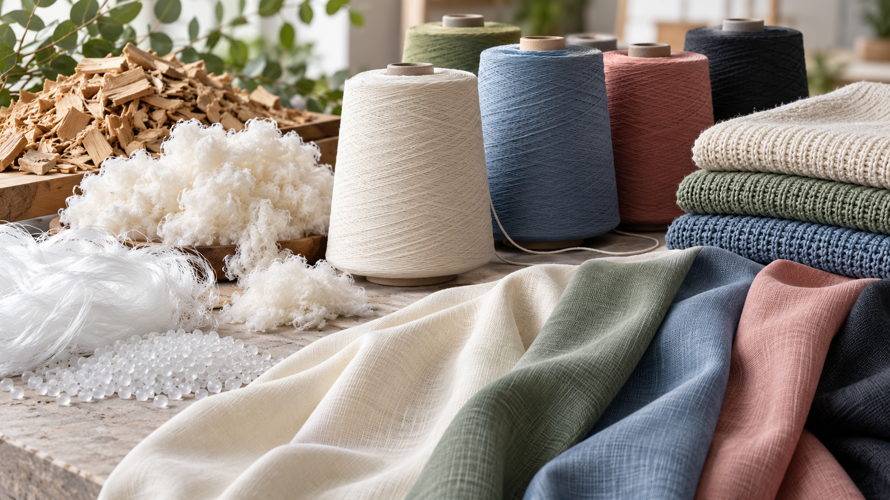
How Do Viscose and Polyester Become Fabric?
Viscose is regenerated into filament or staple fibre, spun into yarn and then knitted or woven. Polyester can be produced as filament or staple yarn and used in many constructions.
Dyeing, finishing, brushing, texturing, heat setting and blending change both materials. Polyester may be heat-set for dimensional control; viscose may need careful control of wet handling and dimensional change.
The production route should match the end use. A scarf, garment panel, lining and home textile can need different balances of drape, opacity, colour, care and recovery.
What Are the Main Viscose and Polyester Options?
Compare the actual construction and blend rather than using fibre stereotypes.
| Option | Typical direction | Potential fit | What to confirm |
|---|---|---|---|
| Fluid viscose woven | Soft, drapey and often matte | Scarves, blouses and dresses | Wet strength, shrinkage and width |
| Polyester filament woven | Stable, smooth and repeatable | Linings, scarves and panels | Heat, static and surface |
| Viscose knit | Soft with flexible drape | Casualwear and soft products | Stretch, recovery and spirality |
| Textured polyester | Engineered hand or surface | Easy-care and repeat programs | Pilling, heat and colour |
| Viscose-polyester blend | Balances hand and stability | Suits, dresses and accessories | Blend ratio and care |
| Printed quality | Print result depends on fibre route | Custom artwork and scarves | Dye compatibility and strike-off |
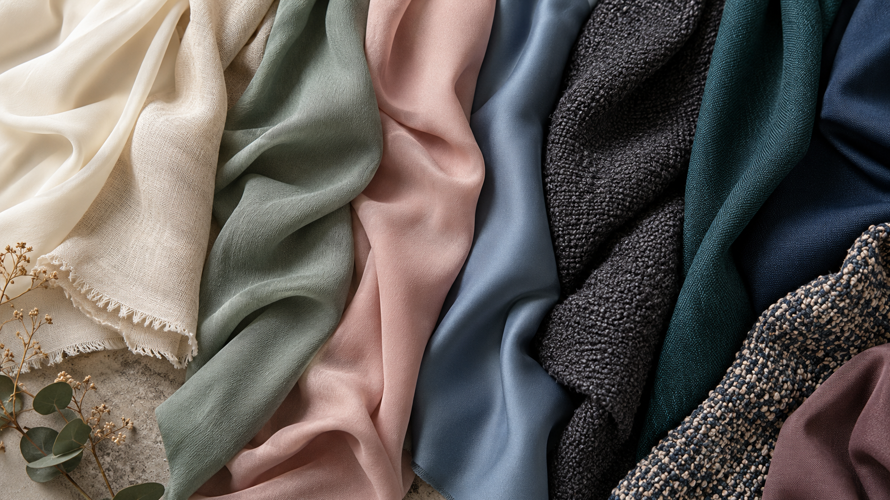
Viscose vs Polyester: What Is the Difference?
Viscose often provides a softer, more fluid direction, while polyester can provide stronger dimensional control and a wider range of engineered yarn options. These are starting tendencies, not automatic outcomes.
Viscose may need closer attention to wet handling, shrinkage, recovery and care. Polyester may need checks for static, heat, pilling, surface shine and hand-feel expectations. The exact construction can reverse the apparent advantage.
For a blend, decide what each fibre is contributing. A fabric swatch should be tested for drape, opacity, colour, care, edge and finished dimensions.
If the product needs a smooth face, compare the satin guide because satin describes construction and surface as well as fibre.
What Should Buyers Check Before Choosing Viscose or Polyester?
Define the desired product behaviour first, then use the fibre comparison to choose a route.
Composition and Blend
Confirm viscose, polyester and any additional fibre percentages in the finished quality and label documents.
Drape and Hand
Handle and hang the fabric at the proposed weight and width. Record fluidity, body, softness, surface and recovery.
Wet and Heat Response
Test washing, drying, steaming and pressing because the two fibre families can respond differently to moisture and heat.
Colour and Print
Select the dye or print route for the actual composition, then approve colour, detail, repeat and show-through.
Pilling and Surface
Check abrasion, fuzz, static, shine, snagging and surface change under the intended use.
Dimensions and Finish
Confirm shrinkage, skew, width, edge, hemming, packing and the finished-product tolerances.
| Criterion | Viscose tendency | Polyester tendency | What to confirm |
|---|---|---|---|
| Hand | Often soft and fluid | From smooth to crisp | Finished sample |
| Drape | Often fluid | Depends on yarn and construction | Weight and width |
| Wet response | Needs careful testing | May be more dimensionally stable | Wash and measurement |
| Heat | Finish and dimension can change | Heat can affect lustre or shape | Pressing trial |
| Surface | May pill or change with abrasion | May pill, shine or create static | Rub and wear test |
| Blend | Adds drape to blends | Adds stability to blends | Exact percentage |
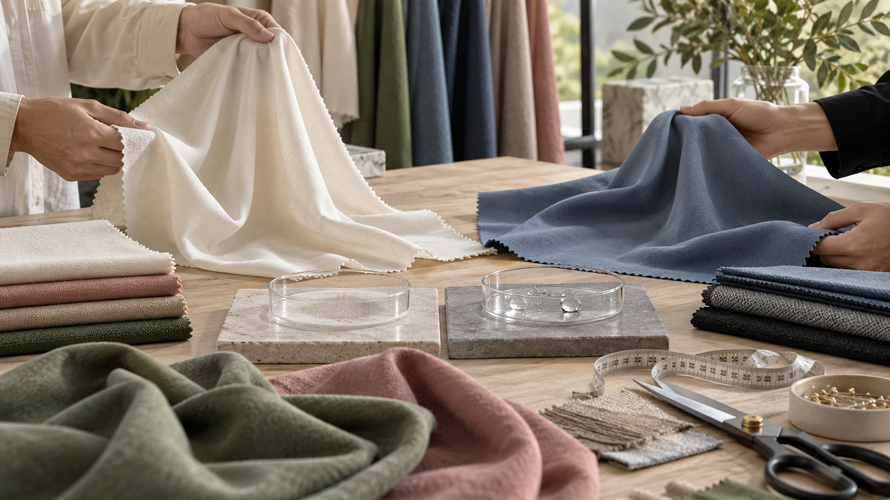
When Should You Choose Viscose, Polyester or a Blend?
Choose viscose as a starting direction when fluid movement, soft hand and a regenerated-cellulose position fit the product. Choose polyester when dimensional control, engineered yarns, repeatability or a particular care route matter.
Choose a blend when the product needs a controlled balance. State what the blend is intended to improve and verify that result on the finished quality.
For a custom scarf, connect the fibre choice with fabric patterns and the chosen print route. Artwork, fibre and weave each influence the final appearance.
How Should Viscose or Polyester Fabric Be Specified?
State generic fibre names and percentages, yarn, construction, weight, width, opacity, drape, hand, stretch, finish, colour, print route, care and dimensional tolerances. Use the FTC fibre-labelling reference or EU textile-label reference for the relevant market.
Approve the finished sample after the intended wash, print, hem and packing route. Do not approve a blend by fibre name alone.
Frequently Asked Questions
Is viscose better than polyester?
Neither is automatically better. Viscose may suit fluid hand and drape, while polyester may suit dimensional control or engineered performance. The finished use decides.
Which is softer, viscose or polyester?
Viscose is often soft, but polyester can also be engineered for a soft hand. Yarn, construction and finish must be compared.
Does viscose shrink more than polyester?
Viscose can need closer dimensional control, but shrinkage depends on the exact fabric and finishing. Test both qualities under the intended care route.
Can viscose and polyester be blended?
Yes. The blend can balance drape and stability, but the percentage, construction and finish determine the result.
Which is better for printed scarves?
The best choice depends on print compatibility, hand, opacity, drape, colour and care. Approve a strike-off and finished sample on the actual fabric.
Is viscose natural or synthetic?
Viscose is a manufactured regenerated-cellulose fibre. It is not the same material family as a natural fibre such as cotton or silk.
What should a buyer compare?
Compare composition, yarn, construction, weight, width, drape, hand, colour, print route, care, pilling and dimensions.
Conclusion
Viscose versus polyester should be decided through the finished product requirement. Define the desired drape, hand, stability, print, care and surface, then approve the composition and construction with samples and targeted tests.
