
What Is Acrylic Fabric? Properties, Uses and Buyer Checks

Carina Silk Editorial Team writes practical guides on silk fabrics, scarves and custom textile development, with a focus on materials, artwork, sampling, construction and finishing decisions.

Acrylic is a manufactured synthetic fibre used in knitwear, scarves, blankets, furnishings and other textiles. It is often selected when a product needs a light, warm or wool-like direction at a different price and care position.
Acrylic is a fibre name, not a guarantee of one fixed hand feel. Staple length, yarn size, knit or weave, brushing, blend ratio and finishing can change the finished fabric substantially.
What Is Acrylic Fabric?
Acrylic fabric is a textile made partly or wholly from acrylic fibre, a synthetic fibre commonly formed from an acrylonitrile-based polymer. The fibre may be spun into staple yarn or used in other engineered forms before it is knitted or woven.
The Textile Exchange materials classification separates acrylic from natural and regenerated cellulosic fibre families. Always check the composition statement because an acrylic product may be a blend.
The final fabric depends on fibre fineness, yarn structure, construction, brushing, dyeing, finishing and product design. The synthetic fabric context helps separate the fibre family from the finished fabric. “Wool-like” describes an appearance or hand direction, not fibre content.
How Is Acrylic Fibre Made Into Fabric?
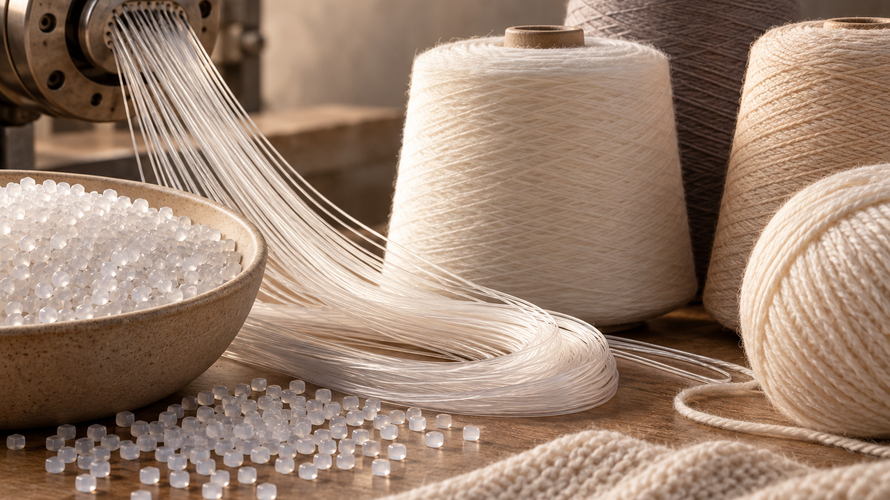
Acrylic polymer is prepared and formed into fibres through spinning. The fibres may be cut into staple lengths, crimped, blended and spun into yarns that imitate some of the loft and softness associated with wool.
The yarn is then knitted or woven and may be brushed, raised, compacted, dyed or finished. These steps influence warmth, surface hairiness, pilling, stretch, recovery, colour and care response.
For a buyer, the important question is not only whether a fabric is acrylic. Confirm the fibre ratio, yarn route, construction, weight, width, surface finish and intended use on the exact quality.
What Are the Main Acrylic Fabric Directions?
Acrylic can appear in several constructions and blend routes. The construction often explains more about the finished behaviour than the generic fibre name alone.
| Acrylic direction | Typical character | Common fit | What to confirm |
|---|---|---|---|
| Acrylic knit | Soft, flexible and often warm | Sweaters, hats and scarves | Loop structure, stretch and recovery |
| Brushed acrylic | Raised, soft and wool-like surface | Cold-weather accessories and blankets | Pile height, shedding and pilling |
| Acrylic fleece | Lofty, warm and easy-care direction | Casual apparel and lining | Weight, warmth and surface stability |
| Acrylic woven | More stable body than many knits | Home textiles and structured items | Construction, handle and edge fray |
| Acrylic blend | Balances acrylic with another fibre | Apparel, accessories and furnishings | Blend ratio and care interaction |
| Solution- or piece-dyed quality | Colour route changes surface and shade | Colour-focused programs | Colourfastness, shade lot and finish |
Acrylic Fibre vs Acrylic Fabric: What Is the Difference?
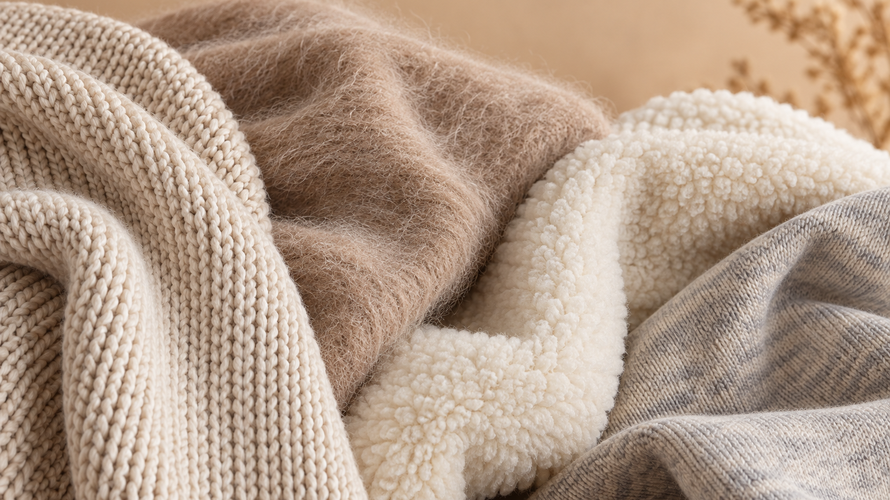
Acrylic is the fibre family. Acrylic fabric is the finished textile created from acrylic yarn through knitting or weaving and later finishing. Two acrylic fabrics can therefore differ in warmth, stretch, density, hand, pilling and care.
Use the synthetic fabric guide for the wider manufactured-fibre context. When the brief compares acrylic with a natural fibre, compare the actual finished sample rather than a fibre name alone.
The polyester versus silk comparison also shows why fibre choice should be separated from surface appearance, weight and end use.
What Should Buyers Check in Acrylic Fabric?
Acrylic can be practical, but the buyer should define the desired warmth, surface, care, durability and appearance before approving a quality.
Composition and Blend
Confirm acrylic percentage, other fibres, yarn route and the exact wording needed for labels or technical documents.
Yarn and Construction
Record staple or filament direction, yarn size, knit or weave, gauge or density and the finished width.
Hand, Loft and Surface
Inspect softness, bulk, brushing, hairiness, recovery and whether the surface changes after handling or washing.
Pilling and Abrasion
Test the finished quality for pilling, rubbing and surface change under the actual use conditions.
Heat and Care
Confirm washing, drying, steaming and pressing limits. High heat can distort or damage some acrylic qualities.
Colour and Dimensional Stability
Check shade, colourfastness, shrinkage, skew, stretch recovery and finished dimensions against the approved sample.
| Check | Why it matters | Possible risk | Evidence to request |
|---|---|---|---|
| Composition | Defines material identity | Blend or label mismatch | Fibre specification |
| Construction | Controls body and stretch | Wrong fit or coverage | Construction and weight data |
| Surface | Controls softness and appearance | Pilling or uneven nap | Finished sample and rub test |
| Heat and care | Protects shape and surface | Glazing or distortion | Care route and trial |
| Colour | Protects shade consistency | Lot or crocking issue | Colour standard and test |
| Dimensions | Controls yield and fit | Shrinkage or skew | After-finish measurements |
What Is Acrylic Fabric Used For?
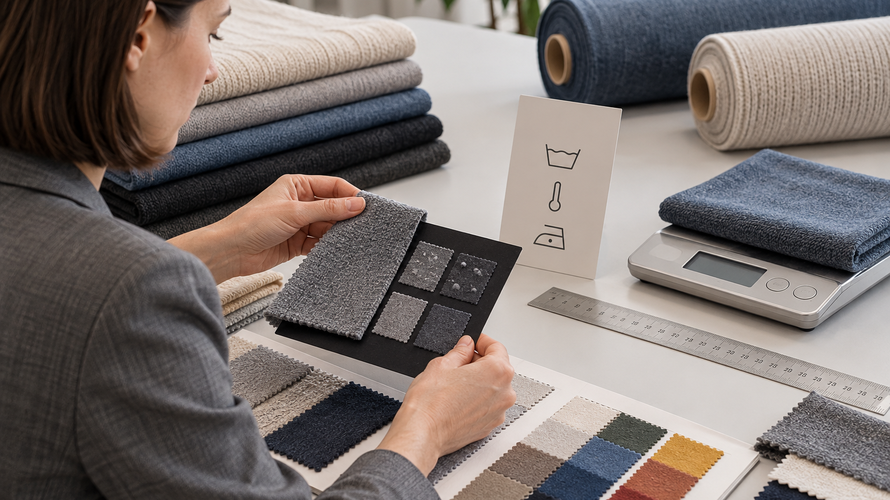
Acrylic is used for knitwear, scarves, hats, gloves, blankets, upholstery, craft yarns and selected outdoor or home-textile products. The fabric swatch guide explains why a small swatch should be checked against the finished product requirements.
Choose acrylic when its warmth, colour, price, care and surface direction fit the brief. The synthetic fabric guide provides wider fibre-family context. Do not describe acrylic as wool or silk unless the composition supports that statement.
How Should Acrylic Fabric Be Specified?
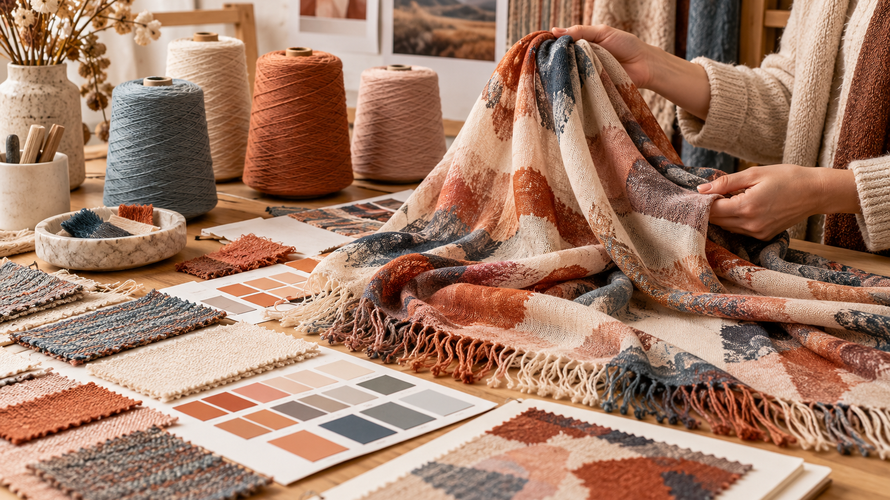
State fibre content, blend ratio, yarn type, knit or weave, weight, width, colour, finish, stretch or recovery, pilling requirement, care route and acceptable tolerances.
If acrylic is being used for a scarf or accessory, define finished dimensions, edge treatment, hand, surface direction and packaging. The woven fabric guide helps separate construction from fibre.
Frequently Asked Questions
What is acrylic fabric?
Acrylic fabric is a textile made from acrylic synthetic fibre, usually through a knitted or woven construction. Its final hand and performance depend on yarn, construction and finishing.
Is acrylic fabric natural or synthetic?
Acrylic is a manufactured synthetic fibre, not a natural fibre such as silk, cotton or wool.
Is acrylic as warm as wool?
Acrylic can provide warmth with low weight, but the exact result depends on loft, construction and finishing. It is not automatically equivalent to wool.
Does acrylic fabric pill?
Some acrylic qualities can pill with abrasion, especially soft or brushed surfaces. Test the actual finished quality rather than relying on the generic fibre name.
Can acrylic fabric be washed?
Many acrylic products can be washed at moderate temperatures, but the approved care route should follow the exact blend, construction and finish.
Is acrylic good for scarves?
Acrylic can suit scarves when the required warmth, hand, drape, care and surface durability are met. Approve the finished sample before production.
What should an acrylic fabric buyer request?
Request composition, construction, weight, width, colour standard, pilling or abrasion evidence, dimensional data, care guidance and an approved sample.
Conclusion
Acrylic is a versatile synthetic fibre, but “acrylic” alone does not specify the finished fabric. Confirm composition, yarn, construction, surface, heat response, pilling, colour and dimensions, then approve the exact quality for the intended product.
