What Is Chiffon Silk? Properties, Uses and Sampling Checks

Carina Silk Editorial Team writes practical guides on silk fabrics, scarves and custom textile development, with a focus on materials, artwork, sampling, construction and finishing decisions.

Silk chiffon is a sheer, lightweight plain-woven fabric made with fine, highly twisted yarns. It is known for airy movement and soft transparency, but the exact hand, strength, opacity and care response depend on yarn, density, weight, finishing and fibre content.
Chiffon is a fabric construction, not a fibre name. Silk chiffon and polyester chiffon can share a light appearance while differing in hand, price, heat response, care and print behaviour. Specify the exact fibre and finished construction before sampling.
What Is Silk Chiffon?
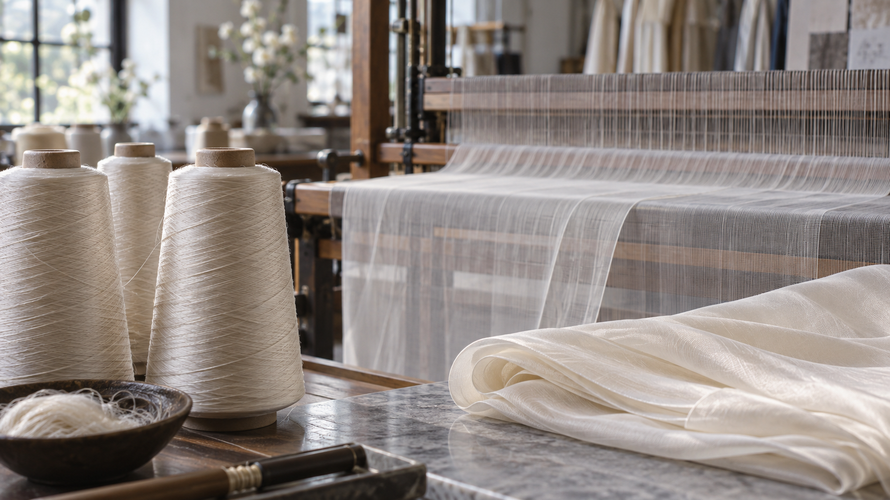
Chiffon is generally a very light, sheer plain weave made with fine, high-twist yarns. The Getty textile terminology record describes it as a sheer lightweight plain-woven textile originally made from silk and now also produced in synthetic fibres. Silk chiffon is the version made with silk fibre.
The chiffon definition from the OQLF highlights the light transparent structure, fine multifilament yarns and strong twist that contribute to drape. In a quotation, use “100% silk chiffon” only when the fibre content supports that description.
Silk Chiffon Versus Polyester Chiffon
Silk chiffon usually provides a natural protein-fibre hand and a refined fluid appearance, while polyester chiffon may offer lower cost, easy-care options or different heat and abrasion behaviour. Neither label tells you the finished opacity, weight, print result or edge stability by itself.
The FTC textile labeling guidance requires accurate generic fibre disclosures for covered textile products. Record fibre content, percentage and country or supplier information separately from the fabric construction name.
| Direction | Typical feel | Potential advantage | What to verify |
|---|---|---|---|
| Silk chiffon | Light, soft and fluid | Premium hand and elegant movement | Fibre, opacity, care and edge |
| Polyester chiffon | Light and variable | Cost and care flexibility | Heat, static, print and hand |
| Viscose chiffon | Soft with fluid movement | Regenerated-cellulose direction | Wet handling and dimensional change |
| Silk georgette | More textured and often heavier | Less transparent body direction | Weight, grain and surface |
How Does Silk Chiffon Compare with Related Fabrics?
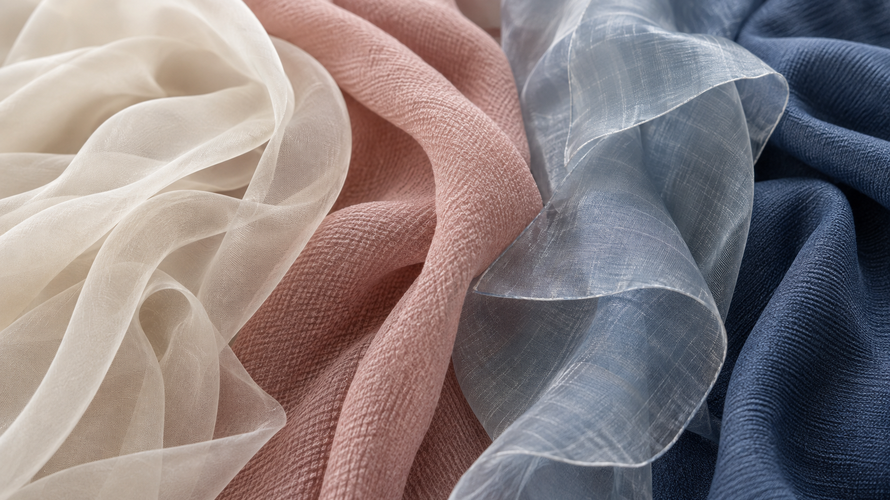
Silk chiffon is generally lighter and more transparent than silk georgette, while organza is usually crisper and more structured. Silk crepe can have a pebbled face and more body. The names describe related fabric directions, but fibre, yarn and finish still need to be confirmed.
Use the existing types of silk fabric guide for the wider taxonomy. For the product itself, compare transparency and drape on the finished width rather than relying on a small flat swatch.
What Properties Matter in Silk Chiffon?
Chiffon is attractive because of its airiness, but the same openness creates practical risks. Test the finished construction against the intended use.
Transparency and Coverage
Check opacity in the customer’s lighting and with the intended underlayer. Colour, print, yarn density and layering can change perceived coverage.
Drape and Recovery
Hang, twist and knot the full-size sample. A small piece may not reveal how a chiffon scarf falls or how it recovers after handling.
Print and Colour Response
Review ground colour, print definition, show-through, repeat scale and colourfastness. Approve a strike-off and a finished piece at the intended dimensions.
Edge and Seam Behaviour
Light chiffon can fray, shift or pucker during cutting and sewing. Test the proposed rolled hem, narrow seam or raw-edge treatment on the actual quality.
Care and Dimensional Change
Confirm washing, dry-cleaning, steaming, pressing and water-mark behaviour. Measure the finished size before and after the intended care route.
| Check | Why it matters | Possible risk | Evidence |
|---|---|---|---|
| Opacity | Controls coverage and layering | Unexpected sheerness | Lighting and underlayer review |
| Weight and width | Controls drape and yield | Finished size does not match brief | Measured roll and full-size sample |
| Print definition | Protects artwork and repeat | Blurred or uneven colour | Strike-off and finished piece |
| Edge stability | Controls scarf appearance | Fraying or hem puckering | Hemmed production sample |
| Care response | Protects service life | Water marks or distortion | Relevant care test |
Is Silk Chiffon Suitable for Scarves?
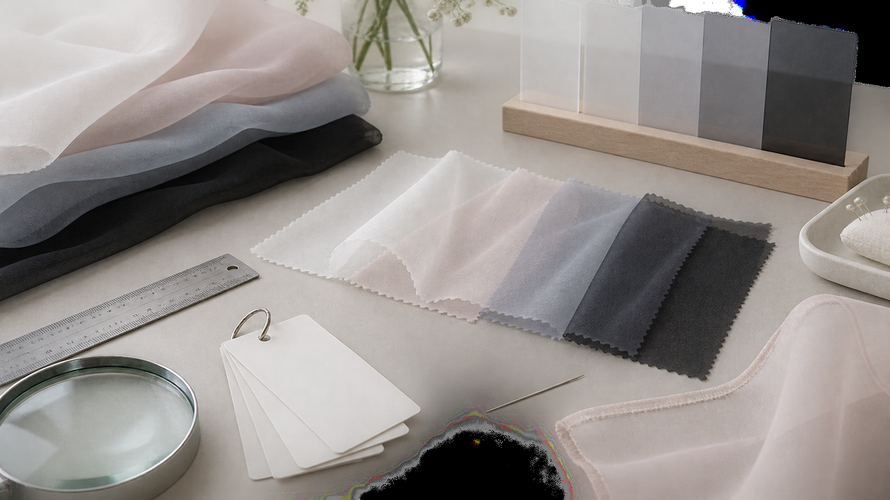
Silk chiffon can suit an airy scarf, overlay, wrap or layered accessory when the brief accepts transparency and delicate handling. It is not automatically the best choice for a fully opaque, highly structured or rough-use product.
For custom production, approve the artwork at the intended scale, check the full width, review show-through and test the finished rolled hem. Keep the approved fabric swatch with the sample and production notes.

How Should Buyers Specify Silk Chiffon?
State fibre content, construction, weight, width, yarn direction, transparency, hand, drape, colour, print method, repeat, fastness, care route and edge treatment. If the product is woven, use the woven fabric guide to record the construction. For print planning, use the printed, woven and jacquard comparison to separate surface routes.
Do not use “silk chiffon” for a blend or substitute without clear fibre disclosure. Retain the approved swatch, strike-off and finished-size sample as the acceptance reference.
Frequently Asked Questions
Is Chiffon Always Made from Silk?
No. Chiffon is a light sheer fabric direction and can be made from silk, polyester, viscose or blends. Confirm the fibre content before approval.
Is Silk Chiffon Durable?
Durability depends on yarn, density, finishing, seam and use. Silk chiffon is delicate compared with many heavier fabrics, so test abrasion, snagging and the finished edge for the intended product.
Can Silk Chiffon Be Printed?
Yes, but print definition, colour depth, show-through and fastness depend on the silk quality and print route. Approve a strike-off and full-size finished sample.
Does Silk Chiffon Stretch?
Basic woven chiffon has limited mechanical stretch, although bias movement, loose construction or a blend can change the result. Test stretch and recovery on the finished quality.
How Is Chiffon Different from Georgette?
Chiffon is generally lighter and more transparent, while georgette often has more texture, body and opacity. Fibre, yarn twist and finishing still need to be confirmed.
Does Silk Chiffon Shrink?
It can change dimension through wet processing, heat and finishing. Measure the exact quality after the intended care route rather than applying one generic shrinkage assumption.
What Should a Silk Chiffon Supplier Provide?
Ask for fibre content, weight, width, transparency, construction, print and fastness evidence, care route, edge sample and production-representative finished piece.
Conclusion
Silk chiffon is a light, transparent fabric made with fine high-twist yarns. Its beauty depends on the right balance of fibre, weight, opacity, print, drape, edge and care. Specify those details together and approve the finished sample before bulk production.