
What Is Herringbone Fabric? Weave, Types, Uses and Buyer Checks

Carina Silk Editorial Team writes practical guides on silk fabrics, scarves and custom textile development, with a focus on materials, artwork, sampling, construction and finishing decisions.
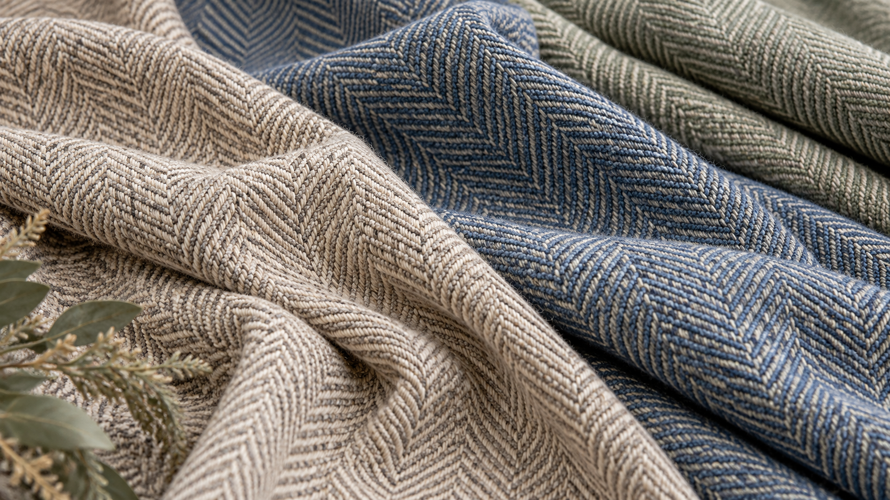
Herringbone fabric is a woven textile with a broken twill pattern that creates repeated V-shaped or fishbone lines. It is a pattern and weave direction, not one fibre. Wool, cotton, silk, polyester and blends can all be used to create herringbone effects.
The buyer must control the direction, scale, contrast, weight, width and finishing. A herringbone pattern can change how a panel looks after cutting, how a border meets the edge and how the finished product reads at different distances.
What Is Herringbone Fabric?
Herringbone is usually formed by reversing the direction of a twill at regular intervals, creating a broken zigzag or V-shaped appearance. The CottonWorks weaving basics reference helps separate the interlacing structure from the fibre used to make the yarn.
The herringbone effect can be subtle or high contrast. It can be created through yarn colour, weave structure, printed artwork or a combination. A printed herringbone image is not technically the same as a woven herringbone construction.
Use the twill fabric guide for the wider twill family. Herringbone adds a directional reversal to the twill, which creates the characteristic broken pattern.

How Is Herringbone Woven?
The loom interlaces warp and weft according to a twill order. At a planned point, the diagonal direction reverses, producing a repeated V or fishbone unit rather than one continuous diagonal.
The scale depends on the repeat, yarn size, density and colour contrast. A fine herringbone may read as texture from a distance, while a large high-contrast repeat becomes a dominant design feature.
Finishing, brushing, pressing and cutting can change the visual clarity. Check the fabric in the final width and at the finished product scale before approving the pattern.
What Are the Main Herringbone Fabric Types?
Classify a herringbone quality by fibre, construction and visual scale rather than by pattern name alone.
| Direction | Typical character | Potential fit | What to confirm |
|---|---|---|---|
| Fine herringbone | Small, quiet broken diagonal | Shirting, scarves and refined panels | Scale and contrast |
| Large herringbone | Visible V-shaped repeat | Outerwear, upholstery and statement products | Pattern placement and yield |
| Wool herringbone | Warm, fuller and often textured | Suits and coats | Fibre, weight and nap |
| Cotton herringbone | From light twill to firm utility cloth | Shirts, accessories and home textiles | Construction and crease |
| Silk herringbone | Light lustre with directional texture | Scarves and decorative products | Momme, drape and snag risk |
| Printed herringbone | Pattern is applied to a base | Custom artwork and low-relief effects | Print registration and base fabric |
Herringbone vs Chevron: What Is the Difference?
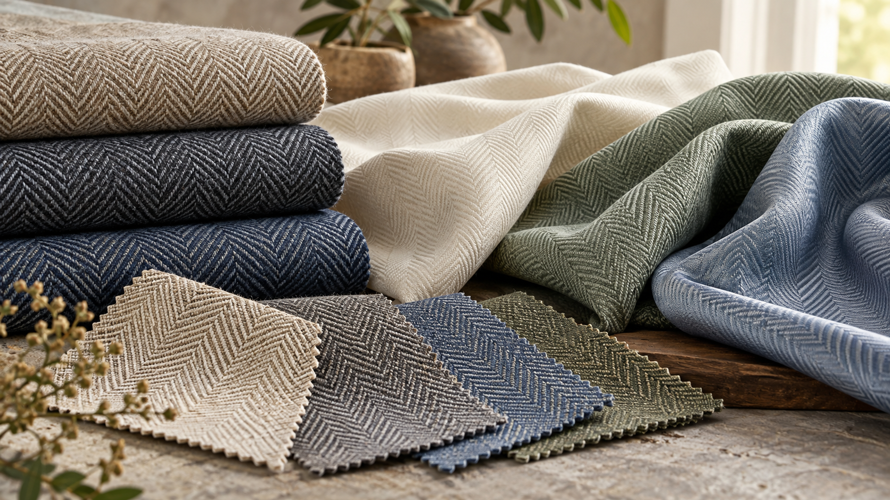
Herringbone usually uses a broken twill with a reversal point, while a chevron can describe a continuous V-shaped arrangement. The appearance may be similar, but the construction, repeat and surface are not automatically the same.
For a woven product, ask whether the lines are produced by interlacing yarns or by printing. Woven structure can affect thickness, face and reverse, while printed artwork can be changed without changing the base construction.
If the project needs a printed pattern rather than a structural weave, compare the printed, woven and Jacquard routes before selecting the artwork method. Approve the direction on a fabric swatch before cutting.
What Should Buyers Check in Herringbone Fabric?
Directional patterns create risks that a plain fabric does not. Check the pattern at the same width and finished shape used for production.
Construction and Direction
Confirm whether the herringbone is woven, knitted, printed or Jacquard, and identify the face, reverse and grain direction.
Repeat and Scale
Record the repeat size, V angle, reversal spacing and contrast. Check whether the scale works on the finished product.
Fibre and Weight
Confirm fibre content, yarn, weight, width, drape and surface because these change how visible and stable the pattern becomes.
Cutting and Matching
Plan the grain, border, seam or hem direction. Check whether panels need matching and whether matching affects yield.
Colour and Contrast
Approve the actual yarn or print colours under the intended lighting. Low contrast can disappear; high contrast can dominate the product.
Finish and Dimensional Stability
Test shrinkage, skew, pressing, brushing and wash response so the V-shaped pattern remains aligned after finishing.
| Check | Why it matters | Possible risk | Evidence to request |
|---|---|---|---|
| Pattern route | Defines face and surface | Printed look mistaken for woven structure | Construction note and swatch |
| Repeat | Controls visual rhythm | Pattern too large or small | Full-width repeat sample |
| Direction | Controls cutting and matching | Panels run different ways | Grain and cut plan |
| Fibre and weight | Controls hand and scale | Wrong drape or coverage | Specification and sample |
| Colour | Controls contrast | Pattern disappears or dominates | Colour standard |
| Finish | Protects alignment | Skew or shrinkage | After-finish measurement |
What Is Herringbone Fabric Used For?
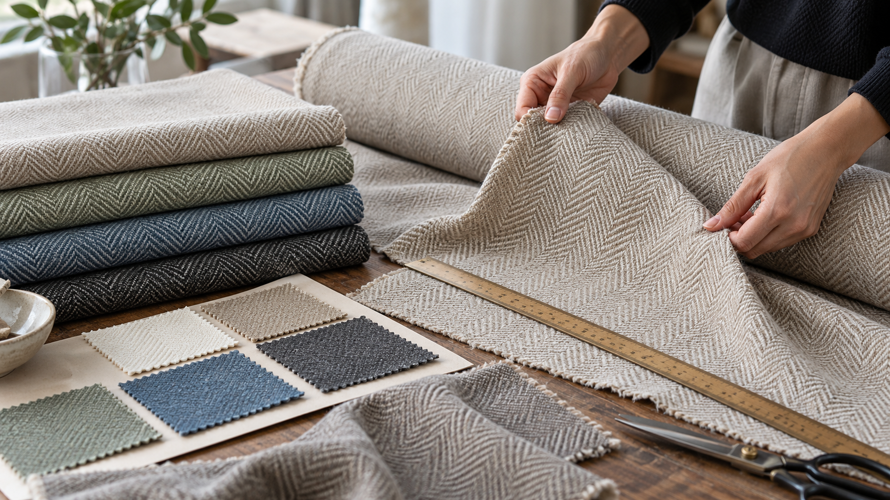
Herringbone is used in apparel, scarves, accessories, upholstery, curtains, blankets and decorative panels. The best use depends on the pattern scale, fibre, weight, surface and required durability.
For a silk scarf, a fine herringbone can add texture without overwhelming the artwork. Compare the direction with silk weave patterns and define whether the pattern is the base construction or a printed design.
For larger products, check matching, cut direction and yield before approving the fabric because directional pattern can increase material use.
How Should Herringbone Fabric Be Specified?
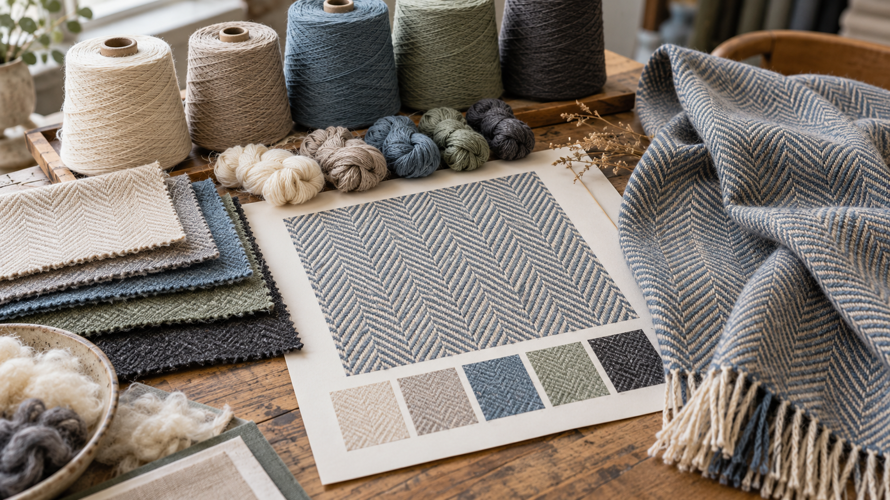
State fibre content, construction, yarn, repeat, scale, direction, weight, width, face and reverse, colour, finish, artwork if printed, matching requirement and acceptable skew or shrinkage.
Attach a full-width fabric swatch or strike-off, not only a small corner. The reference should show the pattern unit and the finished direction.
Frequently Asked Questions
What is herringbone fabric?
Herringbone fabric usually has a broken twill pattern that creates repeated V-shaped or fishbone lines. It can be made from different fibres.
Is herringbone a weave or a pattern?
It commonly describes a broken-twill weave, but a similar herringbone appearance can also be printed. Confirm the construction route.
Is herringbone the same as chevron?
They can look similar, but herringbone normally includes a broken or reversed twill direction. A chevron may describe a continuous V arrangement.
What fibres are used for herringbone?
Wool, cotton, silk, polyester and blends can be used. Fibre content does not follow from the pattern name.
Is herringbone fabric durable?
Durability depends on fibre, yarn, density, construction and finish. Test the actual quality for the intended use.
Can herringbone fabric be printed?
Yes. A printed herringbone effect should be evaluated for registration, colour, repeat and the behaviour of the base fabric.
What should a herringbone buyer confirm?
Confirm construction, repeat, scale, direction, fibre, weight, width, colour, matching, finishing and dimensional stability.
Conclusion
Herringbone is a directional broken-twill design whose finished result depends on fibre, yarn, repeat, scale, contrast and finishing. Confirm the construction route and full-width pattern before approving cutting, printing or bulk production.
