
Silk Weave Patterns: Plain, Twill, Satin and Complex Designs

Carina Silk Editorial Team writes practical guides on silk fabrics, scarves and custom textile development, with a focus on materials, artwork, sampling, construction and finishing decisions.
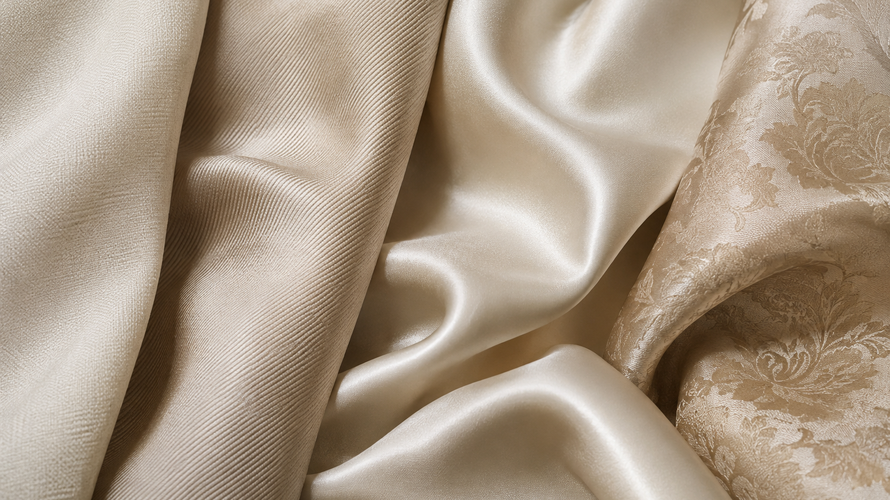
Silk weave patterns describe how silk yarns are interlaced to create a surface, hand and drape. Plain weave, twill, satin and Jacquard constructions can all be made with silk, but they do not produce the same visual or performance result.
For a buyer, the weave name is only one part of the specification. Confirm silk type, yarn, weight, usable width, pattern repeat, face and reverse, finish, print route, care and finished dimensions together.
What Are Silk Weave Patterns?
A weave pattern is the repeat used to interlace warp and weft yarns. It is different from a printed motif: the construction exists in the cloth before colour or artwork is added. The National Park Service weaving glossary is a useful reference for warp, weft and basic weaving terms.
Silk is a fibre direction, while plain, twill, satin and Jacquard describe construction or pattern capability. A supplier should therefore avoid using “silk” as a complete description. The types of silk fabric guide can be read alongside the construction details.

How Does Silk Weaving Change the Fabric?
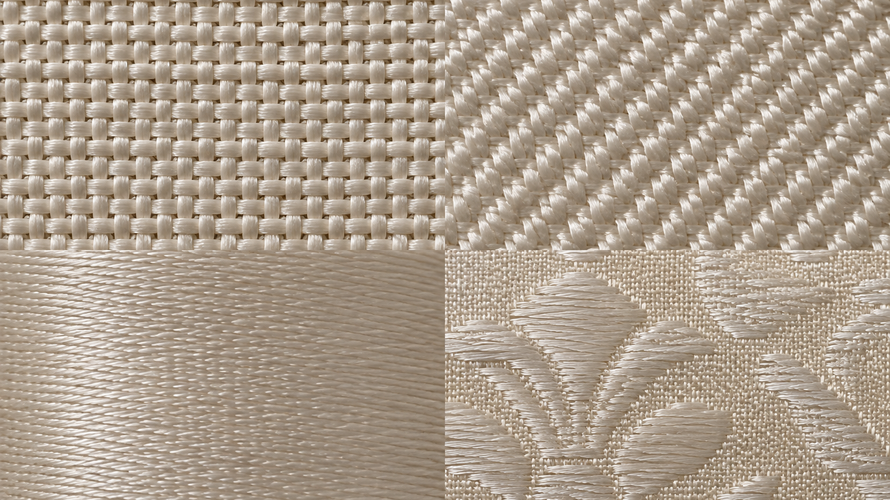
Plain weave creates a regular over-and-under grid and often gives a stable, crisp base. Twill moves the interlacing point to form a diagonal line and can give more body or coverage. Satin uses longer floats to create a smooth face and stronger light reflection, but the surface can be more sensitive to snagging.
Jacquard is a pattern-control capability that can produce large or complex figured designs. It is not a fibre name and does not automatically mean silk. Density, yarn size, colour contrast and finishing can make two silk fabrics with the same broad weave label feel completely different.
For construction context, compare the basic woven design reference before selecting a commercial silk quality.
What Are the Main Silk Weave Patterns?
The following directions are useful starting points, not fixed product promises. Fibre grade, yarn, weight and finish still need to be confirmed on the actual sample.
| Weave direction | Typical surface | Common fit | What to confirm |
|---|---|---|---|
| Plain weave | Even, matte to lightly lustrous | Light scarves, linings and airy apparel | Opacity, stability and hand |
| Silk twill | Diagonal ribs with controlled body | Printed scarves and structured accessories | Direction, weight, drape and hem |
| Silk satin | Smooth, fluid and reflective | Formal accessories and luxury styling | Slip, snagging, face and care |
| Silk chiffon | Light and often sheer | Layered scarves and soft draped goods | Transparency, edge and recovery |
| Silk Jacquard | Figured or reversible woven design | Statement accessories and panels | Repeat, reverse and motif scale |
Silk Weave Pattern Versus Printed Pattern
A woven pattern is created by yarn interlacing; a printed pattern is applied to the surface after the base cloth is made. A silk twill can be printed, and a Jacquard fabric can carry a woven figure, so the two descriptions can appear in the same product brief.
When a design brief uses words such as satin, floral, damask or geometric, ask whether the word refers to the weave, the motif, the finish or the product appearance. The printed, woven and Jacquard comparison helps separate those layers. A sateen versus satin comparison is also useful when the surface name is being used loosely.
What Should Buyers Check in a Silk Weave Pattern?
Approve the construction and finished product together. The same weave direction can behave differently when fibre grade, yarn size, weight, density or finish changes.
Face, Reverse and Light Reflection
Inspect both sides under the lighting used for the finished product. Satin and figured constructions can change apparent colour and contrast as the cloth moves.
Weight, Width and Drape
Record finished weight and usable width, then hang and fold the actual quality. A small swatch can hide how a full scarf or panel will fall.
Repeat and Motif Scale
Measure the woven or printed repeat in both directions. Check how the motif meets the scarf corner, hem, seam or cut edge.
Snagging, Skew and Care
Test the face, reverse, bias and hem after the intended handling, steam, wash or dry-cleaning route. Long floats and open structures need particular care.
Colour and Finish
Confirm the colour standard, print side, lustre, brushing, washing or calendaring route. Finishing can change both the line of the weave and the hand.
| Buyer check | Why it matters | Possible risk | Evidence to request |
|---|---|---|---|
| Fibre and silk type | Sets care and performance direction | Wrong hand or label expectation | Fibre specification and sample |
| Weave and repeat | Controls appearance and cutting | Motif or grain mismatch | Construction note and full-width sample |
| Weight and usable width | Controls drape and yield | Finished product lacks body | Measured roll and approved standard |
| Face and reverse | Confirms presentation side | Unexpected shade or lustre | Both-side approval sample |
| Care and dimensional stability | Protects finished size | Shrinkage, skew or snagging | After-care measurements and test |
| Colour and finish | Protects the final appearance | Shade drift or altered hand | Strike-off and finish approval |
Which Silk Weave Pattern Is Best for a Custom Scarf?
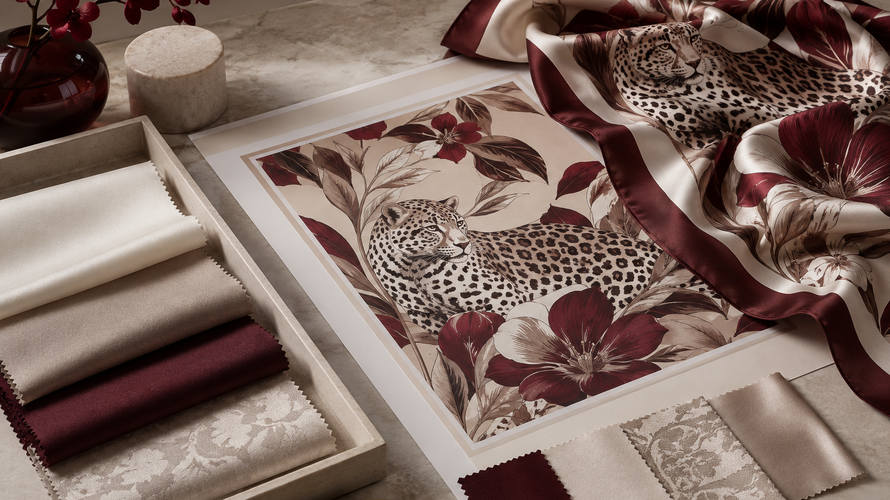
Silk twill often suits a printed scarf that needs a defined face and controlled drape. Silk satin can create a smoother, more reflective luxury look, while plain weave or chiffon may suit a lighter or more transparent brief. Jacquard works when the pattern must be built into the cloth rather than printed on top.
There is no universal best weave. Select the construction by finished weight, opacity, grip, artwork, edge, care route and price position, then approve the fabric swatch and finished-size sample together.
How Should Silk Weave Patterns Be Specified?
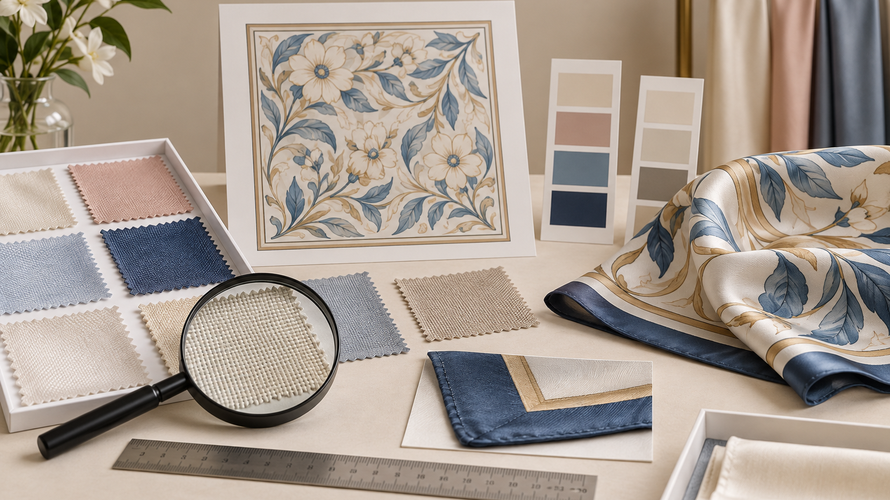
State silk fibre type and percentage, weave construction, yarn, weight, usable width, pattern repeat, face and reverse, colour standard, finish, print route, edge treatment and care route. For a custom scarf, include finished dimensions, hem tolerance, artwork scale and approval sample requirements.
Use the woven fabric guide for the construction vocabulary and retain the approved swatch, strike-off and finished sample as one record.
Frequently Asked Questions
What are the main silk weave patterns?
Plain weave, twill, satin, chiffon-type open constructions and Jacquard are common directions. The exact hand depends on fibre, yarn, density and finish.
Is silk satin a weave or a fibre?
Silk is the fibre direction and satin is the weave or surface direction. A satin-like surface can also be made from other fibres, so confirm the full specification.
Is silk twill good for printed scarves?
It can be a strong starting point when the brief needs a defined face, controlled drape and a polished printed appearance. Approve weight, hem and finished dimensions.
What is the difference between woven and printed silk?
Woven describes how yarns form the cloth; printed describes colour or artwork applied to the surface. A silk fabric can be both woven and printed.
Is Jacquard always made from silk?
No. Jacquard describes a pattern-control method or capability. Jacquard fabrics can use silk, cotton, viscose, polyester, blends and other fibres.
Which silk weave is the most breathable?
Breathability depends on fibre, openness, weight, density and finishing rather than the name alone. Compare the finished samples under the intended use conditions.
What should a silk fabric supplier provide?
Request fibre content, weave, weight, width, repeat, face and reverse, colour and finish standards, care route, dimensional tests and a production-representative sample.
Conclusion
Silk weave patterns are construction choices that shape surface, drape, light reflection and product behaviour. Plain, twill, satin, open weaves and Jacquard can all be useful, but the right choice depends on the finished brief. Specify the fibre and construction together, then approve the actual sample before bulk production.
