What Is Organza Fabric? Properties, Types, Uses and Buyer Checks

Carina Silk Editorial Team writes practical guides on silk fabrics, scarves and custom textile development, with a focus on materials, artwork, sampling, construction and finishing decisions.
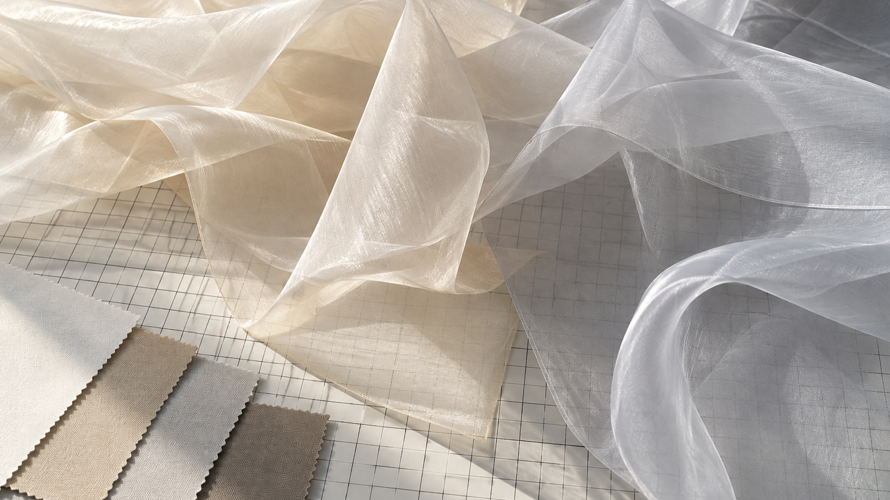
Organza is a lightweight, sheer fabric generally associated with a fine plain weave and a crisp or structured hand. It can be made from silk or manufactured fibres such as polyester or nylon, so the word organza does not by itself establish fibre content or a single quality level.
The organza textile glossary entry describes organza as a fine plain-weave fabric with body and stiffness relative to some other sheer fabrics. For sourcing, add fibre, yarn, weight, width, finish and care to that construction description.
What Is Organza Fabric?
Organza is a fine, sheer, lightweight fabric direction commonly made in a plain weave. Its body, transparency and surface can come from fine filament yarns, yarn density, twist, finishing and the fibre used.
Silk organza and polyester organza can share a crisp transparent appearance while differing in hand, lustre, heat response, care, price and print behaviour. A buyer should not treat the commercial name as a substitute for a composition statement.
Organza is also different from chiffon even though both can be sheer and lightweight. Chiffon is usually softer and more fluid, while organza is commonly selected when more body or structure is wanted; the exact result still depends on the quality.

How Is Organza Made?
Fine yarns are woven into a lightweight plain construction. Filament form, yarn twist, density and finishing help create the transparent surface and crisp hand associated with organza.
Dyeing, printing, coating, calendaring and heat-setting can change lustre, stiffness, colour depth and dimensional stability. A finished organza should therefore be approved after the intended processing route.
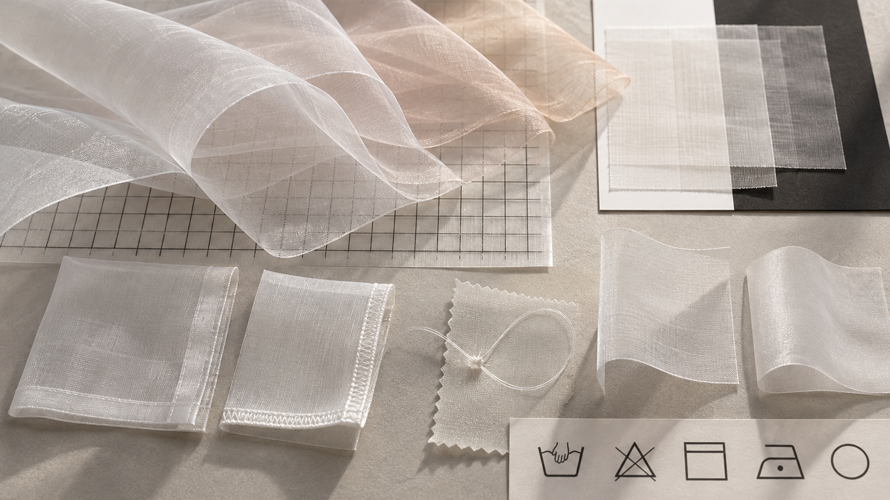
The open visual appearance can make edge, snag and fray behaviour important. Test the hem, border and packing method with the actual product rather than relying on a loose swatch.
What Are the Main Organza Fabric Directions?
Classify organza by fibre, texture, weight and finish so the product brief is specific enough for sampling.
| Direction | Surface and hand | Potential fit | What to confirm |
|---|---|---|---|
| Silk organza | Light, sheer and crisp with silk hand | Luxury overlays and accessories | Fibre, care and snag risk |
| Polyester organza | Consistent sheer body and controlled cost | Fashion, décor and repeat programs | Heat, static and stiffness |
| Nylon organza | Light synthetic sheer with fibre-specific hand | Decorative and fashion products | Composition and heat response |
| Textured organza | Surface texture or yarn effect | Decorative products and accents | Texture stability and print |
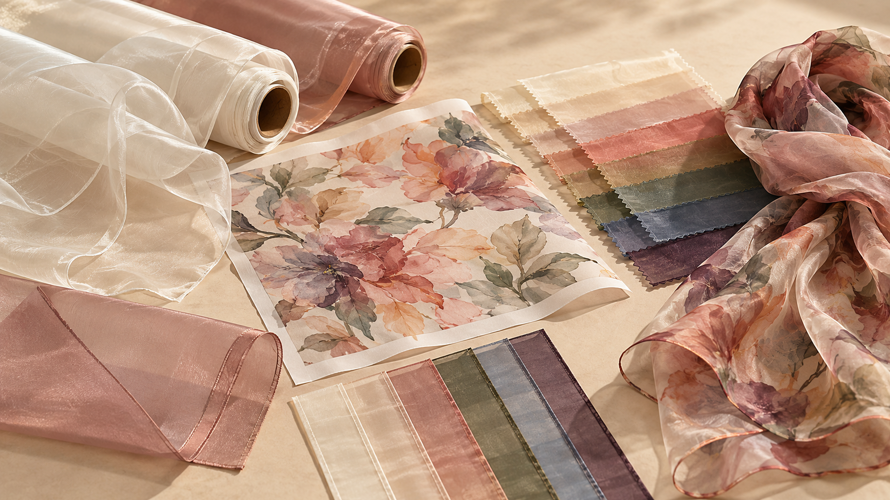
| Printed organza | Artwork sits on or through sheer base | Scarves, overlays and panels | Registration and show-through |
| Embroidered or embellished organza | Added threads, beads or motifs | Occasionwear and accessories | Weight, snag and backing |

Organza vs Chiffon: What Is the Difference?
Organza is generally selected for more crispness and body, while chiffon is generally selected for softer, more fluid movement. Neither description proves a specific fibre: both can be made from silk or manufactured fibres.
Compare the chiffon vs silk explanation with the actual organza quality for transparency, drape, grip, edge, print and care. A lightweight product may need layering or lining even when the base looks attractive on a sample card.
For printed scarves, the surface and transparency can alter perceived colour. Approve the artwork on the intended ground and inspect the reverse and layered appearance.
What Should Buyers Check in Organza Fabric?
Organza is often chosen for its visual lightness and body, so both need to be measured and approved on the final product.
Fibre and Construction
Confirm silk, polyester, nylon or blend content, plain weave, yarn form, weight and width.
Transparency and Colour
Inspect the base and printed colour over the intended background and with the planned number of layers.
Stiffness and Drape
Record the level of body and how the fabric folds, gathers, ties and holds a border.
Snag and Fray
Test yarn pull, abrasion, cut edge, seam and hem because open sheer constructions can be vulnerable.
Print and Embellishment
Check registration, penetration, reverse, added weight and whether decoration changes the drape.
Heat and Care
Test pressing, steaming, washing, drying and packing under the approved care route.
| Check | Why it matters | Possible risk | Evidence to request |
|---|---|---|---|
| Fibre | Controls identity and care | Silk assumed from appearance | Composition statement |
| Opacity | Controls coverage | Unexpected show-through | Layered light test |
| Body | Controls silhouette | Too stiff or too limp | Drape and stiffness reference |
| Edge | Controls durability | Fraying or snagging | Hem sample |
| Controls colour and reverse | Weak or uneven artwork | Strike-off | |
| Care | Controls finished life | Heat or washing damage | Care trial |
Where Is Organza Fabric Used?
Organza is used for overlays, dresses, sleeves, veils, bows, scarves, decorative panels, gift packaging and accessories where transparency and body are useful. Its structure can support a silhouette that a softer sheer fabric would not hold.
For a head scarf or printed accessory, compare organza with silk satin and silk twill for grip, coverage, print definition, care and edge.
Select organza when its stiffness and transparency support the use case, and define whether the required quality is silk or a manufactured fibre.
How Should Organza Fabric Be Specified?
State fibre, construction, yarn, weight, width, transparency, stiffness, lustre, colour, print or embellishment route, edge finish, snag tolerance, heat and care limits.
Attach a finished swatch and a hemmed or assembled sample. For printed organza, show the artwork over the intended background and define the acceptable reverse and layered appearance.
Frequently Asked Questions
What is organza fabric?
Organza is a lightweight, sheer fabric direction commonly made with a fine plain weave and a crisp or structured hand.
Is organza made from silk?
Silk organza exists, but organza can also be made from polyester, nylon or blends. Check the fibre composition.
Is organza the same as chiffon?
No. Organza is generally crisper and more structured, while chiffon is generally softer and more fluid, although the exact result depends on fibre and finish.
Is organza transparent?
Organza is usually sheer or transparent, but opacity depends on weight, colour, density, finish and the number of layers.
Is organza a good fabric for scarves?
It can suit light structured or decorative scarves, but check grip, transparency, edge, snagging, print and care on the finished item.
Does organza wrinkle?
It can crease or change shape depending on fibre and finish. Test pressing and care on the actual quality.
What should a buyer check in organza?
Check fibre, construction, weight, width, transparency, stiffness, surface, print, edge, snag and care behaviour.
Conclusion
Organza is best specified as a sheer plain-weave fabric with a defined fibre, body, transparency and finish. Confirm the exact quality on a layered, printed or hemmed sample before bulk production.