
What Is Polyester Satin Fabric? Properties, Uses and Buyer Checks

Carina Silk Editorial Team writes practical guides on silk fabrics, scarves and custom textile development, with a focus on materials, artwork, sampling, construction and finishing decisions.
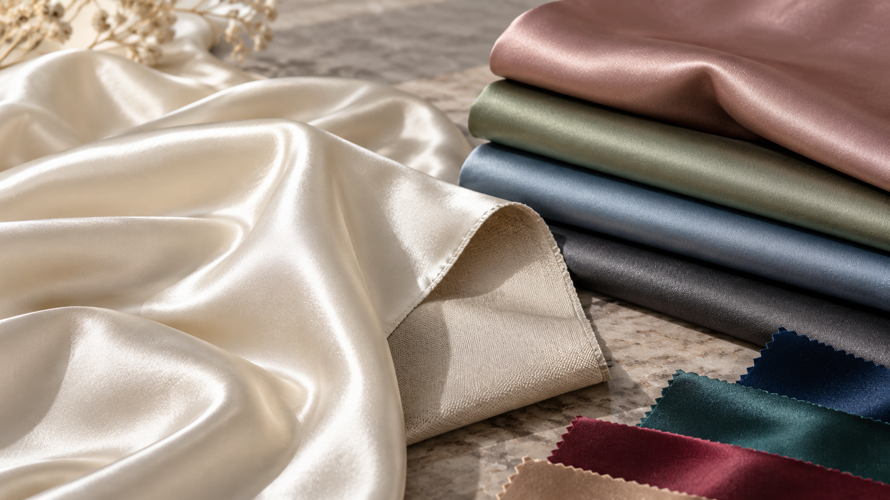
Polyester satin is a fabric made from polyester yarns using a satin-weave construction or a related smooth-face construction. Polyester identifies the fibre; satin describes the weave or surface direction. The combination often creates a smooth, reflective face, but the final hand depends on yarn, density, weight and finish.
Polyester satin can be a practical choice for repeatable colour and a controlled cost position, but it may also be slippery, heat-sensitive, static-prone or prone to surface marks. Compare it with the actual product requirement rather than choosing it from the word satin alone.
What Is Polyester Satin Fabric?
Polyester satin combines a manufactured polyester fibre with a satin weave or satin-like surface. Satin is not automatically silk. The satin guide explains why fibre and weave must be read together.
Longer floats on the face can create smoothness and lustre, while the yarn type, density and finish influence drape, snagging, opacity and surface reflection. The same fibre can produce different satin qualities.
The Textile Exchange materials classification can help identify polyester as a synthetic fibre family, but the finished fabric still needs its own construction and performance specification.
How Is Polyester Satin Made?
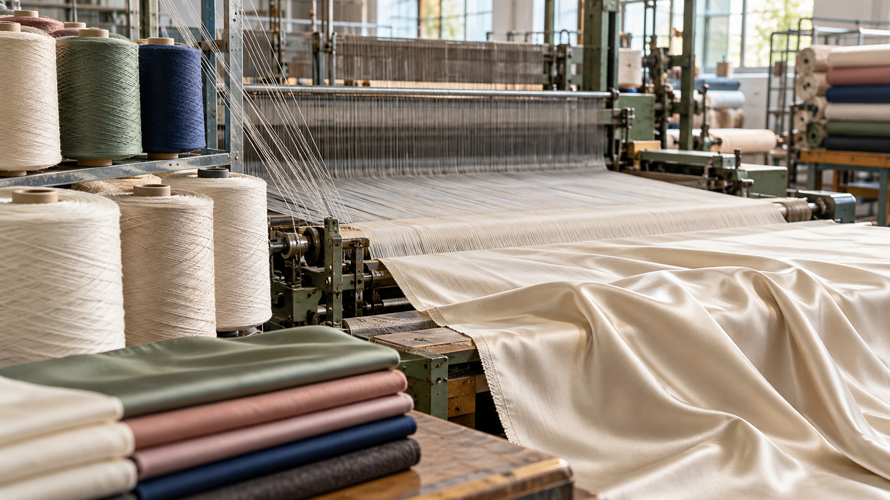
Polyester polymer is formed into yarn, then the yarn is woven with a satin construction or a related float arrangement. The face and reverse can be intentionally different, especially in single-faced satin.
Weight, filament structure, yarn twist, density, calendering, dyeing and finishing control the final reflection and hand. Stretch satin adds elastane or mechanical stretch, which creates another set of recovery and care requirements.
Heat can change lustre, dimensions or surface. When the fabric will be printed, pressed, folded or hemmed, check the finished sample under the production care route. The satin guide helps keep surface description separate from fibre claims.
What Are the Main Polyester Satin Types?
Use the fibre, weight, surface and stretch to distinguish polyester satin options.
| Type | Typical character | Potential fit | What to confirm |
|---|---|---|---|
| Light polyester satin | Fluid and reflective | Scarves, linings and light apparel | Opacity, slip and snag risk |
| Duchess or heavy satin | Fuller body and stronger face | Structured apparel and accessories | Weight, stiffness and drape |
| Matte satin | Lower reflection with smooth face | Subtle premium-looking products | Surface uniformity and light response |
| Stretch satin | Satin face with elastic recovery | Close-fitting products | Stretch, recovery and heat |
| Double-faced satin | Usable face on both sides | Reversible accessories | Face difference and edge finish |
| Printed polyester satin | Colour sits on reflective base | Custom scarves and decorative panels | Colour, registration and show-through |
Polyester Satin vs Silk Satin: What Is the Difference?
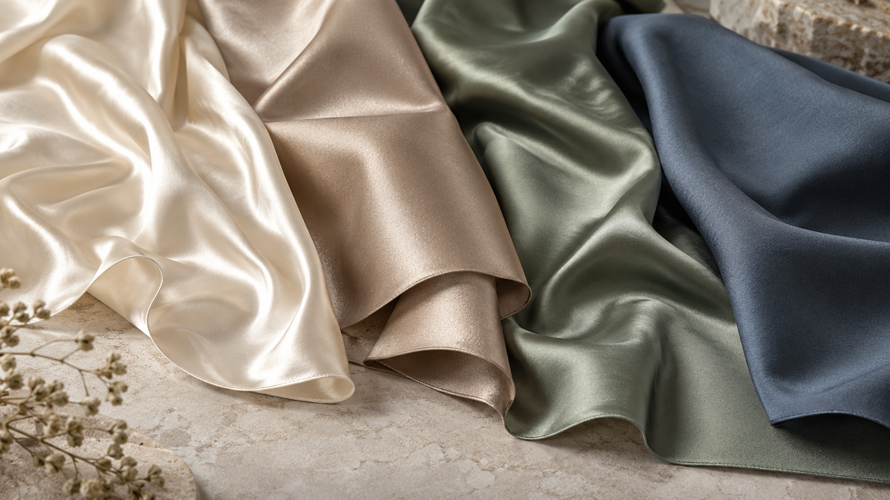
Both can have a smooth, reflective satin face, but the fibre changes the hand, moisture response, heat sensitivity, care and price position. Polyester satin may provide repeatable colour and easier-care options, while silk satin can provide a different natural-fibre hand and drape.
Neither name guarantees a particular weight or quality. Compare yarn, weave, weight, width, lustre, slip, opacity, snagging, colour and care on the finished sample. The sateen versus satin comparison is useful when the brief also includes cotton-based smooth surfaces.
If the buyer needs a silk claim, confirm fibre composition separately. A polyester satin should not be presented as silk satin simply because the surface appears similar.
What Should Buyers Check in Polyester Satin?
A reflective face makes defects visible, so approve the fabric under the lighting and handling used for the final product.
Fibre and Construction
Confirm polyester content, filament or spun yarn, satin construction, face and reverse, weight and width.
Sheen and Surface
Inspect lustre, streaks, barré, glazing, snags, pulls and shade change under different viewing angles.
Drape and Slip
Handle and hang the finished sample. Confirm whether it stays in place, needs lining or requires a different edge treatment.
Heat and Care
Test pressing, steaming, washing and drying. Heat can affect shape, surface reflection and finishing.
Print and Colour
Approve colour, artwork, repeat, border, reverse and show-through on the reflective base.
Hem and Packaging
Check fraying, seam movement, edge curl, folding marks and packaging pressure on the finished product.
| Check | Why it matters | Possible risk | Evidence to request |
|---|---|---|---|
| Fibre and weave | Defines the satin quality | Wrong hand or label | Composition and construction |
| Surface | Controls visible appearance | Snags, streaks or glazing | Light-angle inspection |
| Drape | Controls styling and grip | Too slippery or flat | Finished sample |
| Heat | Protects face and shape | Shine change or distortion | Pressing trial |
| Controls colour and detail | Muted or uneven artwork | Strike-off | |
| Edge and packing | Protects final presentation | Curling or creasing | Finished and packed sample |
What Is Polyester Satin Used For?
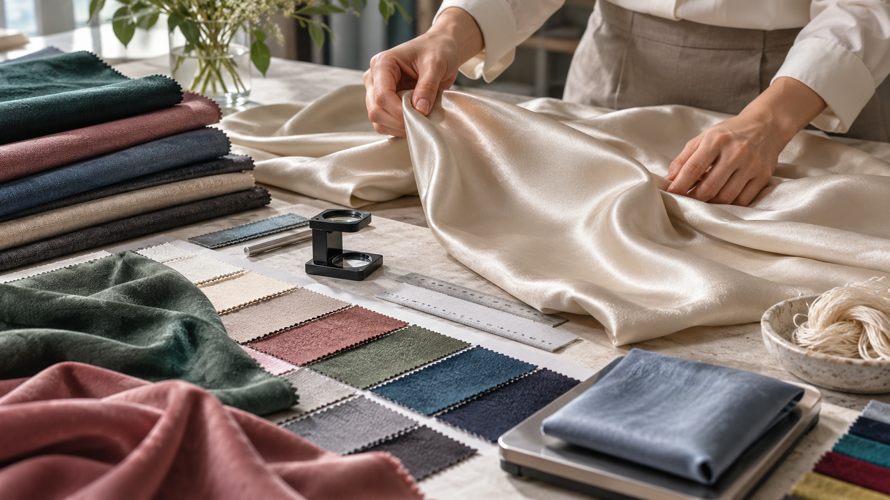
Polyester satin is used for scarves, linings, dresses, sleepwear, ribbons, accessories, decorative panels and other products that need a smooth face or reflective appearance.
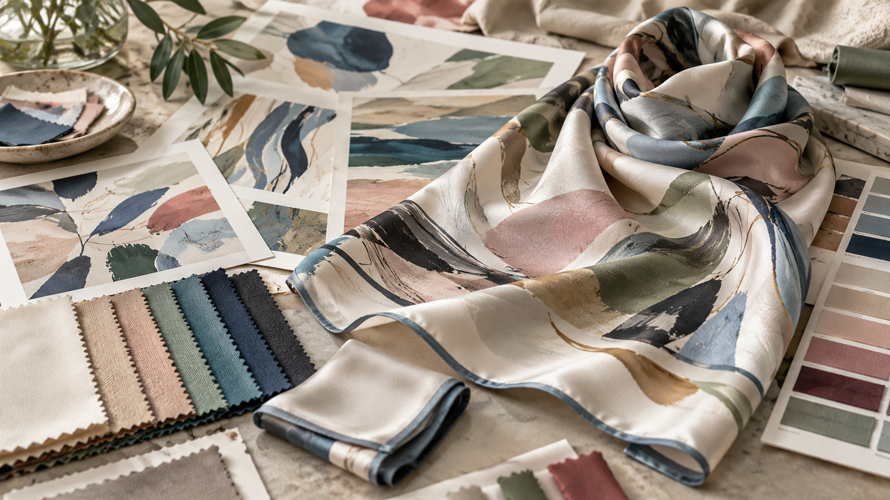
For a printed scarf, compare it with silk fabric types and define whether the product needs natural-fibre content, easy care, high lustre, a matte face or a particular drape.
Select the weight and construction for the product, not only for the shine. A high-lustre surface can be visually strong but may reveal handling marks and require careful packing.
How Should Polyester Satin Be Specified?
State polyester type and percentage, yarn, satin construction, weight, width, face and reverse, lustre, stretch, colour, artwork, print route, care, edge finish, packing and acceptable tolerances.
Attach a fabric swatch and a finished sample showing the face, reverse, hem and packaging. Record the lighting used for colour and sheen approval.
Frequently Asked Questions
What is polyester satin fabric?
Polyester satin is a polyester textile with a satin-weave or satin-like smooth surface. Polyester identifies the fibre and satin identifies the construction direction.
Is polyester satin real satin?
Yes, polyester satin can be satin fabric. Satin is not limited to silk, but the exact construction and fibre should be documented.
Is polyester satin the same as silk satin?
No. They may look similar, but fibre content changes hand, drape, care, moisture response and heat behaviour.
Is polyester satin good for scarves?
It can suit scarves that need a smooth reflective face and repeatable colour. Confirm slip, opacity, print, edge and care on the finished sample.
Does polyester satin wrinkle?
Wrinkle behaviour depends on weight, construction, finishing and care. Test the exact quality instead of generalizing from the fibre name.
Can polyester satin be printed?
Yes, but the print route and colour result depend on the base and preparation. Approve a strike-off on the actual fabric.
What should buyers check?
Check fibre, weave, weight, width, sheen, drape, slip, snagging, heat response, print, colour, edge finish and packaging.
Conclusion
Polyester satin is a fibre-and-weave combination, not a promise of one fixed look or performance. Define the surface, weight, drape, print, care and finishing requirements, then approve the actual fabric and finished product.
