
What Is Poplin Fabric? Structure, Uses and Specification Checks

Carina Silk Editorial Team writes practical guides on silk fabrics, scarves and custom textile development, with a focus on materials, artwork, sampling, construction and finishing decisions.
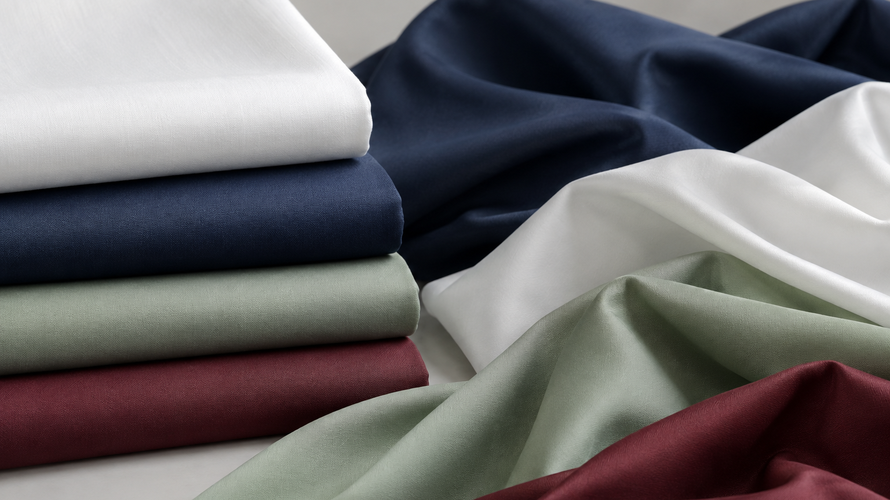
Poplin is a woven fabric commonly associated with a crisp plain weave and a subtle crosswise rib. Cotton poplin is familiar, but polyester, silk, viscose and blended versions can also be produced.
The name does not fix the fibre, weight or final hand. Buyers should confirm yarn, construction, width, weight, finish, care and finished use before approving a poplin quality.
What Is Poplin Fabric?
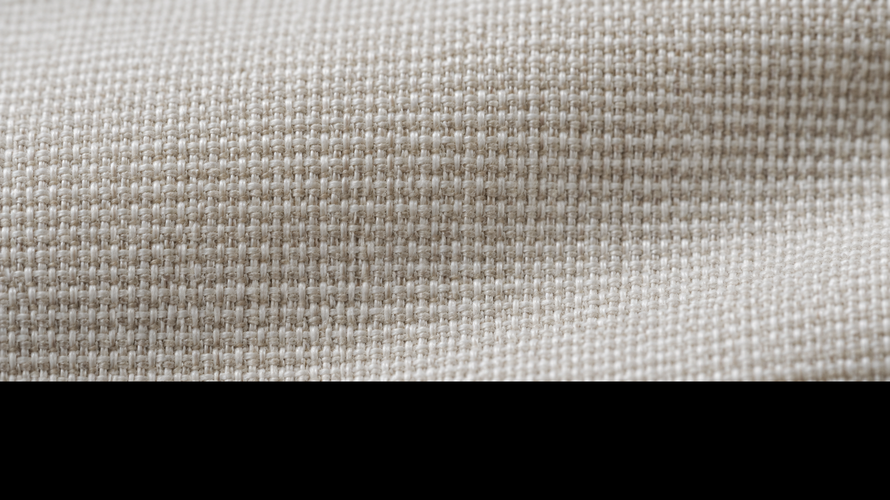
Poplin traditionally uses a finer warp and a slightly heavier or more prominent weft, creating a smooth surface with a fine horizontal rib. It is usually more stable and crisp than a very loose plain weave.
The basic woven design reference and weaving glossary provide useful construction vocabulary.
How Is Poplin Made?
Poplin is generally woven with a plain interlacing, but the relationship between warp and weft yarn size creates its characteristic fine rib and firmer hand. Fibre, yarn twist, density and finish change the result.
Washing, mercerising, brushing, calendaring or coating can change lustre, shrinkage, softness and stability. A cotton poplin and a polyester poplin may share the name while serving different product and care requirements.
What Are the Common Poplin Directions?
Poplin qualities range from light shirt-weight cloth to firmer apparel and accessory fabrics. Confirm the actual sample rather than relying on the label.
| Poplin direction | Typical hand | Common fit | What to confirm |
|---|---|---|---|
| Cotton poplin | Crisp, breathable and matte to lightly lustrous | Shirts, dresses and scarves | Shrinkage, crease and care |
| Polyester poplin | Stable and engineered from matte to smooth | Uniforms, linings and easy-care goods | Static, heat and finish |
| Silk or silk-blend poplin | Light, refined and smoother | Premium apparel and accessories | Silk content, weight and hand |
| Stretch poplin | Crisp base with recovery | Close-fitting apparel | Stretch and blend |
| Printed poplin | Stable base with surface artwork | Scarves, panels and branded goods | Print sharpness and repeat |
Poplin Versus Plain Weave, Twill and Sateen
Poplin is generally a plain-weave direction with a characteristic yarn balance and fine rib. A basic plain weave may be flatter and more even, twill has a diagonal line, and sateen uses longer floats for a smoother face. These terms can overlap in casual trade language, so inspect the actual construction.
Use the twill guide and the woven fabric guide when a buyer needs a precise construction description.
What Should Buyers Check in Poplin Fabric?
Poplin is often chosen for a stable, practical hand, but the finished quality still needs testing for shrinkage, skew, crease, print and edge behaviour.
Fibre and Yarn Balance
Confirm fibre content and the warp/weft yarn relationship. This controls rib visibility, hand and care direction.
Weight and Usable Width
Measure weight and width, then compare the proposed quality with the finished garment or scarf dimensions.
Crispness and Drape
Hang, fold and bend the fabric. Record whether it holds a shape, collapses, wrinkles or feels too firm.
Shrinkage and Skew
Run the intended wash, steam or pressing route and measure length, width, skew and seam response.
Colour, Print and Edge
Approve colour and artwork at finished scale, then test the hem, seam, fray and reverse show-through.
| Check | Why it matters | Possible risk | Evidence to request |
|---|---|---|---|
| Composition | Controls label and care | Wrong fibre assumption | Specification |
| Yarn balance | Controls rib and hand | Unexpected texture | Construction note |
| Weight and width | Controls yield and use | Wrong body | Measured standard |
| Shrinkage and skew | Protects finished size | Twisted panel | After-care measurement |
| Crease and wear | Protects appearance | Wrinkle or abrasion | Finished test |
| Print and edge | Protects final product | Drift or fray | Strike-off and hem |

What Is Poplin Used For?
Poplin can suit shirts, dresses, uniforms, linings, bags, scarves and printed panels when a stable or crisp woven base is useful. Cotton may suit breathable apparel, polyester may suit repeatable easy-care programs, and a silk or blend may support a more refined hand.
For a custom scarf or panel, keep the approved fabric swatch with the print, width and finished edge sample.

How Should Poplin Be Specified?
State fibre content, warp and weft yarns, construction, weight, usable width, rib or texture expectation, face and reverse, finish, colour, print route, care, shrinkage and tolerances.
If a buyer is comparing poplin with a silk quality, use the silk fabric guide and approve the finished sample at the intended scale.
Frequently Asked Questions
Is poplin a plain weave?
Poplin is generally based on a plain weave with a fine crosswise rib created by the yarn relationship, but exact trade usage varies. Confirm the construction.
Is poplin always cotton?
No. Cotton is common, but polyester, silk, viscose and blends can also be made in a poplin direction.
Is poplin breathable?
Light cotton poplin can be comfortable, but breathability depends on fibre, weight, density and finish.
Is poplin a heavy fabric?
Poplin ranges from light shirt-weight to firmer qualities. Confirm weight and drape rather than assuming from the name.
Is poplin good for scarves?
It can suit structured or printed scarves when the crispness, drape, edge and care route fit the product brief.
Does poplin shrink?
It can shrink or skew depending on fibre, construction and care. Measure the proposed fabric after the intended treatment.
What should a poplin supplier provide?
Request composition, yarns, construction, weight, width, finish, care data, colour and print approval, dimensional results and a representative sample.
Conclusion
Poplin is a practical woven fabric direction associated with a crisp plain weave and fine crosswise rib. Specify the fibre, yarn balance, weight, width, finish and care route, then approve the finished sample before production.
