
What Is Sizing in Fabric? Textile Finishing, Uses and Buyer Checks

Carina Silk Editorial Team writes practical guides on silk fabrics, scarves and custom textile development, with a focus on materials, artwork, sampling, construction and finishing decisions.
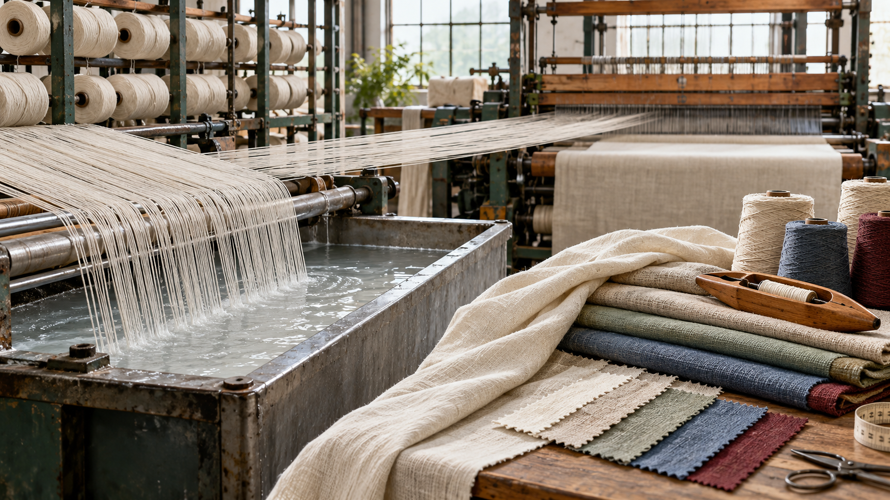
Sizing in fabric manufacturing is a treatment applied mainly to yarns, especially warp yarns, to improve processing performance during weaving. It is not the same as garment size, fabric width or the final dimensions of a textile product.
Sizing can affect abrasion resistance, hairiness, strength, friction, absorbency and later preparation. Buyers should record whether the fabric is sized, desized or further finished before comparing hand, weight, printability or care behaviour.
What Is Sizing in Fabric?
Textile sizing is the application of a temporary or semi-permanent protective material to yarns to help them pass through weaving with less abrasion and breakage. The woven fabric guide provides the broader context: warp and weft construction begins before the finished fabric receives its final hand.
Sizing is commonly associated with warp yarn preparation because warp yarns experience repeated tension and contact with loom parts. The sizing formulation and add-on must suit the yarn, loom, weave and later wet processing.
The word sizing can also be used informally for a surface treatment or stiffening effect. In a technical specification, state the exact process and whether the size remains in the fabric or is removed.

How Does Textile Sizing Work?
Yarn is prepared, coated or impregnated with a sizing solution, then dried and formed into a sheet suitable for weaving. The treatment can reduce hairiness, improve cohesion and protect the yarn during mechanical processing.
After weaving, the size may be removed during desizing or wet processing, depending on the fibre, formulation and product route. Scouring, bleaching, dyeing, printing and finishing can then change absorbency and hand.
The final fabric should be evaluated after the relevant preparation. A loom-state or sized sample can feel stiffer and absorb liquid differently from the fabric intended for dyeing, printing or finished-product use. The warp and weft guide helps identify the construction stage being specified.
What Are the Main Sizing Directions?
Sizing is best classified by its role in the process and its intended removal or retention.
| Direction | Role | Potential fit | What to confirm |
|---|---|---|---|
| Warp sizing | Protects warp during weaving | Woven fabric production | Yarn, loom and formulation |
| Temporary size | Removed in later processing | Greige fabric preparation | Desizing route and residue |
| Low-add-on sizing | Adds limited protection | Fine or sensitive yarns | Breakage and hand trade-off |
| Higher-add-on sizing | Adds stronger cohesion or stiffness | Difficult weaving conditions | Absorbency and removal |
| Starch or polymer route | Different chemistry and film behaviour | Process-specific applications | Compatibility and waste route |
| Surface stiffening finish | Changes final hand rather than loom processing | Decorative or structured products | Whether it is sizing or finishing |
Sizing vs Finishing: What Is the Difference?
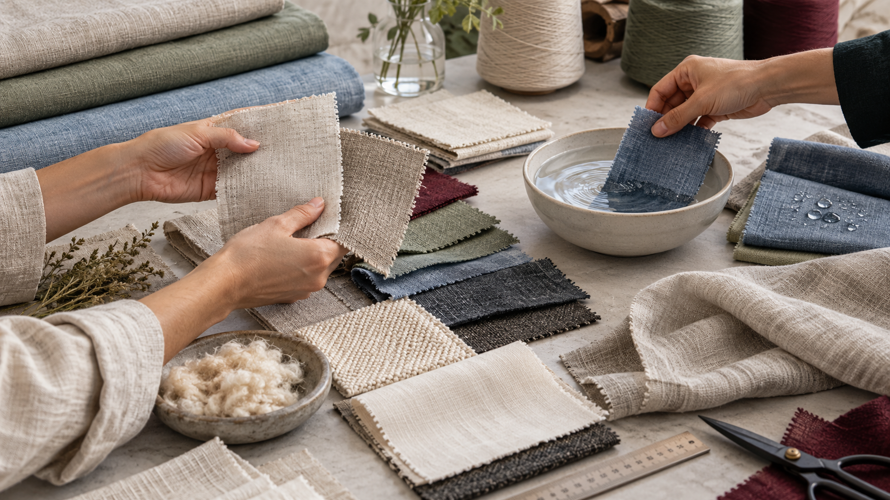
Sizing is primarily a processing aid used to protect yarn during weaving. Finishing is a broader group of treatments applied to convert cloth into a usable textile and to change hand, appearance or performance.
A sized fabric may later be desized, scoured, dyed, printed, softened, calendered or otherwise finished. The same fabric can therefore feel and absorb very differently at different stages.
For a buyer, record the processing stage with the fabric swatch. If the intended product is printed, compare the prepared base rather than a loom-state reference.
What Should Buyers Check About Fabric Sizing?
Sizing is rarely the consumer-facing headline, but it can explain why a sample feels stiff, absorbs unevenly or changes after preparation.
Process Stage
Confirm whether the sample is greige, sized, partially desized, fully prepared, dyed, printed or finished.
Formulation and Compatibility
Request the relevant process description and check compatibility with the yarn, dye, print, coating or finish.
Hand and Stiffness
Handle the sample and record whether stiffness is temporary process residue or an intended final finish.
Absorbency and Printability
Check wetting, dye uptake, print definition and surface uniformity after the intended preparation.
Weight and Dimensions
Measure weight, width, shrinkage and skew after desizing or finishing because process removal can change the fabric.
Residue and Care
Confirm whether residue affects storage, odour, skin contact, care or later finishing, and request the applicable documentation.
| Check | Why it matters | Possible risk | Evidence to request |
|---|---|---|---|
| Process stage | Defines sample comparability | Greige sample mistaken for final | Stage record |
| Sizing route | Controls yarn protection | Wrong handle or residue | Process note |
| Desizing | Controls absorbency and hand | Uneven dye or print | Preparation trial |
| Weight and width | Controls costing and yield | Dimension shift | After-process measurement |
| Surface | Controls print and finish | Streaks or poor wetting | Prepared sample |
| Documentation | Supports repeatability | Uncontrolled batch change | Specification and approval |
Why Does Sizing Matter for Fabric Buyers?
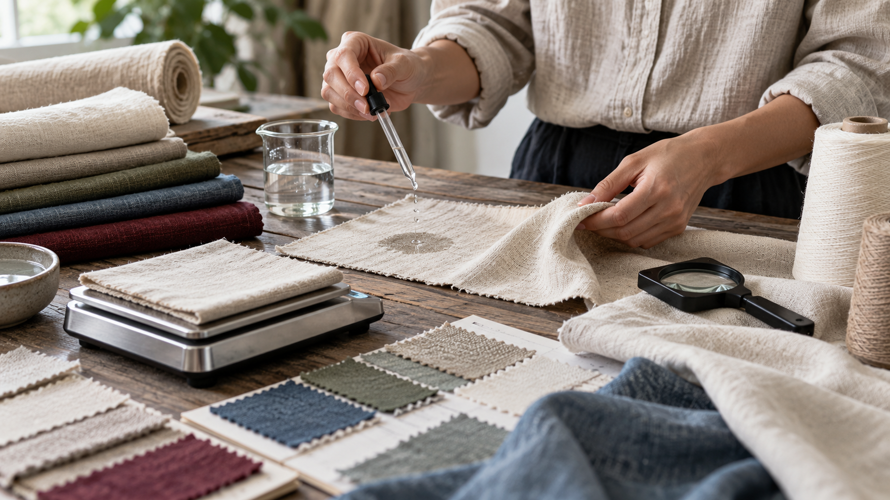
Sizing matters when a buyer compares greige, dyed, printed or finished fabrics and sees a difference in stiffness, absorbency, width or weight. It is especially relevant to woven products where warp yarn protection affects the early process.
For printed textiles, connect sizing with the chosen printing and pattern route only after the fabric has reached the intended preparation stage. The surface that accepts print is not always the surface that leaves the loom.
For a custom product, the buyer should define the sample stage and keep a retained reference. Use a finished fabric sample checklist so later batches are compared fairly.

How Should Sizing Be Specified?
State the fabric stage, yarn, construction, sizing or desizing route when relevant, weight, width, absorbency requirement, finish, care and acceptable hand or dimensional tolerance.
Attach a swatch and prepared sample with the process stage clearly marked. Do not compare a sized loom-state sample with a fully finished quality as if they were the same product.
Frequently Asked Questions
What is sizing in fabric?
Sizing is a treatment applied mainly to yarns, especially warp yarns, to protect them during weaving and improve processing performance.
Is fabric sizing the same as clothing size?
No. Textile sizing is a manufacturing treatment. It is unrelated to garment size or the dimensions shown on a product label.
Why is sizing applied to warp yarns?
Warp yarns experience tension and abrasion during weaving. Sizing can improve cohesion and reduce breakage or hairiness.
Is sizing removed from fabric?
Often it is removed or reduced during desizing and later wet processing, but the route depends on the fibre, formulation and finished product.
Does sizing affect printing?
It can affect absorbency, wetting and print uniformity. Evaluate the prepared fabric that will actually be printed.
Can sizing change fabric hand?
Yes. Size residue can make a sample feel stiffer or less absorbent than the prepared or finished fabric.
What should a buyer request?
Request the process stage, sizing or desizing description, construction, weight, width, absorbency or print trial and finished sample.
Conclusion
Sizing is a process treatment, not a fabric identity or garment measurement. Record the processing stage, confirm whether sizing remains or is removed, and approve hand, absorbency, printability, weight and dimensions on the intended finished quality.
