
Warp and Weft: What They Mean in Woven Fabric

Carina Silk Editorial Team writes practical guides on silk fabrics, scarves and custom textile development, with a focus on materials, artwork, sampling, construction and finishing decisions.
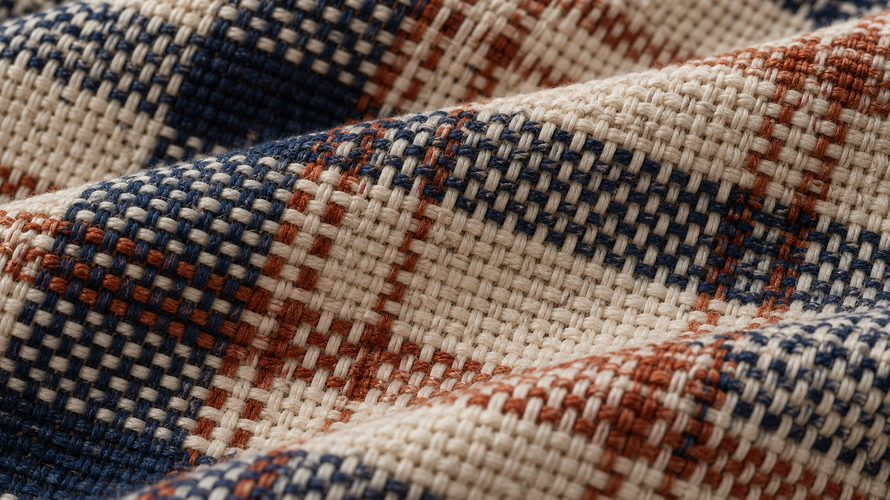
Warp and weft are the two principal yarn directions in woven fabric. Warp yarns run along the length of the cloth and are prepared on the loom; weft yarns are inserted across the width.
The directions are not merely vocabulary. They affect grain, density, stretch, skew, pattern alignment, cutting, drape and how a fabric behaves after finishing.
What Are Warp and Weft?
CottonWorks weaving basics describes woven fabric as two yarn systems interlaced together. Warp yarns are held under tension in the machine direction, while weft yarns are inserted across the width.
Warp is also called the lengthwise direction, ends or machine direction. Weft may be called filling, picks or crosswise direction. The exact terminology can vary by mill or market, but the construction relationship remains the same.
The woven fabric guide provides the broader distinction between woven construction and other fabric categories.
How Do Warp and Weft Form Woven Fabric?
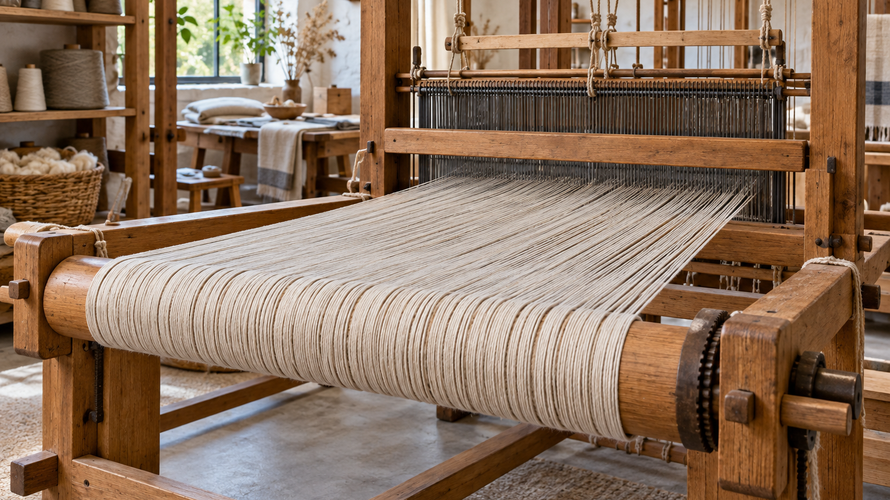
Warp yarns are prepared, sized or otherwise conditioned, wound onto a beam and drawn through the loom system. Tension and spacing need to remain controlled as the shed opens for weft insertion.
The weft is inserted across the width according to the weave plan. Changing the order of interlacements creates plain, twill, satin and more complex constructions.
Finishing can relax, shrink, stretch, skew or compact the cloth. A buyer should measure the finished fabric, not assume the loom direction alone predicts the final width or grain.
How Do Warp and Weft Appear in Different Weaves?
The yarn directions stay fundamental while the interlacing pattern changes the surface and performance.
| Construction | Warp and weft relationship | Typical effect | What to confirm |
|---|---|---|---|
| Plain weave | Frequent alternating interlacements | Stable and more even surface | Density, hand and opacity |
| Twill | Planned floats create a diagonal | Defined direction and drape | Twill angle and skew |
| Satin | Longer floats with fewer intersections | Smooth, lustrous face | Snag risk, face and reverse |
| Yarn-dyed check | Warp and weft colours intersect | Pattern built into the cloth | Repeat and alignment |
| Jacquard | Complex lifting plan controls areas | Figured or engineered design | Design repeat and reverse |
| Loose weave | Lower density between systems | Airier and more open surface | Fray, opacity and stability |
Warp and Weft vs Lengthwise and Crosswise Grain
Warp generally corresponds to the lengthwise or machine direction, while weft corresponds to the crosswise direction. In a finished roll, selvage, print repeat, yarn appearance and technical records can help identify the directions.
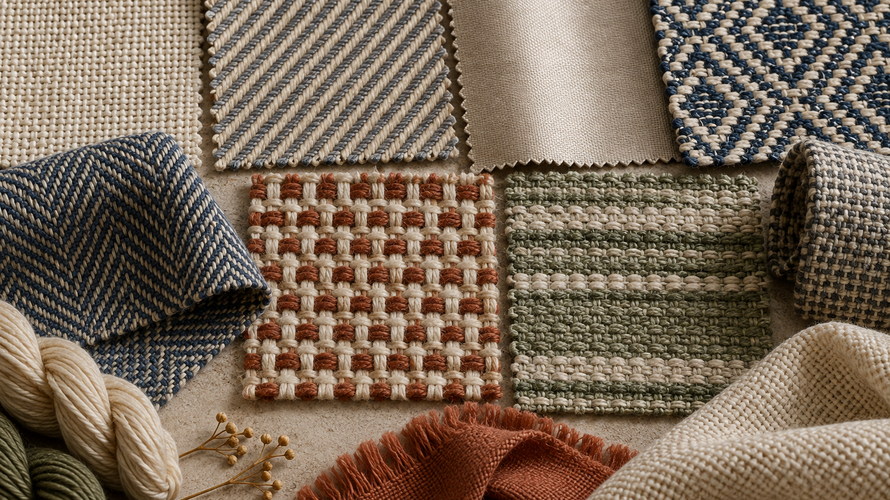
Use the yarn-dyed fabric guide when colour is built into the warp, weft or both. Use the silk weave patterns guide when the surface design depends on a particular interlacing plan.
A fabric may stretch or move in either direction because of fibre, yarn, finishing or bias cutting. Do not infer performance from direction without measuring the finished quality.
What Should Buyers Check About Warp and Weft?
Direction checks help protect cutting, pattern alignment and finished dimensions, especially for printed, striped, checked or structured products.
Direction and Selvage
Identify warp, weft and selvage on the actual roll or sample and record the direction used for cutting.
Density and Cover
Check ends and picks, opacity, gaps, reed marks and whether the density fits the required hand and coverage.
Grain and Skew
Measure the relation between yarn direction and the fabric edge after finishing. Skew can affect patterns and seams.
Width and Shrinkage
Record finished and usable width, length change and width change after the intended care or finishing route.
Pattern and Repeat
Check how stripes, checks, artwork or Jacquard motifs align with warp, weft, border and finished dimensions.
Strength and Slippage
Test seam slippage, tear, snag and abrasion where the product needs structural stability or repeated handling.
| Check | Why it matters | Possible risk | Evidence to request |
|---|---|---|---|
| Direction | Protects cutting and grain | Pattern rotated or distorted | Marked sample and roll record |
| Density | Controls coverage and hand | Open gaps or heavy body | Construction data |
| Skew | Protects finished alignment | Twisted panels | After-finish measurement |
| Width | Controls yield and dimensions | Insufficient usable width | Width tolerance |
| Repeat | Controls design placement | Border or plaid mismatch | Full-width sample |
| Slippage | Protects seams and use | Open seams or damage | Relevant test result |

Why Do Warp and Weft Matter for Scarves and Printed Fabric?
Warp and weft affect the stability, edge, drape and pattern placement of woven scarves. For a printed product, specify the print and construction relationship so the artwork is reviewed on the real base.
For sampling, keep the fabric swatch marked with grain, face, reverse, usable width and intended cut direction.
How Should Warp and Weft Be Written in a Fabric Specification?
State fibre, yarn type, warp and weft yarn or colour, construction, density, weight, width, usable width, finish, shrinkage, skew, face, reverse and care.
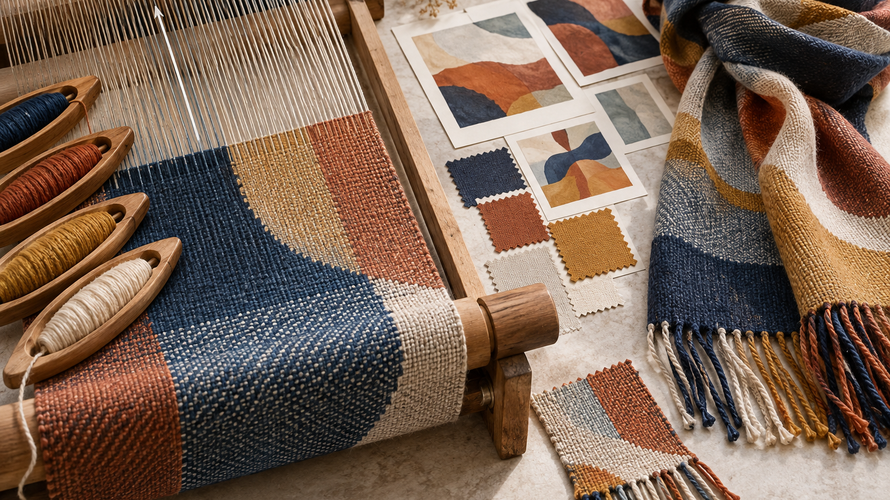
For a custom scarf, define finished size, border, artwork direction, twill or other weave if relevant, hem and inspection points.
Frequently Asked Questions
What is warp in fabric?
Warp is the lengthwise yarn system prepared on the loom and held under tension during weaving.
What is weft in fabric?
Weft is the crosswise yarn system inserted across the warp during weaving. It may also be called filling or pick.
Are warp and weft the same as length and width?
Warp usually follows the lengthwise or machine direction and weft the crosswise direction, but the finished fabric should be checked rather than assumed.
Which direction has more stretch?
Stretch depends on fibre, yarn, construction, finishing and bias. A direction cannot be judged from warp or weft alone.
Why are warp and weft important for printing?
They help control grain, repeat, border placement, skew and the way the finished artwork sits on the product.
How can a buyer identify warp and weft?
Use selvage, yarn appearance, construction records, fabric markings and a close inspection of the finished sample.
What should a woven-fabric buyer request?
Request fibre, yarn, construction, warp and weft details, density, weight, width, finish, shrinkage, skew, testing and a marked finished sample.
Conclusion
Warp and weft are the two yarn systems that form woven fabric. Record their direction and construction role, then verify density, grain, width, skew, repeat and finished behaviour on the actual quality before cutting or bulk production.
