
What Is the Most Breathable Fabric? Fibre, Weave and Buyer Checks

Carina Silk Editorial Team writes practical guides on silk fabrics, scarves and custom textile development, with a focus on materials, artwork, sampling, construction and finishing decisions.
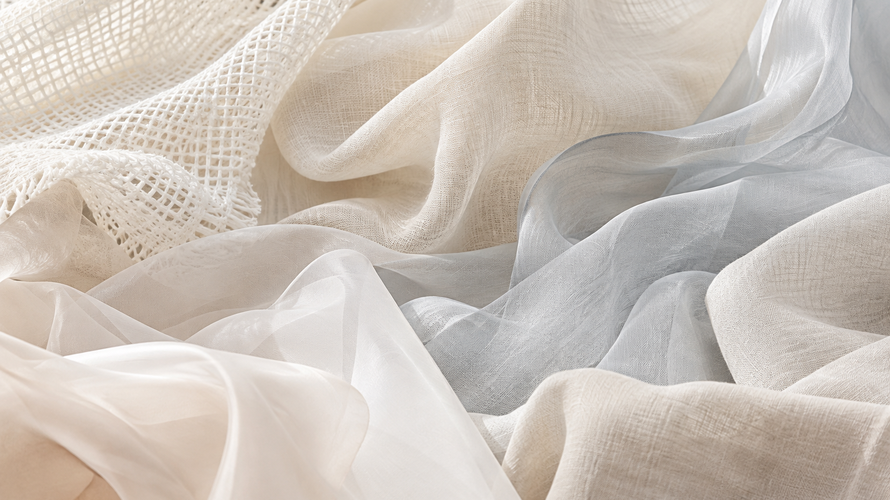
There is no single fabric that is always the most breathable. Air movement and comfort depend on fibre, yarn, weave openness, weight, moisture response, fit and finishing.
Linen, cotton voile, silk chiffon, lightweight silk, modal and some open synthetic constructions can all suit warm-weather products. The correct choice depends on the finished use and the required coverage, drape and care.
What Does Breathable Fabric Mean?
In practical product language, breathability describes how comfortable a fabric feels as heat and moisture move through or away from the construction. It is influenced by air permeability, openness, weight, moisture absorption and garment or scarf design.
The weaving glossary helps separate fibre from warp, weft and construction. A breathable label should not replace a finished sample or an agreed test.
How Do Fibre, Weave and Weight Affect Breathability?
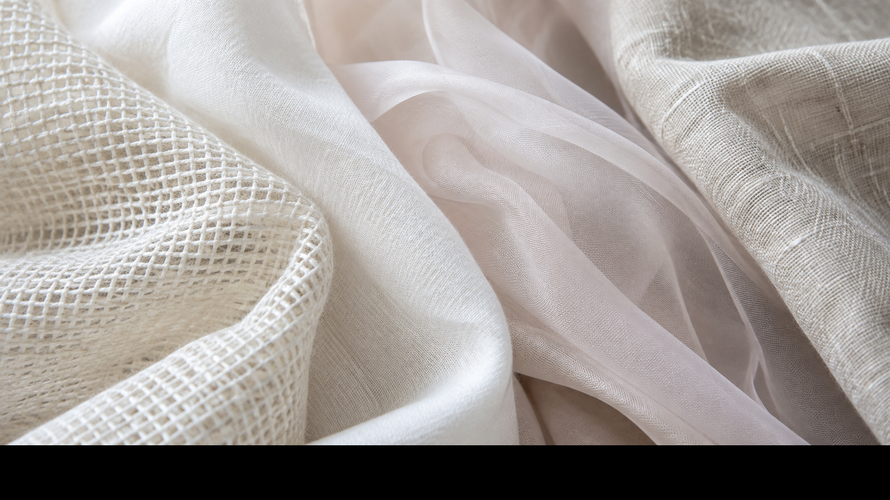
Open constructions allow more air movement but may reduce opacity, coverage or snag resistance. A light plain weave can feel airy, while a dense satin or compact twill may feel warmer even when made from the same fibre.
Moisture response also varies. Linen and cotton can absorb moisture, silk can feel comfortable at a light weight, and regenerated fibres such as modal can offer a soft, fluid hand. Finishing, fit and layering still change the result. The silk chiffon guide shows why lightness and transparency must be evaluated together.
Which Fabrics Are Commonly Chosen for Warm Weather?
These are directional options, not a universal ranking. Compare equivalent weights and finished constructions.
| Fabric direction | Typical comfort | Common fit | What to confirm |
|---|---|---|---|
| Linen | Airy with natural texture | Warm-weather apparel and scarves | Crease, slub and shrinkage |
| Cotton voile | Light and familiar | Everyday summer scarves | Opacity, hand and care |
| Silk chiffon | Very light and often sheer | Layered scarves and formal styling | Transparency, edge and snagging |
| Light silk plain weave | Smooth and light | Premium warm-weather accessories | Weight, drape and finish |
| Modal or viscose | Soft and fluid | Everyday draped products | Blend, wet handling and recovery |
Breathability Versus Coverage, Drape and Durability
The most open fabric is not always the best product fabric. A scarf may need enough coverage for styling, a stable hem for production, or enough body to hold a print. A very sheer cloth can require layering, while a dense fabric may feel too warm.
Use the basic weave reference and the woven-fabric guide to describe openness and construction accurately.
What Should Buyers Check in a Breathable Fabric?
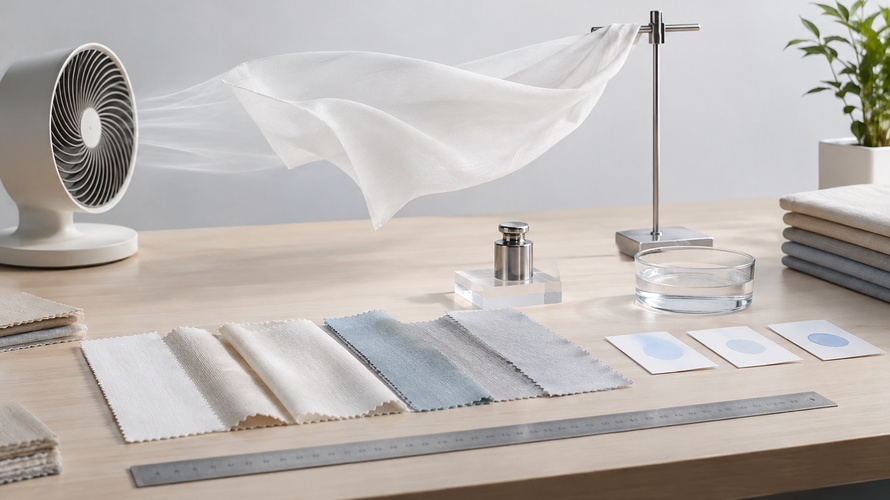
Evaluate the actual fabric in the intended climate and product construction. Record what comfort means for the wearer instead of approving a generic fibre claim.
Airflow and Openness
Inspect the construction against light and compare open areas, yarn density and layering needs.
Weight and Drape
Measure weight and hang the finished quality. Lightness can improve comfort but may also reduce body or coverage.
Moisture and Drying
Consider absorption, drying time, colour change and surface feel after moisture or washing.
Opacity and Layering
Check the fabric on skin and under the final lighting. Sheer fabrics may need lining or a layered design.
Edge, Snagging and Care
Test the finished hem, seam and care route. Open or delicate structures can need careful handling.
| Check | Why it matters | Possible risk | Evidence to request |
|---|---|---|---|
| Weight and openness | Controls air movement and coverage | Too warm or too sheer | Measured fabric and light review |
| Fibre and blend | Influences moisture and care | Wrong comfort expectation | Fibre specification |
| Drape and fit | Controls contact and movement | Fabric clings or collapses | Finished-size sample |
| Colour and print | Adds surface coverage and heat response | Dark print feels warmer | Strike-off and light test |
| Edge and durability | Protects everyday use | Fraying or snagging | Hem and wear sample |
| Care response | Protects long-term comfort | Shrinkage or hand change | After-care comparison |
What Is the Most Breathable Fabric for a Scarf?
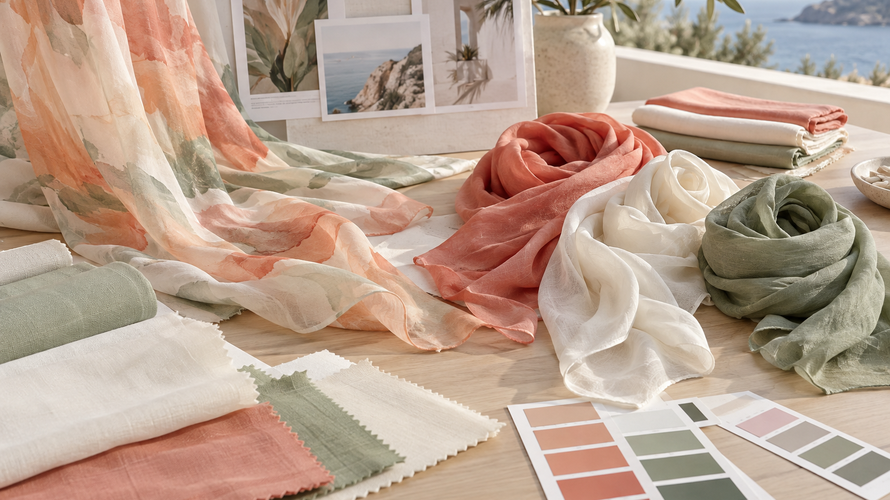
For a light, airy scarf, silk chiffon, cotton voile, linen and lightweight plain weaves are common starting points. For a premium printed scarf, a light silk twill or plain weave may balance comfort with colour and body; the most open option may be too sheer.
Compare the actual proposed quality, then keep the approved fabric swatch with the finished hem and care record.

How Should Breathability Be Specified?
State fibre content, weave, weight, usable width, openness or coverage target, moisture and care expectations, colour, print method, edge and finished dimensions. If comfort is critical, agree a test method or reference standard.
Use the silk fabric guide to compare silk directions without treating fibre name as a complete performance claim.
Frequently Asked Questions
What is the most breathable fabric?
There is no universal answer. Linen, cotton voile, silk chiffon, lightweight silk, modal and open constructions can all be breathable depending on weight, openness and finish.
Is linen more breathable than silk?
Both can feel comfortable in light constructions, but the result depends on yarn, weave, weight, finish and use. Compare the actual samples.
Is silk good for hot weather?
Light silk can feel comfortable in warm weather, especially when the construction is airy and the weight is low. Silk satin or dense silk may feel different.
Is chiffon breathable?
Chiffon is often light and open, but transparency, finish and layering affect comfort. Test the finished scarf and edge.
Does a loose weave mean better comfort?
A loose weave may improve air movement, but it can reduce coverage, stability and snag resistance. Choose against the full brief.
How do you test fabric breathability?
Compare weight, openness, airflow or moisture behaviour and finished drape using representative samples. Repeat after the intended care route.
What should a breathable-fabric supplier provide?
Request fibre content, construction, weight, width, coverage, care, dimensional data and a representative finished sample or agreed test result.
Conclusion
The most breathable fabric is the one that balances air movement, moisture comfort, coverage, drape, durability and care for the intended product. Specify the construction and finished performance, then approve the real sample before production.
