
What Is Pongee Fabric? Properties, Uses and Specification Checks

Carina Silk Editorial Team writes practical guides on silk fabrics, scarves and custom textile development, with a focus on materials, artwork, sampling, construction and finishing decisions.
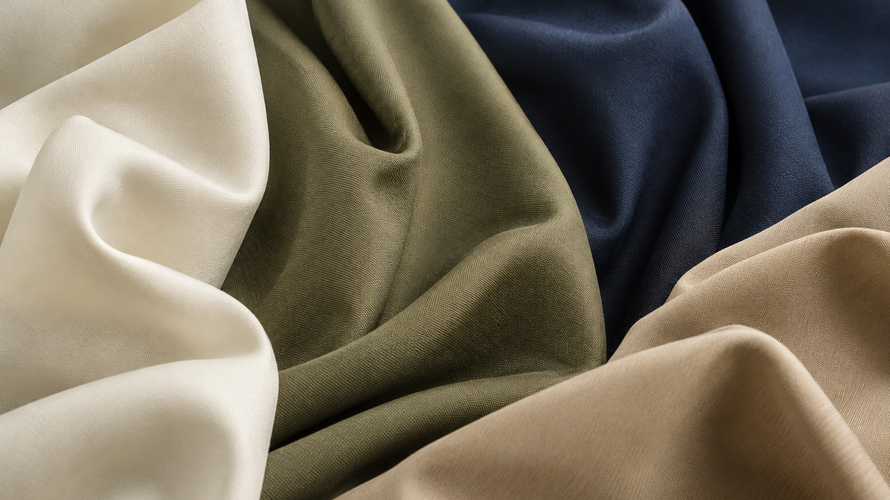
Pongee is a trade term used for lightweight woven fabrics with a relatively simple, often plain-weave appearance. The exact fibre, yarn, weight, surface and end use can vary, so the word alone is not a complete specification.
A pongee quality may be made from silk, polyester, viscose or a blend. Buyers should confirm the composition and finished performance instead of assuming that pongee means one fibre or one price level.
What Is Pongee Fabric?
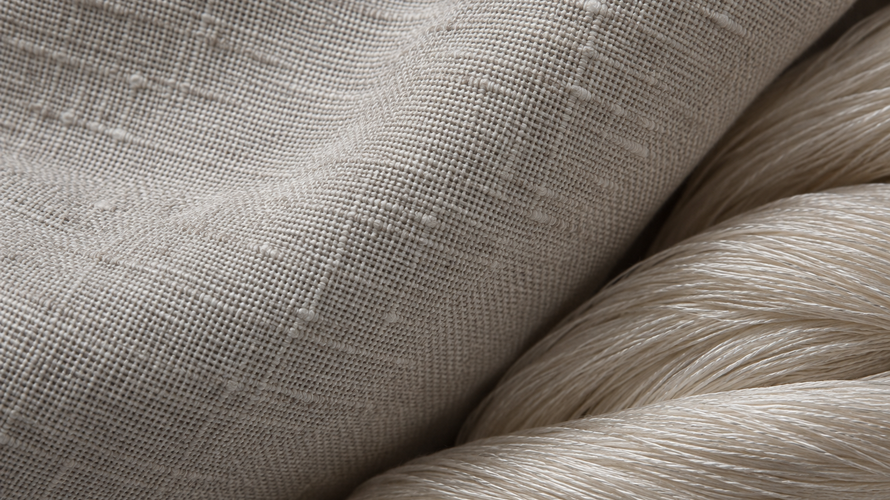
Pongee commonly describes a light woven fabric with a soft to slightly crisp hand and a matte or subdued surface. Some trade descriptions also use it for silk-like polyester qualities or fabrics with subtle slub and irregularity.
Because terminology varies between markets, use the FTC fibre-labelling reference for composition and the woven fabric guide for construction language.
How Is Pongee Made?
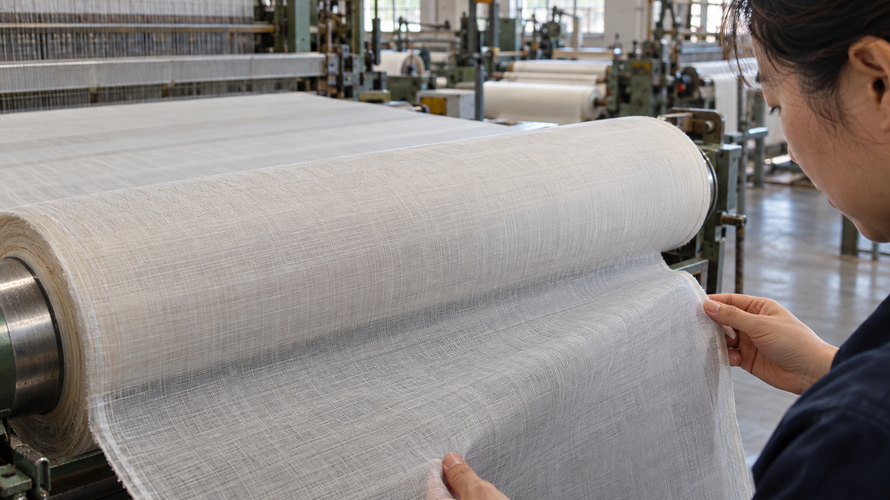
Many pongee-like fabrics use a plain or simple woven construction, but yarn size, density, slub, colour and finishing create different results. Silk pongee can feel natural and soft; polyester pongee can be engineered for cost, repeatability or easy-care use.
Washing, calendaring, brushing, coating or dyeing can change opacity, lustre, drape and dimensional stability. The finished product should therefore be described by fibre, construction, weight and finish rather than by pongee alone.
What Are the Common Pongee Directions?
The following are commercial directions rather than rigid categories. Confirm composition and measurable properties on the sample.
| Pongee direction | Typical hand | Common fit | What to confirm |
|---|---|---|---|
| Silk pongee | Soft, light and natural-looking | Scarves, linings and premium accessories | Silk type, weight and care |
| Polyester pongee | Light to crisp, matte to lightly lustrous | Linings, promotional goods and apparel | Yarn, finish and static |
| Viscose or blended pongee | Soft to fluid depending on blend | Fashion and draped accessories | Wet handling and recovery |
| Slub pongee | Subtle irregular texture | Casual or textured styling | Slub repeat and surface tolerance |
| Printed pongee | Base hand depends on fibre and finish | Custom scarves and panels | Print side, colour and edge |
Pongee Versus Taffeta, Twill and Plain Weave
Pongee is a trade description, while plain weave or twill identifies a construction family. Taffeta usually suggests a crisper, more rustling hand, while a compact twill shows a diagonal line and may have more body. A pongee base can still use a simple plain weave and can also be printed.
Use the twill construction guide and the polyester versus silk comparison to separate construction from fibre and finish.
What Should Buyers Check in Pongee Fabric?
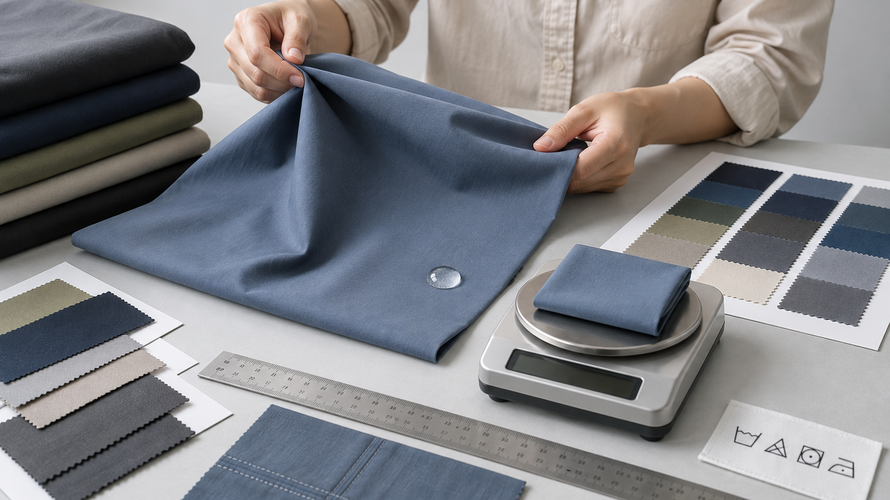
Pongee should be approved as a measured quality. Confirm the actual face, reverse, weight, width and care response before quoting a finished product.
Fibre and Yarn
Confirm fibre percentage, filament or spun direction, yarn size and any slub. These details affect hand, label and care.
Weight, Width and Opacity
Measure finished weight and usable width, then check coverage under production lighting. Light pongee can be more sheer than expected.
Drape and Surface
Hang, fold and rub the actual sample. Note whether the hand is soft, dry, crisp, slippery or textured.
Shrinkage, Skew and Recovery
Test the care route and measure length, width, skew and edge movement after washing, steaming or pressing.
Print and Colourfastness
For printed pongee, approve a strike-off at finished scale and check reverse show-through, sharpness and edge treatment.
| Check | Why it matters | Possible risk | Evidence to request |
|---|---|---|---|
| Composition | Controls label and performance | Wrong fibre assumption | Fibre specification |
| Construction and yarn | Controls hand and stability | Unexpected texture | Construction note and sample |
| Weight and usable width | Controls drape and yield | Wrong finished body | Measured standard |
| Care response | Protects dimensions | Shrinkage or skew | After-care test |
| Print and colour | Protects artwork | Show-through or shade drift | Strike-off and light review |
| Edge and seam | Protects final product | Fraying or puckering | Finished hem sample |
Is Pongee Good for Scarves?
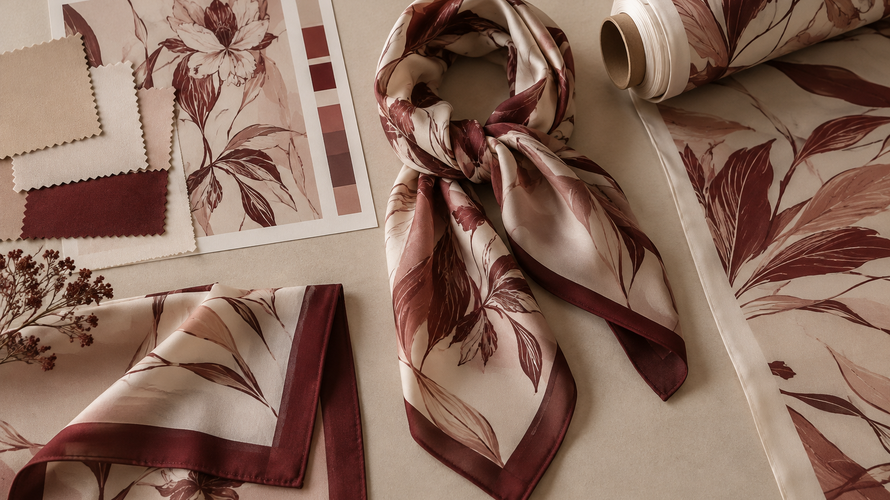
Pongee can suit a light scarf, lining, casual accessory or printed panel when the chosen quality has the right opacity, drape and edge stability. Silk pongee may support a premium natural hand, while polyester pongee may support cost or easy-care programs.
For custom development, keep the approved fabric swatch with the print strike-off, care note and finished hem.
How Should Pongee Be Specified?
State fibre content, yarn, construction, weight, usable width, opacity, face and reverse, colour, finish, print route, repeat, edge treatment, care and tolerances. If the name pongee appears in a quotation, add the measurable details beside it.
Review the silk fabric types guide when the brief requires a silk pongee direction and do not approve from a trade name alone.
Frequently Asked Questions
Is pongee always silk?
No. Pongee is a trade term and may describe silk, polyester, viscose or blended woven fabrics. Confirm fibre content.
Is pongee a plain weave?
Many pongee qualities use a simple or plain woven construction, but trade usage varies. Confirm the actual construction, yarn and finish.
Is pongee fabric soft?
It can be soft, light or slightly crisp depending on fibre, yarn, weight and finish. Approve the actual hand.
Is pongee good for scarves?
It can suit light scarves when the opacity, drape, print, edge and care response fit the brief. Test a finished sample.
What is the difference between silk pongee and polyester pongee?
They differ in fibre source and may differ in hand, lustre, care, price and performance. Compare equivalent constructions and finished samples.
Does pongee shrink?
Shrinkage depends on fibre, construction and care route. Measure the proposed quality before and after the intended treatment.
What should a pongee supplier provide?
Request composition, construction, weight, width, finish, colour and print standards, care data, dimensional results and a representative sample.
Conclusion
Pongee is useful trade language, but it is not a complete fibre or performance specification. Confirm the composition, construction, weight, width, finish, care and finished sample so the chosen quality matches the product brief.
