What Is Charmeuse Fabric? Satin Weave, Properties and Uses

Carina Silk Editorial Team writes practical guides on silk fabrics, scarves and custom textile development, with a focus on materials, artwork, sampling, construction and finishing decisions.

Charmeuse is a smooth, fluid fabric commonly associated with a satin weave and a lustrous face. Silk charmeuse is well known, but polyester, acetate, viscose and blended versions can also be sold under the name.
The word charmeuse describes a fabric direction and hand more than a single fibre. Confirm composition, satin construction, weight, face, reverse, finish and care before selecting it for a product.
What Is Charmeuse Fabric?
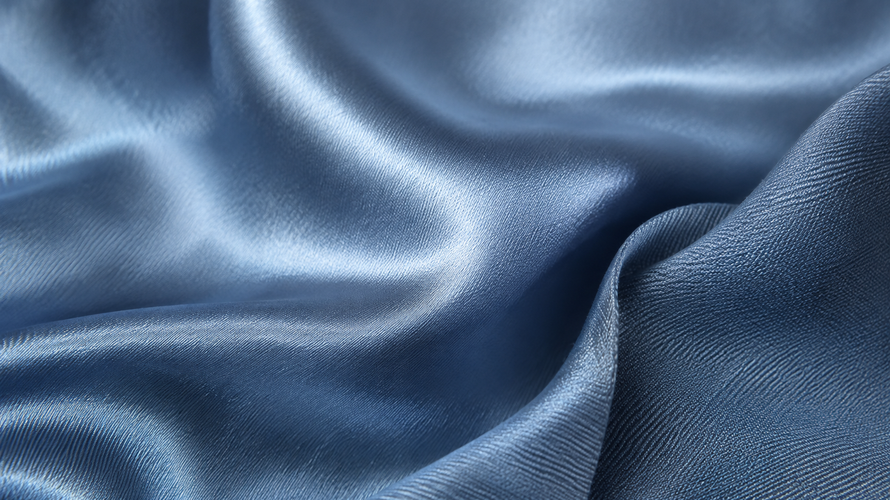
Charmeuse usually has a smooth, reflective face created by longer floats and a duller or less reflective reverse. It is valued for fluid drape, but the surface can also be slippery and more sensitive to snagging than a plain weave.
The FTC textile labelling reference helps keep silk and synthetic fibre claims separate. Satin surface language should be paired with accurate composition.
How Is Charmeuse Made?
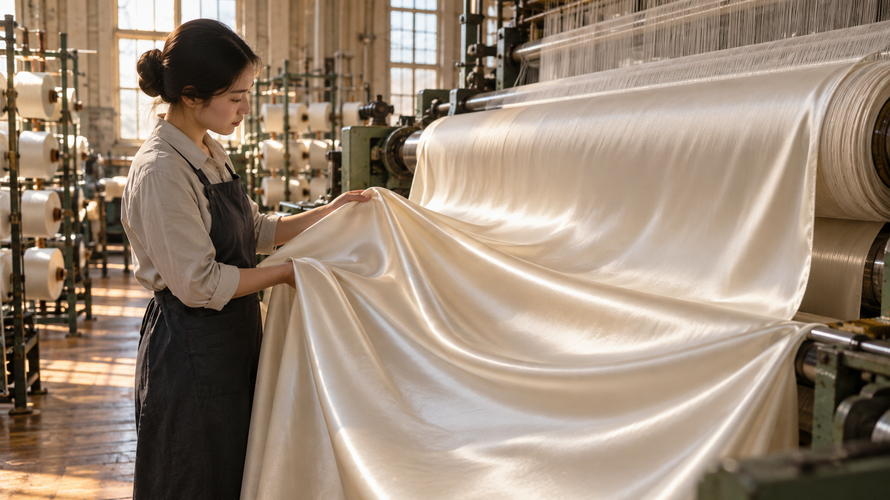
A satin construction places longer floats on one side of the cloth, producing a smooth face and directional light reflection. Yarn fineness, density, fibre, weight and finishing determine whether the result is sleek, fluid, heavy, matte or highly glossy.
Washing, calendaring, softening or coating can alter the hand and lustre. The sateen versus satin guide helps separate surface terms from fibre terms.
What Are the Common Charmeuse Directions?
Charmeuse qualities vary widely by fibre, weight and finish. Treat the following as commercial directions, not fixed grades.
| Charmeuse direction | Typical hand | Common fit | What to confirm |
|---|---|---|---|
| Silk charmeuse | Smooth, fluid and refined | Luxury scarves, lingerie and occasionwear | Silk type, weight and care |
| Polyester charmeuse | Fluid to glossy, often engineered | Cost-conscious apparel and accessories | Static, heat and face |
| Stretch charmeuse | Smooth with mechanical stretch | Close-fitting apparel | Stretch, recovery and blend |
| Printed charmeuse | Reflective face with artwork | Scarves and fashion panels | Print sharpness and reverse |
| Matte or washed charmeuse | Softer, less reflective face | Casual luxury and draped goods | Finish, colour and care |
Charmeuse Versus Satin, Sateen and Silk Twill
Charmeuse is often used for a particular smooth, fluid satin-like fabric, while satin is a broader construction or surface family. Cotton sateen may have a smooth face but is cotton-based, and silk twill is identified by diagonal ribs rather than long satin floats.
Use the silk fabric types guide and the polyester versus silk comparison when fibre and surface must be evaluated together.
What Should Buyers Check in Charmeuse Fabric?
Charmeuse should be approved as a finished product because surface slip, drape and seam behaviour can be very different from a flat swatch.
Face, Reverse and Lustre
Mark the approved face and inspect both sides under the final lighting. Record how reflection changes as the fabric moves.
Drape and Slip
Hang, fold and style the actual weight. Test whether the surface slides, clings or needs a stabilising layer.
Snagging and Seam Behaviour
Test rubbing, pulls, needle marks, seam movement and the finished hem. Longer floats can be more vulnerable.
Print, Colour and Heat
Approve a strike-off under final lighting and check colour depth, reverse show-through and heat or steam response.
Care and Dimensional Stability
Measure shrinkage, skew, lustre and hand after the intended wash, dry-cleaning or pressing route.
| Check | Why it matters | Possible risk | Evidence to request |
|---|---|---|---|
| Fibre and blend | Controls hand and label | Silk assumed incorrectly | Composition specification |
| Face and reverse | Controls presentation | Wrong side approved | Both-side sample |
| Weight and drape | Controls styling | Too fluid or too heavy | Finished-size sample |
| Snagging and seam | Protects production | Pulls or needle marks | Hem and seam test |
| Colour and heat | Protects appearance | Lustre or shade change | Strike-off and care test |
| Care and shrinkage | Protects size | Skew or hand change | After-care measurement |
Is Charmeuse Good for Scarves?
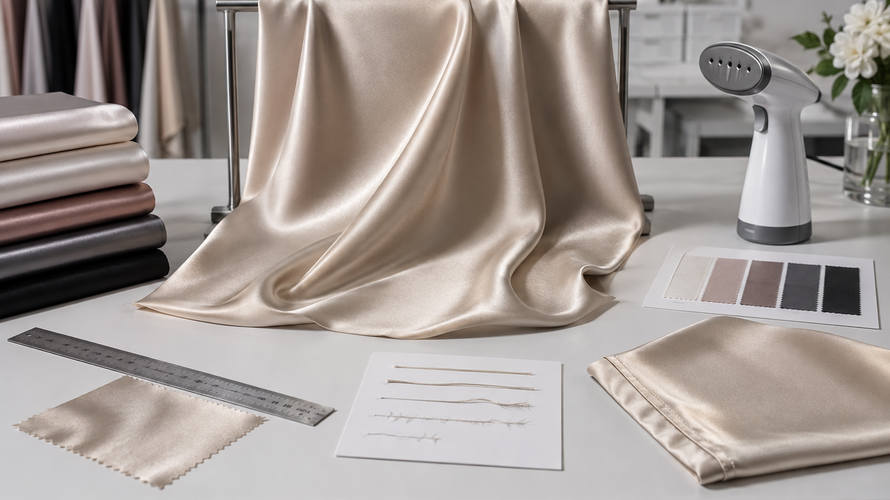
Charmeuse can suit luxury scarves, occasionwear, lingerie, linings and fluid fashion panels when the product can handle a smooth, slippery face. Silk charmeuse may support premium hand and lustre; synthetic versions may support price, repeatability or easier-care programs.
For custom development, keep the approved fabric swatch with the print, face, hem and care approval.
How Should Charmeuse Be Specified?
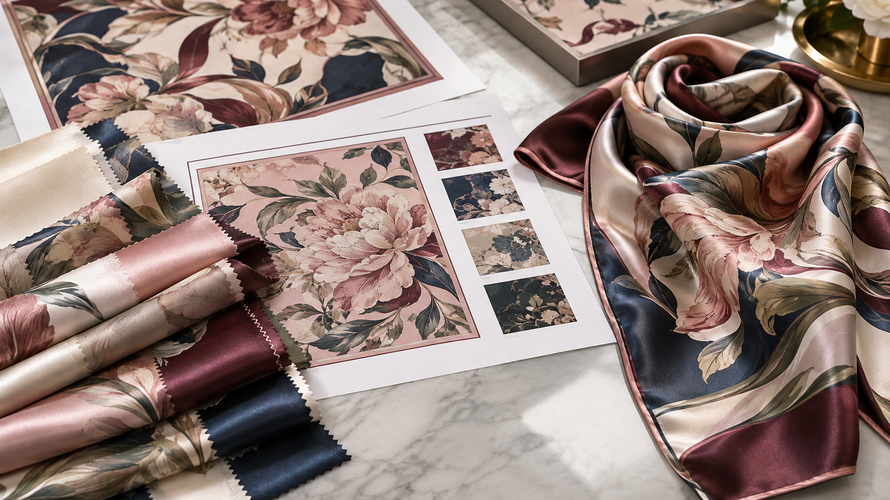
State fibre content and percentage, satin construction, yarn, weight, width, face and reverse, lustre target, colour, print route, finish, edge treatment, care and dimensional tolerances.
When the brief compares charmeuse with another satin, use the woven construction guide and approve a production-representative sample.
Frequently Asked Questions
Is charmeuse always silk?
No. Silk charmeuse is common, but polyester, acetate, viscose and blended versions can also be sold as charmeuse. Confirm fibre content.
Is charmeuse the same as satin?
Charmeuse is commonly a smooth, fluid satin-like fabric, while satin is a broader construction or surface term. Trade usage varies, so inspect the actual fabric.
Is charmeuse good for scarves?
It can suit luxury and fluid scarves, but slip, snagging, edge and care should be tested on the finished sample.
What does the reverse of charmeuse look like?
The reverse is often duller or less reflective than the face, but the exact contrast depends on fibre, weave and finish.
Does charmeuse snag easily?
Longer surface floats can be more sensitive to pulls and abrasion than a simple plain weave. Test the actual construction.
Is polyester charmeuse like silk charmeuse?
It may imitate a smooth or glossy look, but hand, drape, heat response, care and fibre composition can differ.
What should a charmeuse supplier provide?
Request composition, satin construction, weight, width, face and reverse, lustre, colour, care data, dimensional results and a finished sample.
Conclusion
Charmeuse is a smooth, fluid satin-weave fabric direction, not a guarantee that the cloth is silk. Confirm fibre, weight, face, reverse, lustre, slip, snagging and care, then approve the finished sample before production.