
What Is Dupioni Silk? Properties, Uses and Buyer Checks

Carina Silk Editorial Team writes practical guides on silk fabrics, scarves and custom textile development, with a focus on materials, artwork, sampling, construction and finishing decisions.
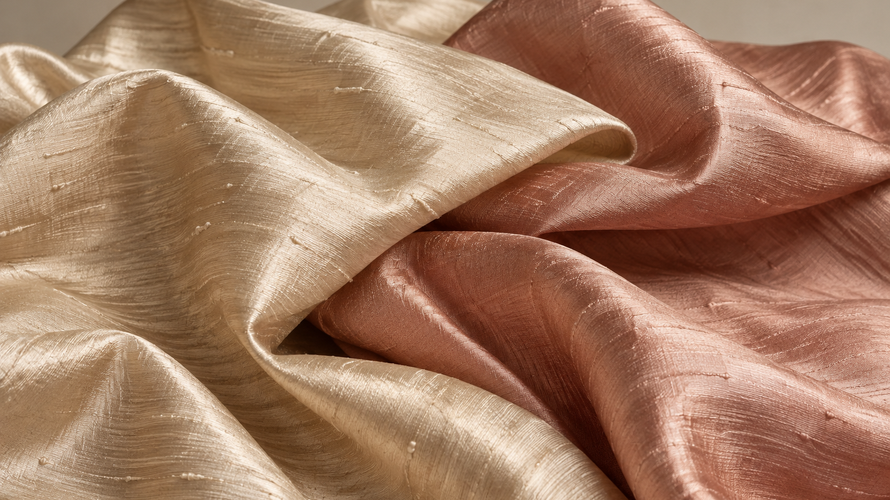
Dupioni silk is a textured silk fabric direction recognized by visible slubs, a crisp or structured hand and a distinctive surface character. The variation can be part of the design, but it still needs to be controlled for production.
Fibre content is only the first specification. Weight, width, slub distribution, dye route, finish and finished dimensions determine whether a particular dupioni quality fits the product.
What Is Dupioni Silk?
Dupioni silk is generally a silk fabric with an irregular slubbed yarn character and a plain-weave structure. It is often chosen when a product needs more surface texture and body than a very fluid silk.
The silk fabric types guide places textured silks alongside other construction directions. Compare dupioni with shantung fabric on the actual sample because supplier naming can overlap.
The approved sample should show the intended slub range, face, reverse, lustre, weight, width, colour and finished edge.
How Is Dupioni Silk Made?
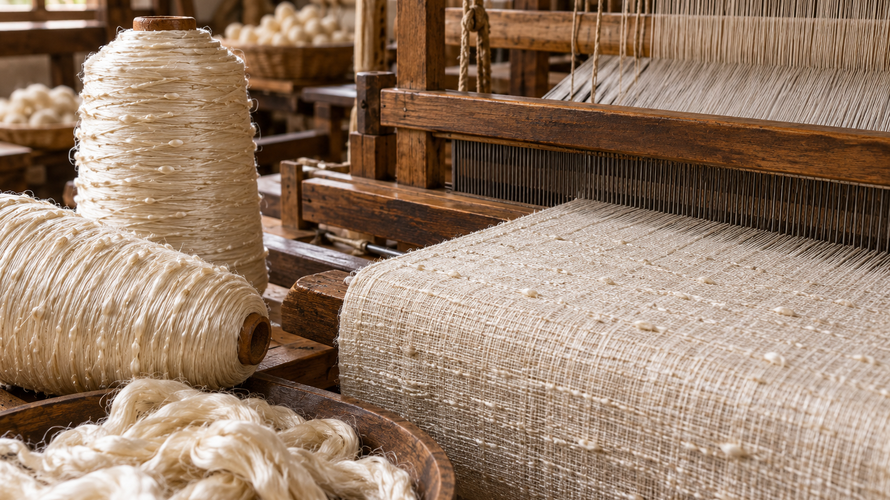
Dupioni character is created through the use of irregular or slubbed silk yarns in a woven construction. Warp and weft may show different levels of texture, direction or colour.
Dyeing, yarn dyeing, finishing, pressing and possible printing can change the appearance of the slubs and the crispness of the hand.
The final product may need structure, pleats, seams or a rolled hem, so test the actual finished dimension and construction rather than approving only a flat swatch.
What Are the Main Dupioni Silk Directions?
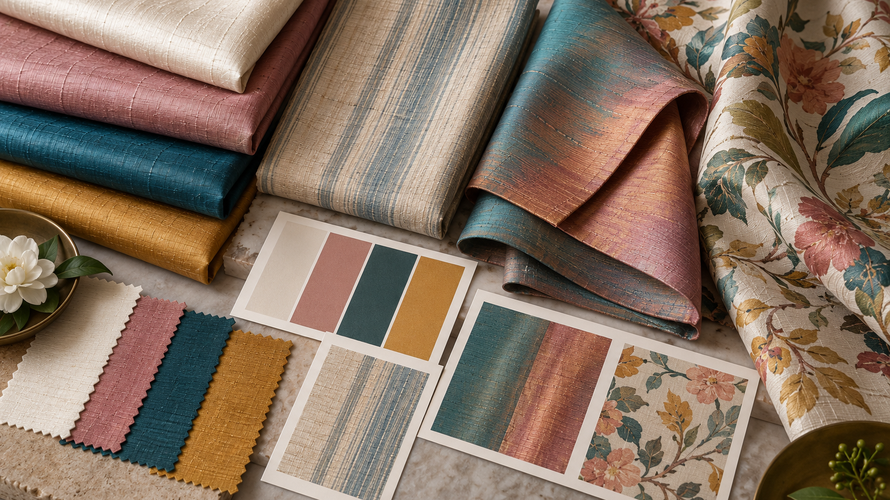
Dupioni can be developed in several colour and surface routes while keeping its textured identity.
| Dupioni direction | Typical character | Common fit | What to confirm |
|---|---|---|---|
| Plain-dyed dupioni | Single-colour textured surface | Occasionwear and accessories | Shade, slub and lustre |
| Yarn-dyed dupioni | Colour relationship built into yarns | Two-tone or patterned products | Warp, weft and repeat |
| Two-tone dupioni | Different face and crosswise colour effect | Premium statement products | Lighting and reverse |
| Printed dupioni | Artwork over textured base | Scarves and panels | Registration and rub |
| Light dupioni | Reduced weight and softer movement | Scarves and apparel | Opacity and drape |
| Heavy dupioni | More body and structure | Jackets, gowns and interiors | Stiffness, width and yield |
Dupioni Silk vs Shantung and Other Textured Silks
Dupioni and shantung are related textured silk directions, and supplier terminology is not always identical. Compare slub size, distribution, hand, lustre, weight and reverse.
Use the woven fabric guide to separate structure from fibre, and the fabric swatch guide to record the accepted natural variation.
A textured silk should be selected for the finished product, not because one name sounds more premium than another.
What Should Buyers Check in Dupioni Silk?
The key is to define the intended variation. Slubs should be characteristic, but the finished quality still needs measurable controls.
Silk Content and Yarn
Confirm fibre composition, yarn route, filament or spun direction and whether warp and weft differ.
Slub Character
Record slub size, frequency, direction and acceptable variation across the finished width.
Weight and Width
Confirm finished weight, usable width, opacity, thickness, stiffness and tolerances.
Colour and Surface
Check plain dye, yarn dye, two-tone or print route, face, reverse, lustre and lighting response.
Construction and Edge
Test cutting, seams, pleats, pressing, hems, fraying, snagging and finished dimensions.
Care and Documentation
Approve care, colourfastness, shrinkage, skew, inspection points and packing protection.
| Check | Why it matters | Possible risk | Evidence to request |
|---|---|---|---|
| Fibre and yarn | Defines silk direction | Wrong composition or hand | Technical specification |
| Slub range | Controls natural character | Out-of-range variation | Approved full-width sample |
| Weight and width | Protects product yield | Wrong body or dimensions | Finished measurement |
| Colour route | Controls visual identity | Two-tone or print mismatch | Colour standard and sample |
| Edge and sewing | Protects manufacturability | Fray or damaged hem | Finished construction trial |
| Care | Protects use and aftercare | Shrinkage or shade change | Care and test record |

What Is Dupioni Silk Used For?
Dupioni silk can suit bridalwear, eveningwear, jackets, structured dresses, scarves, bags, cushions, panels and other products that benefit from texture and body. For custom orders, keep the approved swatch with slub notes and edge details.
If a product needs a smoother flowing surface, compare dupioni with silk satin or charmeuse before choosing the final construction.
How Should Dupioni Silk Be Specified?
State silk content, yarn route, weave, slub range, weight, width, usable width, colour, finish, face, reverse, care, shrinkage, skew and finished-product tolerances.
For a patterned product, define the woven or printed route, repeat, placement, border, hem and packing.
Frequently Asked Questions
What is dupioni silk?
Dupioni silk is a textured silk fabric direction with visible slubs, a plain-weave structure and often a crisp or structured hand.
Is dupioni silk real silk?
The name usually refers to a silk direction, but composition should still be confirmed on the supplier specification and label documentation.
What is the difference between dupioni and shantung?
They are related textured silk directions and naming can overlap. Compare slub distribution, weight, lustre, hand and actual construction.
Is dupioni silk good for scarves?
It can suit structured scarves when the weight, slub character, drape, edge and care match the design.
Can dupioni silk be printed?
Selected dupioni qualities can be printed, but the texture affects registration, colour and hand. Approve a finished strike-off or sample.
Does dupioni silk have slubs?
Visible slubs are a typical character of dupioni, but the acceptable size and frequency should be defined by the approved sample.
What should a dupioni buyer request?
Request silk content, yarn and slub details, weight, width, colour, finish, care, tolerances and an approved full-width sample.
Conclusion
Dupioni silk is valued for its textured slub character and structured hand, but the name is not a complete specification. Define silk content, yarn, slub range, weight, width, colour and finished construction, then approve the actual quality before bulk production.
