
Natural Fabric vs Synthetic Fabric: How Should Buyers Compare Them?

Carina Silk Editorial Team writes practical guides on silk fabrics, scarves and custom textile development, with a focus on materials, artwork, sampling, construction and finishing decisions.

Natural fibres come from plant, animal or mineral sources; synthetic fibres are manufactured from chemical polymers. University of Georgia textile basics also separates natural, regenerated cellulosic and chemical-source manmade fibres, which is important because “natural” and “synthetic” do not cover every textile category.
The finished fabric still depends on yarn, weave or knit, weight, density, finish and care. A fibre category is a useful starting point, not a complete performance specification.
What Is the Difference Between Natural and Synthetic Fabric?
Cotton, linen, silk and wool are examples of natural fibres. Polyester, nylon, acrylic and spandex are synthetic fibre families. Rayon, modal, cupro and lyocell are regenerated or manmade cellulosic directions and should be labelled accurately.
The same construction can use different fibre categories, and the same fibre can be made into different constructions. A natural fibre can be dense or sheer; a synthetic can be matte, lustrous, brushed or engineered.
Use the fabric composition guide with the fabric weight guide and a finished swatch to describe the delivered quality.
How Do Fibre Categories Become Fabric?
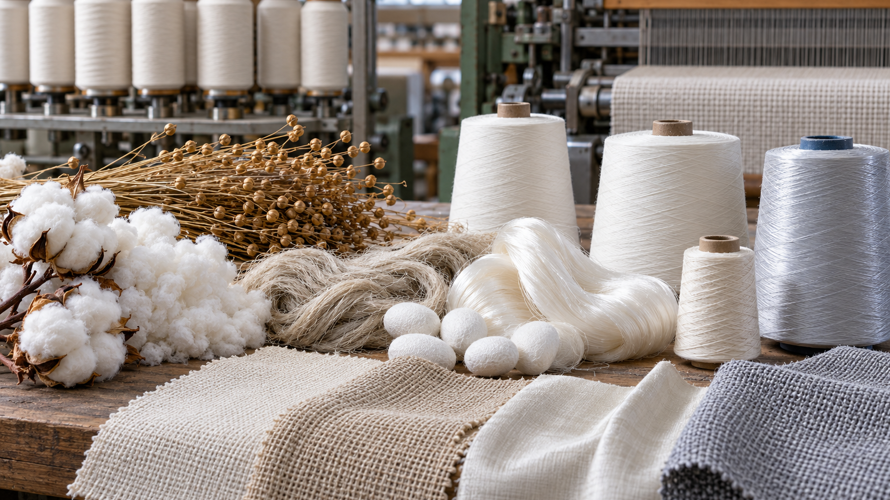
Fibres are prepared into staple or filament forms, then assembled into yarn or directly into a nonwoven structure. Yarns are woven, knitted or otherwise bonded before dyeing and finishing.
Natural fibres have inherent variation from source, preparation and fibre length. Synthetic fibres can be engineered for size, cross-section, crimp, strength or surface, but the finished fabric still depends on construction.
Blends combine fibre categories to balance hand, care, strength, recovery, cost or appearance. The blend ratio and finished process must be confirmed rather than assumed.
What Natural and Synthetic Fabric Directions Should Buyers Compare?
Compare like-for-like finished qualities instead of broad categories only.
| Direction | Textile character | Potential fit | What to confirm |
|---|---|---|---|
| Natural plant fibre | Cotton, linen or ramie | Breathable or textured products | Shrinkage, crease and fibre content |
| Natural animal fibre | Silk or wool | Luxury, warmth or soft hand | Fineness, care and construction |
| Synthetic polyester | Filament or staple forms | Uniforms, scarves and easy-care products | Heat, static, pilling and hand |
| Synthetic nylon or acrylic | Engineered polymer fibre | Strength, stretch or wool-like effects | Recovery, abrasion and care |
| Regenerated cellulosic | Rayon, modal, cupro or lyocell | Fluid and soft products | Process, care and label wording |
| Blended fabric | Two or more fibre families | Balanced product requirements | Ratio, claims and care |
Is Natural Fabric Better Than Synthetic Fabric?
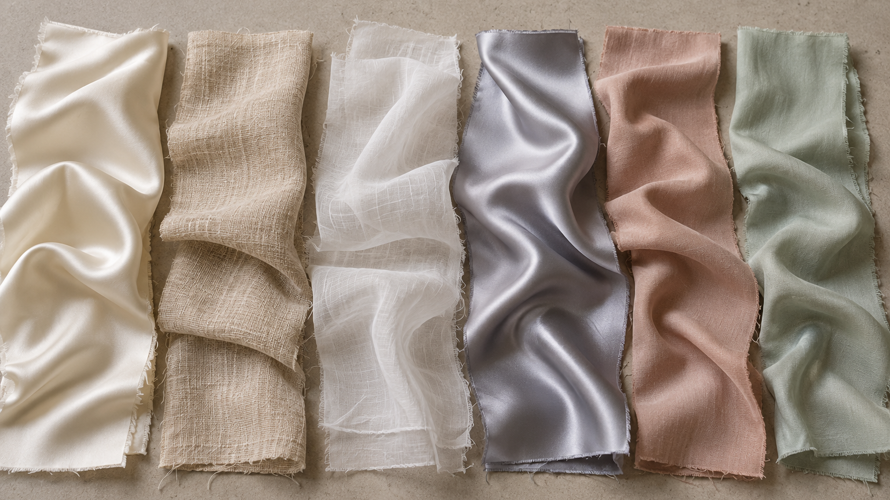
There is no universal winner. Natural, synthetic and regenerated fibres can each be appropriate depending on hand, moisture, durability, care, price, artwork, climate and end use.
For a scarf, compare silk, linen, rayon and polyester on the same sample basis. A soft hand or natural origin alone does not predict the finished product.
Sustainability, comfort and durability claims need claim-specific evidence. Avoid turning a category label into an absolute promise.
What Should Buyers Check in a Natural or Synthetic Fabric?
The decision should be tied to the product brief and a defined acceptance test.
Composition
Confirm every fibre and percentage, including regenerated, synthetic, recycled or coated components.
Construction
Record woven, knitted, bonded, pile, density, weight, width and finish.
Hand and Use
Compare softness, drape, grip, opacity, crease, warmth and wearer comfort in context.
Moisture and Care
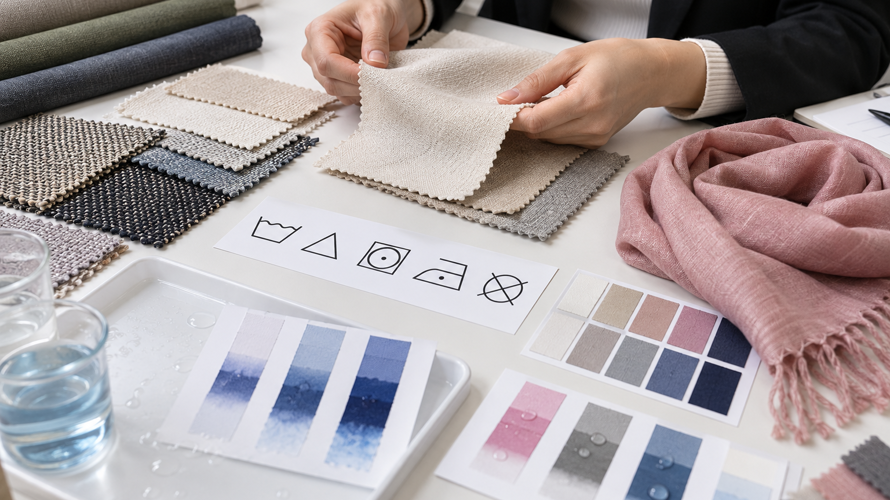
Define absorbency, drying, wicking, washing, pressing and dimensional requirements without conflating them.
Durability
Test abrasion, pilling, colourfastness, recovery, snagging and surface change for the real use.
Claims and Sample
Support sustainability, certification, recycled content or performance claims with relevant evidence and approve the finished sample.
| Check | Why it matters | Possible risk | Evidence to request |
|---|---|---|---|
| Fibre | Controls identity | Natural or synthetic label error | Composition statement |
| Construction | Controls behaviour | Category comparison unfair | Weave or knit record |
| Hand | Controls wearer experience | Swatch misleads | Finished swatch |
| Care | Controls product life | Wrong instruction | Care trial |
| Durability | Controls service life | Early failure | Defined test |
| Claims | Controls trust | Unsupported wording | Claim evidence |
Where Does the Natural vs Synthetic Choice Matter?
The choice matters in scarves, uniforms, apparel, linings, home textiles and performance products where hand, care and service conditions differ.
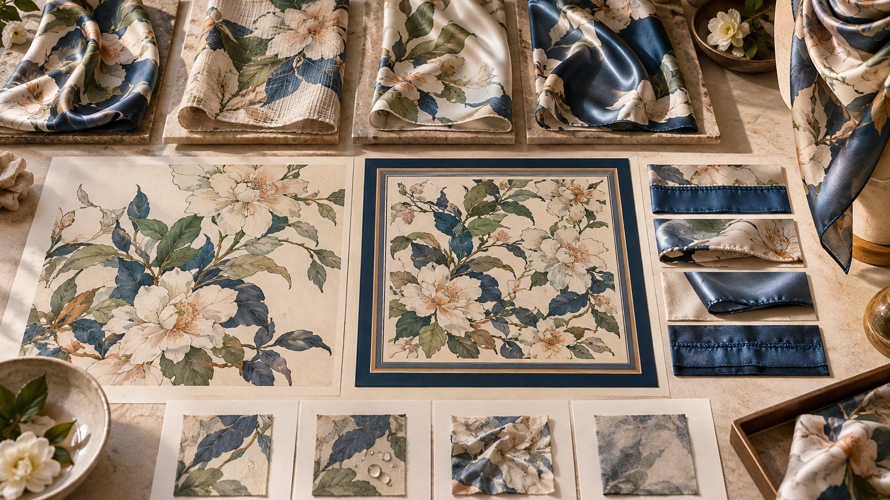
For a premium printed scarf, compare silk twill, polyester satin, linen and regenerated-cellulose options using the actual artwork, border, hem and care route.
The best material is the one that meets the product’s acceptance criteria with claims that can be supported.
How Should Natural or Synthetic Fabric Be Specified?
State fibre origin or family, blend ratio, construction, yarn, weight, width, surface, moisture expectation, care, dimensional tolerance, colour or print and finished use.
Attach a physical swatch and, where claims matter, the claim-specific documentation and finished sample.
Frequently Asked Questions
What is the difference between natural and synthetic fabric?
Natural fibres come from plant, animal or mineral sources, while synthetic fibres are manufactured from chemical polymers. The finished fabric also depends on construction and finishing.
Is natural fabric always more breathable?
Breathability depends on fibre, yarn, density, finish and product design. Do not infer it from origin alone.
Is synthetic fabric always less comfortable?
No. Comfort depends on hand, moisture, construction, temperature, fit and finish.
Are rayon and modal natural fabrics?
They use natural cellulose feedstocks but are regenerated into fibre through manufacturing processes, so they should be described accurately rather than simply called natural.
Which is more durable, natural or synthetic fabric?
Durability depends on the exact fibre, construction, finish and use. Compare the finished quality under a defined test.
Which is better for scarves?
Choose based on drape, grip, opacity, artwork, care, comfort, durability, price and the finished wearing method.
What should a buyer request?
Request composition, construction, weight, width, care, claim evidence and an approved finished sample.
Conclusion
Natural and synthetic are fibre-origin categories, not complete fabric specifications. Compare the exact construction and finished use, then document care, claims, tolerances and sample evidence.
