
What Is Lyocell Fabric? Properties, Types and Buyer Checks

Carina Silk Editorial Team writes practical guides on silk fabrics, scarves and custom textile development, with a focus on materials, artwork, sampling, construction and finishing decisions.
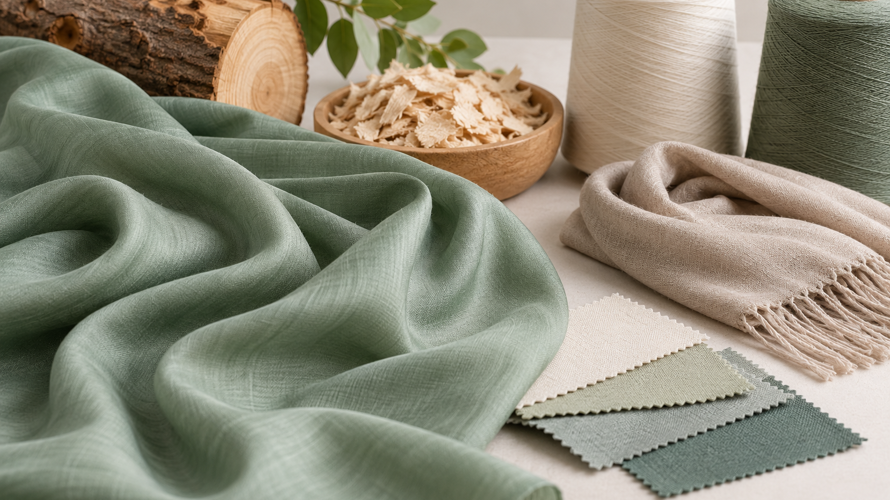
Lyocell is a regenerated cellulosic fibre made through a solvent-spinning route. CIRFS’ lyocell reference identifies the process and common end uses, while Textile Exchange’s glossary explains why TENCEL is a branded lyocell direction rather than a synonym for every lyocell product.
For sourcing, distinguish generic lyocell, a TENCEL-branded fibre and the finished fabric. Yarn, weave, weight, finish and care still determine the product result.
What Is Lyocell Fabric?
Lyocell is made by dissolving cellulose and regenerating it into fibre through solvent spinning. It is a manmade cellulosic fibre, not a fibre that exists in finished form in nature.
Lyocell can be made into staple or filament-like yarns and woven, knitted, blended, dyed or printed. The result can be soft, fluid, matte, lustrous, structured or textured.
Use the Tencel fabric guide carefully: TENCEL is a trademarked branded direction, while lyocell is the generic fibre name.

How Is Lyocell Turned into Fabric?
Cellulose pulp is dissolved in a solvent system and spun into fibre. The specific raw material, process controls and claims belong to the supplier or brand and should not be generalized.
The fibre is converted into yarn and fabric. Fibrillation, finishing, weave, knit, density and dye route can change the hand, surface, colour and care result.
For a custom scarf, compare lyocell with modal or rayon on the same finished swatch and after the intended care route.
What Lyocell Fabric Directions Should Buyers Compare?
Use generic fibre, brand status and construction as separate fields.
| Direction | Textile character | Potential fit | What to confirm |
|---|---|---|---|
| Generic lyocell | Regenerated cellulosic fibre | Soft woven and knitted products | Fibre wording and process |
| TENCEL Lyocell | Branded lyocell direction | Traceability-led programs | Trademark and certification scope |
| Lyocell twill | Diagonal woven construction | Scarves and apparel | Weight, drape and print |
| Lyocell knit | Looped flexible construction | Soft apparel and active use | Stretch and recovery |
| Lyocell blend | Lyocell with cotton, silk or synthetic fibre | Balanced hand or care | Ratio and label |
| Printed lyocell | Artwork on a regenerated-cellulose base | Fashion and accessories | Colour, fibrillation and care |
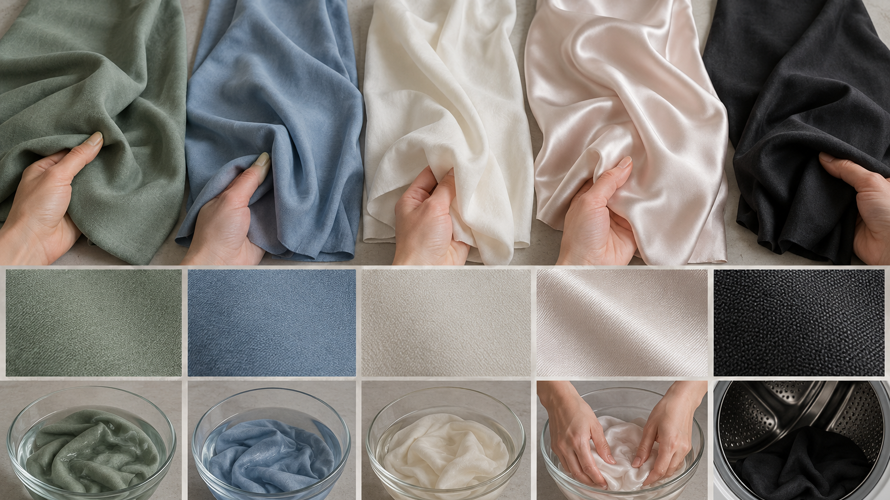
Lyocell vs Viscose and TENCEL
Lyocell and viscose are regenerated-cellulose fibre directions made through different process routes. TENCEL is a brand used for specified lyocell or modal products, not a universal synonym for every regenerated fabric.
Compare lyocell with viscose and modal by hand, drape, moisture, fibrillation, care, pilling, print response and documented claims.
Do not transfer a brand-specific closed-loop or traceability claim to generic lyocell without evidence for the actual product.
What Should Buyers Check in Lyocell Fabric?
Generic fibre wording and brand claims must be kept within their evidence scope.
Fibre and Brand
Confirm generic lyocell, TENCEL or blend wording and the correct trademark use.
Process Claims
Request claim-specific evidence for pulp source, solvent recovery, certification or traceability.
Construction
Record yarn, weave or knit, weight, width, density, finish and opacity.
Surface and Drape
Check softness, fluidity, fibrillation, pilling, colour and print response.
Care and Stability
Test washing, drying, pressing, shrinkage, skew, colourfastness and dimensional change.
Finished Product
Approve the actual cut, hem, seam, packaging and finished sample.
| Check | Why it matters | Possible risk | Evidence to request |
|---|---|---|---|
| Generic fibre | Controls label | Brand and generic terms mixed | Fibre statement |
| Brand | Controls claim scope | TENCEL overgeneralized | Brand documentation |
| Construction | Controls hand | Wrong product behaviour | Weave or knit details |
| Surface | Controls appearance | Fibrillation or pills | Surface and wash test |
| Care | Controls product life | Shrinkage or distortion | Care trial |
| Claims | Controls trust | Unsupported sustainability | Certification or supplier evidence |

Where Is Lyocell Used?
Lyocell is used in apparel, underwear, shirts, dresses, linings, scarves, bedding and blends where a soft or fluid hand is wanted.
For a scarf, compare lyocell with silk, rayon or polyester according to drape, print, opacity, grip, care and price.
Keep generic lyocell performance separate from brand-specific claims and approve the finished fabric.

How Should Lyocell Fabric Be Specified?
State generic fibre or brand, blend ratio, process or certification evidence where relevant, yarn, construction, weight, width, finish, colour or print, care and tolerances.
Attach a finished swatch and the evidence for any TENCEL, traceability, recycled or closed-loop statement.
Frequently Asked Questions
What is lyocell fabric?
Lyocell is a regenerated cellulosic fibre made through a solvent-spinning route and used in woven, knitted and blended fabrics.
Is lyocell the same as TENCEL?
TENCEL is a brand used for specified lyocell or modal products. Generic lyocell is not automatically TENCEL.
Is lyocell the same as viscose?
They are related regenerated-cellulose directions but use different process routes and can produce different finished properties.
Is lyocell breathable?
The finished fabric’s breathability depends on fibre, yarn, density, construction and finish. Test the actual quality.
Does lyocell shrink?
Lyocell can change dimensions depending on construction, finish and care. Use a defined test and tolerance.
Is lyocell good for scarves?
It can suit fluid scarves when drape, opacity, print, grip, care and finished stability meet the brief.
What should a lyocell buyer request?
Request fibre or brand wording, blend, construction, weight, width, care, claim evidence and a finished reference sample.
Conclusion
Lyocell is a generic regenerated-cellulose fibre direction, while TENCEL is a brand-specific direction. Specify the actual fibre, construction, claims, care and finished sample before approval.
