What Is Canvas Fabric? Weave, Weight, Uses and Buyer Checks

Carina Silk Editorial Team writes practical guides on silk fabrics, scarves and custom textile development, with a focus on materials, artwork, sampling, construction and finishing decisions.
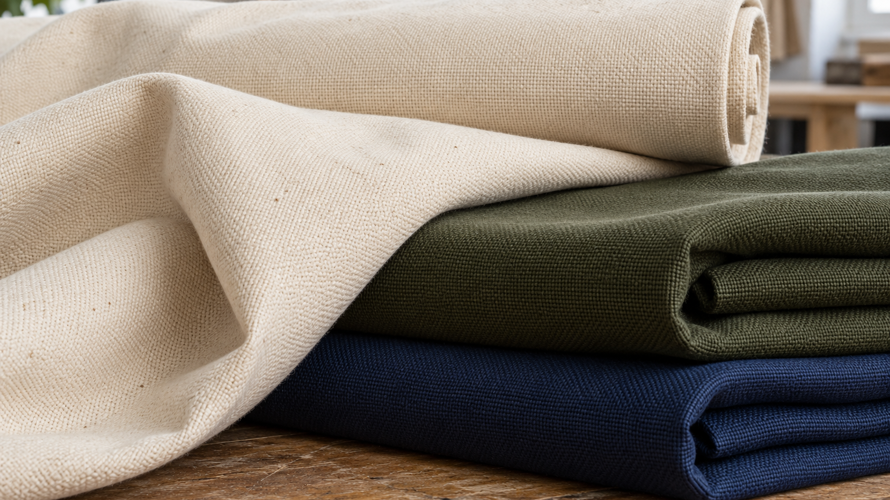
Canvas is a firm woven fabric family, usually associated with a dense plain-weave construction and relatively robust yarns. It can be made from cotton, linen, hemp, polyester, nylon or blends, and its weight and finish can vary widely.
The useful buyer question is not simply “is this canvas?” It is which fibre, yarn, density, weight, width, coating and care route match the finished product.
What Is Canvas Fabric?
Canvas usually uses a plain or plain-weave variation that creates balanced strength and body. The plain-weave guide explains the basic interlacement, but the actual canvas hand depends on yarn size, density and finish.
A cotton canvas can feel different from polyester or coated canvas. Compare it with the fabric composition guide and record the fibre separately from the canvas category.
A water-repellent or coated surface is a finish, not proof of a particular fibre. Confirm the coating chemistry, care, flexibility and testing when those attributes matter.

How Is Canvas Fabric Made?
Yarns are prepared and woven into a dense construction. Heavier yarns and higher density generally create more body, but the exact result depends on fibre, twist, sett and finishing.
The fabric may be dyed, printed, brushed, calendared, coated or laminated. A coating can change water resistance, hand, fold behaviour, repairability and care.
For a custom product, approve an uncoated or coated fabric swatch beside the finished item. Cutting and sewing behaviour can differ from a loose roll.
What Are the Main Canvas Fabric Types?
Classify canvas by fibre, weight, density and finish rather than a single name.
| Direction | Textile character | Potential fit | What to confirm |
|---|---|---|---|
| Cotton canvas | Firm plain weave with natural hand | Bags, accessories, apparel and interiors | Cotton content, weight and shrinkage |
| Linen or hemp canvas | Natural bast-fibre direction with texture | Decorative and durable products | Fibre, yarn irregularity and care |
| Polyester canvas | Synthetic woven structure with stable or coated options | Outdoor, covers and practical products | Fibre, coating and heat |
| Duck canvas | Tightly woven heavy canvas direction | Bags, workwear and structured products | Weight, density and finish |
| Coated canvas | Woven base with surface coating | Water-resistant or structured products | Coating, flex, hydrostatic result and care |
| Lightweight canvas | Lower weight with less rigid body | Apparel and lighter accessories | Drape, opacity and dimensional stability |

Canvas vs Duck Fabric: What Is the Difference?
Canvas is a broad fabric family, while duck often describes a tighter or heavier canvas direction. Names can overlap across suppliers, so the specification should control the actual construction, weight and finish.
Compare canvas with woven fabric by fibre, yarn, density, GSM, width, coating, stiffness and end use. The category name alone does not prove strength or water resistance.
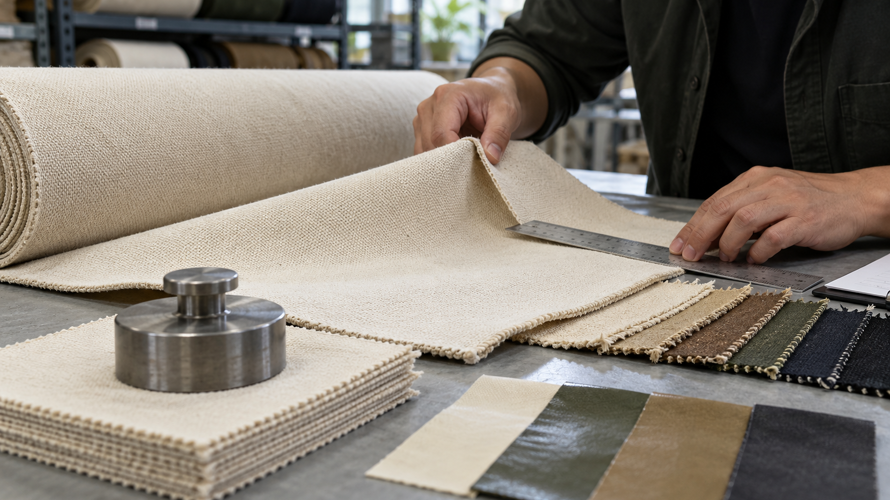
Request a technical sheet and finished sample when the product carries load, rubs against another surface or will be exposed to weather.
What Should Buyers Check in Canvas Fabric?
Canvas selection is a construction and finish decision.
Fibre and blend
Confirm cotton, linen, hemp, polyester, nylon or blend content.
Yarn and density
Record yarn size, twist, ends, picks and construction because they control body and strength.
Weight and width
Check GSM, usable width, thickness and dimensional tolerance.
Coating and finish
Define water repellency, coating type, flexibility, odour, surface and care.
Colour and print
Approve shade, penetration, rub resistance and artwork on the actual base.
Finished product
Test cutting, sewing, edge, load, fold, packaging and end-use performance.
| Check | Why it matters | Possible risk | Evidence to request |
|---|---|---|---|
| Fibre | Controls care and hand | Category hides blend | Composition statement |
| Density | Controls structure | Weak or too stiff | Construction record |
| GSM | Controls yield and use | Wrong body | Weight and thickness |
| Coating | Controls water and flex | Cracking or odour | Finish specification |
| Colour | Controls appearance | Rub or shade failure | Colour standard |
| Finished test | Confirms application | Roll misleads | Approved product |
Where Is Canvas Fabric Used?
Canvas is used in bags, accessories, workwear, jackets, aprons, upholstery, covers, tents, art supports and structured products. The right weight and finish depend on the load and environment.
For a lighter printed textile, compare canvas with cotton percale or twill by stiffness, drape, opacity, print, edge and care.
Use coated or synthetic canvas only when the finish and performance evidence fit the product, because coating can change hand and end-of-life handling.

How Should Canvas Fabric Be Specified?
State fibre and blend, yarn, plain-weave direction, GSM, width, thickness, coating or finish, colour, care, shrinkage, test method and end use. Use the GSM guide for the weight field.
Attach a canvas swatch, edge or seam sample and finished product. If the product needs water resistance or load performance, define the test and acceptance range.
Frequently Asked Questions
What is canvas fabric?
Canvas is a firm woven fabric family usually built with a dense plain-weave direction and robust yarns. Fibre, weight and finish can vary.
Is canvas always cotton?
No. Canvas may use cotton, linen, hemp, polyester, nylon or blends. Confirm the composition.
Is canvas waterproof?
Some canvas is coated or treated for water resistance, but untreated canvas is not automatically waterproof.
Is canvas a plain weave?
Most canvas uses a plain or plain-weave variation, but the exact structure should be confirmed in the supplier specification.
Does canvas shrink?
Cotton-rich canvas may change during washing. Test the actual quality and care route before cutting.
Can canvas be printed?
Yes, but approve penetration, colour, rub, artwork scale and surface after the intended finish.
What should a canvas buyer request?
Request fibre, yarn, construction, GSM, width, coating, colour, care, testing and a finished sample.
Conclusion
Canvas is a fabric family, not a fixed fibre or performance guarantee. Specify composition, yarn, density, GSM, width, coating, care and finished-use evidence.