
What Is Plain Weave Fabric? Structure, Types and Buyer Checks

Carina Silk Editorial Team writes practical guides on silk fabrics, scarves and custom textile development, with a focus on materials, artwork, sampling, construction and finishing decisions.
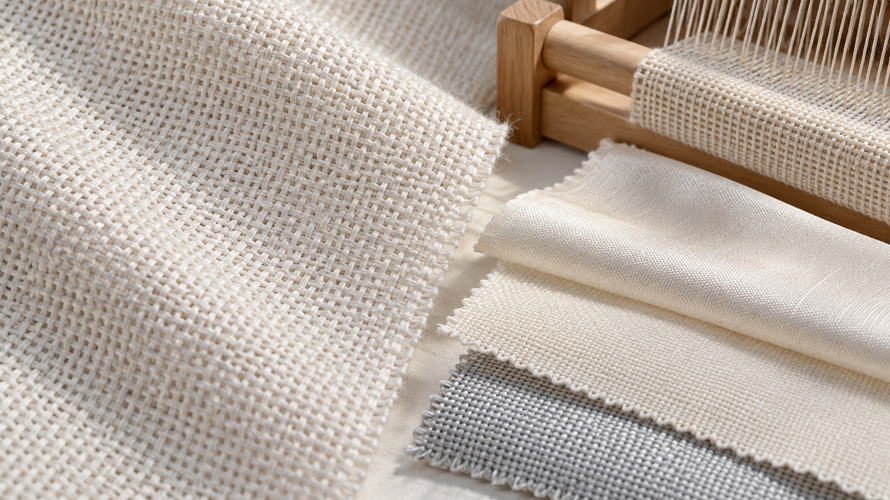
Plain weave is a basic woven structure in which each warp yarn passes over and under successive weft yarns. The CottonWorks weaving basics reference helps explain the interlacement, but plain weave is not one fibre or one finished fabric.
Silk, cotton, linen, polyester and blends can all be made in plain weave. Fibre, yarn, density, weight, finish and width determine the final hand and use; compare it with the woven fabric guide rather than assuming every plain weave behaves alike.
What Is Plain Weave Fabric?
Plain weave is a woven construction based on a simple over-under interlacement between warp and weft. It is often balanced, but the warp and weft may differ in yarn size, density or tension.
Because the structure is comparatively simple, plain-weave fabric can range from open and sheer to dense and firm. It may be smooth, crisp, slubby, textured, lightweight or heavy depending on the yarn and finish.
A plain weave is different from twill and satin constructions, but the same fibre can be used in all three. Construction and fibre should be written separately.
How Is Plain Weave Made?
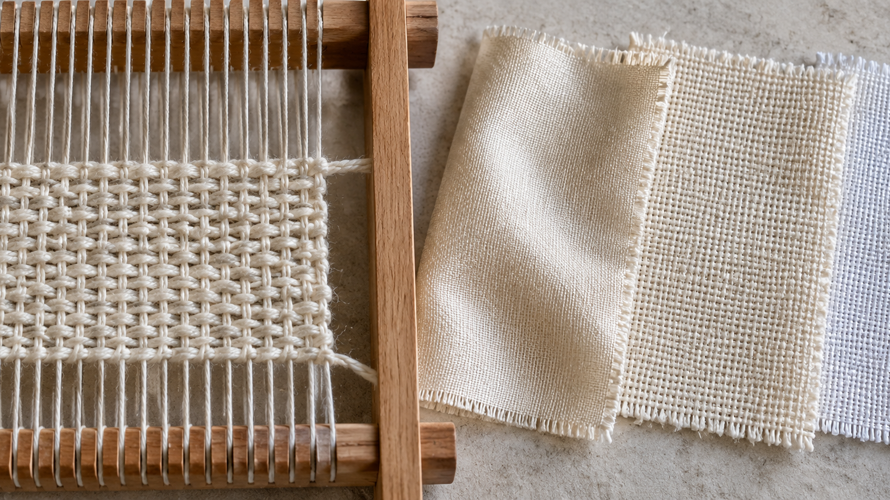
Warp yarns are arranged lengthwise under controlled tension and the weft is inserted across them. Each successive pick changes the interlacement so the yarns lock into a stable grid.
Yarn twist, count, density, colour and finishing change the appearance. A high-twist filament can create a crisp transparent fabric; a thicker spun yarn can create a more matte and substantial surface.
Dyeing, printing, washing, calendaring and softening can change the finished hand. Approve the fabric after the intended route, especially for a printed scarf or border product.
What Are the Main Plain-Weave Variations?
The construction family is broad. Use the yarn and density to describe the actual quality.
| Variation | Structure or effect | Potential fit | What to confirm |
|---|---|---|---|
| Balanced plain weave | Warp and weft are broadly similar | Everyday woven products | Density and hand |
| Warp-faced plain weave | Warp is more visually dominant | Fine structured surfaces | Warp density and lustre |
| Weft-faced plain weave | Weft is more visually dominant | Decorative or textured products | Weft yarn and stability |
| Basket weave | Groups of yarns interlace together | Open or textured products | Slippage and edge |
| Sheer plain weave | Fine yarns and open or light construction | Voile, organza and light scarves | Opacity and snag risk |
| Yarn-dyed plain weave | Colour comes from arranged yarns | Checks, stripes and stable colour layouts | Colour repeat and reverse |

Plain Weave vs Twill vs Satin
Plain weave has frequent interlacements and can provide a stable, even surface. Twill uses a stepped diagonal interlacement and may offer a more defined drape; satin uses longer floats and often a smoother face.
The choice depends on the product. A silk twill scarf may support print definition and body, while a light plain weave may support airiness. A satin surface may look more reflective but can be more slippery.
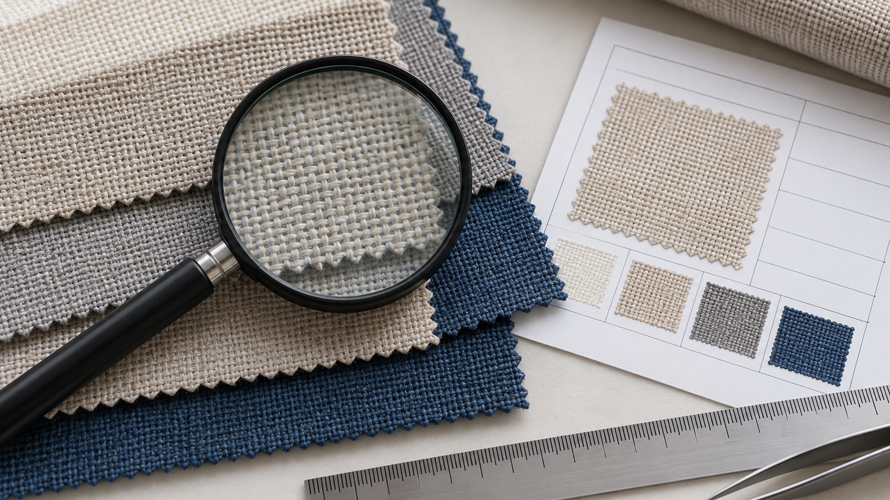
Compare the exact fabric swatch for opacity, grain, print response, edge, care and finished dimensions rather than approving a weave name alone.
What Should Buyers Check in Plain-Weave Fabric?
A plain-weave approval should describe the actual yarn and finished construction, not only the weave label.
Warp and Weft
Record yarn direction, density and any difference between lengthwise and crosswise construction.
Yarn and Surface
Specify fibre, yarn form, twist, slub, lustre, handle and any textured effect.
Weight and Opacity
Use GSM or weight data with a light test because weight alone does not determine transparency.
Grain and Width
Check usable width, bow, skew, selvedge and whether the fabric stays square after finishing.
Print or Yarn Colour
Approve registration, repeat, reverse, colourfastness and the visual result on the final base.
Edge and Care
Test fraying, hem, pressing, washing and packing because a simple structure can still move at the edge.
| Check | Why it matters | Possible risk | Evidence to request |
|---|---|---|---|
| Density | Controls body and opacity | Quality too open or dense | Construction record |
| Yarn | Controls hand and lustre | Unexpected surface | Yarn details |
| Width | Controls yield and layout | Border cropped | Usable width |
| Grain | Controls cutting and hem | Product appears crooked | Bow and skew check |
| Colour or print | Controls appearance | Repeat or registration shifts | Strike-off |
| Care | Controls finished life | Shrinkage or distortion | Care trial |
Where Is Plain Weave Used?
Plain weave is used for shirts, scarves, linings, voile, organza, canvas, sheeting, technical fabrics and many other products.
For a sheer scarf, compare plain-weave organza with chiffon for body, transparency, grip and edge. For a printed premium scarf, compare it with silk twill for drape and artwork definition.
Select the construction that supports the product brief, then specify the actual finished quality.
How Should Plain-Weave Fabric Be Specified?
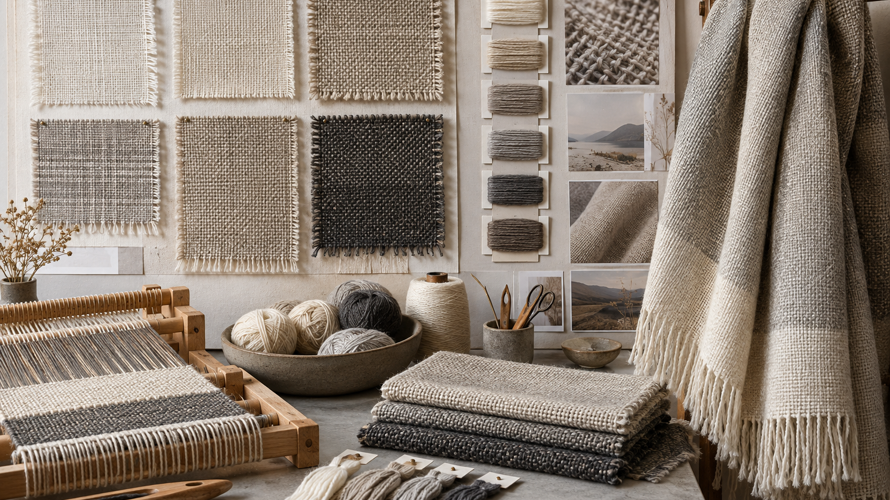
State fibre, yarn, warp and weft density, weight, width, opacity, finish, colour or print, grain, edge, care and dimensional tolerances.
Attach a finished swatch and, for a scarf, an approved hemmed sample showing the intended drape and border.
Frequently Asked Questions
What is plain weave fabric?
Plain weave is a woven construction in which warp and weft yarns interlace over and under in a basic repeating pattern.
Is plain weave strong?
It can be stable because of its frequent interlacements, but strength depends on fibre, yarn, density, finish and product construction.
What fabrics use plain weave?
Examples include many cotton, silk, linen, polyester, voile, organza, canvas and lining fabrics.
Is plain weave the same as cotton?
No. Plain weave is a construction; cotton is a fibre. Plain-weave fabrics can use many fibres.
Is plain weave better than twill?
Neither is automatically better. Plain weave may suit stability or a simple surface, while twill may suit diagonal character or a different drape.
Can silk be plain weave?
Yes. Silk can be woven in plain weave as well as twill, satin and other constructions.
What should a buyer request?
Request fibre, yarn, density, weight, width, opacity, finish, care data and a finished reference sample.
Conclusion
Plain weave describes how warp and weft interlace, not what the fabric is made from. Add fibre, yarn, density, weight, width, finish and finished-product evidence before approving a plain-weave quality.
