What Is Fabric Grain? Warp, Weft, Bias and Buyer Checks

Carina Silk Editorial Team writes practical guides on silk fabrics, scarves and custom textile development, with a focus on materials, artwork, sampling, construction and finishing decisions.
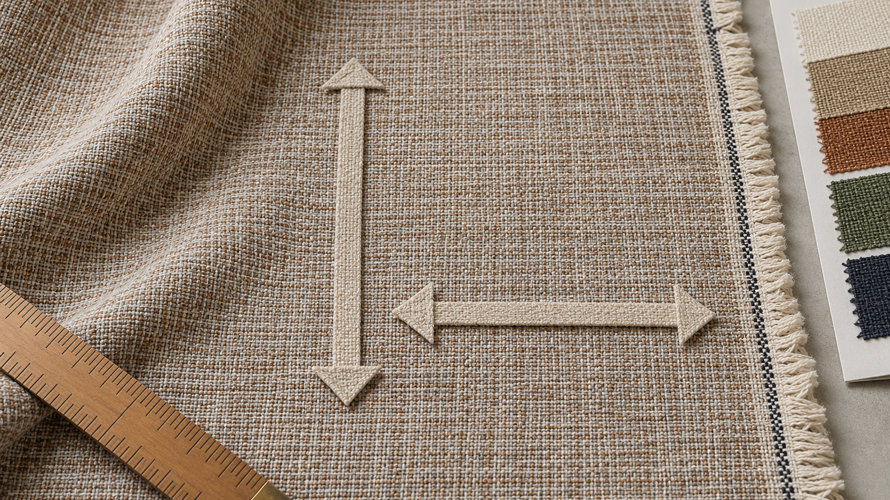
Fabric grain is the directional arrangement created by the yarns or loops in a textile. In a basic woven fabric, the lengthwise warp and crosswise weft form the main reference directions; the bias lies diagonally across them. Grain affects cutting, drape, stretch, skew, print alignment and finished dimensions.
The weaving basics reference and the warp and weft guide provide the structural context. For a buyer, grain is not only a sewing term: it is evidence that the delivered fabric and artwork can be cut and finished consistently.
What Is Fabric Grain?
Fabric grain is the direction of yarns or the dominant structural direction of a textile. In woven fabric, warp yarns run lengthwise and weft yarns cross them. The selvedge usually follows the warp direction and provides a practical reference.
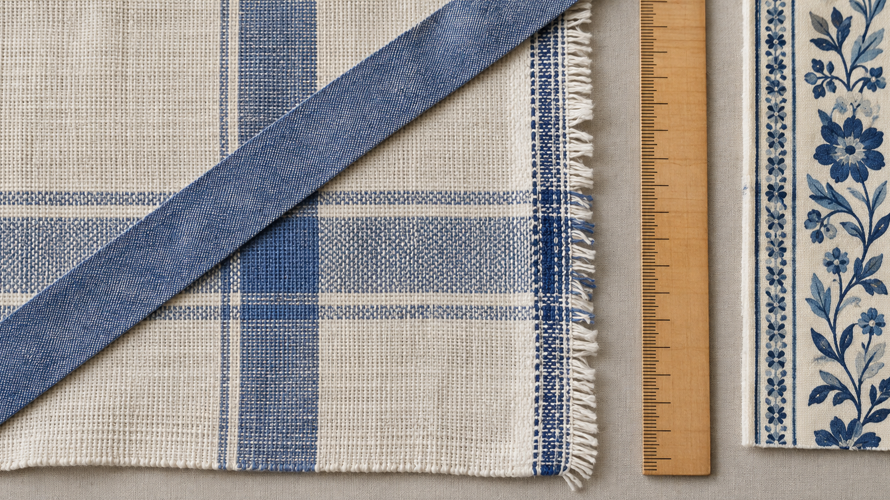
The bias is a diagonal direction, often around 45 degrees to warp and weft. Bias movement can create more drape or stretch in some woven fabrics, but it can also increase growth, distortion and edge movement.
Knitted fabrics do not have warp and weft in the same woven sense, but they still have courses, wales, stretch directions and possible spirality. Describe the relevant structure rather than forcing a woven grain label onto every textile.
How Is Grain Created and Checked?
During weaving, warp yarns are prepared under lengthwise tension and the weft is inserted across them. Yarn density, tension, finishing and handling influence whether the fabric remains square and stable.
A buyer can use selvedges, visible yarn direction, a pulled thread, a printed line or a technical sample to establish the reference. On patterned fabric, artwork direction can support or obscure the structural grain, so both should be recorded.
After dyeing, printing, washing and finishing, check skew, bow, width, border alignment and repeat direction. A fabric that looked square at an early stage may not remain square after processing.
What Are the Main Fabric Grain Directions?
Use these directions to describe how a fabric should be cut, handled and approved.
| Direction | Meaning | Potential effect | What to confirm |
|---|---|---|---|
| Warp or lengthwise grain | Direction of warp yarns or fabric length | More controlled lengthwise stability | Length, tension and selvedge |
| Weft or crosswise grain | Direction across the width | Different give and drape | Width, bow and crosswise movement |
| Bias grain | Diagonal between warp and weft | More movement or growth | Cutting angle and recovery |
| Selvedge reference | Finished edge parallel to warp | Practical orientation marker | Usable width and edge quality |
| Bow or skew | Warp or weft is not square or straight | Pattern and cut distortion | Finished inspection result |
| Knit direction | Courses, wales and stretch axes | Spirality or uneven fit | Stretch, recovery and alignment |

Fabric Grain vs Fabric Direction: Why Does It Matter?
Fabric direction is a broad product term; grain is a structural reference. A printed pattern may have a visual direction that differs from the warp or weft, and a border can be engineered across the grain. Record both when placement matters.
A twill fabric may show a strong diagonal line, but that diagonal surface effect is not automatically the same as cutting the fabric on the bias. A satin fabric may hide yarn direction visually while still changing with warp, weft and finish.
For scarves, grain affects border squareness, hem alignment and the fall of the finished item. Approve a full-size layout or representative cut sample when the product has a directional print.
What Should Buyers Check About Fabric Grain?
Grain control is a combination of fabric inspection, artwork planning and finished-product verification.
Structural Reference
Identify warp, weft, selvedge, courses, wales or other relevant directional markers before cutting.
Width and Usable Area
Measure finished width and exclude damaged or unstable edges when planning yield and placement.
Bow and Skew
Inspect whether yarns or printed lines run square and agree the tolerance for the intended product.
Artwork Direction
Record motif, stripe, border and repeat orientation separately from the structural grain.
Bias Behaviour
Test growth, drape and recovery if the product uses bias panels, diagonal cuts or a flexible wrap.
Finished Alignment
Check cut edges, hem, seams and border placement after printing, washing, pressing and assembly.
| Check | Why it matters | Possible risk | Evidence to request |
|---|---|---|---|
| Grain reference | Controls orientation | Cutting direction unclear | Marked sample |
| Usable width | Controls yield | Border or repeat cropped | Width record |
| Skew and bow | Controls squareness | Print or hem appears crooked | Inspection result |
| Artwork direction | Controls visual placement | Motif faces inconsistently | Layout plan |
| Bias growth | Controls drape and fit | Diagonal edge stretches | Bias test |
| Finished alignment | Confirms actual product | Roll sample differs | Hemmed sample |
Why Does Fabric Grain Matter in Printed Textiles?
Grain matters in garments, scarves, shawls, home textiles, upholstery and any product where shape, border, repeat or drape must remain controlled. It is especially important for engineered prints and directional motifs.
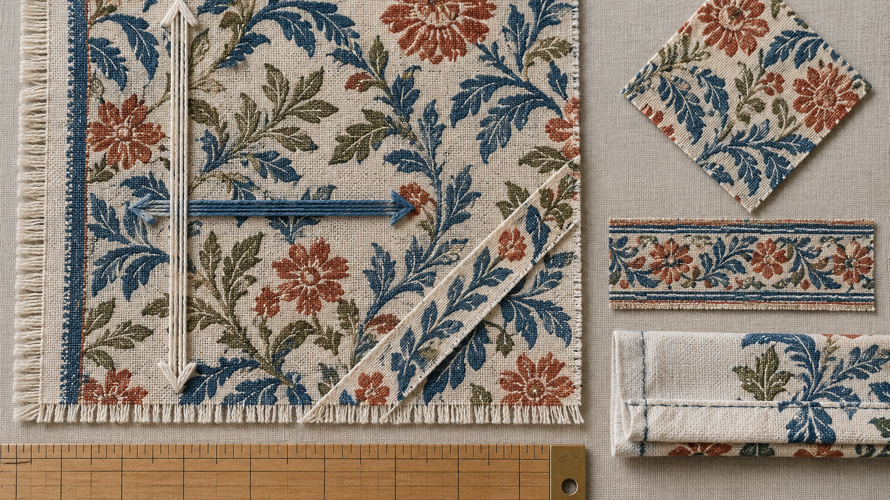
When specifying a fabric pattern, show the repeat and border in relation to the grain. A beautiful artwork can still fail if it lands crookedly or changes direction across the finished product.
Use grain as a production control, not only as a cutting instruction.
How Should Fabric Grain Be Specified?
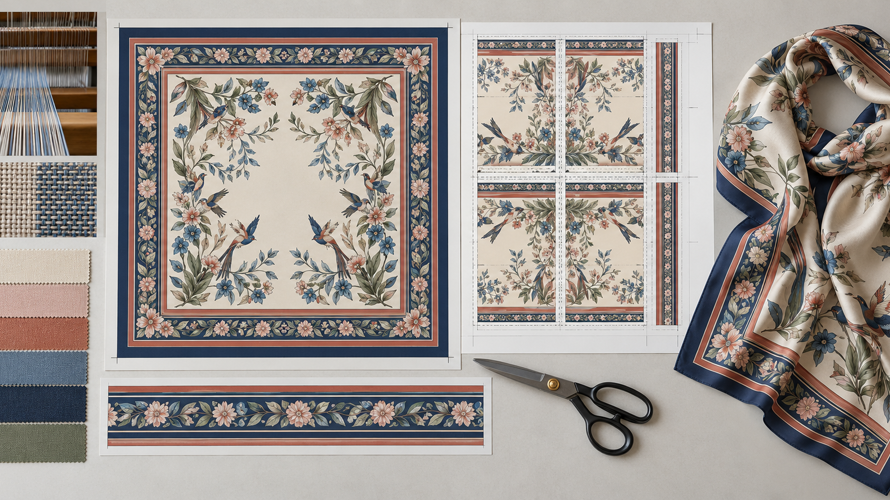
State the structural reference, usable width, warp and weft or knit directions, bow and skew tolerance, artwork orientation, border placement, cutting direction, bias requirement, finished dimensions and inspection stage.
Attach a marked fabric swatch and layout drawing. For a printed scarf, approve the full-size artwork-to-grain relationship and a finished hemmed sample.
Frequently Asked Questions
What is fabric grain?
Fabric grain is the directional arrangement of yarns or loops in a textile. In woven fabric, it includes warp, weft and bias directions.
What is the warp grain?
Warp grain is the lengthwise direction of warp yarns, usually parallel to the selvedge in a woven fabric.
What is the weft grain?
Weft grain is the crosswise direction in which weft yarns pass across the warp.
What is the bias of fabric?
The bias is a diagonal direction between warp and weft. It often allows more movement but can also increase growth or distortion.
Does knitted fabric have grain?
Knits have courses, wales and stretch directions rather than woven warp and weft. These directions still need to be controlled for cutting and fit.
Why does grain matter for printed scarves?
Grain affects border squareness, motif orientation, cutting, drape, hem alignment and the consistency of the finished product.
How should a buyer check grain?
Mark the structural direction, inspect bow and skew, check usable width and artwork alignment, then approve a finished cut or hemmed sample.
Conclusion
Fabric grain is a practical bridge between textile structure and finished-product quality. Record the structural directions, inspect bow and skew, align artwork deliberately and verify the cut and hemmed product before bulk approval.