
Types of Bamboo Fabric: Rayon, Viscose, Blends and Buyer Checks

Carina Silk Editorial Team writes practical guides on silk fabrics, scarves and custom textile development, with a focus on materials, artwork, sampling, construction and finishing decisions.
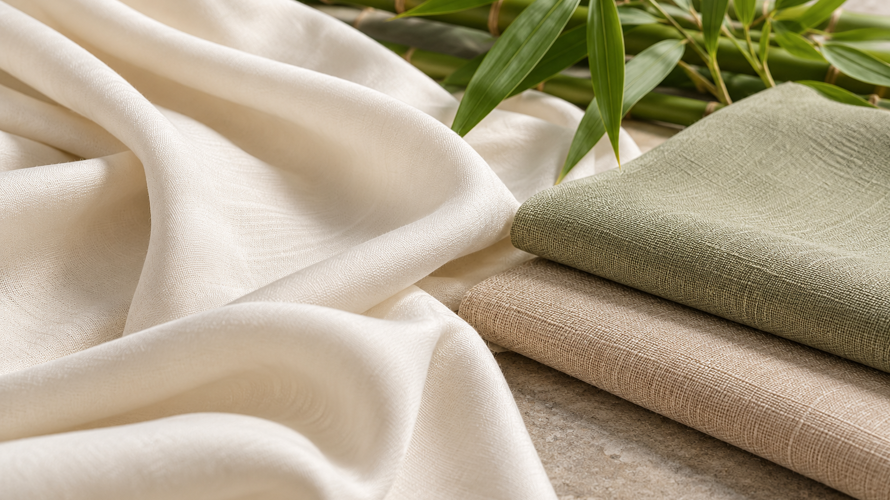
“Bamboo fabric” can describe different material routes, so the first step is to separate plant source, generic fibre and finished construction. The FTC bamboo textile guidance explains that rayon or viscose made using bamboo as a plant source should be described with the rayon or viscose generic name, rather than simply called bamboo.
The final fabric may be woven, knitted, brushed, blended, printed or finished in several ways. A buyer should specify the actual fibre wording and construction instead of treating every bamboo-labelled product as the same.
What Are the Main Types of Bamboo Fabric?
Most commercial bamboo textiles discussed in apparel and home products are regenerated-cellulose qualities such as rayon or viscose made from bamboo-derived cellulose. The plant source does not automatically make the finished fibre a direct bamboo fibre.
Compare bamboo-derived rayon with viscose and rayon terminology and record the generic fibre, blend, weave or knit and finish. A soft hand is not evidence of a particular source or process.
Avoid unsupported antibacterial, natural or sustainability claims. The FTC also warns that a rayon product made from bamboo should not be advertised as if it retains the plant’s original properties.
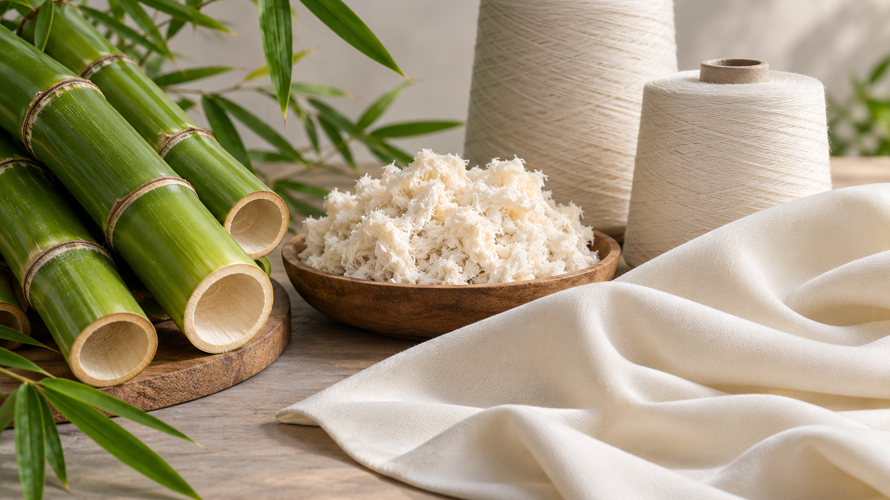
How Is Bamboo-Derived Textile Made?
Bamboo may be used as a cellulose source, after which the cellulose is processed into a manufactured regenerated fibre such as rayon or viscose. The generic fibre name describes the finished fibre category.
The fibre is spun into yarn, then woven or knitted and finished. Blending, brushing, dyeing, printing and coating create different hand, drape, opacity and care behaviour.
For a custom product, request the source and fibre documentation with a physical swatch. Approve the finished quality rather than the plant image or marketing name.
What Bamboo Textile Directions Should Buyers Distinguish?
Use generic fibre wording first, then describe the construction and finish.
| Direction | Textile character | Potential fit | What to confirm |
|---|---|---|---|
| Rayon made from bamboo | Manufactured rayon using bamboo-derived cellulose | Soft apparel, linings and home textiles | Generic label wording and evidence |
| Viscose made from bamboo | Viscose wording for a bamboo-derived regenerated fibre | Fluid apparel and blended products | Market-specific claim and label |
| Bamboo blend | Bamboo-derived rayon or viscose combined with another fibre | Products needing altered hand or recovery | Blend ratio and care |
| Bamboo lyocell | A lyocell direction with a bamboo source claim where documented | Claim-led products | Generic fibre and brand or process evidence |
| Woven bamboo textile | Warp and weft construction using the stated fibre | Shirts, scarves and home products | Density, width and finish |
| Knitted bamboo textile | Looped construction with stretch or softness | Jersey, underwear and loungewear | Knit structure, recovery and shrinkage |

Bamboo Fabric vs Bamboo Rayon: What Is the Difference?
Bamboo is a plant source or marketing shorthand. Rayon or viscose made from bamboo is the generic fibre description for many commercial products. The distinction matters for labels, advertising and claims.
Compare the quality with rayon fabric, modal or lyocell by generic fibre, construction, weight, surface, care and evidence. Do not use “bamboo” to imply properties that belong to the plant rather than the finished fibre.
For a U.S.-facing product, check the FTC wording before finalizing labels or advertising. For other markets, confirm the applicable textile rules separately.
What Should Buyers Check in Bamboo Fabric?
Control the name, evidence and finished product together.
Generic fibre wording
Confirm whether the product is rayon, viscose, lyocell or another recognized generic fibre.
Source claim
Ask what the bamboo reference means and what documentation supports it.
Blend ratio
Record all fibres and percentages rather than relying on a bamboo headline.
Construction and finish
Identify woven or knitted structure, weight, width, surface and finishing.
Claims and market
Review antibacterial, natural, sustainable and country-specific wording before publication.
Care and sample
Test washing, drying, print, edge, surface and finished-product behaviour.
| Check | Why it matters | Possible risk | Evidence to request |
|---|---|---|---|
| Generic fibre | Controls truthful label | Bamboo used as fibre name | Composition statement |
| Source | Controls claim scope | Plant source overpromised | Supplier documentation |
| Blend | Controls care and hand | Unknown component | Blend record |
| Construction | Controls product behaviour | Same name, different cloth | Weave or knit details |
| Market wording | Controls compliance | Unsupported advertising | Approved label copy |
| Finished sample | Confirms result | Marketing image misleads | Swatch and sample |
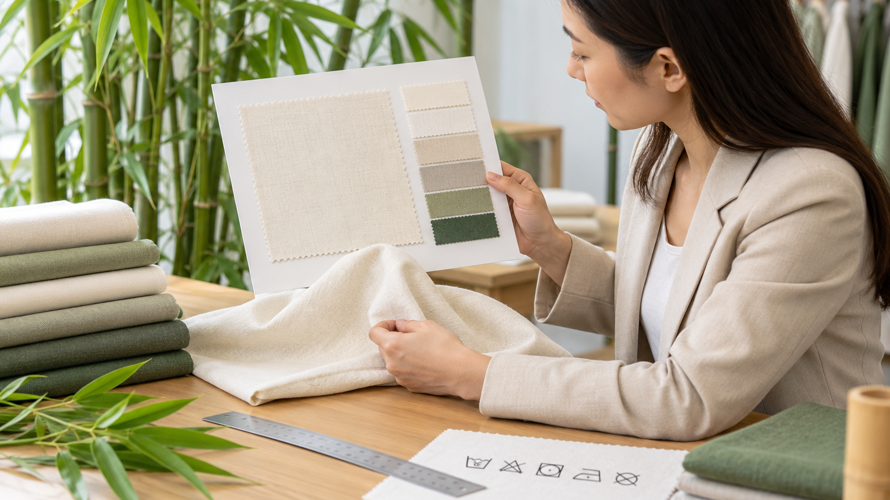
Where Are Bamboo-Derived Fabrics Used?
Bamboo-derived rayon and viscose are used in apparel, underwear, loungewear, linings, bedding, scarves and blends where a soft or fluid hand is wanted. The exact quality depends on construction and finish.
For a printed scarf, compare the material with modal fabric or silk by hand, drape, opacity, print response, care and label wording.
Use a conservative product description that names the generic fibre and keeps any bamboo-source statement within the evidence.

How Should Bamboo Fabric Be Specified?
State the generic fibre name, bamboo-source wording if supported, blend percentage, yarn, construction, GSM, width, finish, print route, care, market and claim evidence. Link the record to the composition guide.
Attach a fabric swatch and finished sample. Keep plant-source, fibre, construction and sustainability claims as separate fields so one does not imply another.
Frequently Asked Questions
What are the types of bamboo fabric?
Commercial bamboo textiles may include rayon or viscose made from bamboo-derived cellulose, documented bamboo lyocell, blends and different woven or knitted constructions.
Is bamboo fabric the same as rayon?
Many bamboo-labelled textiles are rayon or viscose made from bamboo-derived cellulose. The product should use the correct generic fibre wording.
Is bamboo fabric natural?
The plant may be the cellulose source, but rayon and viscose are manufactured regenerated fibres. Check the exact composition and claim.
Is bamboo fabric antibacterial?
Do not assume that a rayon textile made from bamboo retains antibacterial properties. A specific claim needs reliable evidence.
Is bamboo fabric breathable?
Breathability depends on construction, density, finish and product design, not only on the source plant.
Can bamboo fabric be printed?
Yes, but approve the print route, colour, penetration, care and finished surface on the actual quality.
What should a bamboo textile buyer request?
Request generic fibre wording, source documentation, blend, construction, weight, width, finish, care, claim evidence and a finished sample.
Conclusion
Bamboo is not a complete fibre specification. Control generic composition, source wording, blend, construction, claims, care and the finished sample before approval.
