
What Is Acetate Fabric? Properties, Uses and Buyer Checks

Carina Silk Editorial Team writes practical guides on silk fabrics, scarves and custom textile development, with a focus on materials, artwork, sampling, construction and finishing decisions.

Acetate is a manufactured cellulose-based fibre made by chemically modifying cellulose. Acetate fabric is the finished textile produced from acetate yarn or from a blend that contains acetate; the word does not describe one fixed weave, weight, surface or product performance.
For buyers, separate the fibre from the construction and finish. The Textile Exchange materials classification gives a useful fibre-family framework, while CIRFS acetate information helps place acetate among manufactured fibres. The final specification still needs fibre percentage, weave or knit, weight, width and care.
What Is Acetate Fabric?
Acetate fabric is made from yarn containing acetate fibre. Acetate is cellulose-derived but chemically modified, so it should not be described simply as an unprocessed natural fibre. A finished fabric may be woven, knitted, dyed, printed, brushed, coated or blended.
Acetate is often selected for a smooth hand, lustre, fluid drape or lining and fashion applications, but the actual result depends on yarn, density, weave, finish and fabric weight. “Acetate” alone does not guarantee a specific satin appearance.
Triacetate is a related but distinct fibre direction with a different degree of acetylation and commonly different heat, crease and care behaviour. Request the exact fibre name and percentage instead of treating acetate and triacetate as interchangeable.

How Is Acetate Fabric Made?
Cellulose is chemically processed into a fibre-forming material, spun or formed into filament or staple yarn, and then converted into fabric through weaving or knitting. Subsequent dyeing, printing and finishing determine much of the final surface and hand.
A smooth face may come from filament yarn, a satin construction, calendaring or another finish. The visual effect should therefore be described with the base construction as well as the acetate content.
For a custom product, approve a fabric swatch after the intended dye, print and finishing route. A smooth acetate sample can respond differently after heat, pressing, coating or repeated handling.
What Are the Main Acetate Fabric Directions?
Use the fibre name as the starting point, then classify the finished quality by construction, surface and intended use.
| Direction | Surface or construction | Potential fit | What to confirm |
|---|---|---|---|
| Acetate satin | Smooth, lustrous face with fluid fall | Linings, fashion and accessories | Slip, snag, heat and care |
| Acetate lining | Lightweight smooth woven quality | Garment and accessory lining | Opacity, seam and friction |
| Acetate crepe | Textured or grainy surface | Drapey apparel and scarves | Surface stability and print |
| Triacetate | Related cellulose-based fibre direction | Structured or crease-resistant fashion | Exact fibre and heat response |
| Acetate blend | Acetate combined with another fibre | Cost or performance balancing | Blend ratio and label wording |
| Printed acetate | Dyed or printed finished surface | Scarves and fashion products | Colour, show-through and care |
Acetate vs Polyester vs Silk: What Changes?
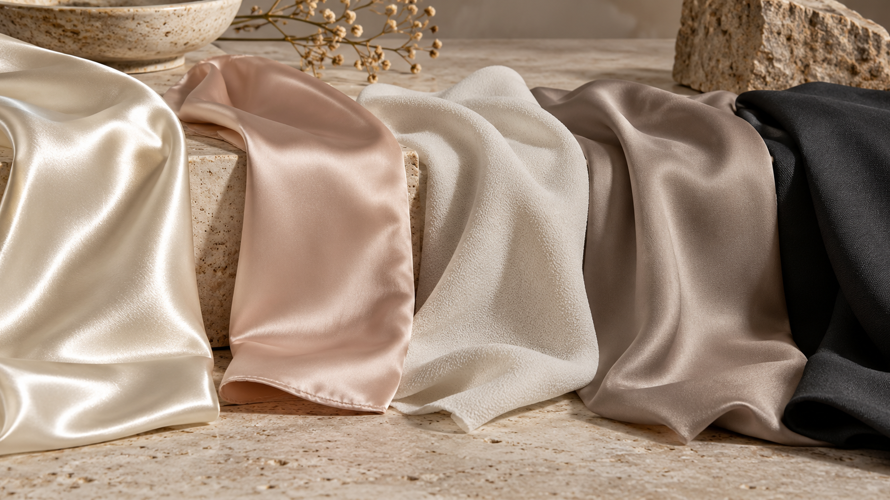
Acetate, polyester and silk can all be used in smooth or lustrous fabrics, but they are different fibre directions. Fibre content affects heat response, moisture behaviour, care, static, drape and labelling; construction and finishing can make their visual appearance overlap.
Do not approve a “silk-like” appearance as a substitute for fibre identity. Compare with the silk guide and the synthetic-fabric guide when the brief needs a defined material or cost position.
For a product sold in a regulated market, use the applicable fibre-label rules and the supplier’s test documentation. The US FTC and EU textile-label guidance are useful starting references, but the actual label should match the legal market and verified composition.
What Should Buyers Check in Acetate Fabric?
The fibre name should be supported by a technical specification and a finished sample that demonstrates the required surface and care behaviour.
Exact Fibre Name
Confirm acetate, triacetate or blend content and ensure the product label uses the documented fibre terminology.
Construction and Weight
Record weave or knit, yarn form, weight, width, opacity and finish because these control the actual hand and drape.
Surface and Lustre
Inspect shine, smoothness, snag response, pilling, static and colour depth under the intended product lighting.
Heat and Care
Test pressing, steaming, washing and drying limits on the final quality before approving care wording.
Print and Colour
Approve colour, penetration, reverse, registration and show-through on the intended acetate base.
Finished Edge
Check fraying, seam movement, hem stability and packing because a fluid smooth fabric can shift during finishing.
| Check | Why it matters | Possible risk | Evidence to request |
|---|---|---|---|
| Fibre identity | Controls composition and claims | Acetate confused with silk or polyester | Fibre specification |
| Construction | Controls hand and drape | Wrong surface or body | Yarn and weave details |
| Heat response | Protects the finished quality | Gloss, melt or distortion | Care and pressing trial |
| Colour and print | Controls appearance | Uneven or weak colour | Strike-off |
| Snag and seam | Controls use durability | Pulls or seam movement | Finished sample |
| Label and care | Controls customer instruction | Unsupported claim | Verified label copy |
Where Is Acetate Fabric Used?
Acetate is used in linings, dresses, blouses, scarves, accessories and other products where a smooth hand, drape or lustrous appearance is desired. Triacetate and acetate blends may be selected for different structure or care objectives.
For a premium printed scarf, compare the intended acetate quality with satin and chiffon directions. The visual category alone does not resolve slip, opacity, body or care.
Use acetate when the documented fibre, construction, finishing and care route fit the product brief. Avoid making natural-fibre or sustainability claims without evidence.

How Should Acetate Fabric Be Specified?
State exact fibre name and percentage, construction, yarn form, weight, width, surface, lustre, opacity, finish, dye or print route, colour, heat and care limits, edge finish and tolerance.
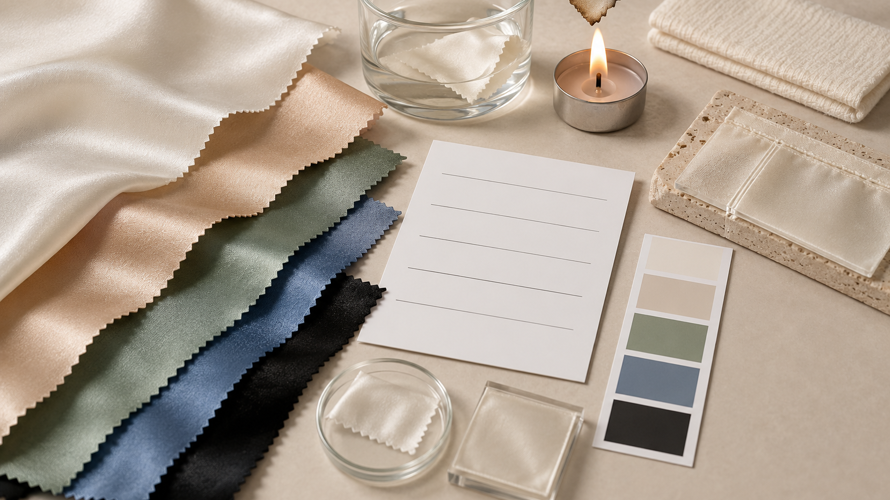
Attach a finished swatch and the verified label wording. If the product is a scarf, approve the actual size, print layout and hem because the finished edge can change the perceived body and drape.
Frequently Asked Questions
What is acetate fabric?
Acetate fabric is a finished textile made from yarn containing acetate fibre, a manufactured cellulose-based fibre that has been chemically modified.
Is acetate a natural or synthetic fabric?
Acetate is cellulose-derived but manufactured through chemical modification. The exact label should use the verified fibre terminology for the relevant market.
Is acetate the same as triacetate?
No. They are related but distinct fibre directions with potentially different performance and care behaviour. Confirm the exact composition.
Does acetate fabric look like silk?
Some acetate fabrics can have a smooth, lustrous or fluid appearance similar to certain silk constructions, but appearance does not prove silk content.
Is acetate fabric breathable?
Breathability depends on fibre, yarn, construction, weight, finish and garment design. Do not infer it from the name alone.
Can acetate fabric be washed?
Care depends on the exact quality and finish. Follow a tested route because heat, water and agitation can affect appearance and dimensions.
What should buyers request for acetate fabric?
Request exact fibre composition, construction, weight, width, finish, colour or print data, care testing, label wording and a finished sample.
Conclusion
Acetate is a fibre direction, not a complete fabric specification. Confirm whether the quality is acetate, triacetate or a blend, then approve construction, surface, heat response, print, care and finished dimensions on the actual product.
