
What Is Cotton Sateen? Weave, Properties and Sateen vs Satin

Carina Silk Editorial Team writes practical guides on silk fabrics, scarves and custom textile development, with a focus on materials, artwork, sampling, construction and finishing decisions.
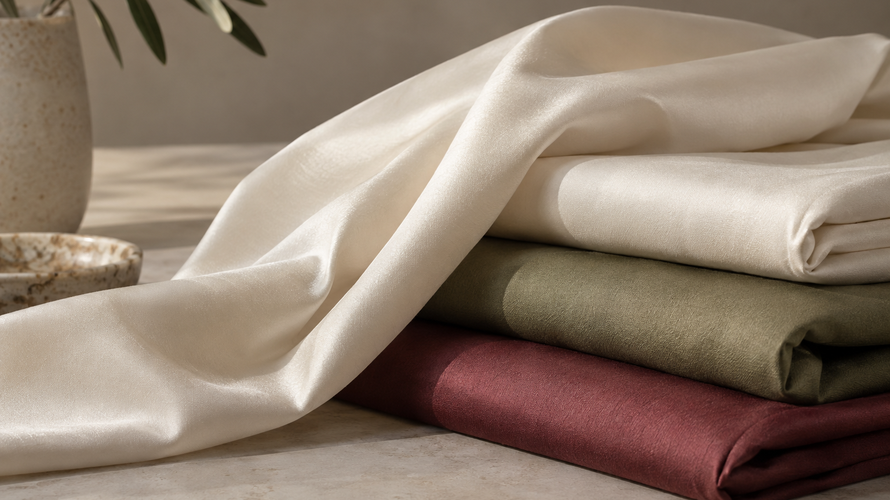
Cotton sateen is a cotton woven fabric with a smooth, often subtly lustrous surface created by a weft-facing sateen construction. It is cotton by fibre and sateen by weave or surface direction.
The word sateen should not be treated as a synonym for silk satin. Fibre, float arrangement, yarn, weight, finish and care all affect the finished fabric.
What Is Cotton Sateen?
Cotton sateen uses a sateen weave in which longer weft floats create a smoother face than a basic plain weave. It may look polished without having the same reflective, fluid or slippery behaviour as silk satin.
For construction language, the CottonWorks weave reference is useful. For the naming distinction, use the sateen versus satin comparison.
How Is Cotton Sateen Made?
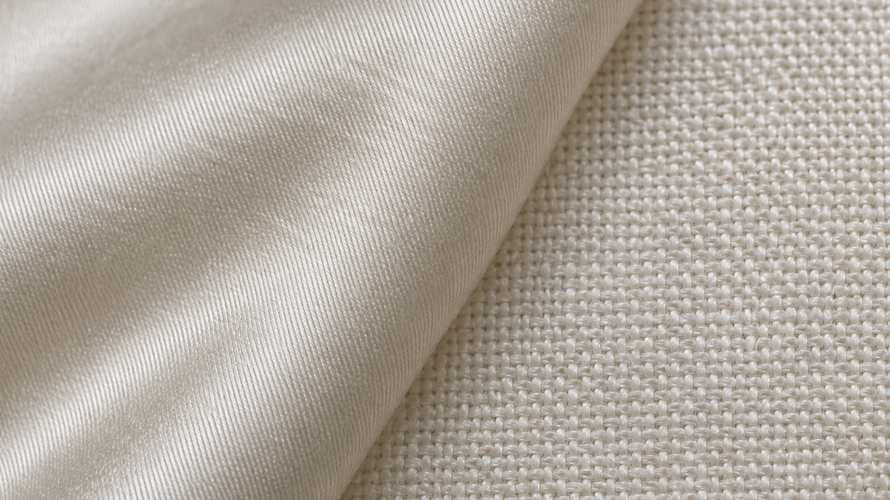
The interlacing pattern places more of the weft yarn on the face, creating a smoother surface and a directional light reflection. Yarn fineness, density, colour and finishing determine whether the result is matte, softly lustrous, crisp or fluid.
Longer floats can make the surface more vulnerable to snagging or abrasion than a simple plain weave. Washing, brushing, calendaring and softening can change the hand and the apparent lustre.
What Are the Common Cotton Sateen Directions?
Sateen qualities vary by weight, yarn and finish. Treat the categories below as selection directions, not fixed grades. Compare the surface with the twill construction guide when a buyer is choosing between diagonal and smooth faces.
| Direction | Typical hand | Common fit | What to confirm |
|---|---|---|---|
| Light cotton sateen | Smooth and relatively fluid | Blouses, linings and light accessories | Opacity, drape and slip |
| Medium cotton sateen | Soft with more body | Apparel, bags and home goods | Weight, abrasion and care |
| Brushed cotton sateen | Soft or peach-like face | Comfort apparel and casual products | Pilling, nap and wash |
| Stretch cotton sateen | Smooth with mechanical stretch | Close-fitting apparel | Stretch, recovery and blend |
| Printed cotton sateen | Smooth base with surface artwork | Custom panels and accessories | Print sharpness and face |
Cotton Sateen Versus Satin and Plain Weave
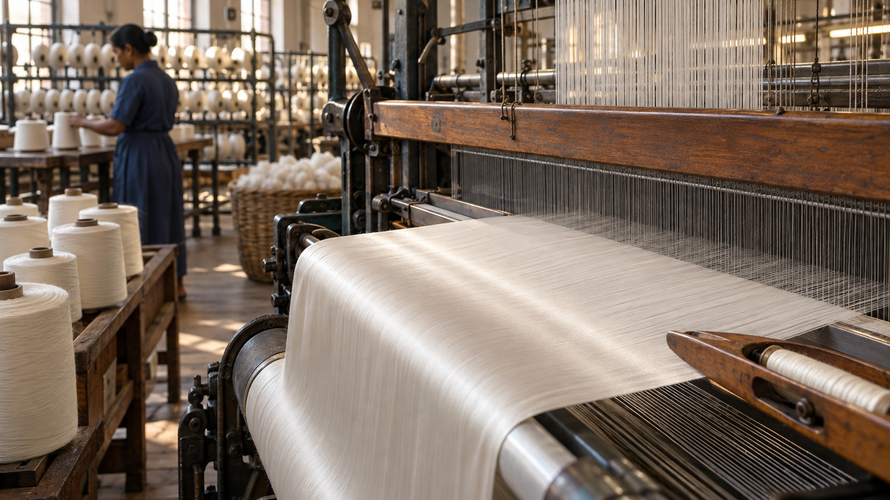
Sateen and satin both refer to smooth surface families, but cotton sateen normally describes a cotton fabric while satin is a broader weave or surface term that may be made from silk, polyester, acetate or other fibres. Plain weave has a simpler over-and-under grid and often a more even, matte face.
The woven fabric guide helps separate construction from fibre. Always state cotton content, weave, weight and finish rather than approving the word shiny alone.
What Should Buyers Check in Cotton Sateen?
A smooth face can look attractive in a photograph but behave differently in use. Evaluate the actual weight, face, reverse and care route before approval.
Lustre and Direction
Inspect the face under the final lighting and from different angles. Record how the surface changes when the fabric moves.
Weight and Drape
Measure weight and usable width, then hang and fold the proposed quality. Light sateen and dense sateen may serve different products.
Abrasion and Snagging
Test rubbing, surface marking, snagging and seam movement. Longer floats can change the risk profile.
Shrinkage and Colourfastness
Run the intended wash, steam or pressing route and measure length, width, skew and colour response.
Stretch, Print and Edge
If the fabric has elastane or artwork, test recovery, print sharpness, show-through and the finished hem.
| Check | Why it matters | Possible risk | Evidence to request |
|---|---|---|---|
| Cotton content | Controls label and hand direction | Wrong fibre claim | Composition specification |
| Weave and finish | Controls lustre and surface | Unexpected face | Construction and finish note |
| Weight and width | Controls drape and yield | Wrong finished body | Measured standard |
| Float wear | Protects appearance | Snagging or abrasion | Wear sample |
| Care response | Protects dimensions and colour | Shrinkage or shade change | After-care test |
| Stretch or print | Controls finished use | Recovery or artwork drift | Finished sample and strike-off |

What Is Cotton Sateen Used For?
Cotton sateen can suit apparel, linings, accessories, bags, home goods and printed panels where a smoother cotton face is useful. It can provide more lustre than plain cotton without requiring a silk or synthetic satin construction.
For a custom product, retain the approved fabric swatch with the colour, print and care standard.

How Should Cotton Sateen Be Specified?
State cotton content and any blend, yarn, sateen construction, weight, usable width, face and reverse, lustre target, finish, colour, print route, stretch if applicable, care and tolerances.
When a brief compares it with silk or polyester satin, use the silk fabric types guide and approve equivalent finished samples rather than comparing photographs.
Frequently Asked Questions
Is cotton sateen the same as satin?
No. Cotton sateen normally identifies a cotton fabric with a smooth weft-facing surface, while satin is a broader surface or weave term that can use many fibres.
Is cotton sateen shiny?
It can have a soft or moderate lustre, depending on floats, yarn, colour and finish. It is not necessarily as reflective as silk satin.
Is cotton sateen breathable?
Cotton can support comfortable products, but breathability depends on weight, density, finish and use. Test the actual quality.
Is cotton sateen durable?
Durability depends on yarn, density, float length, finish and care. Test abrasion and snagging for the intended product.
Does cotton sateen shrink?
It can shrink or skew depending on construction and care. Measure the proposed fabric after the intended treatment.
Can cotton sateen be printed?
Yes, a cotton sateen base can be printed, but artwork sharpness, shade and reverse show-through should be approved on a finished strike-off.
What should a cotton sateen supplier provide?
Request composition, construction, weight, width, finish, lustre, colour and print standards, care data and a representative sample.
Conclusion
Cotton sateen is a cotton fabric with a smooth, weft-facing sateen surface. It sits between fibre and appearance language, so specify the composition, construction, weight, finish and care together. Approve the actual face, reverse and finished sample before production.
