
What Is Lurex Fabric? Metallic Yarn, Types and Buyer Checks

Carina Silk Editorial Team writes practical guides on silk fabrics, scarves and custom textile development, with a focus on materials, artwork, sampling, construction and finishing decisions.
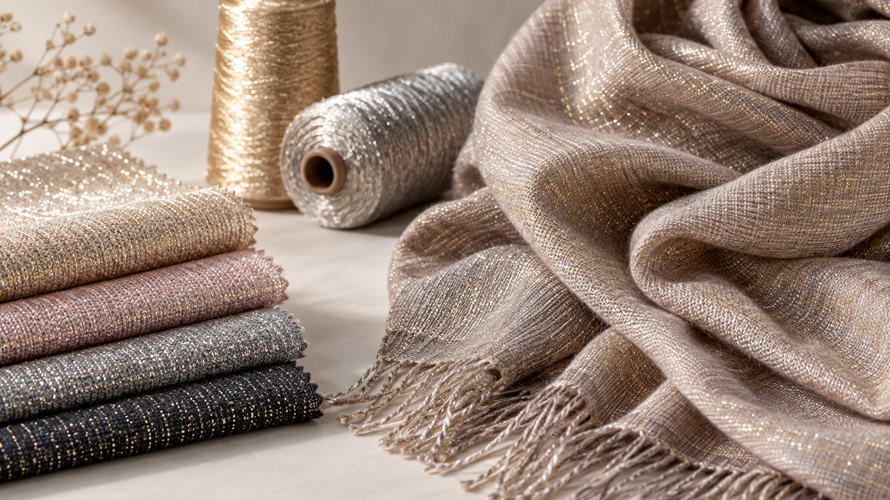
Lurex is a trademarked name associated with shiny metallic-looking yarn or thread. Cambridge Dictionary’s definition describes it as a brand name for thread that looks like metal or cloth made with that thread. It is not a complete fibre or fabric specification.
A Lurex fabric may combine metallic yarn with silk, polyester, nylon, cotton or another base. Buyers should identify the base composition, metallic component, construction, surface coverage and care route.
What Is Lurex Fabric?
Lurex yarn commonly creates a metallic appearance through a coated or metallised film or strip that is used alone, wrapped, twisted, woven or knitted with other yarns.
The word can describe a decorative yarn direction, a fabric effect or a brand reference. The delivered quality may vary in shine, width, hand, flexibility, abrasion and wash resistance.
Use the fabric composition guide and keep the metallic component separate from the base fibre and silk construction.
How Is Lurex Used in Fabric?
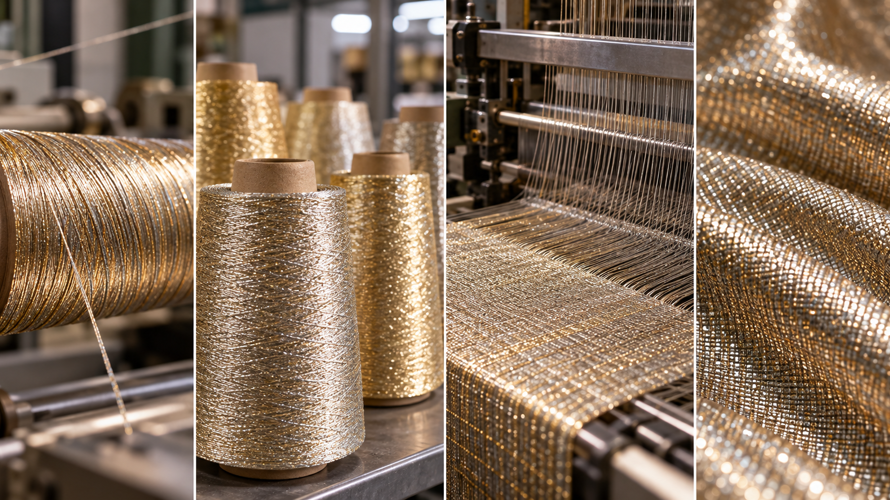
A reflective film or strip is prepared and combined with a carrier or coating system. It may be slit into narrow strips, wrapped around a core or combined with another yarn.
The metallic yarn can be inserted into a woven structure, knitted into a pattern, embroidered or used as a small decorative percentage. Placement changes the final surface and hand.
Dyeing, finishing, rubbing, pressing and packing can affect shine. Approve a finished fabric swatch after the intended route.
What Lurex Fabric Directions Should Buyers Compare?
Describe the metallic yarn and the base construction together.
| Direction | Textile character | Potential fit | What to confirm |
|---|---|---|---|
| Metallic yarn | Shiny yarn used with another base | Decorative woven or knit effects | Yarn form and coverage |
| Wrapped metallic yarn | Metallic strip around a core | Softer or more stable sparkle | Core, twist and snag risk |
| Woven Lurex fabric | Metallic yarn inserted in warp or weft | Scarves and fashion panels | Repeat, reverse and edge |
| Knitted sparkle fabric | Metallic yarn in loops | Stretch fashion and accessories | Recovery and irritation |
| Silk-metallic blend | Silk base with metallic yarn | Premium evening products | Composition and care |
| Subtle metallic effect | Low percentage or small motif | Brand accents and borders | Placement and rubbing |
Lurex vs Metallic-Looking Fabric
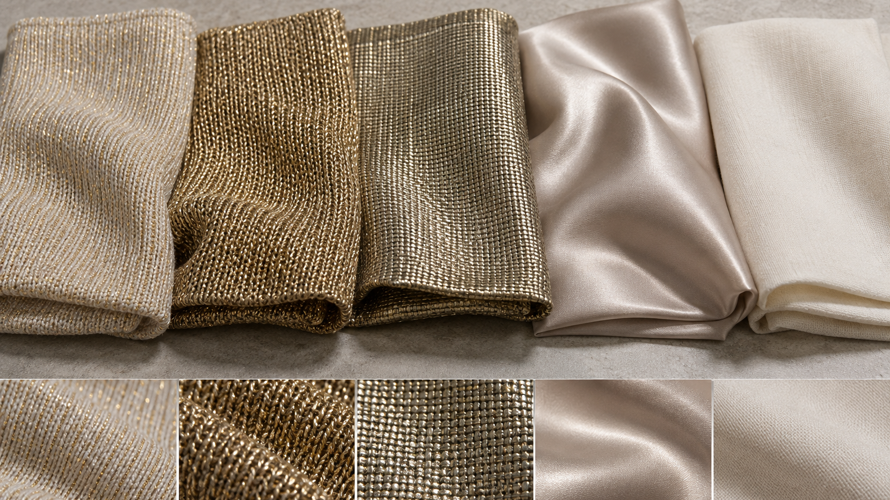
A metallic-looking fabric may use Lurex or another metallic yarn, foil, coating, glitter or reflective finish. Appearance alone does not identify the construction or material.
Compare Lurex with silk satin and printed or woven effects by shine, hand, flexibility, snagging, rubbing, care and finished cost.
The buyer should specify the required visual effect and the acceptable material route instead of treating the brand name as the entire brief.
What Should Buyers Check in Lurex Fabric?
Metallic yarn needs both visual and handling tests.
Material Identity
Confirm the base fibre, metallic component, blend, coating and label wording.
Coverage and Placement
Map where the metallic yarn appears and whether the reverse or border differs.
Hand and Flexibility
Check softness, stiffness, scratchiness, fold memory and drape against the product use.
Rubbing and Snagging
Test surface loss, catching, abrasion, seam handling and repeated tying or folding.
Colour and Shine
Approve metallic shade, reflection, lot variation and lighting response.
Care and Finished Sample
Test washing, pressing, packing and the completed hem or seam before bulk.
| Check | Why it matters | Possible risk | Evidence to request |
|---|---|---|---|
| Base fibre | Controls care and label | Metallic effect hides composition | Composition |
| Yarn type | Controls surface and hand | Wrong sparkle or stiffness | Yarn reference |
| Placement | Controls artwork | Border or logo disappears | Layout map |
| Rubbing | Controls durability | Surface loss | Abrasion test |
| Care | Controls use | Coating or yarn damage | Care trial |
| Sample | Confirms final effect | Flat swatch misleads | Finished product |
Where Is Lurex Fabric Used?
Lurex and other metallic yarn effects are used in scarves, eveningwear, knitwear, costumes, accessories, trims and decorative textiles.
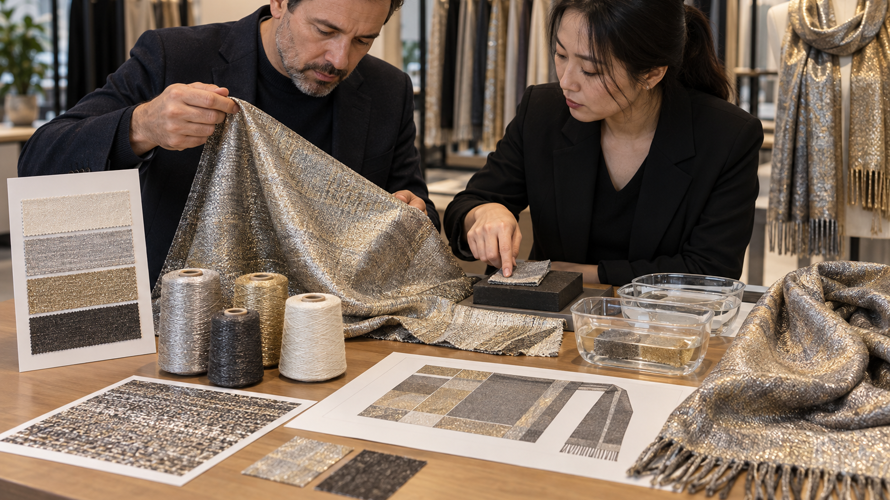
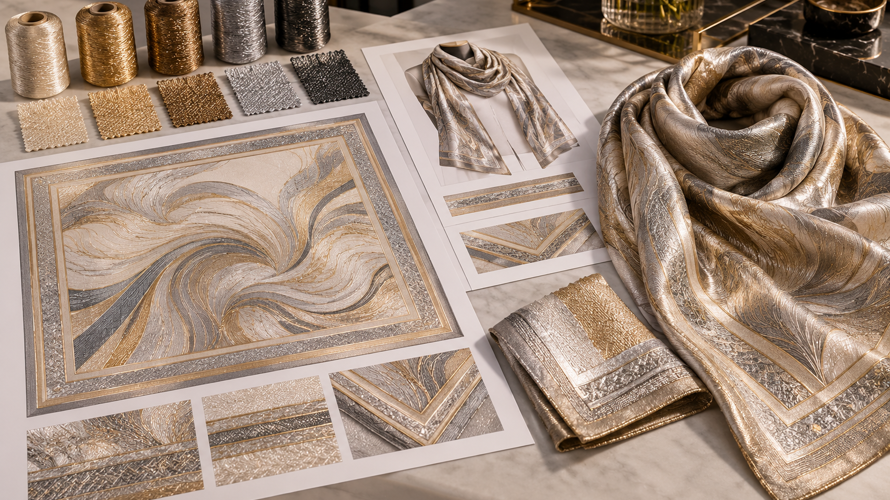
For a premium scarf, compare a subtle metallic yarn with silk twill or satin and review the result after folding, tying and hemming.
Use metallic effects where the visual benefit justifies the handling, care and production requirements.
How Should Lurex Fabric Be Specified?
State base fibre, metallic yarn or film description, percentage or placement, construction, weight, width, shine, hand, snagging, rubbing, colour, care and finished dimensions.
Attach a finished swatch and a sample tied or handled in the intended use. Do not use Lurex as a substitute for composition wording.
Frequently Asked Questions
What is Lurex?
Lurex is a trademarked name associated with shiny metallic-looking yarn or thread and fabric made with that yarn.
Is Lurex a fibre?
No. Lurex is a brand or yarn direction, not a complete fibre category. The base fibre and metallic component should be specified.
Is Lurex fabric scratchy?
It can be depending on yarn construction, coverage and finishing. Test the actual fabric against the intended skin contact and use.
Can Lurex be woven with silk?
Yes. Metallic yarn can be combined with silk or another base, but the composition and care route should be documented.
Does Lurex wash well?
Performance varies by yarn and construction. Test the actual care route for shine loss, snagging and surface change.
Is Lurex good for scarves?
It can suit decorative scarves when hand, flexibility, snagging, care and the finished effect meet the brief.
What should a Lurex buyer request?
Request base composition, metallic yarn description, placement, care, rubbing or snagging evidence and a finished sample.
Conclusion
Lurex describes a metallic-looking yarn or branded effect, not a complete fabric identity. Specify the base fibre, yarn, placement, surface, care and finished-product behaviour before approval.
