
What Is Momme Silk? Meaning, Weight and Buyer Checks

Carina Silk Editorial Team writes practical guides on silk fabrics, scarves and custom textile development, with a focus on materials, artwork, sampling, construction and finishing decisions.
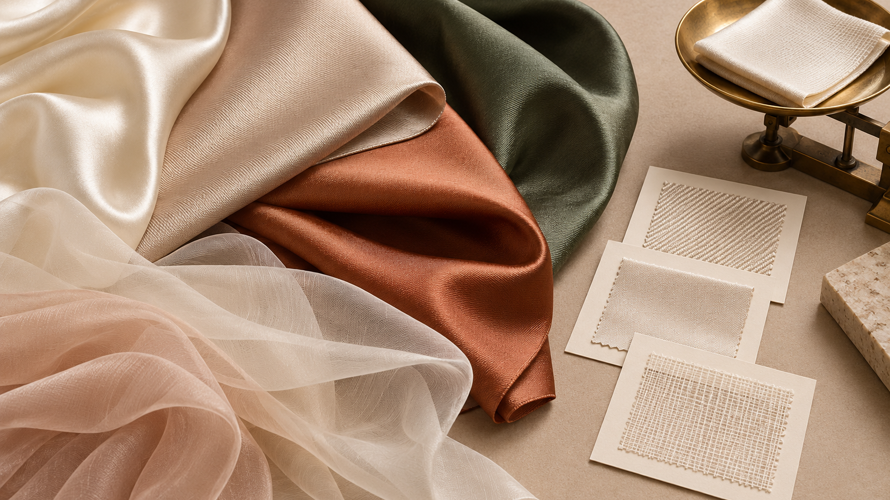
Momme is a traditional weight convention used for silk. It helps describe the mass of a defined silk area, but it is not a complete quality grade and it does not identify the weave, finish, fibre source, width, hand, print response or care behaviour.
A useful silk brief combines momme with construction and use. The silk guide, silk fabric types guide and fabric GSM guide provide the comparison framework; the exact quality still needs a verified weight, width, weave and finished sample.
What Is Momme Silk?
Momme is a unit or convention used to describe the weight of silk based on a defined area. In commercial discussions, a higher momme generally indicates more silk mass per area within a comparable silk quality, but it should not be treated as a universal measure of quality or durability.
Two fabrics with the same momme can feel different because weave, yarn, density, finish and fibre type change the hand and performance. A silk twill, satin and chiffon should not be compared by the number alone.
Momme is also not automatically interchangeable with GSM. Conversion depends on the measurement basis, area convention, material and condition. Use the supplier’s stated method and a physical reference when the weight matters.
How Is Silk Momme Used in Fabric Specifications?
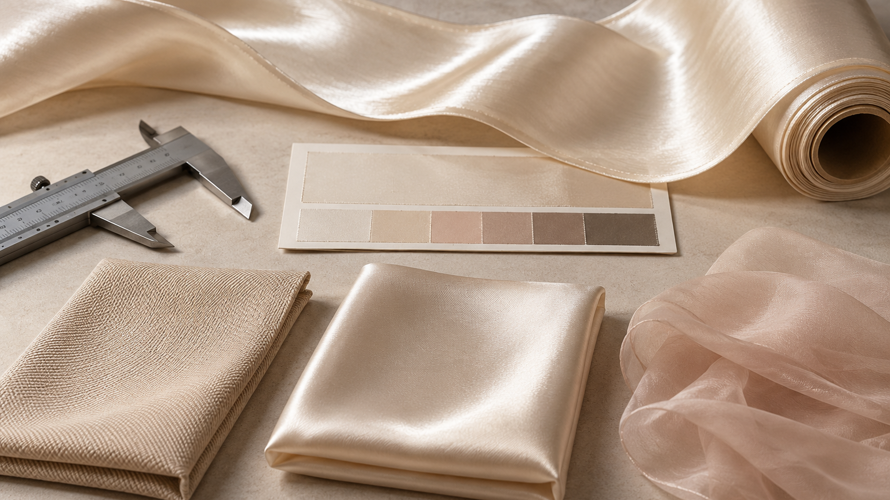
A supplier or buyer states a target momme for a defined silk quality, then confirms the fabric’s weight through an agreed measurement approach. The sample condition, width, finish and test method should be recorded.
The weight number is then interpreted alongside weave, yarn, density, finish, opacity, drape and use. A heavier silk may provide more body or coverage, but it may not be the right choice for every scarf or garment.
For a printed scarf, sample the actual silk construction at the target weight. Printing, washing, pressing and hemming can change the finished hand and dimensions.
How Do Different Silk Constructions Use Momme?
Momme is meaningful only when the construction and intended use are clear.
| Silk direction | What weight may change | Potential fit | What to confirm |
|---|---|---|---|
| Silk twill | Body, opacity and print definition | Printed scarves and accessories | Weave, width and hem |
| Silk satin | Coverage, lustre and fluidity | Formal and luxury styling | Slip, surface and care |
| Silk chiffon | Sheerness and light movement | Airy scarves and overlays | Layering, edge and snag |
| Silk charmeuse | Smooth drape and reflective face | Luxury apparel and accessories | Slip, grain and finish |
| Silk crepe | Body and textured hand | Soft drapey products | Surface and recovery |
| Silk habotai or plain weave | Lightness and coverage balance | Linings and light scarves | Density and opacity |

Momme vs GSM: What Is the Difference?
GSM expresses grams per square metre. Momme is a traditional silk weight convention based on a defined silk area and commercial practice. They describe related weight concepts but should not be converted casually without confirming the basis and condition.
A number is not enough to specify a silk. Compare it with the GSM guide and record fibre, weave, width, finish, opacity and hand. A lightweight chiffon and a heavier twill may serve completely different products even when a buyer focuses on a single weight label.
For purchasing, the best reference is the target number plus an approved physical swatch and finished sample. This gives production a repeatable visual and tactile basis.
What Should Buyers Check When Buying Momme Silk?
Use momme to control weight within a defined quality, then verify everything the number cannot describe.
Silk Identity
Confirm silk fibre content, silk type where relevant and any blend or coating that affects the weight.
Measurement Basis
Record the momme convention, condition, test approach and tolerance so suppliers are using the same reference.
Construction and Width
State weave, yarn, density, finished width and usable width because these affect yield and hand.
Hand and Opacity
Inspect drape, body, lustre, coverage, surface and slip under the intended lighting and use.
Print and Finish
Check artwork, colour, surface, washing, pressing and finishing because the final result can differ from greige silk.
Finished Product
Approve the scarf or other product with its hem, dimensions and care route rather than approving weight alone.
| Check | Why it matters | Possible risk | Evidence to request |
|---|---|---|---|
| Momme basis | Controls comparability | Different methods compared | Supplier method and tolerance |
| Construction | Controls actual hand | Same number, different fabric | Weave and yarn details |
| Width | Controls yield and costing | Usable area differs | Finished width record |
| Opacity | Controls product coverage | Scarf too sheer or heavy | Layered light test |
| Finish | Controls final surface | Print or care changes hand | Finished swatch |
| Product sample | Confirms real use | Bulk differs from roll | Approved hemmed sample |

What Is the Right Momme for a Silk Scarf?
There is no single correct momme for every silk scarf. The target depends on the scarf size, weave, desired drape, opacity, print definition, edge finish, climate, care and price position.
A printed silk twill may need a different body from a light silk chiffon, while a satin scarf may prioritize a smooth reflective surface. Use the number as one control point and approve the finished fabric swatch.
A higher momme is not automatically better. It may add body or coverage but can change drape, cost and the way the scarf wraps.
How Should Momme Silk Be Specified?
State silk fibre and type, target momme, measurement basis and tolerance, weave, yarn, width, opacity, finish, colour or print route, care, edge finish and finished dimensions.
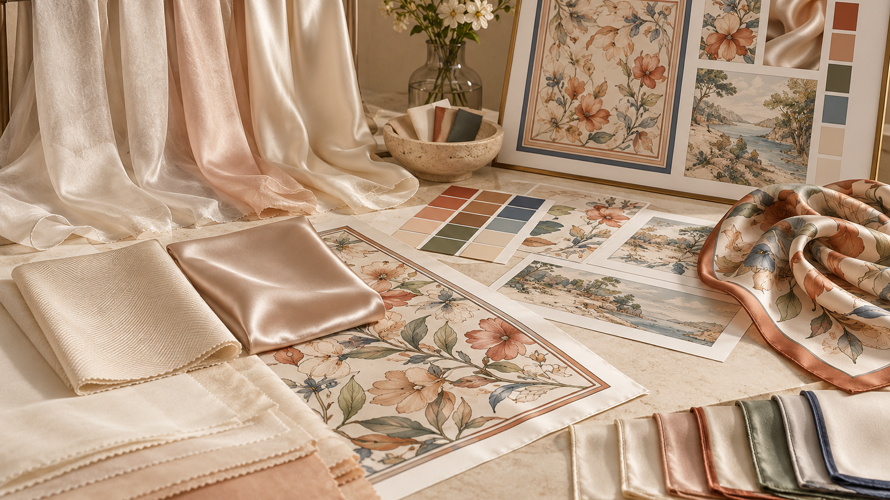
Attach a physical silk swatch and a finished hemmed sample. If a GSM comparison is provided, state the method and do not imply that it replaces the momme or construction specification.
Frequently Asked Questions
What is momme silk?
Momme is a traditional weight convention used for silk. It describes mass per a defined area, but it is not a complete quality grade.
What does 22 momme mean?
It indicates a stated silk weight under the relevant momme convention. The construction, width, finish and test basis should still be confirmed.
Is higher momme better?
Not automatically. Higher weight may add body or coverage, but the best target depends on weave, drape, opacity, care, product and price position.
Is momme the same as GSM?
No. They are different weight conventions. Do not convert or compare them without confirming the measurement basis and fabric condition.
What momme is best for a silk scarf?
There is no universal best number. Choose the target with the intended weave, size, drape, opacity, print and finished edge.
Does momme identify silk quality?
It helps describe weight within a defined silk quality, but it does not by itself identify silk type, weave, finish, origin or durability.
What should a silk buyer request?
Request fibre and weave details, momme basis and tolerance, width, finish, care data, a physical swatch and a finished product sample.
Conclusion
Momme is useful when it is tied to a defined silk construction and measurement basis. Pair the target weight with weave, width, hand, opacity, finish, care and a finished sample so the number supports a real product decision.
