
What Is the Softest Fabric? Hand Feel, Fibre and Construction

Carina Silk Editorial Team writes practical guides on silk fabrics, scarves and custom textile development, with a focus on materials, artwork, sampling, construction and finishing decisions.

There is no single fabric that is always the softest. Hand feel depends on fibre, yarn fineness, weave or knit structure, surface finish, weight, moisture and the way the finished product touches the skin.
Silk, modal, fine cotton, cashmere-type wool, viscose and soft blends can all feel gentle, but they solve different product needs. A buyer should compare the actual finished fabric rather than select a fibre name in isolation.
What Makes a Fabric Feel Soft?
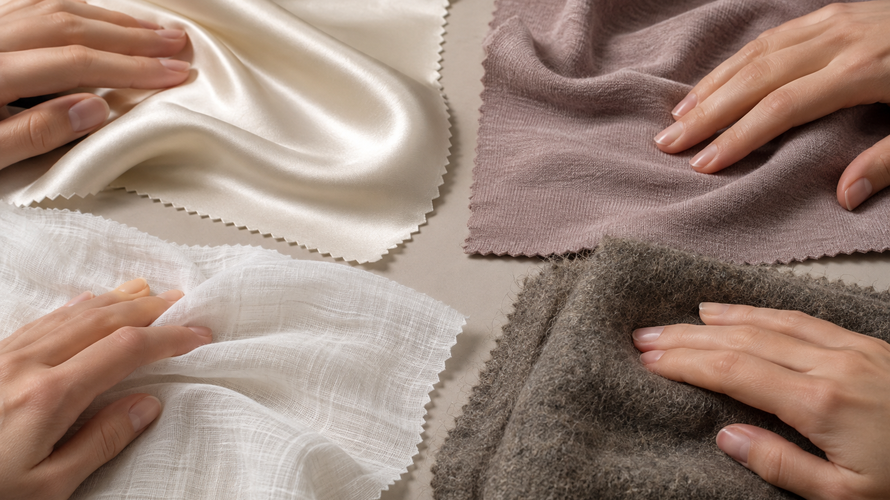
Softness is a tactile result: low surface harshness, comfortable bending, a smooth or gently brushed face, and a hand that fits the intended use. A basic weave structure can change coverage and bending even when the fibre is the same.
For textile buyers, the more useful specification is a target hand supported by a reference sample, weight, construction and finish. Fibre descriptions such as silk or modal should be paired with measurable product details.
How Do Fibre, Yarn and Finish Change Softness?
Fibre length, fineness, cross-section and surface affect the first touch. Smooth filament silk can feel sleek, while a fine spun yarn or a brushed surface can feel soft in a different way. The modal fabric guide explains why fibre direction alone does not determine the finished hand.
Loose or fluid constructions bend more easily, but a very open fabric may feel delicate, sheer or unstable. Washing, brushing, calendaring, softening and coating can alter surface friction and drape, sometimes reducing long-term stability.
The softest-feeling fabric for a scarf may not be the best choice for a product that needs grip, opacity, abrasion resistance, crisp printing or a stable hem.
Which Fabrics Are Commonly Chosen for a Soft Hand?
These are useful starting directions, not universal rankings. Compare the same weight, finish and end use whenever possible. For a silk-specific starting point, see the silk chiffon guide.
| Fabric direction | Typical hand | Common fit | What to confirm |
|---|---|---|---|
| Silk satin or charmeuse | Smooth, fluid and reflective | Luxury scarves and close-to-skin accessories | Slip, snagging, care and edge |
| Silk chiffon | Light, airy and soft | Layered scarves and sheer styling | Opacity, recovery and hem |
| Modal or viscose | Soft, fluid and usually matte | Everyday accessories and apparel | Blend, wet handling and pilling |
| Fine cotton or voile | Clean, breathable and familiar | Light scarves and warm-weather goods | Crease, shrinkage and coverage |
| Fine wool or cashmere-type blend | Warm, springy and soft | Cold-weather accessories | Fibre content, pilling and care |

Softness Versus Smoothness, Drape and Breathability
A fabric can be smooth without being especially soft, or soft without having a glossy surface. Satin may feel sleek but slip during wear; a brushed or knitted construction may feel soft but be warmer or more prone to pilling. Breathability also depends on weight, openness, moisture response and finish.
For a silk product, read the silk fabric comparison together with the intended use. Do not treat the label “soft” as a substitute for a reference swatch, care route or finished sample.
How Should Buyers Evaluate Soft Fabric?
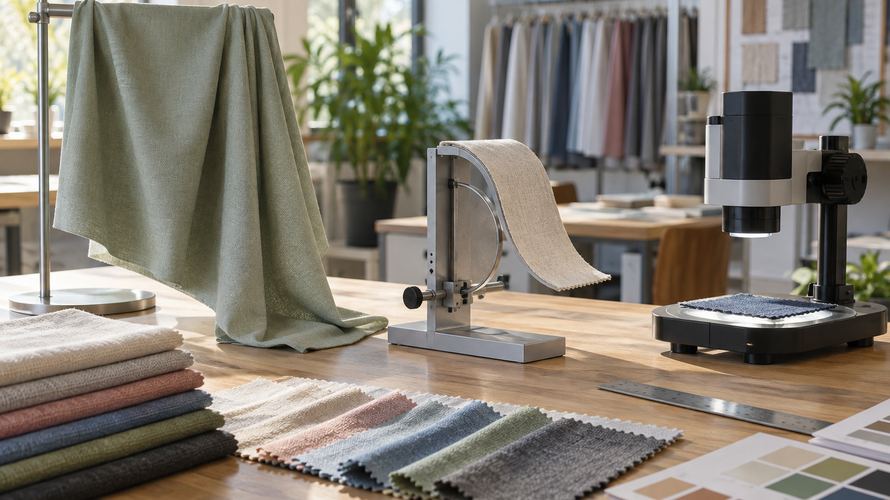
Use a consistent sample protocol. Compare fabrics at the proposed weight and finish, in the same light and after the intended care route.
Surface Smoothness and Friction
Touch the face and reverse with dry and moisturised hands, and note whether the surface feels sleek, brushed, fuzzy, dry or slippery.
Drape and Bending
Hang, fold and gather the fabric. Record whether it falls fluidly, springs back, collapses or keeps a defined edge.
Weight and Warmth
A heavier or denser cloth can feel soft but warm. Confirm whether the product needs airy comfort, insulation or a lighter hand.
Pilling, Snagging and Wear
Softening finishes and loose fibres can change after rubbing or washing. Test the actual face, hem and seam, not only a loose swatch.
Care and Wet Handling
Check softness before and after washing, steaming or dry-cleaning. A fabric that feels excellent initially may change after care.
| Check | Why it matters | Possible risk | Evidence to request |
|---|---|---|---|
| Fibre and blend | Sets surface and care direction | Unexpected hand or label | Fibre specification |
| Yarn and construction | Controls bending and friction | Too stiff or unstable | Construction note and sample |
| Weight and width | Controls warmth and drape | Wrong finished feel | Measured standard |
| Finish | Can add softness or lustre | Finish changes after care | Finish description and test |
| Wear and pilling | Protects use-life | Fuzz, snag or roughening | Finished-sample test |
| Care response | Protects repeat hand | Softness loss or shrinkage | After-care comparison |
What Is the Softest Fabric for a Scarf or Custom Product?
For a luxury printed scarf, silk satin or silk twill may provide the desired combination of smooth touch, colour appearance and controlled drape. For a softer everyday or warmer-weather product, modal, viscose, cotton voile or a blend may be more practical. A sheer scarf also needs an opacity and edge decision.
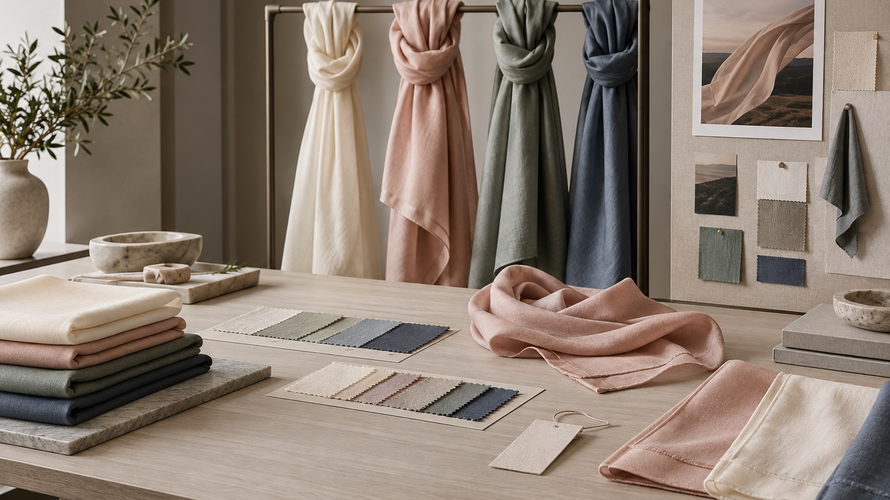
The best choice is the one that meets the whole brief. Keep the approved fabric swatch with the artwork, care instruction and finished-size sample.
How Should a Soft Fabric Be Specified?
State fibre content, yarn or construction, weight, width, surface finish, target hand, colour, opacity, drape expectation, care route, pilling or snagging tolerance and finished edge. If the fabric is printed, include the print side, colour standard and sample approval.
Use the woven fabric guide for construction language and do not approve softness from a product name alone.
Frequently Asked Questions
What is the softest fabric?
There is no universal answer. Silk, modal, fine cotton, viscose, cashmere-type wool and blends can feel soft, but yarn, construction, finish and weight change the result.
Is silk softer than cotton?
Not always. Silk can feel smooth and fluid, while fine cotton can feel soft, breathable and familiar. Compare the actual quality, weight and finish.
Is modal a very soft fabric?
Modal is often selected for a soft, fluid hand, but blend, yarn, weight and finishing still matter. Test the finished fabric before approval.
What makes fabric feel rough?
Coarse fibres, harsher yarns, dense or dry constructions, surface damage, certain finishes and repeated care can all increase perceived roughness.
Is soft fabric always breathable?
No. Softness and breathability are different attributes. Weight, openness, moisture response, fibre and finish should be compared for the intended climate.
How do you test fabric softness?
Compare reference samples at the same weight and finish, inspect surface and bending, then repeat the check after the intended wash, steam or dry-cleaning route.
What should a soft-fabric supplier provide?
Request fibre content, construction, weight, width, finish, care route, target hand, dimensional data and a production-representative sample.
Conclusion
The softest fabric is not a fixed ranking. Softness comes from the interaction of fibre, yarn, construction, finish, weight and care. Define the target hand, compare equivalent samples and approve the finished product before bulk production.
