
What Is Voile Fabric? Properties, Uses, Opacity and Buyer Checks

Carina Silk Editorial Team writes practical guides on silk fabrics, scarves and custom textile development, with a focus on materials, artwork, sampling, construction and finishing decisions.
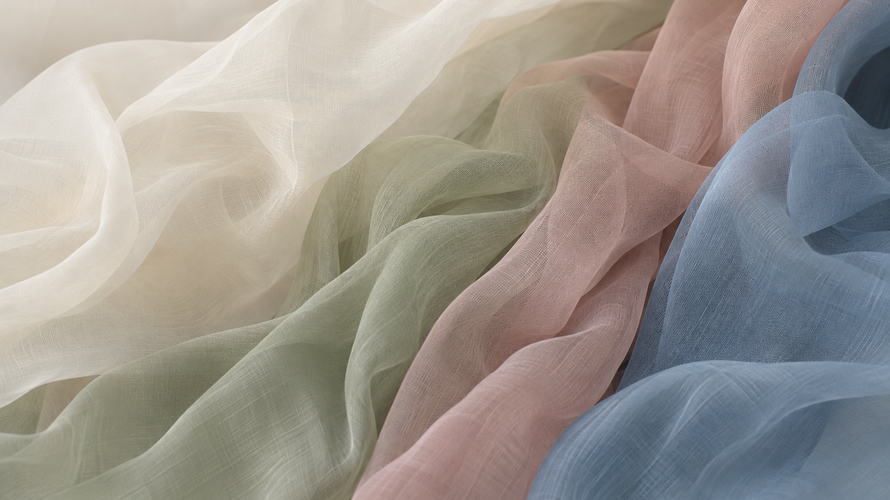
Voile is a light, fine woven fabric often associated with a soft hand, open appearance and a degree of transparency. Cotton voile is common, but silk, viscose and blends can also be made in a voile direction.
Voile is not a single fibre or fixed weight. The final opacity, drape, breathability, print response and care depend on yarn, construction, density and finish.
What Is Voile Fabric?
Voile usually describes a lightweight plain-woven fabric made with fine yarns and a relatively open construction. It can feel crisp, soft, airy or fluid depending on fibre and finishing.
The weaving glossary supports the warp-and-weft language, while the woven fabric guide helps distinguish construction from fibre.
How Is Voile Made?
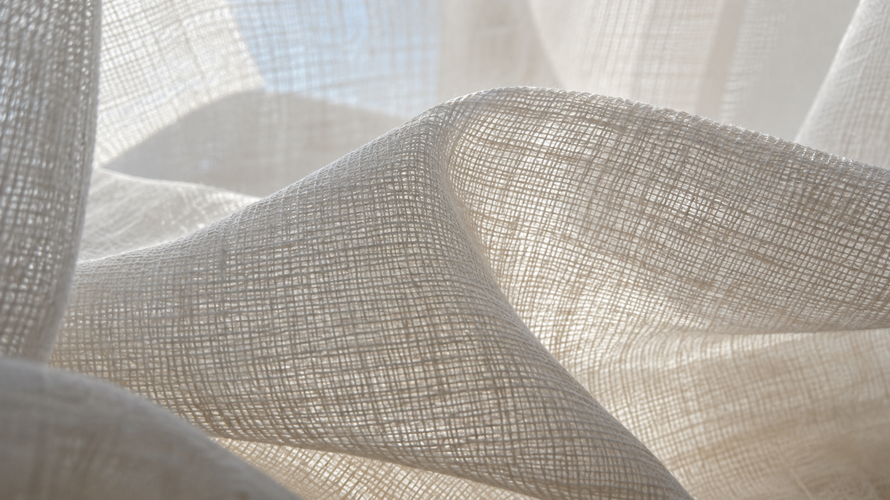
Fine yarns and a light plain weave create the airy appearance. Cotton can give voile a familiar matte hand, silk can add a smoother or more refined surface, and viscose can create a soft fluid result.
The open construction can increase transparency and make the edge or cut panel more delicate. Washing, calendaring, softening, printing and finishing can change the apparent openness, hand and dimensional stability. Compare with silk chiffon when a brief uses both terms.
What Are the Common Voile Directions?
Voile names are useful starting points, but buyers should confirm fibre, weight, opacity and finish on the actual quality.
| Voile direction | Typical hand | Common fit | What to confirm |
|---|---|---|---|
| Cotton voile | Light, matte and breathable | Summer apparel and everyday scarves | Opacity, shrinkage and care |
| Silk voile | Smooth, light and refined | Premium scarves and layered styling | Silk type, edge and drape |
| Viscose voile | Soft and fluid | Fashion accessories and apparel | Wet handling and recovery |
| Printed voile | Light base with surface artwork | Custom scarves and panels | Show-through, sharpness and repeat |
| Embroidered or finished voile | Decorative and delicate | Occasionwear and statement products | Weight, snagging and seam |
Voile Versus Chiffon, Organza and Plain Weave
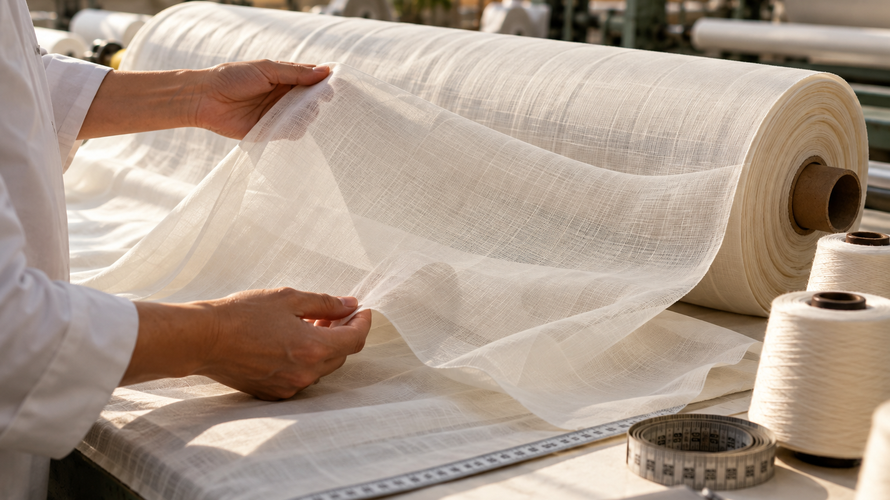
Voile, chiffon and organza can all be light or sheer, but their yarn, construction, surface and stiffness differ. Chiffon often has a more fluid or crepe-like character, while organza is usually crisper and more structured. Voile is commonly associated with a fine, light plain weave.
Use the breathable fabric guide when comfort matters, and do not infer opacity from a fabric name alone.
What Should Buyers Check in Voile Fabric?
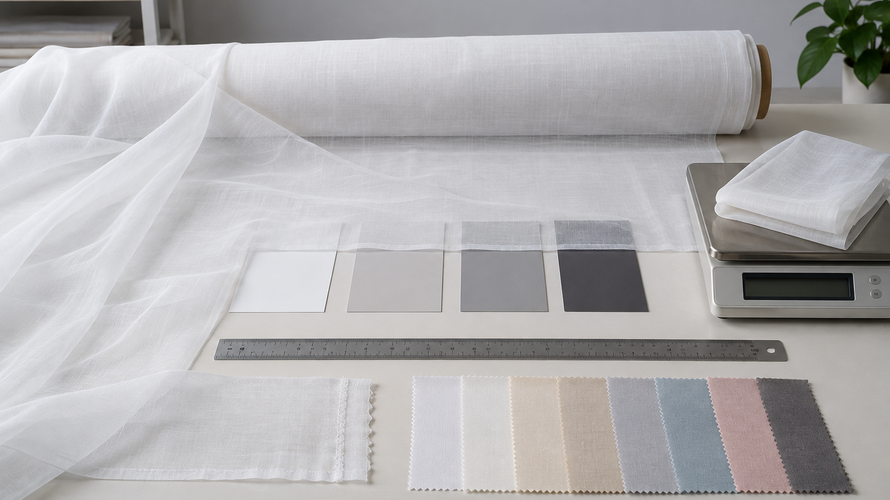
Voile should be evaluated under the lighting and finished construction used in the final product. A small flat swatch can hide transparency, edge and drape issues.
Opacity and Layering
View the fabric on skin and against the final background. Record whether lining, layering or a double panel is required.
Weight and Drape
Measure finished weight and hang the quality. Light voile can collapse, cling or float depending on fibre and finish.
Edge and Fraying
Test the proposed hem, rolled edge or seam. Fine open constructions can fray or distort during handling.
Print and Colour
Approve the strike-off at finished scale and inspect reverse show-through, colour depth, repeat and registration.
Care and Shrinkage
Measure dimensional change and hand after the intended wash, steam or pressing route.
| Check | Why it matters | Possible risk | Evidence to request |
|---|---|---|---|
| Fibre and yarn | Controls hand and care | Wrong quality assumption | Composition and yarn note |
| Weight and openness | Controls coverage and drape | Too sheer or unstable | Measured sample and light review |
| Edge and seam | Protects manufacturing | Fraying or puckering | Finished hem |
| Print and colour | Protects artwork | Show-through or shade drift | Strike-off |
| Shrinkage and skew | Protects finished size | Uneven panel or hem | After-care measurement |
| Snagging and wear | Protects service life | Damage in use | Finished construction test |
Is Voile Good for Scarves?
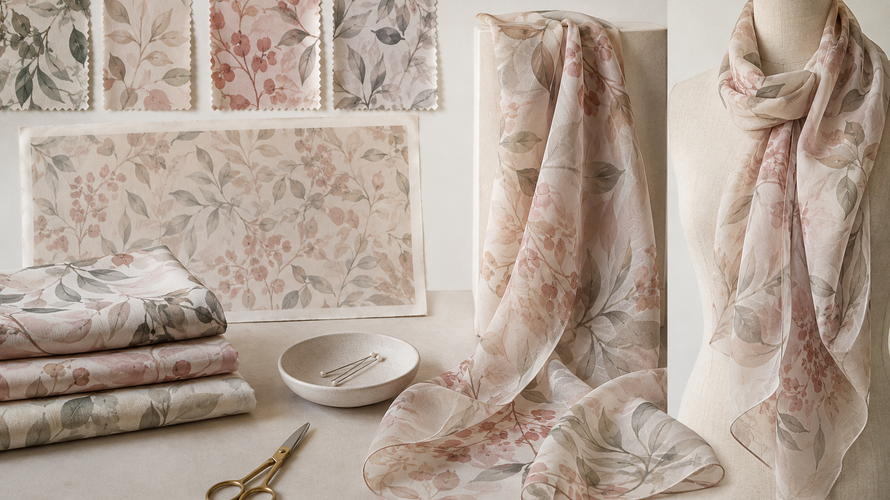
Voile can suit airy scarves, warm-weather accessories, layered styling, apparel panels and light decorative products. Cotton voile may be practical and breathable; silk voile can support a premium look; viscose voile can give soft fluid movement.
For custom development, keep the approved fabric swatch with the opacity, print and hem approval.
How Should Voile Be Specified?
State fibre content, construction, yarn, weight, usable width, opacity target, drape, colour, print method, repeat, edge treatment, care route and dimensional tolerances.
For silk voile, compare the relevant silk fabric directions and approve the finished-size sample, not only the fibre name.
Frequently Asked Questions
Is voile fabric sheer?
Voile is often light and somewhat transparent, but opacity depends on fibre, yarn, density, colour and finish. Test it under the final lighting.
Is voile always cotton?
No. Cotton is common, but silk, viscose and blends can also be made in a voile direction. Confirm composition.
Is voile breathable?
Light open voile can feel airy, but comfort depends on weight, openness, moisture response and layering.
What is the difference between voile and chiffon?
Both can be light and sheer, but yarn, construction, surface, drape and edge behaviour differ. Compare finished samples.
Is voile good for scarves?
It can suit light and layered scarves when opacity, edge stability, print and care meet the brief.
Does voile shrink?
It may shrink or skew depending on fibre, construction and care. Test the proposed quality before production.
What should a voile supplier provide?
Request composition, construction, weight, width, opacity, finish, care data, colour and print approval and a representative finished sample.
Conclusion
Voile is a light woven fabric direction, not a fixed fibre or guaranteed opacity. Specify the fibre, construction, weight, coverage, edge, print and care route, then approve the actual finished sample before bulk production.
