
Different Types of Head Wraps: Shapes, Fabrics and Buyer Checks

Carina Silk Editorial Team writes practical guides on silk fabrics, scarves and custom textile development, with a focus on materials, artwork, sampling, construction and finishing decisions.
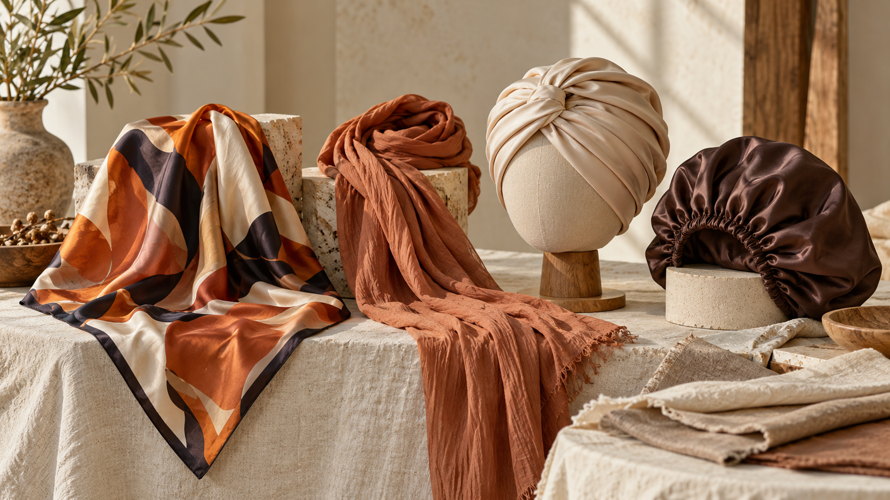
Different head wraps are defined by shape, construction and wearing method rather than by one universal fabric. A square scarf, long rectangular wrap, pre-shaped turban and sleep bonnet can all cover the head, but they need different relationships between width, length, grip, drape, stretch, opacity and edge finish.
For a custom product, start with the use case and finished dimensions. The head-scarf fabric guide provides a material comparison; this article adds the product-format decisions needed to turn a fabric direction into a repeatable head-wrap specification.
What Are the Main Types of Head Wraps?
A head wrap is a fabric or constructed accessory used to cover, tie, protect or style the head. It may be a flat piece that the wearer wraps, or a shaped product with seams, elastic, ties, lining or internal support.
The same format can behave differently when the fabric changes. A smooth satin may look polished but need more grip support; a textured cotton may stay in place but create a different silhouette; a stretch jersey may fit closely but feel warmer. Product names should therefore be paired with fabric and finishing details.
Separate the product shape from the textile. A silk fabric is a fibre direction, while a square scarf or turban is a product format. The woven fabric guide explains why construction affects the final behaviour.
How Are Head Wraps Developed?
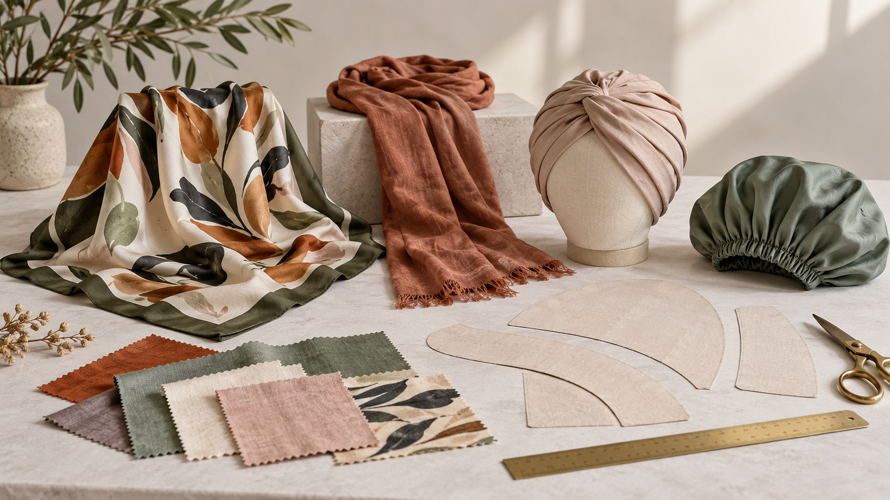
Development normally begins with a use case: styling, coverage, sleep, protective wear, active movement, gifting or a fashion collection. That use case determines the required dimensions, hold, comfort, opacity and care route.
The pattern is then tested with the intended fabric. Check how the fabric folds, slips, stretches, recovers, shows seams and behaves at the edge. A flat swatch cannot reveal all of the problems that appear when the item is tied around a head.
For a printed product, test artwork on the actual shape. A border that looks correct on a square may land in the wrong position after wrapping, while a directional paisley pattern or stripe needs an agreed orientation.
What Are the Different Types of Head Wraps?
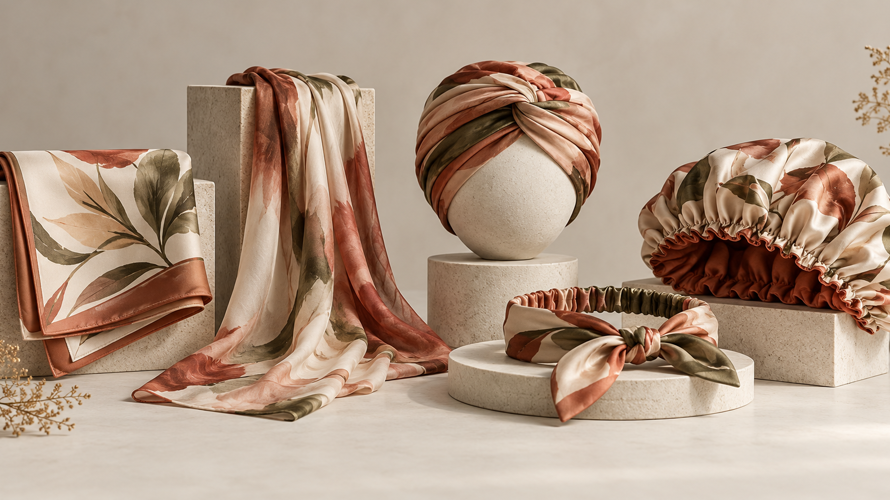
These formats are useful starting points for a buyer brief. Names vary by market, so describe the dimensions and construction as well as the style name.
| Format | Typical construction | Potential fit | What to confirm |
|---|---|---|---|
| Square scarf wrap | Flat square with finished edges | Versatile styling and printed collections | Size, border, hem and grip |
| Long rectangular wrap | Longer length for layered tying | Coverage and multiple wrap methods | Length, width and edge behaviour |
| Pre-shaped turban | Panels, seams, elastic or internal support | Fast, repeatable wear | Fit range, seams and recovery |
| Head tie or band | Narrow strip, tie or gathered shape | Accent styling and light coverage | Length, knot bulk and edge |
| Sleep bonnet or cap | Shaped shell with elastic or drawcord | Night protection and hair coverage | Opening, lining, pressure and care |
| Stretch wrap | Knit or elastane-containing construction | Close fit and active movement | Stretch, recovery, heat and opacity |
How Do Head Wrap Formats Compare?
A flat square or rectangle gives the wearer more styling freedom, but the final hold depends strongly on surface friction, size and tying technique. A pre-shaped turban gives more consistent placement, but fit, seam location and elastic recovery become critical.
For a smooth luxury direction, compare silk satin with silk twill or another construction because surface slip and drape can change the wear experience. For casual or active use, compare stretch and recovery rather than assuming that a heavier fabric will stay secure.
Coverage is not only a fabric property. It comes from dimensions, layering, opacity, seam placement and the way the product is worn. Record the finished coverage requirement and test it with the real pattern.
What Should Buyers Check in a Head Wrap?
A good head-wrap specification connects the format, fabric and finished fit. Approve the product as worn, not only as a laid-flat rectangle.
Finished Shape
State square, rectangle, turban, tie, bonnet or cap construction, including seams, elastic, lining and fastening details.
Dimensions and Coverage
Record finished length, width, opening, depth and intended coverage, including any tolerance after care.
Grip and Slip
Test the actual surface on hair or an agreed test form. Smoothness, finish and layering can change hold more than fibre name alone.
Drape and Recovery
Check folding, knot bulk, stretch, recovery and shape retention after repeated wrapping or fitting.
Opacity and Comfort
Inspect coverage under intended light and record heat, breathability, seam comfort and pressure points.
Edge and Care
Approve hem, binding, elastic, drawcord, wash route and packing so the product remains consistent after use.
| Check | Why it matters | Possible risk | Evidence to request |
|---|---|---|---|
| Format | Defines how the product is worn | Style name hides construction | Pattern and tech pack |
| Coverage | Controls the user outcome | Insufficient or excessive coverage | Fitted sample and size chart |
| Grip | Controls security during wear | Slipping or pressure | Wear test notes |
| Recovery | Controls repeatable fit | Stretch-out or shape loss | Recovery test |
| Opacity | Controls coverage and appearance | Unexpected show-through | Light test and swatch |
| Finish | Controls durability and comfort | Curling, irritation or loose edge | Finished seam sample |
Where Are Different Head Wraps Used?
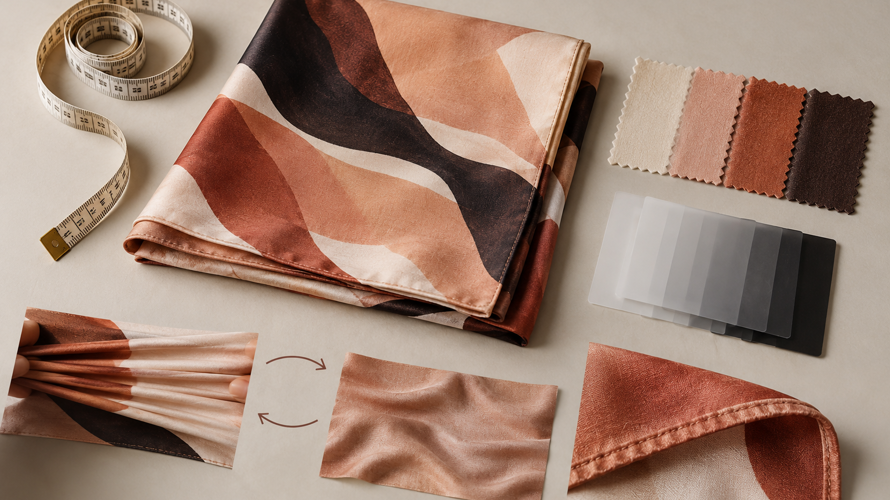
Square and rectangular wraps suit fashion collections, retail styling and printed scarf programs. Pre-shaped turbans and caps can suit repeatable fit, gift sets, sleep products or uniform ranges. Narrow ties and bands work when the brief is accent styling rather than full coverage.
Material choice should follow use. A light chiffon direction may create an airy layered look but need an opacity and grip check; a cotton or modal direction may offer a more familiar hand; a silk quality may support a premium visual direction when care and slip are acceptable.
Do not market a format as universally suitable. State the intended use, fit range, care route and tested fabric behaviour.

How Should a Head Wrap Be Specified?
State format, finished dimensions, pattern pieces, fibre and construction, weight, width, opacity, stretch and recovery, grip expectation, seam and edge finish, artwork layout, care, packaging and acceptable tolerances.
Attach a finished swatch and a full-size or representative fitted sample. For printed products, include artwork orientation and border placement on the actual pattern rather than relying on a generic repeat.
Frequently Asked Questions
What are the different types of head wraps?
Common formats include square scarf wraps, long rectangular wraps, pre-shaped turbans, head ties or bands, sleep bonnets and stretch wraps. The exact names vary by market.
What fabric is best for a head wrap?
There is no universal best fabric. Compare grip, drape, opacity, comfort, care, stretch, dimensions and the intended styling method.
Is a square scarf the same as a head wrap?
A square scarf can be used as a head wrap, but head wrap is a broader product description that can include rectangular and pre-shaped formats.
How do I stop a head wrap from slipping?
Test the surface, size, tying method, layering and any grip or fastening feature on the actual product. Fibre name alone cannot guarantee hold.
Are stretch head wraps better?
Stretch can improve fit and recovery for some formats, but it may also change warmth, opacity, pressure and shape retention. Test the finished construction.
What size should a head wrap be?
The correct size depends on the format, coverage, hair volume, tying method and fit range. Specify finished dimensions and test the intended wear method.
What should a buyer request from a head-wrap supplier?
Request fabric composition, construction, dimensions, pattern, finish, stretch or recovery data, artwork layout, care instructions and an approved worn or finished sample.
Conclusion
Different head wraps should be planned as finished products, not only as fabric names. Choose the format first, then test the fabric, dimensions, grip, coverage, comfort, edge and care on a representative sample.
