
What Are the Different Types of Scarves Called?

Carina Silk Editorial Team writes practical guides on silk fabrics, scarves and custom textile development, with a focus on materials, artwork, sampling, construction and finishing decisions.
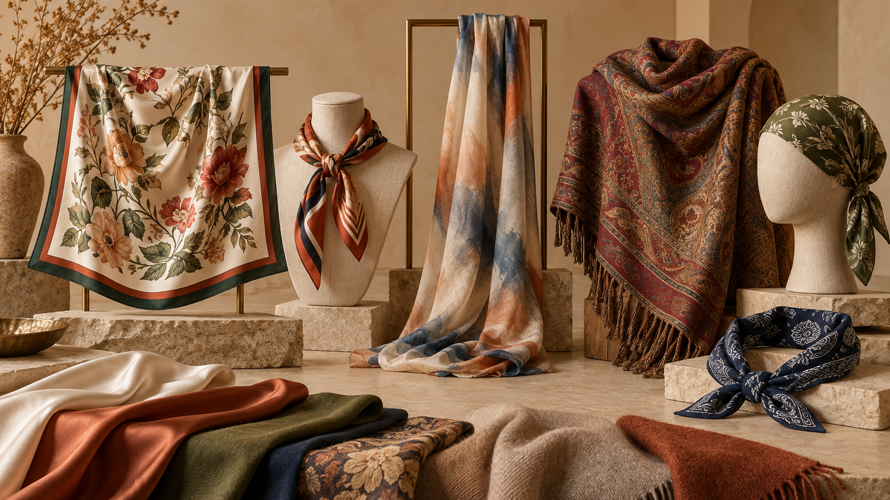
Scarf names describe product shape, wearing method, cultural use or styling tradition, but they do not always have fixed definitions. A square scarf, neckerchief, stole, shawl, headscarf or bandana can differ in size, proportion, border, fabric and finishing.
For sourcing, use the name as a starting point and define the physical product. The best fabric for a head scarf guide and head-wrap comparison show why grip, drape, coverage and care should accompany the style name.
What Are the Main Types of Scarves?
A scarf is a textile accessory worn around the neck, shoulders, head or body. The format may be flat and unshaped, or it may be sewn, gathered, looped, lined or finished with special edges.
Names overlap across markets. A stole may be a long formal wrap, a shawl may be larger and broader, and a neckerchief may be smaller; the exact product still needs dimensions and use.
Fibre and construction are separate decisions. Silk can be used for a square scarf, a neckerchief or a shawl, while polyester or cotton can use the same shapes with different care and hand.
How Are Scarf Formats Defined?
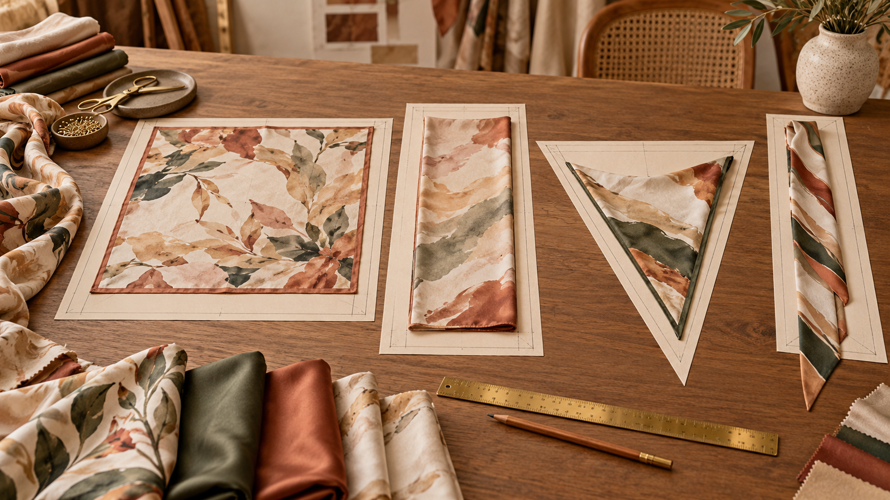
Begin with finished length, width, proportion and intended wearing method. A square offers folding flexibility; a long rectangle allows wrapping and draping; a narrow tie creates a more controlled knot.
Add border, corner, print direction, hem, fringe, tassel, lining or joining details. These elements can change cost, yield and the visual result more than the style name suggests.
For artwork, use a fabric pattern reference and map the repeat to the finished shape. A border that looks balanced on a square may not work on a long stole.
What Are the Different Scarf Formats Called?
Use these names with finished dimensions and a technical description.
| Format | Typical shape | Potential fit | What to confirm |
|---|---|---|---|
| Square scarf | Equal or near-equal length and width | Neck, head and styling use | Size, border and corner |
| Neckerchief | Small square or short rectangle | Uniform and accent styling | Knot bulk and edge |
| Stole | Long rectangular wrap | Formal or shoulder styling | Length, width and drape |
| Shawl | Broad wrap, often larger | Shoulders and layering | Coverage, weight and fringe |
| Headscarf | Square or rectangle for head coverage | Hair and head styling | Opacity, grip and coverage |
| Bandana | Small square or printed casual scarf | Neck, head and accessory use | Print scale and hem |
| Infinity scarf | Joined loop | Easy repeatable styling | Seam, circumference and recovery |
Scarf Names vs Scarf Specifications
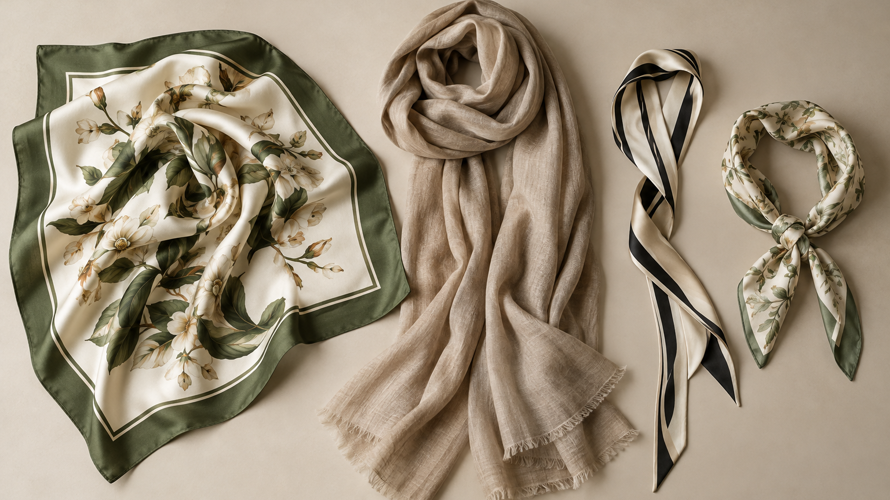
A product name helps a buyer search, but the specification controls production. “Square silk scarf” is more useful than “luxury scarf” because it states shape and fibre; it still needs size, weave, weight, print and edge.
For a premium printed product, compare silk twill, silk satin and chiffon by hand, grip, opacity, print response and care.
For a uniform or gifting program, define the style and supply a finished swatch plus a finished sample so the same knot, fold and border can be repeated.
What Should Buyers Check for Each Scarf Type?
The format, fabric and finishing have to be reviewed as one product system.
Name and Use
Define the product name, intended wearer, styling method, climate and coverage requirement.
Finished Dimensions
State length, width, proportion, circumference or opening and all tolerances after finishing.
Fabric Direction
Specify fibre, construction, weight, width, opacity, grip, drape and care.
Artwork Layout
Map repeat, border, logo, direction and corner placement to the actual scarf shape.
Edge and Hardware
Check hem, rolled edge, fringe, tassel, seam, label, loop or closure details.
Finished Wearing Test
Tie, fold or drape the actual sample and confirm hold, bulk, coverage and appearance before bulk.
| Check | Why it matters | Possible risk | Evidence to request |
|---|---|---|---|
| Format | Defines product use | Style name is ambiguous | Pattern and dimensions |
| Fabric | Controls hand and performance | Wrong drape or care | Composition and swatch |
| Artwork | Controls visual placement | Border or logo cropped | Layout proof |
| Edge | Controls appearance and durability | Uneven or curling hem | Finished edge sample |
| Size | Controls wearing method | Product too small or large | Measurement record |
| Wearing test | Confirms real use | Flat sample misleads | Approved worn sample |

Where Are Different Scarf Types Used?
Square scarves suit fashion, gifting, headwear and uniform styling. Neckerchiefs suit compact branding; stoles and shawls suit formal, hospitality or occasion use; bandanas and headscarves support casual and accessory programs.
For a corporate or airline range, compare the custom airline scarf direction with the fabric and artwork requirements of the actual uniform.
Choose the name that communicates the product, but use dimensions and a technical pack to control production.
How Should a Scarf Type Be Specified?
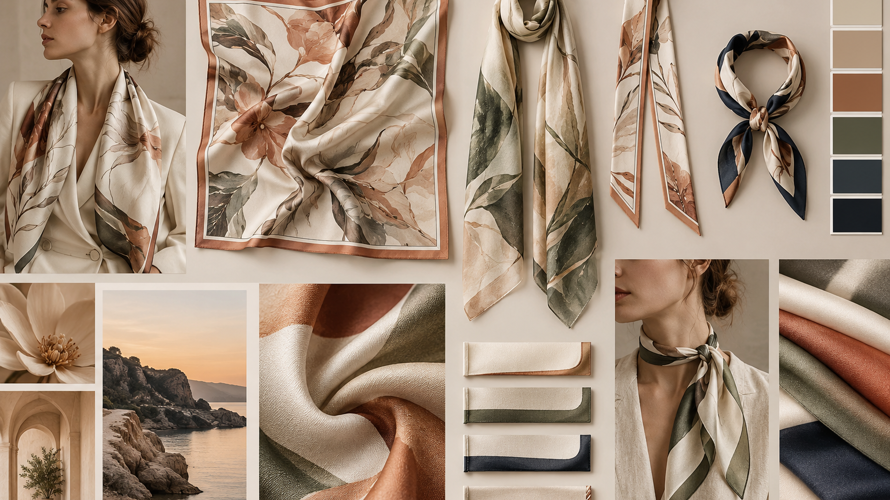
State format, finished dimensions, proportion, fibre, construction, weight, width, opacity, drape, artwork, border, edge, label, care and packaging.
Attach the artwork layout and finished fabric reference. If the scarf has a required tie or fold, approve a sample worn in that method.
Frequently Asked Questions
What are the different types of scarves?
Common formats include square scarves, neckerchiefs, stoles, shawls, headscarves, bandanas and infinity scarves. Names vary, so dimensions should be specified.
What is a square scarf?
A square scarf has equal or near-equal finished length and width and can be folded or tied in several ways.
What is the difference between a stole and a shawl?
A stole is generally a long narrow wrap, while a shawl is often broader and provides more shoulder coverage. Exact market definitions vary.
What is a neckerchief?
A neckerchief is usually a small square or short scarf worn around the neck, often for accent or uniform styling.
What fabric is best for a scarf?
There is no universal best fabric. Match fibre, weave, weight, grip, drape, opacity, care and finished use.
What scarf shape is best for a uniform?
Square or rectangular formats can both work. Choose based on the required tie, dimensions, artwork, hold, care and repeatability.
What should a scarf buyer provide?
Provide format, dimensions, fabric, artwork layout, edge finish, care, packaging and a finished reference sample.
Conclusion
Scarf names are useful only when they are tied to shape, use and finished dimensions. A professional sourcing brief adds fibre, construction, artwork, edge, care and a sample worn in the intended way.
