
What Is Cupro Fabric? Properties, Uses and Buyer Checks

Carina Silk Editorial Team writes practical guides on silk fabrics, scarves and custom textile development, with a focus on materials, artwork, sampling, construction and finishing decisions.
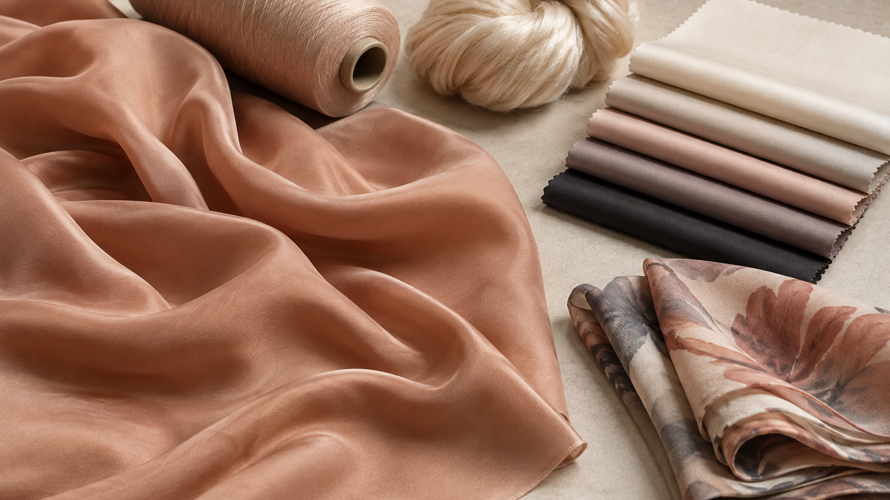
Cupro is a regenerated cellulosic fibre direction used in smooth, fluid fabrics and linings. Some supplier pages also use Bemberg as a brand reference, but a brand name is not a generic substitute for every cupro product.
Cupro can look silk-like, but appearance does not prove silk content. Verify composition, construction, weight, width, finish and care. The rayon fabric guide helps place cupro within the broader regenerated-cellulose conversation.
What Is Cupro Fabric?
Cupro is made by regenerating cellulose into fibre, commonly associated with cotton-linter or other cellulosic feedstock depending on the specific process and supplier.
Cupro fabrics are often valued for fluid drape, smooth hand and lining performance, but the final result changes with yarn, weave, density, finish and blend.
Use the fabric composition guide and request written evidence before making recycled, by-product-based, vegan, biodegradable or closed-loop claims.
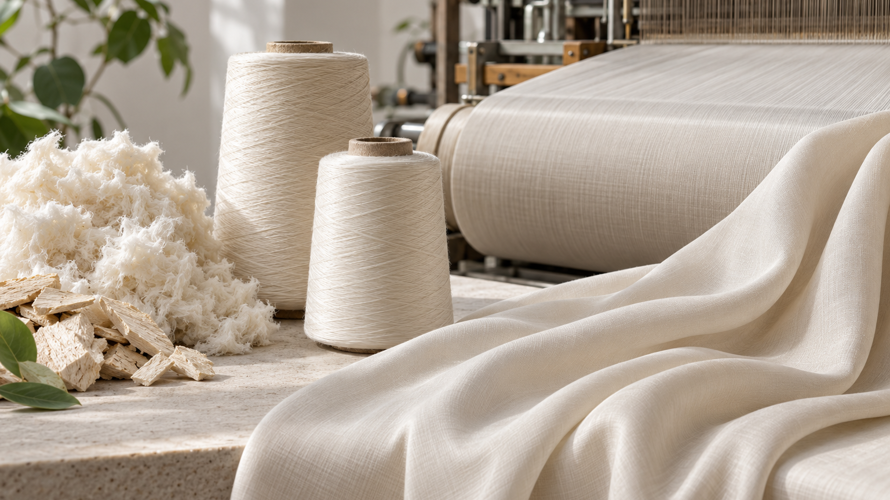
How Is Cupro Fabric Made?
Cellulosic material is processed into a solution or spinning dope and regenerated into fibres. The exact feedstock, chemistry and production system belong to the specific product and supplier.
The fibre is then made into yarn and woven or knitted. Satin, plain weave, twill and lining constructions can produce different hand, opacity, weight and care.
Approve the finished swatch after dyeing, printing and finishing. A generic description of cupro cannot predict the delivered surface.
What Cupro Fabric Directions Should Buyers Compare?
Use fibre, construction and claim scope together.
| Direction | Textile character | Potential fit | What to confirm |
|---|---|---|---|
| Cupro lining | Smooth fluid lining quality | Garment and accessory lining | Weight, friction and care |
| Cupro plain weave | Matte or smooth woven base | Light apparel and scarves | Opacity and width |
| Cupro satin | Reflective smooth face | Formal and fluid products | Slip and snagging |
| Cupro twill | Diagonal construction character | Structured drape products | Weight and print |
| Cupro blend | Cupro with silk, rayon or synthetic fibre | Balanced hand or cost | Ratio and label |
| Brand-specific cupro | A named commercial product | Traceable product programs | Brand and claim evidence |

Cupro vs Silk and Viscose
Cupro can share fluidity or smoothness with silk and viscose, but it is a different regenerated-cellulosic direction. The fibre category, yarn, construction, finish and care should be compared directly.
Compare cupro with silk, viscose and modal on drape, opacity, surface, moisture, care, print response and price position.
Do not call cupro silk or assume every cupro claim applies to every brand or supplier.
What Should Buyers Check in Cupro Fabric?
Cupro requires careful distinction between generic fibre language and product-specific claims.
Fibre and Brand
Confirm generic cupro wording, brand reference, blend ratio and the market’s acceptable label term.
Feedstock and Process
Request claim-specific information if feedstock, recycled input or process is part of the brief.
Construction
Record yarn, weave or knit, weight, width, density, finish and opacity.
Hand and Drape
Compare fluidity, smoothness, slip, friction and seam behaviour in the intended product.
Care and Stability
Test washing, pressing, shrinkage, colourfastness, snagging and dimensional change.
Finished Claims
Keep evidence for vegan, recycled, biodegradable, closed-loop or traceability wording.
| Check | Why it matters | Possible risk | Evidence to request |
|---|---|---|---|
| Composition | Defines material | Silk-like name misleads | Fibre statement |
| Feedstock | Controls claim scope | Generic claim overreaches | Supplier evidence |
| Construction | Controls hand | Wrong drape | Weave and weight |
| Care | Controls use | Shrinkage or damage | Care test |
| Drape | Controls product result | Lining sample misleads | Finished swatch |
| Claims | Controls trust | Unsupported sustainability | Claim documents |

Where Is Cupro Used?
Cupro is used in linings, fluid apparel, dresses, scarves, relaxed products and blends where a smooth hand and drape are useful.
For a printed scarf, compare cupro with silk satin or rayon by hand, print response, opacity, grip, care and edge.
Use the specific cupro quality and supplier evidence when writing product or sustainability copy.
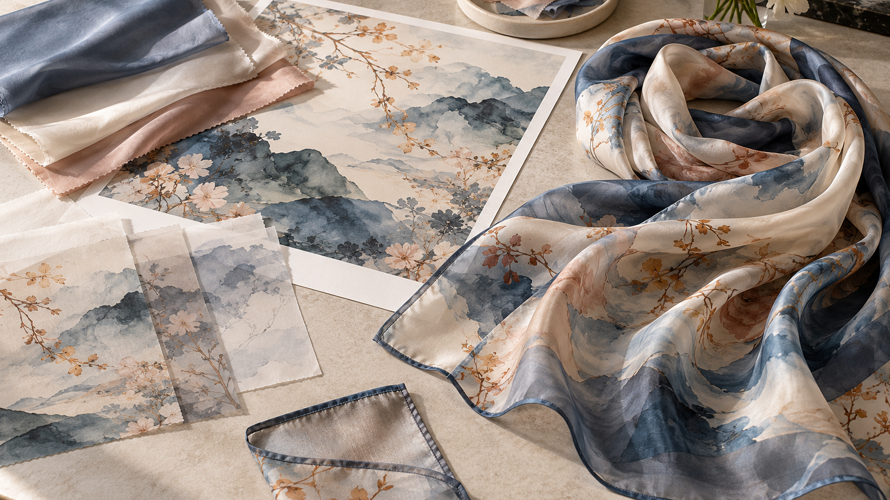
How Should Cupro Fabric Be Specified?
State generic fibre and brand where relevant, feedstock or claim evidence, blend ratio, yarn, construction, weight, width, surface, colour or print, care, tolerance and finished use.
Attach a physical swatch and claim documentation. Keep a silk-like appearance separate from silk composition.
Frequently Asked Questions
What is cupro fabric?
Cupro is a regenerated cellulosic fibre direction used in smooth, fluid woven or knitted fabrics and blends.
Is cupro the same as silk?
No. Cupro can look or feel silk-like, but it is a different fibre direction and should be labelled by its actual composition.
Is cupro the same as viscose?
They are related regenerated-cellulose directions but are not automatically the same product. Confirm the exact fibre and process.
What is Bemberg cupro?
Bemberg is a brand reference associated with a specific cupro product. It should not be treated as a generic synonym for every cupro quality.
Is cupro sustainable?
The answer depends on feedstock, process, supplier evidence and the exact claim. Avoid general sustainability statements without scope.
Is cupro good for scarves?
It can suit fluid scarves when drape, surface, print, grip, care and dimensional stability meet the brief.
What should a cupro buyer request?
Request composition, brand or process evidence where relevant, construction, weight, width, care and a finished sample.
Conclusion
Cupro is a regenerated-cellulosic fibre direction with a smooth, fluid product potential. Separate generic cupro from brands and claims, then approve composition, construction, care and the finished sample.
