What Is Cotton Percale? Weave, Feel, Uses and Buyer Checks

Carina Silk Editorial Team writes practical guides on silk fabrics, scarves and custom textile development, with a focus on materials, artwork, sampling, construction and finishing decisions.
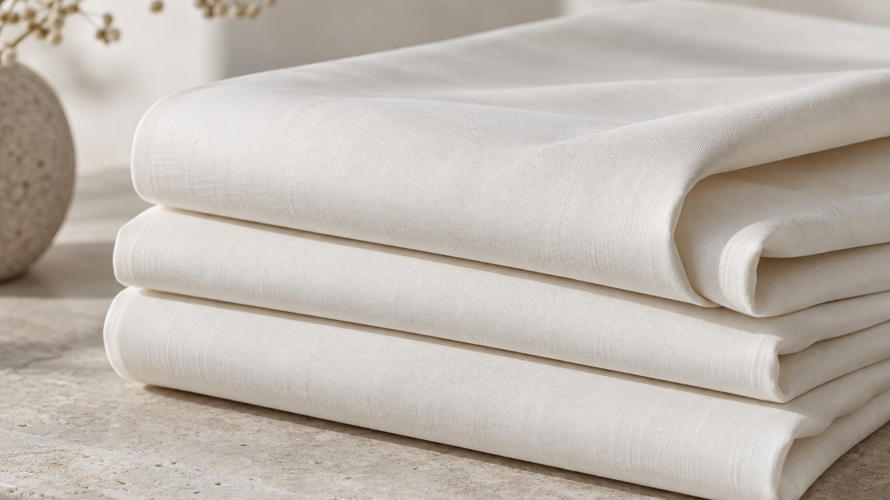
Cotton percale is a closely woven plain-weave fabric direction, usually made with cotton yarns. CottonWorks describes percale as a smooth, slightly crisp, printed or dyed plain-woven fabric made from combed yarns. The word identifies a construction and fabric family, not one universal weight or finish.
For a buyer, the useful question is how the percale quality is built. Yarn size, density, fibre content, finish, width and weight determine whether it feels crisp, soft, light, firm or more suitable for a structured product.
What Is Cotton Percale?
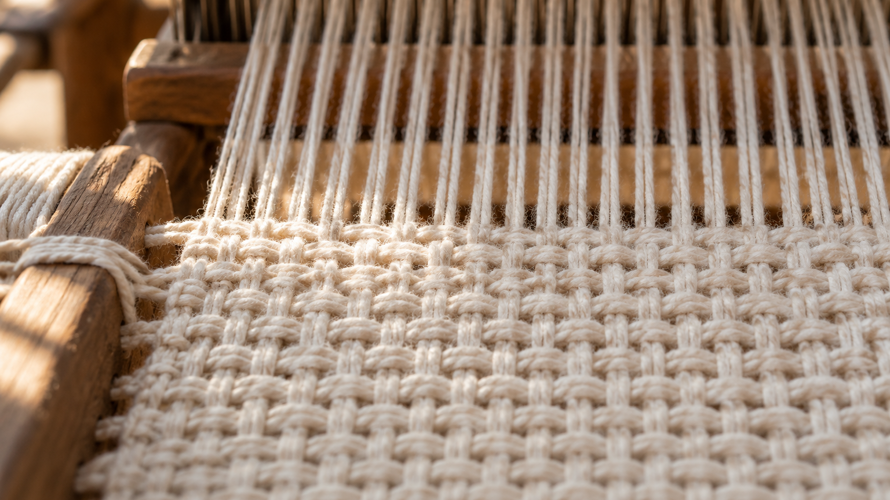
Percale uses a simple one-over, one-under interlacement. That plain-weave structure gives balanced warp and weft directions, but the final hand still depends on yarn preparation, density and finishing.
Cotton percale is different from cotton sateen because the weave changes the surface direction. A percale-like fabric may also contain blends, so “percale” alone does not prove 100% cotton.
State fibre content with the fabric composition guide, then record construction and finish separately. This prevents a weave name from being used as a substitute for a complete specification.
How Is Cotton Percale Made?
Cotton is prepared into yarn, often with combing or other yarn preparation that affects cleanliness, regularity and surface. The yarn is then woven in a balanced plain construction.
The greige fabric may be scoured, bleached, dyed, printed, softened, calendared or otherwise finished. Each step can change hand, width, lustre, shrinkage and print response.
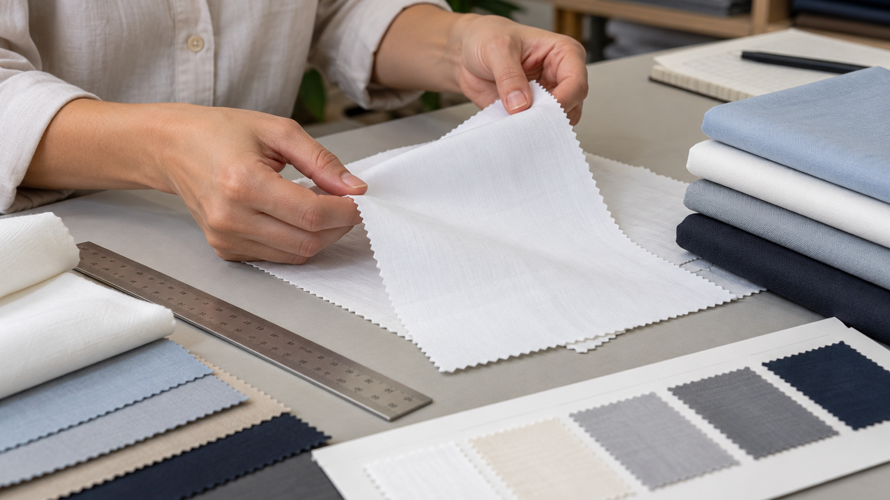
For a custom product, approve a finished fabric swatch after the planned dye or print route. A loom sample alone cannot show the final surface or care behaviour.
What Are the Main Cotton Percale Directions?
Use the fibre, yarn, density and finish together when comparing percale qualities.
| Direction | Textile character | Potential fit | What to confirm |
|---|---|---|---|
| Classic cotton percale | Balanced plain weave with a crisp matte hand | Bedding, shirts and structured products | Yarn, density, weight and finish |
| Combed-yarn percale | Cleaner, more regular yarn surface | Smooth premium basics and printed cloth | Yarn preparation and surface |
| Lightweight percale | Lower weight and more open body | Summer products and airy panels | Opacity, width and stability |
| Printed percale | Plain weave carrying surface artwork | Scarves, home textiles and apparel | Registration, colour and reverse |
| Blend percale | Cotton combined with another fibre | Easy-care or performance-led products | Blend ratio and label wording |
| Finished percale | Construction modified by softening or calendaring | Products needing a defined hand | Finish durability and care route |

Percale vs Cotton Sateen: What Changes?
Percale and cotton sateen can both be made from cotton, but their weave directions create different surfaces. Percale is usually more matte and crisp, while sateen is smoother and more reflective.
The choice changes with the product brief. Compare satin and sateen surfaces using the same fibre content, weight, artwork and care route rather than treating one weave as automatically better.
For scarves or printed panels, check drape, opacity, fold memory, border behaviour and finished hem. A flat swatch can hide differences that appear after printing or washing.
What Should Buyers Check in Cotton Percale?
Approve the construction and the finished surface together.
Fibre content
Confirm cotton percentage, blend components and any named cotton claim.
Yarn and density
Record yarn preparation, count, ends, picks and the construction used for the sample.
Weight and width
Measure GSM, usable width and dimensional tolerance after the agreed finish.
Hand and opacity
Compare crispness, softness, cover, drape and surface uniformity under intended lighting.
Print and colour
Approve artwork registration, shade, reverse, border and colourfastness through a strike-off.
Care and finished sample
Test the actual care route and review the finished cut, hem, packaging and use case.
| Check | Why it matters | Possible risk | Evidence to request |
|---|---|---|---|
| Fibre | Controls label and claim | Blend confusion | Composition statement |
| Construction | Controls hand and stability | Wrong comparison | Weave and density record |
| Weight | Controls opacity and yield | Sample differs | GSM and width |
| Surface | Controls customer experience | Finish changes | Approved swatch |
| Controls artwork result | Registration or shade error | Strike-off | |
| Finished sample | Confirms real product | Bulk behaves differently | Approved item |
Where Is Cotton Percale Used?
Cotton percale is used in bedding, shirts, apparel, scarves, linings, home textiles and printed products where a balanced plain weave and controlled hand are useful.
For a custom printed accessory, compare percale with silk twill or a lighter plain weave according to drape, opacity, artwork definition, edge and care.
The correct percale is the one whose weight, surface and finished dimensions match the product rather than the one with the most attractive fabric name.
How Should Cotton Percale Be Specified?
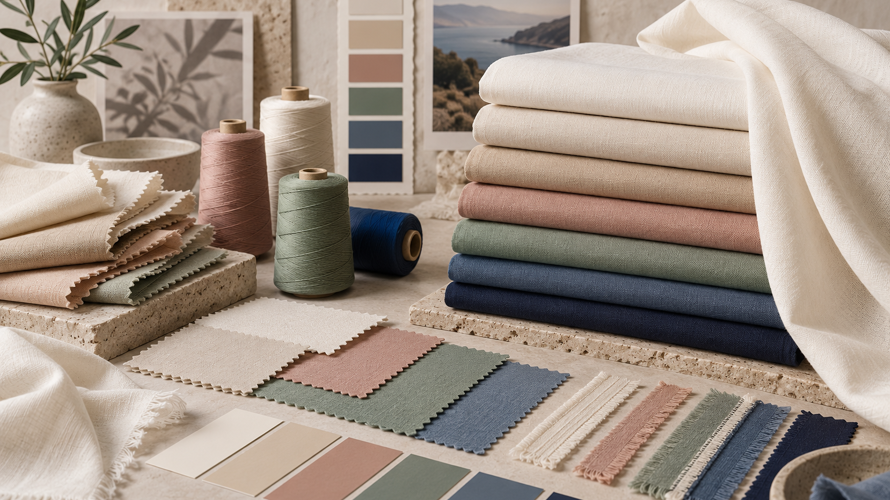
State fibre and blend percentage, yarn direction, plain-weave construction, GSM, usable width, finish, colour or print route, shrinkage tolerance, care and end use. Use the GSM guide when weight is part of the approval decision.
Attach a physical swatch, print strike-off and finished sample. If a cotton trademark or origin statement matters, keep that claim separate from the percale construction.
Frequently Asked Questions
What is cotton percale?
Cotton percale is a plain-weave fabric direction usually made with cotton yarns. Its final hand depends on yarn, density, weight and finishing.
Is percale always 100% cotton?
No. Percale describes a fabric construction and may be made with cotton blends or other fibres. Confirm the composition statement.
Is cotton percale soft?
It is often crisp or smooth, but softness depends on yarn preparation, finishing, weight and washing.
Is percale breathable?
Its air movement depends on density, weight, finish and product design. Do not infer the finished result from the word percale alone.
What is the difference between percale and sateen?
Percale uses a plain-weave direction and is usually matte and crisp, while sateen uses a smoother surface direction with more lustre.
Can cotton percale be printed?
Yes. Confirm the print route, registration, colour, reverse and wash response on the actual finished base.
What should a percale buyer request?
Request composition, yarn and construction details, GSM, width, finish, care, strike-off and an approved finished sample.
Conclusion
Cotton percale is a construction direction, not a complete product specification. Control composition, yarn, density, weight, finish, print, care and the finished sample before approval.