
Does Viscose Shrink? Causes, Care and Buyer Checks

Carina Silk Editorial Team writes practical guides on silk fabrics, scarves and custom textile development, with a focus on materials, artwork, sampling, construction and finishing decisions.
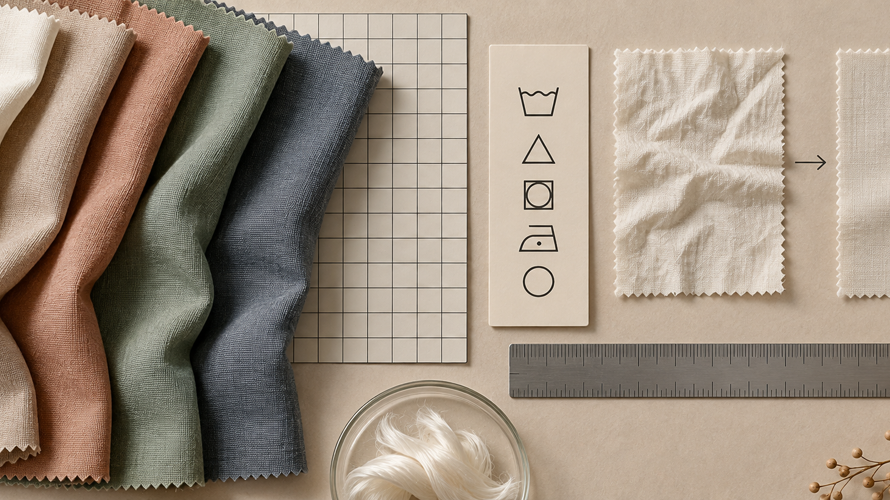
Viscose can shrink or change dimensions, but the result is not one fixed percentage for every fabric. Dimensional change depends on the fibre form, yarn, knit or weave, fabric density, finishing, moisture, heat, agitation, drying and the condition of the sample before testing.
For sourcing, ask a more useful question than “Does viscose shrink?”: how much length, width, skew, stretch and drape change under the actual care route? The viscose and rayon comparison and viscose and cotton guide provide fibre context; the finished fabric still needs its own test.
Does Viscose Shrink?
Viscose may shrink, relax or distort when it absorbs moisture, experiences heat or agitation, or is released from stresses introduced during spinning, weaving, knitting, dyeing and finishing. Some fabrics change mainly in length, some in width, and some show skew, spirality or surface change.
The word viscose identifies a regenerated-cellulose fibre family, not one fabric construction. A stable woven viscose, a loose knitted viscose and a viscose-elastane blend can respond differently to the same wash route.
Use the fabric weight and GSM guide together with construction, width and finish. Weight alone will not predict shrinkage, and a catalogue description should not replace a dimensional test.
Why Does Viscose Shrink or Change Shape?
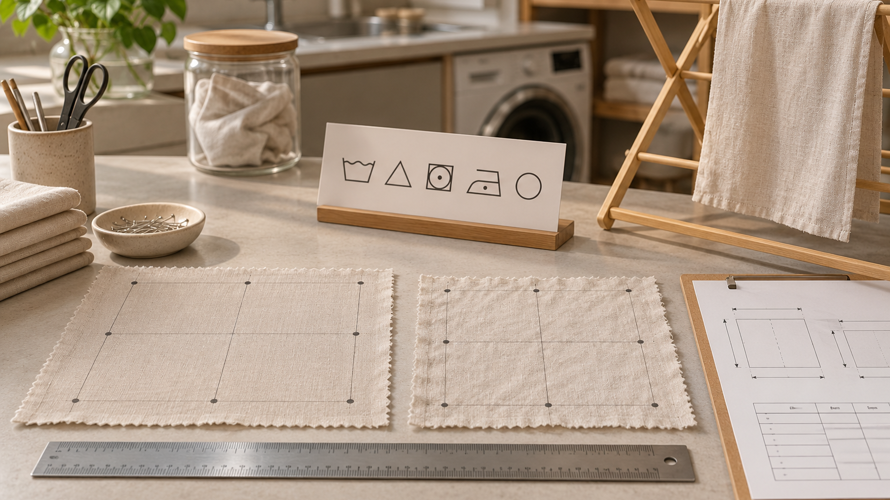
Moisture can relax yarn and fabric stresses, while heat and agitation can increase movement. Drying method and whether the sample is laid flat, hung or tumble dried can change the final dimensions and drape.
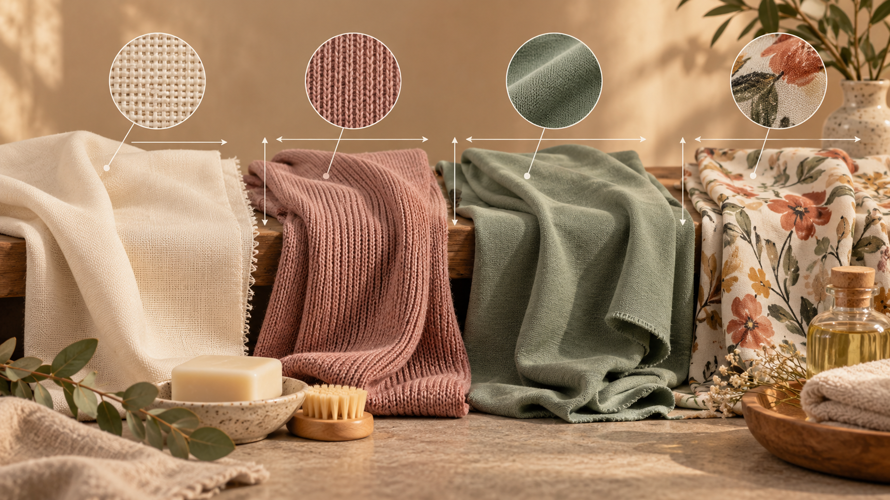
Construction matters. A loose weave can relax differently from a dense weave; a knit can change length, width and recovery; a blend may be controlled by the behaviour of the other fibre and any elastane.
Finishing can improve dimensional stability, but the finish must be evaluated on the final dyed, printed or coated quality. A pre-production swatch that has not followed the intended route is not enough evidence.
What Can Change Viscose Dimensional Stability?
Use these directions to identify the source of risk before selecting a care claim or finished measurement.
| Direction | Typical behaviour to investigate | Potential fit | What to confirm |
|---|---|---|---|
| Woven viscose | Length, width and skew can change with wet processing | Drapey scarves and apparel | Finished width and wash test |
| Knitted viscose | Stretch, recovery and spirality interact with shrinkage | Soft close-fitting products | Relaxed dimensions and recovery |
| Viscose blend | Other fibres and elastane alter movement | Performance or cost-led products | Blend ratio and care route |
| Printed viscose | Print and ground can change together | Scarves and fashion products | Strike-off after care test |
| Finished viscose | Softening or resin finish may affect stability | Smooth or controlled-hand products | Finish durability |
| Loose or open construction | Relaxation may be more visible | Airy products and overlays | Skew, edge and width tolerance |
Viscose Shrinkage vs Relaxation: What Is the Difference?
Shrinkage is a reduction in a measured dimension after a defined treatment. Relaxation is the release of stresses or extension introduced during processing or handling. In a real fabric, both may contribute to the observed change, so the test method and starting condition matter.
Do not use “viscose” as a substitute for a construction description. Compare the result with the woven fabric guide and record whether the sample is woven, knitted, blended, printed or finished.
A finished scarf may also change because of hemming, pressing, washing and packing. The acceptance record should include the actual product dimensions, not only the roll sample.
What Should Buyers Check for Viscose Shrinkage?
The buyer should define the test route, starting condition, measurement points and acceptable change before approving production.
Fibre and Blend
Record viscose content, other fibres and elastane because the composition influences moisture response and recovery.
Construction and Finish
State knit or weave, density, weight, width, finish and whether the sample is dyed, printed, washed or coated.
Starting Dimensions
Mark length and width points on the intended quality and condition the sample consistently before treatment.
Care Route
Test the actual wash, temperature, agitation, drying and pressing route that will appear on the product care instruction.
Dimensional Change
Record length, width, skew, spirality, stretch and recovery rather than relying on one overall shrinkage number.
Finished Product
Check the printed, cut and hemmed product because artwork placement and edge finish can change after the fabric test.
| Check | Why it matters | Possible risk | Evidence to request |
|---|---|---|---|
| Composition | Defines material response | Wrong care expectation | Fibre specification |
| Construction | Controls relaxation and recovery | Roll sample misleads | Knit or weave details |
| Care route | Makes the result reproducible | Test cannot be repeated | Wash and dry method |
| Measurements | Shows where change occurs | Width or skew missed | Before-and-after record |
| Tolerance | Sets a pass/fail basis | Dispute after delivery | Agreed range |
| Finished sample | Confirms product reality | Hem or print shifts | Approved finished reference |
Where Is Viscose Used When Shrinkage Is Controlled?
Viscose is used in apparel, scarves, linings, soft furnishings and blended fabrics where a fluid hand and cellulose-based fibre direction are desired. It can work well when the construction, finishing and care route are controlled.
For a custom scarf, compare viscose with modal or a silk direction based on the intended drape, opacity, care, print route and price position. Avoid promising “no shrinkage” unless the exact finished quality and care method support that claim.
If the product will be washed by the end customer, build the care route into sampling and approve dimensions after the relevant treatment.

How Should Viscose Shrinkage Be Specified?
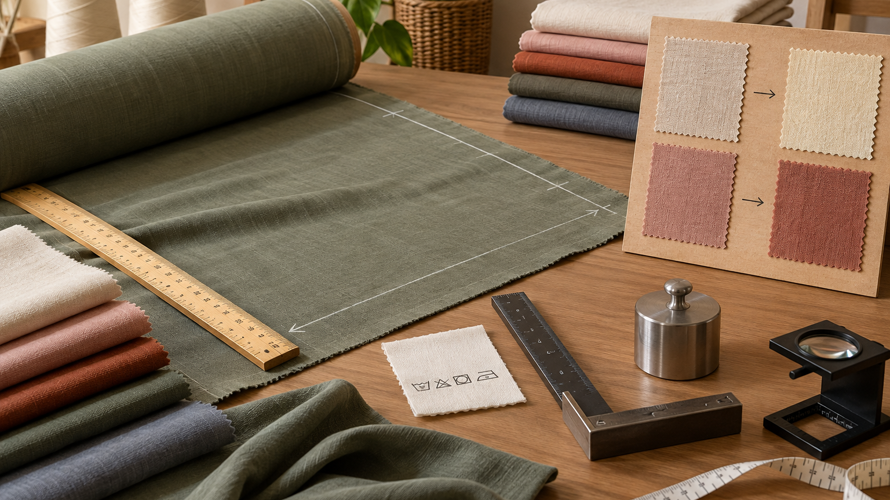
State fibre composition, construction, weight, width, finishing stage, test condition, wash and dry route, measurement points, length and width tolerance, skew or spirality tolerance, care wording and finished-product dimensions.
Attach a fabric swatch and a retained before-and-after sample. For printed goods, include the artwork and hem so the approval covers the final product rather than an unfinished fabric only.
Frequently Asked Questions
Does viscose shrink?
Viscose can shrink or change dimensions, but the amount depends on construction, finish, moisture, heat, agitation, drying and the specific care route.
Does viscose shrink more than cotton?
There is no universal ranking for every fabric. Compare the exact viscose and cotton constructions under the same defined test and care route.
Can viscose shrink in the wash?
Yes, washing and drying can cause dimensional change or relaxation. Follow the tested care route rather than assuming all viscose behaves the same way.
Does viscose shrink in hot water?
Heat and moisture can increase dimensional change for some qualities, but the response depends on construction and finishing. Test the actual fabric.
How can viscose shrinkage be reduced?
Use a suitable construction and finishing route, condition the sample, test the intended care process and specify an acceptable dimensional tolerance.
Does knitted viscose shrink?
It can change length, width, spirality, stretch and recovery. A knitted quality needs a test that measures relaxed dimensions and recovery, not only flat length.
What should a buyer ask about viscose fabric?
Ask for composition, construction, weight, width, finish, care route, dimensional test results, tolerances and a finished reference sample.
Conclusion
Viscose can be a reliable fabric choice when its dimensional behaviour is measured rather than assumed. Specify the exact construction and finish, test the real care route, and approve the printed or finished product with clear tolerances.
