
Is Viscose Stretchy? Knit, Woven and Blend Differences

Carina Silk Editorial Team writes practical guides on silk fabrics, scarves and custom textile development, with a focus on materials, artwork, sampling, construction and finishing decisions.

Viscose can feel flexible or show stretch, but viscose fibre alone does not guarantee a fixed amount of stretch. The result depends on whether the fabric is knitted or woven, how loose the construction is, whether it is cut on the bias, whether elastane is present and how well the fabric recovers.
The viscose and rayon comparison explains the fibre family; this article focuses on fabric behaviour. A buyer should specify stretch direction, extension, recovery, test condition and finished fit rather than relying on the word viscose.
Is Viscose Stretchy?
Viscose fibre is not the same as elastane, and a plain woven viscose fabric may have limited mechanical stretch. A knitted viscose can extend because of its loop structure, while a woven viscose can move more on the bias or through a looser construction.
A viscose-elastane blend can provide more controlled extension, but the blend ratio, yarn, knit, recovery and finishing determine the final result. Stretch without recovery may become growth or fit change rather than a useful performance feature.
The modal guide is a useful comparison point for regenerated-cellulose fabrics, but composition alone still cannot replace a stretch and recovery test on the finished quality.
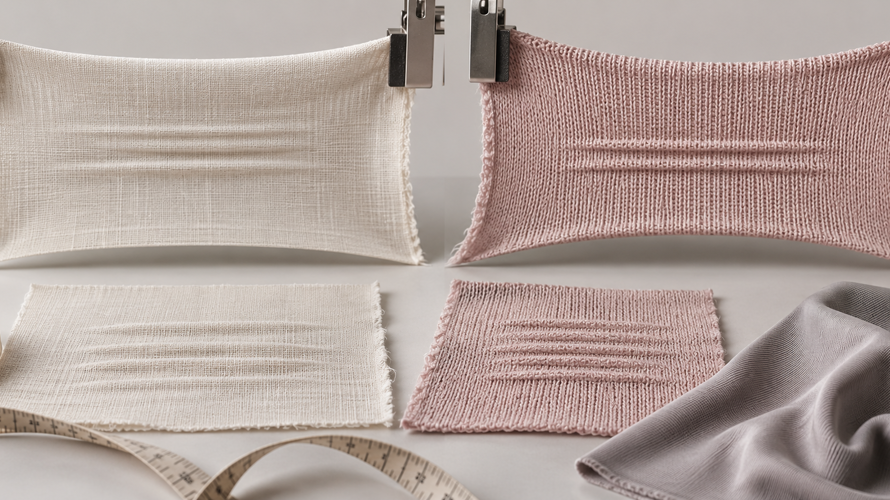
What Creates Stretch in Viscose Fabric?
Knitted viscose stretches as loops open and move. The amount depends on knit type, loop length, yarn, finishing and the direction measured.
Woven viscose may show mechanical give from yarn spacing, construction or bias movement. A garment or scarf cut diagonally can behave differently from the same fabric cut along warp or weft.
Elastane adds active extension and recovery, but heat, care, repeated loading and finishing can change that behaviour. Test the fabric after the relevant dyeing, printing, washing and pressing route.
What Are the Main Viscose Stretch Directions?
Classify the fabric by source of movement and recovery, not by the fibre name alone.
| Direction | Source of movement | Potential fit | What to confirm |
|---|---|---|---|
| Woven viscose | Mechanical give from construction | Drapey apparel and scarves | Warp and weft extension |
| Knitted viscose | Loop structure and fabric relaxation | Soft close-fitting products | Stretch, recovery and spirality |
| Viscose elastane | Added elastic fibre plus base construction | Fitted or active products | Blend ratio and recovery |
| Bias-cut viscose | Geometry allows more movement | Fluid garments and panels | Growth and edge stability |
| Loose viscose weave | Open spacing and relaxation | Airy products | Skew, width and care |
| Finished viscose | Softening or treatment changes hand | Comfort-led products | Finish durability and repeatability |

Viscose Stretch vs Recovery: What Is the Difference?
Stretch is the amount a fabric extends under a defined load or movement. Recovery is how much it returns after the load is removed. A fabric can stretch easily but recover poorly, which may cause growth, bagging or changed dimensions.
Record stretch by direction and condition, then compare it with the woven fabric guide or the relevant knit specification. A fabric that feels fluid is not necessarily a stretch fabric.
For scarves and wraps, movement may be desirable, but excessive growth or bias distortion can shift borders and finished dimensions. Test the actual product shape, not just a small strip.
What Should Buyers Check in Viscose Stretch Fabric?
A stretch specification needs a direction, load, extension, recovery time and finished-product reference.
Construction and Blend
Record woven or knitted construction, fibre blend, elastane content, weight, width and finish.
Stretch Direction
Measure warp, weft, cross-course, wale or bias directions as relevant to the product.
Extension and Load
Define the test length, applied load or method and the acceptable extension instead of saying simply “stretchy”.
Recovery
Record immediate and delayed recovery after repeated extension because fit depends on return, not only extension.
Care and Growth
Check how washing, heat, printing, pressing and repeated wear change stretch and dimensions.
Finished Fit
Approve the pattern or scarf sample so seams, borders and body remain acceptable after handling.
| Check | Why it matters | Possible risk | Evidence to request |
|---|---|---|---|
| Construction | Explains movement | Wrong fit expectation | Knit or weave data |
| Direction | Controls product behaviour | Stretch measured in wrong axis | Directional test |
| Extension | Defines usable movement | Too tight or too loose | Method and result |
| Recovery | Controls repeatable fit | Bagging or growth | Recovery record |
| Care | Controls durability | Performance changes after washing | Care trial |
| Finished fit | Confirms real use | Sample differs from swatch | Fitted or finished sample |

Where Is Stretchy Viscose Used?
Stretch viscose qualities can be used in jersey apparel, close-fitting products, soft wraps, drapey garments and blended fashion textiles. Woven viscose without elastane is often selected for fluidity rather than active stretch.
For custom scarves, compare stretch with fabric weight, size, edge finish and artwork placement. A directional printed scarf may need extra control if the base can grow or skew.
Use the exact stretch and recovery result to set the fit and care expectation.
How Should Viscose Stretch Be Specified?
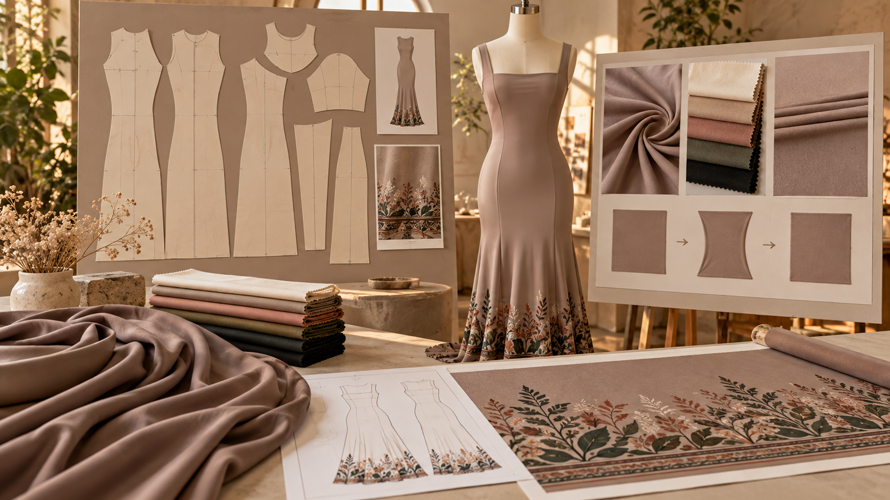
State composition, construction, weight, width, stretch direction, test length and load, extension, recovery time, growth tolerance, care route, print or finish route and finished dimensions.
Attach a fabric swatch with directional marks and a finished sample. If the fabric is for a wrap or scarf, record how the border, hem and artwork respond after repeated handling.
Frequently Asked Questions
Is viscose stretchy?
It can be, but stretch depends on construction, bias, blend, elastane, finishing and direction. Viscose fibre alone does not define a fixed stretch level.
Does woven viscose stretch?
Some woven viscose has limited mechanical give or bias movement, but it is not automatically a stretch fabric. Test warp and weft separately.
Does knitted viscose stretch?
Knitted viscose can stretch through its loop structure. Measure extension, recovery and spirality on the intended quality.
Is viscose elastane stretchy?
A viscose-elastane blend is designed for more extension, but the actual result depends on blend ratio, construction and recovery.
Does viscose stretch out?
Some qualities can grow or lose shape with wear, moisture, heat or loading. Test recovery and care rather than assuming the fabric will return.
Is viscose good for scarves?
It can suit scarves when the drape, weight, opacity, print response, edge and dimensional stability match the intended product.
What should a buyer ask about viscose stretch?
Ask for construction, blend, stretch direction, method, extension, recovery, care data, dimensional tolerance and a finished sample.
Conclusion
Viscose is not automatically stretchy or non-stretch. Specify the construction, direction, blend and recovery, then test the finished quality and product shape under the intended care and use conditions.
