Mulberry Silk vs Silk: What Is the Difference?

Carina Silk Editorial Team writes practical guides on silk fabrics, scarves and custom textile development, with a focus on materials, artwork, sampling, construction and finishing decisions.

Silk is a broad natural protein-fibre category. Mulberry silk usually refers to silk produced by domesticated silkworms fed on mulberry leaves, commonly associated with Bombyx mori. That makes it a specific source direction, not a separate non-silk material.
The silk types guide is the better starting point for comparison. Source alone does not define the finished fabric: filament length, yarn, weave, weight, finish and processing also matter.
What Is the Difference Between Mulberry Silk and Silk?
Mulberry silk is a type of real silk associated with a domesticated silkworm and mulberry feeding system. Other silk directions may come from different silkworm species, feeding sources or processing routes.
The broader word silk does not automatically mean mulberry silk. A buyer should request the exact fibre or silk type description rather than assuming the most premium source.
A momme specification describes silk fabric weight, not the biological source of the silk. Keep source and construction separate.
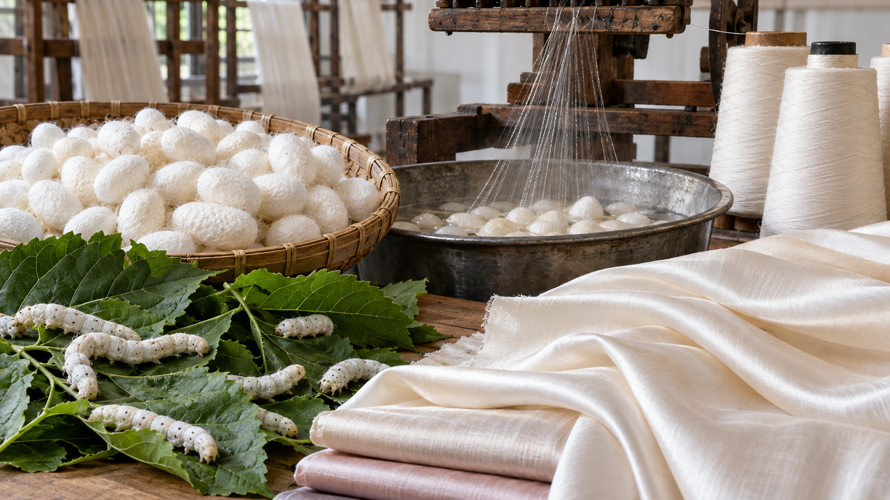
How Does Silk Source Affect the Finished Fabric?
The source and cocoon characteristics influence filament length, colour, fineness and consistency. Filament silk may be reeled; shorter fibres can be spun into a different yarn system.
Yarn preparation, degumming, dyeing, weaving, printing and finishing change the hand and surface. A high-quality source can still be made into different fabrics.
For a printed scarf, compare the finished silk swatch in the intended twill construction or satin route, not only a raw fibre description.
What Silk Directions Should Buyers Compare?
Describe source and construction together when the distinction affects the product.
| Direction | Textile character | Potential fit | What to confirm |
|---|---|---|---|
| Mulberry silk | Domesticated silkworm and mulberry feeding direction | Fine apparel and premium scarves | Source wording, filament and finish |
| Tussar or wild silk | Different silkworm and feeding environment | Textured or natural-look products | Species, colour and surface |
| Eri silk | Distinct silk source and staple-like handling | Matte, textured or specialty products | Fibre description and yarn |
| Spun silk | Shorter silk fibres spun into yarn | Matte or textured fabrics | Yarn and fibre length |
| Silk satin | Silk fibre in satin construction | Smooth luxury surfaces | Weave, slip and weight |
| Silk twill | Silk fibre in twill construction | Printed scarves and structured drape | Weight, print and hem |
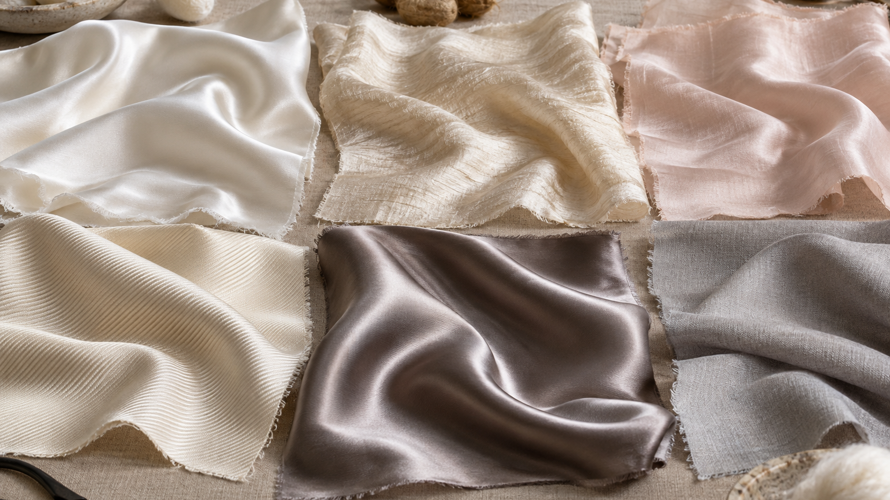
Mulberry Silk vs “100% Silk”
“100% silk” states fibre content but may not identify the source or type. “Mulberry silk” makes a more specific source claim that should be supported by the supplier’s documentation and applicable market wording.
Compare the actual fabric by silk weight, filament or spun yarn, weave, hand, colour, print response and care. A source label cannot predict every finished-fabric property.
Do not use mulberry as a shorthand for every luxury claim. State only what the evidence and finished sample support.
What Should Buyers Check for Mulberry Silk?
Source, construction and product evidence should agree.
Source and Fibre
Confirm the silk type, source wording and whether the product is pure silk or a blend.
Filament or Spun Yarn
Record yarn form, filament continuity, twist, ply and surface effect.
Weave and Weight
Specify satin, twill, plain weave or another construction with weight and width.
Colour and Print
Check base colour, dye route, print registration, reverse, bleed and colourfastness.
Care and Finish
Confirm degumming, softening, pressing, washing and care instructions for the delivered quality.
Finished Claim
Keep the supporting documentation and approve the actual scarf or finished product.
| Check | Why it matters | Possible risk | Evidence to request |
|---|---|---|---|
| Silk type | Controls source claim | Generic silk wording | Fibre statement |
| Yarn | Controls hand and lustre | Source overpromises | Yarn details |
| Weight | Controls body and coverage | Thin or heavy result | Momme or GSM record |
| Weave | Controls surface and drape | Wrong product behaviour | Construction record |
| Controls artwork | Bleed or dull colour | Strike-off | |
| Sample | Confirms delivered quality | Marketing image differs | Finished sample |
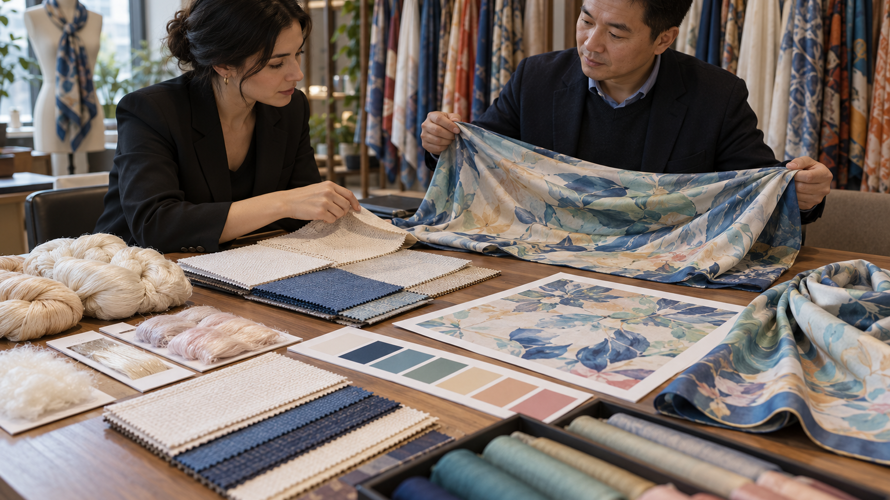
Where Is Mulberry Silk Used?
Mulberry silk is used in premium scarves, apparel, sleep products, linings and accessories where a fine filament direction and refined surface are wanted.
For a custom scarf, compare silk satin and silk twill because weave, weight and finish often change the product more visibly than the source label alone.
The intended use should determine whether the buyer needs a specific mulberry source, a broader silk category or a particular finished performance.
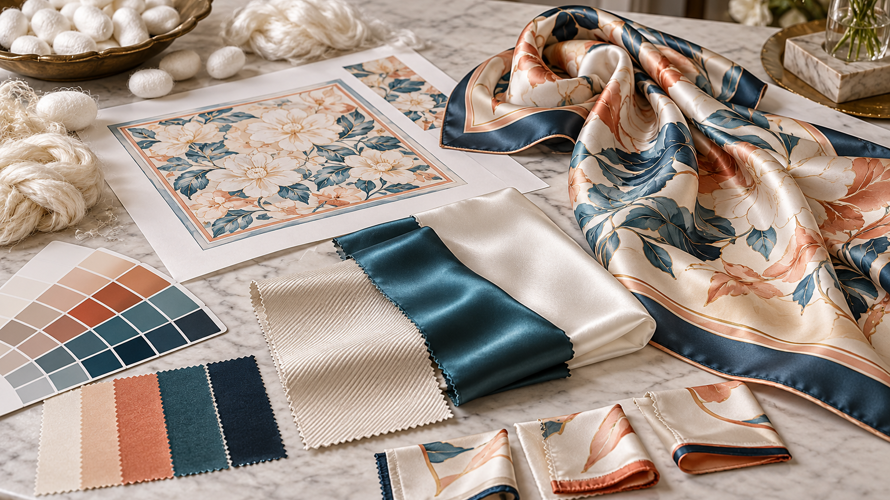
How Should Mulberry Silk Be Specified?
State silk type or source, pure or blend content, yarn form, construction, weight, width, colour, print route, finish, care and finished dimensions.
Attach a finished fabric swatch and supporting source or composition documentation. Keep “mulberry” separate from unverified quality or sustainability claims.
Frequently Asked Questions
Is mulberry silk real silk?
Yes, mulberry silk is a type of real silk associated with domesticated silkworms fed on mulberry leaves, but the exact product still needs verification.
Is all silk mulberry silk?
No. Silk includes different source and processing directions, so a generic silk label does not automatically identify mulberry silk.
Is mulberry silk better than other silk?
It may suit a smooth, fine or consistent direction, but the finished quality also depends on yarn, weave, weight, finish and care.
What is the difference between mulberry and tussar silk?
They are associated with different silkworm and feeding directions and can differ in filament, colour, texture and processing.
Does momme prove mulberry silk?
No. Momme describes fabric weight. It does not identify the biological source of the silk.
Is mulberry silk good for scarves?
It can be suitable for premium scarves when the chosen weave, weight, print, grip, care and finished sample meet the brief.
What should a buyer request?
Request silk type, composition, yarn, construction, weight, width, finish, care and an approved finished sample.
Conclusion
Mulberry silk is a specific silk source direction, while silk is the broader fibre category. Control source wording, yarn, weave, weight, finish and finished-product evidence before approving the claim.